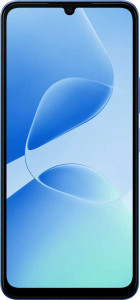
Infinix Hot 60i 5G
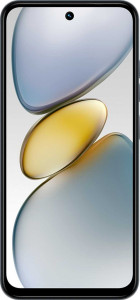
Tecno Spark 40

Infinix Hot 60i 5G Tecno Spark 40

Overview

Welcome to our in-depth comparison of the Infinix Hot 60i 5G and the Tecno Spark 40 — two budget-friendly Android smartphones vying for attention in the same competitive segment. Both share a solid foundation of 8GB RAM, 256GB storage, and 45W fast charging, yet they diverge significantly when it comes to connectivity, chipset technology, and camera features. Read on to discover which device best suits your needs.

Common Features

  • Both phones are water resistant with an IP64 ingress protection rating.
  • Both devices have a thickness of 7.7 mm.
  • Neither phone has a rugged build.
  • Neither device can be folded.
  • Both phones feature an LCD IPS display type.
  • Both devices share a resolution of 720 x 1600 px.
  • Neither phone has branded damage-resistant glass.
  • HDR10 support is not available on either device.
  • HDR10+ support is not available on either device.
  • Dolby Vision support is not available on either device.
  • Neither phone has a secondary screen.
  • Both devices have a touch screen.
  • Both phones come with 256GB internal storage and 8GB RAM.
  • Both devices have integrated LTE support.
  • Both phones support 64-bit processing.
  • Both devices use DirectX 12.
  • Both phones use big.LITTLE technology.
  • Both devices use DDR4 memory.
  • Both phones have a 50 MP main camera.
  • Neither phone has a dual-lens main camera.
  • Both devices have an 8 MP front camera.
  • Neither phone has built-in optical image stabilization.
  • Both phones support video recording at 1440 x 30 fps on the main camera.
  • Neither device has a dual-tone LED flash, and both have 2 flash LEDs.
  • Neither phone has a BSI sensor.
  • Both phones run Android 15.
  • Both devices have clipboard warnings.
  • Both phones include location privacy options.
  • Both devices offer camera and microphone privacy options.
  • Mail Privacy Protection is not available on either phone.
  • Both phones support theme customization.
  • Both devices can block app tracking.
  • Cross-site tracking blocking is not available on either device.
  • Neither phone supports wireless charging.
  • Both devices support fast charging at 45W.
  • Neither phone has a removable battery.
  • Both devices have a battery level indicator and a rechargeable battery.
  • Both phones have a 3.5 mm audio jack.
  • Both devices have stereo speakers.
  • aptX support is not available on either device.
  • LDAC support is not available on either device.
  • Both phones support dual SIM cards.
  • Both devices have an external memory slot.
  • Both phones have a USB Type-C port.
  • Both devices have a fingerprint scanner.
  • Emergency SOS via satellite is not available on either phone.
  • Crash detection is not available on either device.
  • Both phones have a video light.
  • Neither device has a sapphire glass display.
  • Neither phone has a curved or e-paper display.

Main Differences

  • Width is 76.6 mm on Infinix Hot 60i 5G and 77 mm on Tecno Spark 40.
  • Height is 166 mm on Infinix Hot 60i 5G and 165.6 mm on Tecno Spark 40.
  • Volume is 97.91 cm³ on Infinix Hot 60i 5G and 98.18 cm³ on Tecno Spark 40.
  • Screen size is 6.75″ on Infinix Hot 60i 5G and 6.67″ on Tecno Spark 40.
  • Pixel density is 260 ppi on Infinix Hot 60i 5G and 263 ppi on Tecno Spark 40.
  • Touch sampling rate is 240Hz on Infinix Hot 60i 5G and 120Hz on Tecno Spark 40.
  • Always-On Display is available on Infinix Hot 60i 5G but not on Tecno Spark 40.
  • The chipset is MediaTek Dimensity 6400 on Infinix Hot 60i 5G and MediaTek Helio G81 Ultra on Tecno Spark 40.
  • The GPU is Arm Mali-G57 MC2 on Infinix Hot 60i 5G and Mali G52 MP2 on Tecno Spark 40.
  • CPU speed is 2 x 2.5 & 6 x 2 GHz on Infinix Hot 60i 5G and 2 x 2 & 6 x 1.8 GHz on Tecno Spark 40.
  • RAM speed is 2133 MHz on Infinix Hot 60i 5G and 1800 MHz on Tecno Spark 40.
  • Semiconductor size is 6 nm on Infinix Hot 60i 5G and 12 nm on Tecno Spark 40.
  • Maximum memory bandwidth is 17.1 GB/s on Infinix Hot 60i 5G and 13.41 GB/s on Tecno Spark 40.
  • Slow-motion video recording is supported on Infinix Hot 60i 5G but not on Tecno Spark 40.
  • Built-in HDR mode is available on Infinix Hot 60i 5G but not on Tecno Spark 40.
  • Timelapse function is available on Infinix Hot 60i 5G but not on Tecno Spark 40.
  • Battery capacity is 6000 mAh on Infinix Hot 60i 5G and 5200 mAh on Tecno Spark 40.
  • 5G support is present on Infinix Hot 60i 5G but not available on Tecno Spark 40.
  • NFC is present on Infinix Hot 60i 5G but not available on Tecno Spark 40.
  • Download speed is 3300 Mbits/s on Infinix Hot 60i 5G and 300 Mbits/s on Tecno Spark 40.
  • An infrared sensor is present on Infinix Hot 60i 5G but not available on Tecno Spark 40.
Specs Comparison
Infinix Hot 60i 5G

Infinix Hot 60i 5G

Tecno Spark 40

Tecno Spark 40

Design:
water resistance Water resistant Water resistant
thickness 7.7 mm 7.7 mm
width 76.6 mm 77 mm
height 166 mm 165.6 mm
volume 97.91012 cm³ 98.18424 cm³
Ingress Protection (IP) rating IP64 IP64
has a rugged build
can be folded

In terms of design, the Infinix Hot 60i 5G and the Tecno Spark 40 are remarkably close siblings. Both share an identical 7.7 mm thickness and the same IP64 water and dust resistance rating, meaning neither will survive submersion but both can handle splashes and light rain without issue — a meaningful real-world assurance for everyday use.

The dimensional differences are marginal at best: the Spark 40 is fractionally wider (77 mm vs. 76.6 mm) while the Hot 60i is ever so slightly taller (166 mm vs. 165.6 mm), resulting in volumes of 98.18 cm³ and 97.91 cm³ respectively. In practice, these sub-millimeter gaps are imperceptible in hand and will make no meaningful difference in one-handed comfort or pocketability. Neither device offers a rugged build or a foldable form factor.

This group is effectively a tie. The two phones are design near-twins, and no practical advantage exists for either based solely on these specs. A buyer's decision here should rest entirely on other specification groups.

Display:
Display type LCD, IPS LCD, IPS
screen size 6.75" 6.67"
pixel density 260 ppi 263 ppi
resolution 720 x 1600 px 720 x 1600 px
touch sampling rate 240Hz 120Hz
has branded damage-resistant glass
supports HDR10
supports HDR10+
Always-On Display
supports Dolby Vision
Has a secondary screen
has a touch screen

Both phones use an LCD IPS panel and share the same 720 x 1600 px resolution, so neither has an edge in sharpness — and at this resolution tier, pixel density differences of 260 ppi (Hot 60i) vs. 263 ppi (Spark 40) are completely indistinguishable to the naked eye. What does differ is screen size: the Hot 60i offers a slightly larger 6.75″ panel versus the Spark 40's 6.67″, which translates to a bit more real estate for media consumption and reading, though the gap is subtle.

The most meaningful differentiator in this group is touch sampling rate. The Infinix Hot 60i 5G doubles its rival here with a 240Hz touch sampling rate compared to the Spark 40's 120Hz. This does not affect how smoothly content scrolls — that is governed by the display refresh rate — but it does make the screen more responsive to finger input, which is especially noticeable during fast-paced gaming or rapid typing. For casual users it may go unnoticed, but it is a genuine technical advantage. Additionally, the Hot 60i supports an Always-On Display, allowing users to glance at the time or notifications without waking the screen — a convenience feature the Spark 40 lacks entirely.

The Infinix Hot 60i 5G holds a clear edge in this category. Its larger screen, superior touch responsiveness, and Always-On Display functionality collectively offer a more feature-rich experience, even though the two phones are otherwise identical in panel technology and resolution.

Performance:
internal storage 256GB 256GB
RAM 8GB 8GB
Chipset (SoC) name MediaTek Dimensity 6400 MediaTek Helio G81 Ultra
GPU name Arm Mali-G57 MC2 Mali G52 MP2
CPU speed 2 x 2.5 & 6 x 2 GHz 2 x 2 & 6 x 1.8 GHz
Has integrated LTE
RAM speed 2133 MHz 1800 MHz
semiconductor size 6 nm 12 nm
Supports 64-bit
DirectX version DirectX 12 DirectX 12
Has integrated graphics
Uses big.LITTLE technology
maximum memory bandwidth 17.1 GB/s 13.41 GB/s
DDR memory version 4 4

Storage and RAM are identical — both phones offer 8GB of RAM and 256GB of internal storage — but the silicon underneath tells a very different story. The Infinix Hot 60i 5G runs on the MediaTek Dimensity 6400, built on a modern 6nm process node, while the Tecno Spark 40 relies on the Helio G81 Ultra, an older design fabbed at 12nm. That process gap is significant: a smaller node typically means better power efficiency and more performance per watt, so the Hot 60i should run cooler and sustain peak performance longer under load.

The CPU and memory advantages compound this gap further. The Dimensity 6400 clocks its performance cores at 2.5 GHz versus the G81 Ultra's 2.0 GHz, and the Hot 60i's RAM operates at 2133 MHz compared to 1800 MHz on the Spark 40. Critically, the Hot 60i also delivers a maximum memory bandwidth of 17.1 GB/s versus 13.41 GB/s — a 27% advantage that directly benefits multitasking, app loading, and graphics-intensive workloads. The GPU pairing reinforces this: the Mali-G57 MC2 in the Hot 60i is a newer architecture than the Spark 40's Mali G52 MP2, which matters for gaming and graphically demanding apps.

The Infinix Hot 60i 5G wins this category decisively. Across every meaningful performance dimension — process node, CPU clock speed, memory bandwidth, and GPU generation — it holds a tangible lead over the Spark 40. Real-world users will notice this in snappier app launches, smoother gaming, and better sustained performance over time.

Cameras:
megapixels (main camera) 50 MP 50 MP
Has a dual-lens (or multi-lens) main camera
megapixels (front camera) 8MP 8MP
has built-in optical image stabilization
video recording (main camera) 1440 x 30 fps 1440 x 30 fps
Has a dual-tone LED flash
number of flash LEDs 2 2
has a BSI sensor
has a CMOS sensor
has continuous autofocus when recording movies
Has phase-detection autofocus for photos
supports slow-motion video recording
has a built-in HDR mode
has manual exposure
has a flash
optical zoom 0x 0x
has manual ISO
has a serial shot mode
has manual focus
has a front camera
Has laser autofocus
Shoots 360° panorama
has manual white balance
shoots raw
has touch autofocus
has manual shutter speed
can create panoramas in-camera
Has timelapse function
Has a front-facing LED flash
has a dual-lens (or multi-lens) front camera
supports HDR10 recording
supports Dolby Vision recording
has a front-facing camera under the display
Has a RGB LED flash
has 3D photo/video recording capabilities

On paper, these two cameras look like carbon copies: both sport a 50 MP single-lens main camera and an 8 MP front shooter, cap video at 1440 x 30 fps, and share the same autofocus setup with phase-detection and touch autofocus. Neither offers optical image stabilization or optical zoom, which are common omissions at this price tier. For everyday shooting — social media photos, casual video calls — both phones cover the same ground.

Where they diverge is in shooting modes and creative flexibility. The Infinix Hot 60i 5G supports slow-motion video recording, a built-in HDR mode for stills, and a timelapse function — none of which are available on the Tecno Spark 40. Slow-motion is a particularly practical feature for capturing action moments, while HDR mode helps retain detail in high-contrast scenes like bright outdoor shots. Timelapse, though niche, adds a creative option that many users do reach for occasionally.

The Infinix Hot 60i 5G takes this category. The core hardware is identical, but its broader set of shooting features — slow-motion, HDR stills, and timelapse — gives it meaningfully more versatility for users who want more from their camera beyond basic point-and-shoot.

Operating system:
Android version Android 15 Android 15
has clipboard warnings
has location privacy options
has camera/microphone privacy options
has Mail Privacy Protection
has theme customization
can block app tracking
blocks cross-site tracking
has on-device machine learning
has notification permissions
has media picker
Can play games while they download
has dark mode
has Wi-Fi password sharing
has battery health check
has an extra dim mode
has focus modes
has dynamic theming
can offload apps
Has customizable notifications
has Live Text
has full-page screenshots
supports split screen
gets direct OS updates
has PiP
Can be used as a PC
Has sharing intents
has a child lock
Supports widgets
Is free and open source
Has offline voice recognition
has voice commands
Tracks the current position of a mobile device
is a multi-user system
has Quick Start

This is a rare case of a perfect draw. Every single software feature listed for both phones is identical — from the shared Android 15 base to privacy controls, productivity tools, and accessibility options. Both support split-screen multitasking, Picture-in-Picture, dynamic theming, on-device machine learning, and a full suite of privacy permissions covering location, camera, and microphone access. Neither receives direct OS updates, and neither supports Wi-Fi password sharing or focus modes.

Running the same Android version matters more than it might seem: Android 15 brings improved privacy sandboxing, better notification management, and refined media controls — features both phones deliver equally. The shared absence of direct OS updates is worth noting for longevity-conscious buyers, as it means both devices depend on their respective manufacturers for patches and upgrades rather than receiving them straight from Google.

This group is a complete tie. There is no software differentiator — not a single feature or capability — that separates the Infinix Hot 60i 5G from the Tecno Spark 40. Buyers should look entirely to other specification groups to make their decision.

Battery:
battery power 6000 mAh 5200 mAh
has wireless charging
Supports fast charging
charging speed 45W 45W
has a removable battery
has a battery level indicator
has a rechargeable battery

Charging speed is a non-issue here — both phones support 45W fast charging, meaning top-up times from low battery will be virtually identical for either device. Neither offers wireless charging, and both have sealed, non-removable batteries, so the specs are aligned in every dimension except one: raw capacity.

That one difference is meaningful. The Infinix Hot 60i 5G packs a 6000 mAh battery against the Tecno Spark 40's 5200 mAh — an 800 mAh gap, or roughly a 15% larger reservoir. In practical terms, this translates to noticeably longer screen-on time, more hours of video playback, and greater headroom for heavy users who push their phones hard through a full day. For light-to-moderate users, both phones should comfortably last a full day, but the Hot 60i's larger cell provides a more comfortable buffer before needing to reach for a charger.

The Infinix Hot 60i 5G wins this category clearly. With an equal charging speed but a significantly larger battery, it offers a longer potential runtime — a straightforward advantage that benefits all types of users, from casual to power users alike.

Audio:
has a socket for a 3.5 mm audio jack
has stereo speakers
has aptX
has LDAC
has aptX HD
has aptX Adaptive
has aptX Lossless

Audio hardware is identical across both devices. The Infinix Hot 60i 5G and the Tecno Spark 40 each include a 3.5 mm headphone jack and stereo speakers — two features that are increasingly being dropped from budget and mid-range phones, so their shared presence here is a genuine plus for users who rely on wired headphones or want fuller sound when watching media without earphones.

Neither phone supports advanced wireless audio codecs such as aptX, LDAC, or any of their variants. This means Bluetooth audio is limited to standard SBC or AAC transmission, which is adequate for casual listening but falls short for audiophiles pairing premium wireless headphones that depend on high-resolution codecs for lossless or near-lossless playback. For the target audience of these devices, however, this omission is unlikely to be a deciding factor.

This group is a complete tie. Every audio specification is shared equally between the two phones, and neither holds any advantage over the other in this category.

Connectivity & Features:
release date August 2025 July 2025
has 5G support
SIM cards 2 SIM 2 SIM
has an external memory slot
Has USB Type-C
has NFC
download speed 3300 MBits/s 300 MBits/s
Has a fingerprint scanner
has emergency SOS via satellite
has crash detection
is DLNA-certified
supports ANT+
Has a heart rate monitor
has GPS
supports Wi-Fi
Has an infrared sensor
has an accelerometer
has a cellular module
Has a barometer
has an HDMI output
Uses 3D facial recognition
Has an iris scanner
Stylus included
supports Galileo
Has motion tracking
Has optical tracking
Has a built-in projector

This is where the gap between these two phones becomes most pronounced. The Infinix Hot 60i 5G supports 5G connectivity with a peak download speed of 3300 Mbits/s, while the Tecno Spark 40 is limited to 4G with a maximum of 300 Mbits/s — a tenfold difference in theoretical throughput. For users in areas with 5G coverage, this translates to dramatically faster downloads, lower latency for gaming and video calls, and greater future-proofing as 5G networks continue to expand and mature.

Beyond cellular, the Hot 60i also includes NFC and an infrared sensor, neither of which the Spark 40 offers. NFC is the technology behind contactless payments and quick device pairing — an increasingly essential feature for users who rely on mobile wallets. The infrared sensor, meanwhile, allows the phone to function as a universal remote for TVs and home appliances, a convenience that may seem minor but proves surprisingly practical in daily use. Both phones otherwise share dual-SIM support, USB Type-C, expandable storage, GPS with Galileo, Wi-Fi, and a fingerprint scanner.

The Infinix Hot 60i 5G wins this category by a wide margin. Its advantages — 5G, NFC, and an infrared sensor — are not marginal additions; they represent connectivity capabilities that the Spark 40 simply cannot match, making the Hot 60i a substantially more versatile and forward-looking device.

Miscellaneous:
has a video light
Has sapphire glass display
Has a curved display
Has an e-paper display

The miscellaneous specs for these two phones are identical across every data point provided. Both feature a video light — useful for illuminating subjects during video recording in low-light conditions — and neither carries a sapphire glass display, curved screen, or e-paper panel, all of which are premium or niche features not expected at this price tier.

This group is a complete tie. There is nothing here to distinguish the Infinix Hot 60i 5G from the Tecno Spark 40, and buyers should weigh the other specification categories to inform their decision.

Comparison Summary & Verdict

After a thorough look at every spec, these two phones serve distinctly different users. The Infinix Hot 60i 5G stands out with its 5G connectivity, more efficient 6nm Dimensity 6400 chipset, faster 240Hz touch sampling rate, Always-On Display, NFC, infrared sensor, and a larger 6000 mAh battery — making it the stronger all-round performer for future-focused, feature-hungry buyers. The Tecno Spark 40, on the other hand, is a capable 4G device that still offers 50MP photography, stereo speakers, and a compact 6.67″ screen in a slightly wider frame. If day-to-day essentials are your priority and 5G is not yet critical in your area, the Tecno Spark 40 remains a solid, no-frills choice.

Infinix Hot 60i 5G
Buy Infinix Hot 60i 5G if...

Buy the Infinix Hot 60i 5G if you want 5G connectivity, a larger battery, a more powerful chipset, NFC, an infrared sensor, and richer camera features like slow-motion and HDR mode.

Tecno Spark 40
Buy Tecno Spark 40 if...

Buy the Tecno Spark 40 if you are on a tight budget, 5G coverage is not available in your area, and you only need reliable 4G performance for everyday tasks.