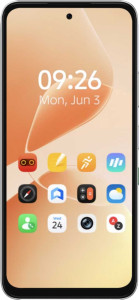
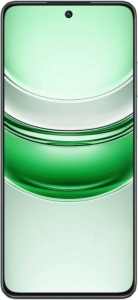
The camera story here splits cleanly depending on which lens you prioritize. On the rear, the Infinix Hot 60i holds a clear edge with its 50 MP main sensor versus the Narzo 80 Lite 5G's 32 MP — more pixels means finer detail in well-lit shots and more flexibility when cropping. More telling is the video ceiling: the Hot 60i tops out at 1440p at 30 fps while the Narzo is capped at 1080p at 30 fps, a meaningful difference for users who care about video quality. The Hot 60i also packs 2 flash LEDs versus the Narzo's single LED, which typically translates to more even, natural-looking flash illumination in dark environments. Both share the same f/1.8 main aperture, so light intake is identical at the lens level.
Flip to the front, and the tables turn decisively. The Narzo 80 Lite 5G sports a 32 MP selfie camera with a wider f/1.8 aperture, compared to the Hot 60i's modest 8 MP front shooter behind a narrower f/2.0 lens. That is a fourfold resolution advantage combined with better low-light intake — a combination that matters enormously for portrait selfies, video calls, and social content creation. For selfie-centric users, this gap is hard to overlook.
The rest of the feature set — phase-detection autofocus, continuous movie autofocus, slow-motion, HDR mode, and manual controls — is identical across both devices, so the decision comes down to use case. The Hot 60i is the stronger rear camera phone, offering higher resolution stills and sharper video recording. The Narzo 80 Lite 5G is the clear winner for selfies. Neither device has an objectively superior camera system overall; the right choice depends entirely on which camera you use most.