Infinix Note 50 4G
Infinix Note 50x 5G

Infinix Note 50 4G Infinix Note 50x 5G

Overview

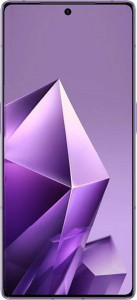
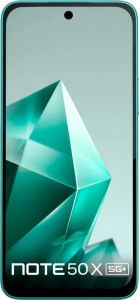
Welcome to our in-depth spec comparison between the Infinix Note 50 4G and the Infinix Note 50x 5G. These two siblings from Infinix take notably different paths: one bets on a superior AMOLED display and wireless charging, while the other counters with a faster chipset and next-generation connectivity. Read on as we break down every key category to help you decide which device truly fits your needs.

Common Features

  • Both phones are water resistant with an IP64 ingress protection rating.
  • Neither phone has a rugged build.
  • Neither phone can be folded.
  • Both phones have a touchscreen display.
  • Neither phone has branded damage-resistant glass.
  • HDR10 support is not available on either product.
  • HDR10+ support is not available on either product.
  • Dolby Vision support is not available on either product.
  • Neither phone has a secondary screen.
  • Both phones come with 8GB of RAM.
  • Both phones have integrated LTE support.
  • Both phones support 64-bit processing.
  • Both phones use big.LITTLE technology with 8 CPU threads and HMP support.
  • Both phones run Android 15.
  • Both phones support fast charging at 45W.
  • Neither phone has a removable battery.
  • Neither phone has a 3.5mm audio jack.
  • Both phones have stereo speakers and a built-in radio.
  • Both phones support Bluetooth 5.4 and USB Type-C (USB 2.0).
  • Both phones have NFC, a fingerprint scanner, and support dual SIM cards.
  • Both phones have a CMOS sensor, phase-detection autofocus, continuous autofocus during video, slow-motion recording, built-in HDR mode, and manual exposure.
  • Both phones have a video light and no curved or e-paper display.

Main Differences

  • Weight is 199g on Infinix Note 50 4G and 198.9g on Infinix Note 50x 5G.
  • Thickness is 7.6mm on Infinix Note 50 4G and 8mm on Infinix Note 50x 5G.
  • Width is 74.4mm on Infinix Note 50 4G and 76.4mm on Infinix Note 50x 5G.
  • Height is 163.3mm on Infinix Note 50 4G and 165.4mm on Infinix Note 50x 5G.
  • Display type is OLED/AMOLED on Infinix Note 50 4G and LCD IPS on Infinix Note 50x 5G.
  • Screen size is 6.78″ on Infinix Note 50 4G and 6.67″ on Infinix Note 50x 5G.
  • Pixel density is 393 ppi on Infinix Note 50 4G and 263 ppi on Infinix Note 50x 5G.
  • Resolution is 1080 x 2436 px on Infinix Note 50 4G and 720 x 1600 px on Infinix Note 50x 5G.
  • Refresh rate is 144Hz on Infinix Note 50 4G and 120Hz on Infinix Note 50x 5G.
  • Always-On Display is available on Infinix Note 50 4G but not on Infinix Note 50x 5G.
  • Internal storage is 256GB on Infinix Note 50 4G and 128GB on Infinix Note 50x 5G.
  • AnTuTu benchmark score is 432052 on Infinix Note 50 4G and 720000 on Infinix Note 50x 5G.
  • The chipset is MediaTek Helio G100 on Infinix Note 50 4G and MediaTek Dimensity 7300 on Infinix Note 50x 5G.
  • The GPU is Mali G57 on Infinix Note 50 4G and Mali G615 MC2 on Infinix Note 50x 5G.
  • Semiconductor size is 6nm on Infinix Note 50 4G and 4nm on Infinix Note 50x 5G.
  • RAM speed is 4266 MHz (DDR4) on Infinix Note 50 4G and 6400 MHz (DDR5) on Infinix Note 50x 5G.
  • Maximum memory support is 12GB on Infinix Note 50 4G and 16GB on Infinix Note 50x 5G.
  • The main camera is dual-lens (50MP + 8MP) on Infinix Note 50 4G, while Infinix Note 50x 5G has a single 50MP lens.
  • Optical image stabilization is present on Infinix Note 50 4G but not available on Infinix Note 50x 5G.
  • Front camera resolution is 13MP on Infinix Note 50 4G and 8MP on Infinix Note 50x 5G.
  • Max video recording is 1440p at 30fps on Infinix Note 50 4G and 2160p at 30fps on Infinix Note 50x 5G.
  • Battery capacity is 5200 mAh on Infinix Note 50 4G and 5500 mAh on Infinix Note 50x 5G.
  • Wireless charging is supported on Infinix Note 50 4G but not available on Infinix Note 50x 5G.
  • 5G support is present on Infinix Note 50x 5G but not available on Infinix Note 50 4G.
  • Wi-Fi 6 (802.11ax) support is present on Infinix Note 50x 5G but not available on Infinix Note 50 4G.
  • Download speed reaches 650 Mbits/s on Infinix Note 50 4G and 3270 Mbits/s on Infinix Note 50x 5G.
  • An infrared sensor is present on Infinix Note 50x 5G but not available on Infinix Note 50 4G.
Specs Comparison
Infinix Note 50 4G

Infinix Note 50 4G

Infinix Note 50x 5G

Infinix Note 50x 5G

Design:
water resistance Water resistant Water resistant
weight 199 g 198.9 g
thickness 7.6 mm 8 mm
width 74.4 mm 76.4 mm
height 163.3 mm 165.4 mm
volume 92.336352 cm³ 101.09248 cm³
Ingress Protection (IP) rating IP64 IP64
has a rugged build
can be folded

Both the Infinix Note 50 4G and the Note 50x 5G share the same core design philosophy: neither is rugged or foldable, and both carry an IP64 rating, meaning they resist dust and water splashes — a useful everyday safeguard, though not suitable for submersion. On paper, these two devices look nearly identical in their feature set, so the real differentiation lies in the physical dimensions.

Despite a near-identical weight — 199 g versus 198.9 g — the Note 50 4G is meaningfully more compact. It is slimmer at 7.6 mm compared to the Note 50x's 8 mm, narrower by 2 mm (74.4 mm vs 76.4 mm), and shorter by over 2 mm (163.3 mm vs 165.4 mm). The cumulative effect is significant: the Note 50 4G has a total volume of roughly 92.3 cm³ versus the Note 50x's 101.1 cm³ — nearly 9% more bulk in the larger device. In practice, that extra width and height is what most users will feel daily, especially during single-handed use or when fitting the phone into a pocket.

For design and ergonomics, the Note 50 4G has a clear edge: it achieves essentially the same weight while occupying noticeably less space, making it the more pocketable and hand-friendly option. The Note 50x 5G's larger footprint is likely a trade-off to accommodate its 5G hardware or a bigger display, but from a pure design standpoint, the Note 50 4G is the more refined physical package.

Display:
Display type OLED/AMOLED LCD, IPS
screen size 6.78" 6.67"
pixel density 393 ppi 263 ppi
resolution 1080 x 2436 px 720 x 1600 px
refresh rate 144Hz 120Hz
has branded damage-resistant glass
supports HDR10
supports HDR10+
Always-On Display
supports Dolby Vision
Has a secondary screen
has a touch screen

The display is where these two devices diverge most dramatically. The Note 50 4G uses an OLED/AMOLED panel, while the Note 50x 5G relies on an LCD IPS screen — and that single distinction cascades into almost every aspect of the viewing experience. OLED technology delivers true blacks, higher contrast, and more vivid colors by lighting each pixel individually, while IPS LCD produces a flatter, less punchy image with a visible backlight. For media consumption, gaming, or simply browsing in a dark room, the Note 50 4G's panel will look noticeably more premium.

The resolution gap compounds this further. The Note 50 4G renders at 1080 x 2436 px with a pixel density of 393 ppi, producing sharp, detailed visuals on its slightly larger 6.78″ screen. The Note 50x 5G, by contrast, tops out at 720 x 1600 px — an HD-level resolution that translates to just 263 ppi. At that density, text and fine image detail can appear noticeably softer, especially on a 6.67″ panel where pixels are more visible to the naked eye. The refresh rate difference — 144Hz on the Note 50 4G versus 120Hz on the Note 50x — is a smaller but real advantage, delivering marginally smoother scrolling and animations.

The Note 50 4G also supports an Always-On Display, a convenience feature absent on the Note 50x that lets users glance at time, notifications, or widgets without waking the screen — a natural fit for an OLED panel since only active pixels consume power. Across every meaningful display metric — panel technology, sharpness, refresh rate, and features — the Note 50 4G holds a decisive advantage, making it the clear choice for anyone who prioritizes screen quality.
Performance:
internal storage 256GB 128GB
RAM 8GB 8GB
AnTuTu benchmark score 432052 720000
Chipset (SoC) name MediaTek Helio G100 MediaTek Dimensity 7300
GPU name Mali G57 Mali G615 MC2
CPU speed 2 x 2.2 & 6 x 2 GHz 4 x 2.5 & 4 x 2 GHz
GPU clock speed 1000 MHz 1047 MHz
Has integrated LTE
RAM speed 4266 MHz 6400 MHz
semiconductor size 6 nm 4 nm
Supports 64-bit
DirectX version DirectX 11 DirectX 12
Has integrated graphics
Uses big.LITTLE technology
CPU threads 8 threads 8 threads
Uses HMP
maximum memory amount 12GB 16GB
DDR memory version 4 5

Under the hood, these two phones tell very different stories. The Note 50 4G is powered by the MediaTek Helio G100, built on a 6 nm process, while the Note 50x 5G runs on the MediaTek Dimensity 7300, fabbed at a more advanced 4 nm node. A smaller semiconductor process generally means greater power efficiency and thermal performance — the Dimensity 7300 can do more work while generating less heat. The AnTuTu scores make the gap concrete: the Note 50x 5G scores approximately 720,000 versus the Note 50 4G's 432,052 — a difference of roughly 67%, which is not marginal. In real-world terms, this translates to snappier app launches, smoother multitasking under load, and more headroom for demanding games.

The memory architecture reinforces this gap. Both devices ship with 8 GB of RAM, but the Note 50x 5G uses the faster DDR5 standard at 6400 MHz, compared to the Note 50 4G's DDR4 at 4266 MHz. Faster RAM reduces latency when switching between apps and handling large data sets. The Note 50x 5G also supports a higher maximum memory of 16 GB (versus 12 GB), giving it more ceiling for virtual RAM expansion. On GPU and API support, the Note 50x 5G's Mali G615 MC2 with DirectX 12 support edges out the Note 50 4G's Mali G57 with DirectX 11 — a meaningful distinction for graphically intensive gaming. Storage is the one area where the Note 50 4G counters: it ships with 256 GB of internal storage versus the Note 50x 5G's 128 GB, which is a tangible everyday advantage for users who store large media libraries without relying on the cloud.

Overall, the Note 50x 5G holds a clear performance advantage in raw processing power, memory speed, and graphics capability — the Dimensity 7300 is simply a more modern and capable chip. The Note 50 4G partially compensates with double the base storage, which matters for a different type of user. But for anyone prioritizing sustained performance and future-proofing, the Note 50x 5G is the stronger performer.

Cameras:
megapixels (main camera) 50 & 8 MP 50 MP
wide aperture (main camera) 2.2 & 1.9f 1.6f
Has a dual-lens (or multi-lens) main camera
megapixels (front camera) 13MP 8MP
has built-in optical image stabilization
video recording (main camera) 1440 x 30 fps 2160 x 30 fps
Has a dual-tone LED flash
number of flash LEDs 2 1
has a BSI sensor
has a CMOS sensor
has continuous autofocus when recording movies
Has phase-detection autofocus for photos
supports slow-motion video recording
has a built-in HDR mode
has manual exposure
has a flash
optical zoom 0x 0x
has manual ISO
has a serial shot mode
has manual focus
has a front camera
Has laser autofocus
Shoots 360° panorama
has manual white balance
shoots raw
has touch autofocus
has manual shutter speed
can create panoramas in-camera
wide aperture (front camera) 2.2f 2f
Has timelapse function
Has a front-facing LED flash
has a dual-lens (or multi-lens) front camera
supports HDR10 recording
supports Dolby Vision recording
has a front-facing camera under the display
Has a RGB LED flash
has 3D photo/video recording capabilities

Both phones lead with a 50 MP primary sensor, but the camera systems are structured quite differently. The Note 50 4G pairs its main shooter with a secondary 8 MP lens, giving it a dual-camera setup that adds versatility — whether for depth sensing or an additional focal length. The Note 50x 5G, by contrast, relies on a single rear camera. What the Note 50x 5G sacrifices in lens count, it partially recovers through aperture: its main camera opens to f/1.6, compared to f/2.2 on the Note 50 4G's primary lens. A wider aperture lets in significantly more light, which typically benefits low-light photography by producing brighter images with less noise — a real-world advantage in dimly lit environments.

Video capability is another meaningful point of divergence. The Note 50x 5G can record at 4K (2160p) at 30 fps, while the Note 50 4G tops out at 2.5K (1440p) at 30 fps. For users who care about future-proofing their video content or editing with more resolution headroom, 4K is a genuine step up. On the other hand, the Note 50 4G includes optical image stabilization (OIS), which the Note 50x 5G lacks entirely. OIS physically compensates for hand shake during both photo and video capture, and its absence on the Note 50x 5G means 4K footage may appear shakier without deliberate effort to stay still. The selfie cameras follow a similar pattern: the Note 50 4G offers a 13 MP front shooter versus the Note 50x 5G's 8 MP, with the latter having a marginally wider aperture of f/2.0 versus f/2.2.

Neither phone is a clear sweep. The Note 50 4G wins on camera count, OIS, and selfie resolution, while the Note 50x 5G counters with a wider main aperture and higher video resolution. On balance, the Note 50 4G holds a slight overall edge for most users — OIS is a broadly applicable stabilization benefit that improves everyday photos and videos alike, and the dual-lens system adds flexibility. The Note 50x 5G's 4K video is compelling for dedicated videographers, but without OIS, capturing stable 4K footage requires extra care.

Operating system:
Android version Android 15 Android 15
has clipboard warnings
has location privacy options
has camera/microphone privacy options
has Mail Privacy Protection
has theme customization
can block app tracking
blocks cross-site tracking
has on-device machine learning
has notification permissions
has media picker
Can play games while they download
has dark mode
has Wi-Fi password sharing
has battery health check
has an extra dim mode
has focus modes
has dynamic theming
can offload apps
Has customizable notifications
has Live Text
has full-page screenshots
supports split screen
gets direct OS updates
has PiP
Can be used as a PC
Has sharing intents
has a child lock
Supports widgets
Is free and open source
Has offline voice recognition
has voice commands
Tracks the current position of a mobile device
is a multi-user system
has Quick Start

When it comes to software, these two devices are effectively identical. Both run Android 15 and share every single feature in this specification group — from privacy controls like location and camera/microphone permissions, to productivity tools like split-screen multitasking, Picture-in-Picture, and full-page screenshots. Neither receives direct OS updates, and neither supports features like Wi-Fi password sharing, focus modes, or Quick Start. This is a complete tie across the board.

It is worth noting the quality of the shared feature set. Both phones include meaningful privacy tooling — clipboard warnings, app tracking blocks, and on-device machine learning — along with user-friendly conveniences like dynamic theming, Live Text, and offline voice recognition. For everyday users, this is a well-rounded Android 15 implementation that covers the essentials without any notable omissions on either side.

For this specification group, neither phone has an advantage. A buyer's software experience will be functionally identical on both devices, so the operating system should not factor into the decision between these two models. Any differentiation will come from the hardware categories instead.

Battery:
battery power 5200 mAh 5500 mAh
has wireless charging
Supports fast charging
charging speed 45W 45W
has a removable battery
has a battery level indicator
has a rechargeable battery

Charging speed is a wash here — both phones support fast charging at 45W, meaning top-up times from flat will be roughly equivalent. The divergence lies in two other areas: capacity and wireless charging. The Note 50x 5G edges ahead on raw battery size with 5500 mAh versus the Note 50 4G's 5200 mAh. That 300 mAh difference is modest — in practice, it might translate to 20–30 extra minutes of screen-on time — but it does give the Note 50x 5G a marginal endurance lead, particularly relevant given that its more powerful Dimensity 7300 chip may draw more aggressively under load.

The more consequential difference is wireless charging. The Note 50 4G supports it; the Note 50x 5G does not. Wireless charging is a meaningful quality-of-life feature for users who have compatible pads at home or in the office — simply placing the phone down to charge without fumbling for a cable adds genuine daily convenience. Its absence on the Note 50x 5G is a notable omission at this tier.

This category ends in a practical trade-off rather than a clear winner. The Note 50x 5G offers slightly more battery capacity, while the Note 50 4G brings wireless charging — a feature that some users will value significantly and others will never miss. Buyers who prioritize charging flexibility should lean toward the Note 50 4G, while those focused purely on longevity will find the Note 50x 5G's larger cell a minor but real advantage.

Audio:
has a socket for a 3.5 mm audio jack
has stereo speakers
has aptX
has LDAC
has aptX HD
has aptX Adaptive
has aptX Lossless
Has a radio

Audio is another category where the two phones are inseparable. Both omit the 3.5 mm headphone jack, requiring users to rely on Bluetooth or USB-C audio adapters for wired listening — a trade-off that has become common at this price tier but remains worth flagging for users who prefer traditional wired headphones. On the positive side, both feature stereo speakers, which deliver a noticeably wider and more immersive soundstage than mono setups — a real benefit for media consumption and speakerphone calls. Both also include a built-in FM radio, a niche but appreciated feature in markets where terrestrial radio remains relevant.

Neither phone supports advanced Bluetooth audio codecs — no aptX, LDAC, aptX HD, or any of their variants. This means wireless audio quality is capped at standard Bluetooth SBC or AAC levels, which is adequate for casual listening but will not satisfy audiophiles using high-resolution wireless headphones that depend on those codecs for lossless or near-lossless transmission.

With every audio specification matching exactly, this group is a complete tie. The shared feature set is decent for everyday use — stereo speakers and FM radio are genuine positives — but the lack of a headphone jack and high-resolution Bluetooth codecs are shared limitations that neither phone overcomes. Audio quality should not influence the choice between these two devices.

Connectivity & Features:
release date March 2025 March 2025
has 5G support
Wi-Fi version Wi-Fi 4 (802.11n), Wi-Fi 5 (802.11ac) Wi-Fi 4 (802.11n), Wi-Fi 5 (802.11ac), Wi-Fi 6 (802.11ax)
SIM cards 2 SIM 2 SIM
Bluetooth version 5.4 5.4
Has USB Type-C
USB version 2 2
has NFC
download speed 650 MBits/s 3270 MBits/s
upload speed 150 MBits/s 3270 MBits/s
Has a fingerprint scanner
has emergency SOS via satellite
has crash detection
is DLNA-certified
has a gyroscope
supports ANT+
Has a heart rate monitor
has GPS
has a compass
supports Wi-Fi
Has an infrared sensor
has an accelerometer
has a cellular module
Has a barometer
has an HDMI output
Uses 3D facial recognition
Has an iris scanner
Stylus included
supports Galileo
Has motion tracking
Has optical tracking
Has a built-in projector

The name difference between these two phones is not just marketing — the ″5G″ in the Note 50x 5G signals a genuine connectivity upgrade. Beyond cellular generation, the Note 50x 5G also supports Wi-Fi 6 (802.11ax), while the Note 50 4G tops out at Wi-Fi 5. Wi-Fi 6 delivers better performance in congested environments — like offices or apartments with many connected devices — and supports higher theoretical throughput. The cellular speed gap is even more dramatic: the Note 50x 5G offers download and upload speeds of up to 3270 Mbits/s, compared to the Note 50 4G's 650 Mbits/s down and just 150 Mbits/s up. In 5G-covered areas, this translates to faster file downloads, smoother cloud streaming, and vastly superior upload performance — particularly relevant for content creators or heavy cloud users.

Two additional differentiators stand out. The Note 50x 5G includes an infrared sensor, which allows the phone to function as a universal remote control for TVs, air conditioners, and other IR-compatible appliances — a convenient feature the Note 50 4G lacks entirely. Both phones otherwise share a solid common foundation: NFC for contactless payments, Bluetooth 5.4, USB Type-C, dual SIM support, and a full suite of navigation sensors including GPS, compass, gyroscope, and Galileo support.

The Note 50x 5G holds a clear and meaningful advantage in this category. The combination of 5G connectivity, Wi-Fi 6, dramatically higher data speeds, and an infrared blaster gives it a noticeably broader and more future-ready feature set. For users in regions with 5G coverage or those who frequently transfer large files, the gap is especially significant. The Note 50 4G's connectivity spec sheet, while functional, is a step behind on every key differentiator.

Miscellaneous:
has a video light
Has sapphire glass display
Has a curved display
Has an e-paper display

The miscellaneous specs for these two devices are identical across every data point provided. Both include a video light, and neither features sapphire glass, a curved display, or an e-paper panel. None of the absent features represent a meaningful omission at this price tier — sapphire glass and curved displays are typically reserved for flagship devices, and e-paper is a niche technology suited to specific use cases rather than general-purpose smartphones.

This is a complete tie with no differentiating factors present in this group. As with the audio and operating system categories, the miscellaneous specifications offer no basis for choosing one phone over the other, and buyers should weigh other spec groups — particularly display, performance, and connectivity — when making their decision.

Comparison Summary & Verdict

After examining every spec, these two phones serve clearly different audiences. The Infinix Note 50 4G stands out for media enthusiasts who demand a sharper, more vibrant experience, thanks to its AMOLED screen with 144Hz refresh rate and 393 ppi pixel density, plus the added convenience of wireless charging and optical image stabilization. On the other hand, the Infinix Note 50x 5G is the stronger choice for users who prioritize raw performance and future-proof connectivity, delivering a significantly higher AnTuTu score, a 4nm Dimensity 7300 chipset, 5G support, Wi-Fi 6, and a larger 5500 mAh battery. Choose the Note 50 4G for display quality and versatile charging; choose the Note 50x 5G for speed, connectivity, and longevity.

Infinix Note 50 4G
Buy Infinix Note 50 4G if...

Buy the Infinix Note 50 4G if you prioritize a vibrant AMOLED display with a 144Hz refresh rate, wireless charging, and optical image stabilization for everyday photography.

Infinix Note 50x 5G
Buy Infinix Note 50x 5G if...

Buy the Infinix Note 50x 5G if you want faster overall performance, 5G and Wi-Fi 6 connectivity, a larger battery, and a more powerful chipset built for demanding tasks.