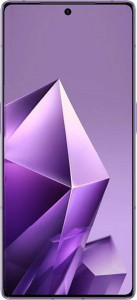
Infinix Note 50 4G
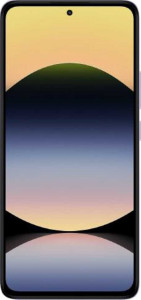
Xiaomi Redmi Note 14 4G (Global)

Infinix Note 50 4G Xiaomi Redmi Note 14 4G (Global)

Overview

Welcome to our in-depth specification comparison between the Infinix Note 50 4G and the Xiaomi Redmi Note 14 4G (Global) — two compelling mid-range contenders sharing the same OLED display technology, 8GB of RAM, and 256GB of storage. Yet beneath those shared foundations, meaningful differences emerge across display refresh rate, charging capabilities, camera configurations, and audio features, making the choice between them far from straightforward. Read on to find out which device suits your needs best.

Common Features

  • Both phones are water resistant.
  • Both phones share the same height of 163.3 mm.
  • Neither phone has a rugged build.
  • Neither phone can be folded.
  • Both phones feature an OLED/AMOLED display type.
  • Both phones support Always-On Display.
  • Neither phone supports Dolby Vision.
  • Neither phone has a secondary screen.
  • Both phones have a touch screen.
  • Both phones come with 256GB of internal storage and 8GB of RAM.
  • Both phones use the Mali G57 GPU.
  • Both phones share the same CPU speed of 2 x 2.2 and 6 x 2 GHz.
  • Both phones have integrated LTE.
  • Both phones use a 6 nm semiconductor size.
  • Both phones support 64-bit processing.
  • Both phones feature a multi-lens main camera.
  • Both phones have built-in optical image stabilization.
  • Neither phone has a dual-tone LED flash.
  • Both phones have a CMOS sensor.
  • Both phones support continuous autofocus when recording movies.
  • Both phones support phase-detection autofocus for photos.
  • Both phones support slow-motion video recording.
  • Both phones include clipboard warnings.
  • Both phones offer location privacy options.
  • Both phones provide camera and microphone privacy options.
  • Neither phone has Mail Privacy Protection.
  • Both phones support theme customization.
  • Both phones can block app tracking.
  • Neither phone blocks cross-site tracking.
  • Both phones have on-device machine learning.
  • Both phones support fast charging.
  • Both phones come with a charger in the box.
  • Neither phone has a removable battery.
  • Both phones have a battery level indicator.
  • Both phones have a rechargeable battery.
  • Both phones feature stereo speakers.
  • Neither phone supports aptX, aptX HD, aptX Adaptive, or aptX Lossless.
  • Both phones include an FM radio.
  • Neither phone supports 5G.
  • Both phones support Wi-Fi 4 (802.11n) and Wi-Fi 5 (802.11ac).
  • Both phones have dual SIM card slots.
  • Both phones have a USB Type-C port with USB version 2.
  • Both phones have NFC.
  • Both phones share the same download speed of 650 MBits/s and upload speed of 150 MBits/s.
  • Both phones have a video light.
  • Neither phone has a sapphire glass display.
  • Neither phone has a curved display.
  • Neither phone has an e-paper display.

Main Differences

  • Weight is 199 g on Infinix Note 50 4G and 196.5 g on Xiaomi Redmi Note 14 4G (Global).
  • Thickness is 7.6 mm on Infinix Note 50 4G and 8.2 mm on Xiaomi Redmi Note 14 4G (Global).
  • Width is 74.4 mm on Infinix Note 50 4G and 76.6 mm on Xiaomi Redmi Note 14 4G (Global).
  • Volume is 92.34 cm³ on Infinix Note 50 4G and 102.57 cm³ on Xiaomi Redmi Note 14 4G (Global).
  • The IP rating is IP64 on Infinix Note 50 4G and IP54 on Xiaomi Redmi Note 14 4G (Global).
  • Screen size is 6.78″ on Infinix Note 50 4G and 6.67″ on Xiaomi Redmi Note 14 4G (Global).
  • Pixel density is 393 ppi on Infinix Note 50 4G and 395 ppi on Xiaomi Redmi Note 14 4G (Global).
  • Resolution is 1080 x 2436 px on Infinix Note 50 4G and 1080 x 2400 px on Xiaomi Redmi Note 14 4G (Global).
  • Refresh rate is 144Hz on Infinix Note 50 4G and 120Hz on Xiaomi Redmi Note 14 4G (Global).
  • Damage-resistant glass is present on Xiaomi Redmi Note 14 4G (Global) but not available on Infinix Note 50 4G.
  • HDR10 support is present on Xiaomi Redmi Note 14 4G (Global) but not available on Infinix Note 50 4G.
  • HDR10+ support is present on Xiaomi Redmi Note 14 4G (Global) but not available on Infinix Note 50 4G.
  • AnTuTu benchmark score is 432052 on Infinix Note 50 4G and 470000 on Xiaomi Redmi Note 14 4G (Global).
  • The chipset is MediaTek Helio G100 on Infinix Note 50 4G and Mediatek Helio G99 on Xiaomi Redmi Note 14 4G (Global).
  • GPU clock speed is 1000 MHz on Infinix Note 50 4G and 950 MHz on Xiaomi Redmi Note 14 4G (Global).
  • Main camera resolution is 50 and 8 MP on Infinix Note 50 4G and 108, 2, and 2 MP on Xiaomi Redmi Note 14 4G (Global).
  • Main camera aperture is f/2.2 and f/1.9 on Infinix Note 50 4G and f/1.7, f/2.2, and f/2.4 on Xiaomi Redmi Note 14 4G (Global).
  • Front camera resolution is 13 MP on Infinix Note 50 4G and 20 MP on Xiaomi Redmi Note 14 4G (Global).
  • Main camera video recording is 1440 x 30 fps on Infinix Note 50 4G and 1080 x 30 fps on Xiaomi Redmi Note 14 4G (Global).
  • Number of flash LEDs is 2 on Infinix Note 50 4G and 1 on Xiaomi Redmi Note 14 4G (Global).
  • Infinix Note 50 4G runs Android 15 while Xiaomi Redmi Note 14 4G (Global) runs Android 14.
  • App offloading is supported on Infinix Note 50 4G but not available on Xiaomi Redmi Note 14 4G (Global).
  • Battery capacity is 5200 mAh on Infinix Note 50 4G and 5500 mAh on Xiaomi Redmi Note 14 4G (Global).
  • Wireless charging is supported on Infinix Note 50 4G but not available on Xiaomi Redmi Note 14 4G (Global).
  • Charging speed is 45W on Infinix Note 50 4G and 33W on Xiaomi Redmi Note 14 4G (Global).
  • A 3.5 mm audio jack is present on Xiaomi Redmi Note 14 4G (Global) but not available on Infinix Note 50 4G.
  • LDAC support is present on Xiaomi Redmi Note 14 4G (Global) but not available on Infinix Note 50 4G.
  • Bluetooth version is 5.4 on Infinix Note 50 4G and 5.3 on Xiaomi Redmi Note 14 4G (Global).
  • An infrared sensor is present on Xiaomi Redmi Note 14 4G (Global) but not available on Infinix Note 50 4G.
Specs Comparison
Infinix Note 50 4G

Infinix Note 50 4G

Xiaomi Redmi Note 14 4G (Global)

Xiaomi Redmi Note 14 4G (Global)

Design:
water resistance Water resistant Water resistant
weight 199 g 196.5 g
thickness 7.6 mm 8.2 mm
width 74.4 mm 76.6 mm
height 163.3 mm 163.3 mm
volume 92.336352 cm³ 102.571996 cm³
Ingress Protection (IP) rating IP64 IP54
has a rugged build
can be folded

Both phones share the same 163.3 mm height and carry a water-resistant build, but the differences in their IP ratings and physical dimensions tell a more nuanced story. The Infinix Note 50 4G holds an IP64 rating, while the Redmi Note 14 4G is rated IP54. The first digit is the critical distinction here: a ″6″ means the Infinix is fully dust-tight, whereas a ″5″ on the Redmi only means partial dust protection. In practice, this makes the Infinix meaningfully more resilient in dusty environments — such as construction sites, sandy beaches, or dry outdoor settings — where fine particles can gradually damage internal components over time.

In terms of form factor, the Infinix again has the upper hand for ergonomics. At 7.6 mm thick and 74.4 mm wide, it is noticeably slimmer and narrower than the Redmi's 8.2 mm thickness and 76.6 mm width. This translates to a more pocketable, one-hand-friendly feel — a real daily-use advantage. The volume difference reinforces this: the Infinix displaces roughly 92.3 cm³ versus the Redmi's 102.6 cm³, meaning the Redmi is a physically bulkier device overall. The Redmi does edge out a marginal win in weight at 196.5 g versus 199 g, but a 2.5 g difference is imperceptible in hand and is not a meaningful advantage.

Overall, the Infinix Note 50 4G holds a clear design edge in this group. Its superior dust resistance rating and more compact, slimmer chassis make it the better-engineered device from a physical design standpoint, without any meaningful trade-off compared to the Redmi Note 14 4G.

Display:
Display type OLED/AMOLED OLED/AMOLED
screen size 6.78" 6.67"
pixel density 393 ppi 395 ppi
resolution 1080 x 2436 px 1080 x 2400 px
refresh rate 144Hz 120Hz
has branded damage-resistant glass
supports HDR10
supports HDR10+
Always-On Display
supports Dolby Vision
Has a secondary screen
has a touch screen

Both phones use OLED/AMOLED panels and land at virtually identical pixel densities — 393 ppi on the Infinix versus 395 ppi on the Redmi — meaning sharpness is a non-issue for either device at normal viewing distances. The Infinix does offer a slightly larger 6.78″ screen compared to the Redmi's 6.67″, which gives it a modest edge for media consumption and gaming. However, where the two diverge most meaningfully is refresh rate: the Infinix pushes 144Hz versus the Redmi's 120Hz. While both feel smooth in everyday use, the Infinix's higher ceiling produces noticeably snappier scrolling and more fluid animation in supported games and apps.

The Redmi Note 14 4G counters with two significant display quality advantages. First, it carries branded damage-resistant glass, which the Infinix lacks entirely — a practical durability benefit that matters for drop and scratch resistance over the phone's lifetime. Second, the Redmi supports both HDR10 and HDR10+, enabling richer contrast and more accurate color rendering when streaming HDR content on compatible platforms. The Infinix supports neither standard, which is a real gap for users who prioritize display fidelity in video consumption.

This group ends in a split verdict. The Infinix Note 50 4G wins on screen size and refresh rate — advantages that favor gamers and power users who value responsiveness. The Redmi Note 14 4G wins on content quality and screen protection, making it the better pick for media enthusiasts and users who want a more durable display out of the box. Neither phone dominates outright; the right choice depends on what the user values most in a screen.

Performance:
internal storage 256GB 256GB
RAM 8GB 8GB
AnTuTu benchmark score 432052 470000
Chipset (SoC) name MediaTek Helio G100 Mediatek Helio G99
GPU name Mali G57 Mali G57
CPU speed 2 x 2.2 & 6 x 2 GHz 2 x 2.2 & 6 x 2 GHz
GPU clock speed 1000 MHz 950 MHz
Has integrated LTE
RAM speed 4266 MHz 4266 MHz
semiconductor size 6 nm 6 nm
Supports 64-bit
DirectX version DirectX 11 DirectX 11
Has integrated graphics
OpenGL ES version 3.2 3.2
Uses big.LITTLE technology
CPU threads 8 threads 8 threads
Uses HMP
Has TrustZone
maximum memory bandwidth 17.1 GB/s 17.1 GB/s
OpenCL version 2 2
maximum memory amount 12GB 12GB
Thermal Design Power (TDP) 5W 5W
DDR memory version 4 4

On paper, these two phones share a striking amount of silicon DNA: identical 8GB RAM, 256GB storage, the same 6 nm fabrication node, matched CPU configurations, and equal memory bandwidth. The core distinction lies in the chipset — the Infinix runs a MediaTek Helio G100 while the Redmi carries a Helio G99. The AnTuTu benchmark scores make the real-world gap concrete: the Redmi Note 14 4G posts approximately 470,000 points versus the Infinix's 432,052, a difference of roughly 9%. That margin is noticeable in sustained workloads like extended gaming sessions or heavy multitasking, though both phones will handle everyday tasks without friction.

One counterintuitive detail worth flagging: the Infinix's Mali G57 GPU runs at 1000 MHz, compared to the Redmi's 950 MHz. Despite the Infinix holding a higher GPU clock speed, it still trails in the overall benchmark — indicating that the Helio G99's broader architectural efficiencies give the Redmi its lead. In gaming terms, the GPU clock advantage on the Infinix does not translate into a performance win, and users should trust the composite benchmark score as the more reliable indicator of real-world output.

The Redmi Note 14 4G holds a clear, if not dramatic, edge in this performance group. Its higher AnTuTu score reflects a chipset that delivers more processing throughput despite the near-identical surrounding hardware. For users who push their phones hard — gaming, video editing, or heavy app switching — the Redmi is the stronger performer based solely on the data provided here.

Cameras:
megapixels (main camera) 50 & 8 MP 108 & 2 & 2 MP
wide aperture (main camera) 2.2 & 1.9f 1.7 & 2.2 & 2.4f
Has a dual-lens (or multi-lens) main camera
megapixels (front camera) 13MP 20MP
has built-in optical image stabilization
video recording (main camera) 1440 x 30 fps 1080 x 30 fps
Has a dual-tone LED flash
number of flash LEDs 2 1
has a BSI sensor
has a CMOS sensor
has continuous autofocus when recording movies
Has phase-detection autofocus for photos
supports slow-motion video recording
has a built-in HDR mode
has manual exposure
has a flash
optical zoom 0x 0x
has manual ISO
has a serial shot mode
has manual focus
has a front camera
Has laser autofocus
Shoots 360° panorama
has manual white balance
shoots raw
has touch autofocus
has manual shutter speed
can create panoramas in-camera
wide aperture (front camera) 2.2f 2.2f
Has timelapse function
Has a front-facing LED flash
has a dual-lens (or multi-lens) front camera
supports HDR10 recording
supports Dolby Vision recording
has a front-facing camera under the display
Has a RGB LED flash
has 3D photo/video recording capabilities

The most consequential camera difference here is the Redmi's 108 MP primary sensor versus the Infinix's 50 MP main shooter. A higher megapixel count enables more aggressive pixel-binning for cleaner low-light shots and gives users far greater flexibility to crop into a scene without losing detail — a meaningful real-world benefit for photography enthusiasts. Equally important is the primary aperture: the Redmi's f/1.7 lens lets in significantly more light than the Infinix's f/1.9, which translates to brighter, less noisy images in dim conditions. On front cameras, the Redmi again pulls ahead with a 20 MP selfie shooter compared to the Infinix's 13 MP — a noticeable gap for video calls and portrait selfies.

The Infinix fights back in video. It tops out at 1440p at 30 fps, while the Redmi is capped at 1080p at 30 fps — a concrete resolution advantage for users who want sharper video footage, extra cropping headroom in post-production, or future-proofing for higher-resolution displays. It also ships with 2 flash LEDs versus the Redmi's single LED, which can improve flash coverage in close-range shots. Worth noting on the Redmi's triple-camera setup: its two auxiliary lenses are 2 MP each, which are typically depth or macro sensors of limited practical impact — the triple-camera label should not be mistaken for a versatile multi-focal system.

This group splits along use case lines. The Redmi Note 14 4G is the stronger still-photography device, with its higher-resolution main sensor, wider primary aperture, and superior front camera all pointing toward better photo quality. The Infinix Note 50 4G earns a clear win for videographers, offering a full resolution tier above the Redmi. Users who prioritize photos should lean toward the Redmi; those who shoot a lot of video will find the Infinix more capable.

Operating system:
Android version Android 15 Android 14
has clipboard warnings
has location privacy options
has camera/microphone privacy options
has Mail Privacy Protection
has theme customization
can block app tracking
blocks cross-site tracking
has on-device machine learning
has notification permissions
has media picker
Can play games while they download
has dark mode
has Wi-Fi password sharing
has battery health check
has an extra dim mode
has focus modes
has dynamic theming
can offload apps
Has customizable notifications
has Live Text
has full-page screenshots
supports split screen
gets direct OS updates
has PiP
Can be used as a PC
Has sharing intents
has a child lock
Supports widgets
Is free and open source
Has offline voice recognition
has voice commands
Tracks the current position of a mobile device
is a multi-user system
has Quick Start

The software gap between these two phones is narrow but meaningful. The Infinix Note 50 4G ships with Android 15, while the Redmi Note 14 4G launches on Android 14. A newer Android version matters for a few concrete reasons: it brings the latest security patches out of the box, access to newer platform APIs that developers target first, and refined system behaviors around privacy and performance. For a device the user plans to keep for two or more years, starting one OS generation ahead is a tangible head start on longevity — even if neither phone receives direct OS updates according to the provided data.

Beyond the OS version, the only other functional differentiator in this group is app offloading. The Infinix supports this feature; the Redmi does not. App offloading allows the system to automatically remove infrequently used apps while preserving their data, freeing up storage without requiring the user to manually uninstall anything. On a 256GB device this matters less than it would on a lower-capacity phone, but it remains a useful housekeeping tool for users who accumulate a large app library over time. Every other software feature in this group — from privacy controls and dark mode to split-screen, widgets, and offline voice recognition — is identical across both devices.

The Infinix Note 50 4G holds a clear edge in this category. Its more current Android version and app offloading support are the only two differentiators in an otherwise evenly matched software profile, and both favor the Infinix in ways that compound over the ownership period.

Battery:
battery power 5200 mAh 5500 mAh
has wireless charging
Supports fast charging
charging speed 45W 33W
comes with a charger
has a removable battery
has a battery level indicator
has a rechargeable battery

Raw capacity goes to the Redmi, but not by a margin that changes daily behavior. The Redmi Note 14 4G packs a 5500 mAh battery versus the Infinix's 5200 mAh — a 300 mAh difference that, in practice, might add 20 to 30 minutes of screen-on time at most. Both cells are large enough to comfortably last a full day for most users, so this gap is more theoretical than transformative.

Where the story flips is charging. The Infinix Note 50 4G supports 45W fast charging compared to the Redmi's 33W, meaning the Infinix will go from empty to full meaningfully faster — a gap of roughly 20 to 30 minutes in a full charge cycle at these wattages, which matters significantly for users who charge on the go or in short windows. More striking still, the Infinix adds wireless charging — a feature the Redmi lacks entirely. Wireless charging at this price tier is a genuine differentiator: it enables charging pads on desks and nightstands, removes wear on the charging port, and adds a layer of daily convenience the Redmi simply cannot match.

This group goes clearly to the Infinix Note 50 4G. While the Redmi holds a modest capacity lead, the Infinix's faster wired charging and exclusive wireless charging support represent more impactful real-world advantages. Unless a user specifically needs every last milliampere of passive battery reserve, the Infinix's charging ecosystem is the more compelling overall package.

Audio:
has a socket for a 3.5 mm audio jack
has stereo speakers
has aptX
has LDAC
has aptX HD
has aptX Adaptive
has aptX Lossless
Has a radio

Shared ground first: both phones deliver stereo speakers and FM radio, which puts them on equal footing for casual listening without headphones. The meaningful divergence comes from two features, each benefiting a different type of audio user. The Redmi Note 14 4G retains a 3.5 mm headphone jack — something the Infinix has dropped entirely. For users with a collection of wired headphones or earphones, this is a practical daily convenience that eliminates the need for a dongle and avoids the latency and pairing friction of Bluetooth alternatives.

On the wireless audio side, however, the Redmi also supports LDAC — a high-resolution Bluetooth audio codec that transmits up to three times more data than standard SBC. For users pairing with LDAC-compatible headphones or speakers, this translates to audibly richer, more detailed sound compared to standard Bluetooth audio. The Infinix supports neither LDAC nor any other high-quality audio codec based on the provided data, leaving it at a disadvantage for both wired and high-fidelity wireless listening.

The Redmi Note 14 4G wins this category without ambiguity. Its combination of a headphone jack for wired compatibility and LDAC for premium wireless audio covers both ends of the headphone user spectrum — advantages the Infinix Note 50 4G has no answer for in this spec group.

Connectivity & Features:
release date March 2025 January 2025
has 5G support
Wi-Fi version Wi-Fi 4 (802.11n), Wi-Fi 5 (802.11ac) Wi-Fi 4 (802.11n), Wi-Fi 5 (802.11ac)
SIM cards 2 SIM 2 SIM
Bluetooth version 5.4 5.3
Has USB Type-C
USB version 2 2
has NFC
download speed 650 MBits/s 650 MBits/s
upload speed 150 MBits/s 150 MBits/s
Has a fingerprint scanner
has emergency SOS via satellite
has crash detection
is DLNA-certified
has a gyroscope
supports ANT+
Has a heart rate monitor
has GPS
has a compass
supports Wi-Fi
Has an infrared sensor
has an accelerometer
has a cellular module
Has a barometer
has an HDMI output
Uses 3D facial recognition
Has an iris scanner
Stylus included
supports Galileo
Has motion tracking
Has optical tracking
Has a built-in projector

Connectivity fundamentals are nearly identical across these two devices. Both support dual-SIM, NFC, USB Type-C, matched Wi-Fi standards, identical cellular download and upload speeds, and the same sensor suite including GPS, gyroscope, accelerometer, and compass. For most users, this parity means neither phone has a connectivity edge in day-to-day use — calls, mobile data, tap-to-pay, and location services all behave the same way on both.

Zoom in on the details, though, and two differentiators emerge — one per device. The Infinix Note 50 4G runs Bluetooth 5.4 versus the Redmi's 5.3. While the real-world gap between these adjacent versions is modest, 5.4 does bring improved connection reliability and efficiency, particularly relevant for users who keep multiple Bluetooth devices paired simultaneously. On the flip side, the Redmi Note 14 4G includes an infrared sensor that the Infinix lacks. This lets the Redmi double as a universal remote for TVs, air conditioners, and other IR-controlled appliances — a genuinely practical feature for users who want to consolidate their devices.

This group is effectively a draw, with each phone claiming one niche advantage. The Infinix's Bluetooth 5.4 edges ahead for wireless peripheral users, while the Redmi's infrared sensor adds a utility the Infinix cannot replicate. Neither advantage is significant enough to tip the overall verdict — users should weigh whichever feature aligns more closely with their specific habits.
Miscellaneous:
has a video light
Has sapphire glass display
Has a curved display
Has an e-paper display

The miscellaneous spec group for these two phones is a clean sweep of shared traits: both include a video light, and neither features a sapphire glass display, curved screen, or e-paper panel. There is not a single differentiator in this category to analyze.

This is a complete tie. The provided data gives no basis to favor one device over the other here, and users should look to the other spec groups — design, cameras, battery, and performance — to inform their decision.

Comparison Summary & Verdict

After a thorough side-by-side analysis, both phones prove themselves as solid mid-range options, but each caters to a different type of user. The Infinix Note 50 4G stands out with its 144Hz refresh rate, wireless charging support, faster 45W wired charging, a slimmer and lighter build, a higher IP64 dust-and-water resistance rating, and Android 15 out of the box — making it ideal for users who want a more future-ready and feature-rich experience. The Xiaomi Redmi Note 14 4G (Global), on the other hand, wins on camera versatility with its 108MP main sensor, a larger 5500 mAh battery, HDR10 and HDR10+ display support, damage-resistant glass, a 3.5mm audio jack, LDAC audio, and an infrared sensor — making it the better pick for users who prioritize multimedia quality and everyday practicality.

Infinix Note 50 4G
Buy Infinix Note 50 4G if...

Buy the Infinix Note 50 4G if you want a smoother 144Hz display, wireless charging, faster 45W wired charging, a slimmer design, and a higher IP64 rating with Android 15.

Xiaomi Redmi Note 14 4G (Global)
Buy Xiaomi Redmi Note 14 4G (Global) if...

Buy the Xiaomi Redmi Note 14 4G (Global) if you prioritize a versatile 108MP camera system, a larger battery, HDR10+ display support, a 3.5mm audio jack, and LDAC audio quality.