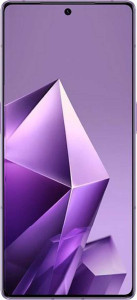
Infinix Note 50 Pro 4G 8GB RAM
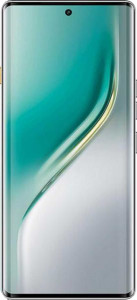
Tecno Camon 40 Pro 4G

Infinix Note 50 Pro 4G 8GB RAM Tecno Camon 40 Pro 4G

Overview

Welcome to our in-depth comparison of the Infinix Note 50 Pro 4G 8GB RAM and the Tecno Camon 40 Pro 4G, two mid-range contenders that share a surprising amount of common ground while diverging in some meaningful ways. From charging capabilities and water resistance to camera performance and display features, each device takes a distinct approach to delivering value. Read on as we break down every spec to help you decide which one truly fits your needs.

Common Features

  • Both phones share the same thickness of 7.3 mm.
  • Neither phone has a rugged build.
  • Neither phone can be folded.
  • Both phones feature an OLED/AMOLED display type.
  • Both phones have a screen size of 6.78″.
  • Both phones have a pixel density of 393 ppi.
  • Both phones support a 144Hz refresh rate.
  • HDR10 support is not available on either phone.
  • HDR10+ support is not available on either phone.
  • Always-On Display is available on both phones.
  • Dolby Vision support is not available on either phone.
  • Both phones are powered by the MediaTek Helio G100 chipset.
  • Both phones use the Mali G57 GPU.
  • Both phones have the same CPU speed of 2 x 2.2 & 6 x 2 GHz.
  • Both phones have a GPU clock speed of 1000 MHz.
  • Both phones have 256GB of internal storage.
  • Both phones have a RAM speed of 4266 MHz.
  • Both phones are built on a 6 nm semiconductor process.
  • LTE is integrated in both phones.
  • Both phones have a dual-lens main camera with 50 & 8 MP.
  • Optical image stabilization is built into both phones.
  • Both phones have 2 flash LEDs.
  • Neither phone has a BSI sensor.
  • Both phones use a CMOS sensor.
  • Both phones support continuous autofocus when recording movies.
  • Both phones feature phase-detection autofocus for photos.
  • Both phones run Android 15.
  • Clipboard warnings are present on both phones.
  • Both phones offer location privacy options.
  • Camera and microphone privacy options are available on both phones.
  • Mail Privacy Protection is not available on either phone.
  • Theme customization is supported on both phones.
  • App tracking can be blocked on both phones.
  • Cross-site tracking is not blocked on either phone.
  • Both phones have a 5200 mAh battery.
  • Fast charging is supported on both phones.
  • Both phones come with a charger.
  • Neither phone has a removable battery.
  • A battery level indicator is present on both phones.
  • Both phones have a rechargeable battery.
  • Neither phone has a 3.5 mm audio jack.
  • Both phones feature stereo speakers.
  • aptX support is not available on either phone.
  • LDAC support is not available on either phone.
  • A radio is present on both phones.
  • Neither phone supports 5G.
  • Both phones support Wi-Fi 4 (802.11n) and Wi-Fi 5 (802.11ac).
  • Both phones have dual SIM card support.
  • Both phones have a USB Type-C port with USB version 2.
  • NFC is available on both phones.
  • Both phones share the same download speed of 650 MBits/s.
  • Both phones share the same upload speed of 150 MBits/s.
  • Both phones have a video light.
  • Neither phone has a sapphire glass display.
  • Neither phone has an e-paper display.

Main Differences

  • Water resistance is rated as Water resistant on Infinix Note 50 Pro 4G 8GB RAM and Waterproof on Tecno Camon 40 Pro 4G.
  • Weight is 198 g on Infinix Note 50 Pro 4G 8GB RAM and 178 g on Tecno Camon 40 Pro 4G.
  • Width is 74.4 mm on Infinix Note 50 Pro 4G 8GB RAM and 74.6 mm on Tecno Camon 40 Pro 4G.
  • Height is 163.3 mm on Infinix Note 50 Pro 4G 8GB RAM and 164.3 mm on Tecno Camon 40 Pro 4G.
  • Volume is 88.691496 cm³ on Infinix Note 50 Pro 4G 8GB RAM and 89.474494 cm³ on Tecno Camon 40 Pro 4G.
  • The IP rating is IP64 on Infinix Note 50 Pro 4G 8GB RAM and IP68 on Tecno Camon 40 Pro 4G.
  • Display resolution is 1080 x 2436 px on Infinix Note 50 Pro 4G 8GB RAM and 1080 x 2463 px on Tecno Camon 40 Pro 4G.
  • Damage-resistant glass branding is not present on Infinix Note 50 Pro 4G 8GB RAM but is available on Tecno Camon 40 Pro 4G.
  • RAM is 8GB on Infinix Note 50 Pro 4G 8GB RAM and 12GB on Tecno Camon 40 Pro 4G.
  • AnTuTu benchmark score is 438000 on Infinix Note 50 Pro 4G 8GB RAM and 415000 on Tecno Camon 40 Pro 4G.
  • Main camera wide aperture is 2.2 & 1.9f on Infinix Note 50 Pro 4G 8GB RAM and 1.9f on Tecno Camon 40 Pro 4G.
  • Front camera resolution is 32MP on Infinix Note 50 Pro 4G 8GB RAM and 50MP on Tecno Camon 40 Pro 4G.
  • Main camera video recording is 1440 x 30 fps on Infinix Note 50 Pro 4G 8GB RAM and 2160 x 60 fps on Tecno Camon 40 Pro 4G.
  • Dual-tone LED flash is not present on Infinix Note 50 Pro 4G 8GB RAM but is available on Tecno Camon 40 Pro 4G.
  • Front camera wide aperture is 2.2f on Infinix Note 50 Pro 4G 8GB RAM and 2.5f on Tecno Camon 40 Pro 4G.
  • Wireless charging is supported on Infinix Note 50 Pro 4G 8GB RAM but not available on Tecno Camon 40 Pro 4G.
  • Charging speed is 90W on Infinix Note 50 Pro 4G 8GB RAM and 45W on Tecno Camon 40 Pro 4G.
  • A heart rate monitor is present on Infinix Note 50 Pro 4G 8GB RAM but not available on Tecno Camon 40 Pro 4G.
  • An infrared sensor is not present on Infinix Note 50 Pro 4G 8GB RAM but is available on Tecno Camon 40 Pro 4G.
  • A curved display is not featured on Infinix Note 50 Pro 4G 8GB RAM but is present on Tecno Camon 40 Pro 4G.
Specs Comparison
Infinix Note 50 Pro 4G 8GB RAM

Infinix Note 50 Pro 4G 8GB RAM

Tecno Camon 40 Pro 4G

Tecno Camon 40 Pro 4G

Design:
water resistance Water resistant Waterproof
weight 198 g 178 g
thickness 7.3 mm 7.3 mm
width 74.4 mm 74.6 mm
height 163.3 mm 164.3 mm
volume 88.691496 cm³ 89.474494 cm³
Ingress Protection (IP) rating IP64 IP68
has a rugged build
can be folded

In terms of physical dimensions, the two phones are nearly identical twins. Both share the same 7.3 mm thickness and nearly matching widths and heights, making the in-hand experience virtually indistinguishable from a size perspective. The marginal volume difference is negligible in practice.

Where a real-world gap emerges is in weight and water protection. The Tecno Camon 40 Pro 4G is noticeably lighter at 178 g versus 198 g for the Infinix Note 50 Pro 4G — a 20-gram difference that becomes perceptible during prolonged one-handed use or long calls. On protection, the Camon 40 Pro carries an IP68 rating, meaning it can withstand submersion in water up to 1.5 meters for 30 minutes, while the Note 50 Pro is rated IP64, which only guards against water splashes and jets, not full submersion. This is a meaningful distinction for users who frequently use their phone near pools, in rain, or in high-humidity environments.

Overall, the Tecno Camon 40 Pro 4G holds a clear design advantage: it is lighter and offers significantly stronger water protection. Neither phone has a rugged build or folding form factor, so for users prioritizing durability against the elements and everyday comfort, the Camon 40 Pro is the stronger choice based on these specs alone.

Display:
Display type OLED/AMOLED OLED/AMOLED
screen size 6.78" 6.78"
pixel density 393 ppi 393 ppi
resolution 1080 x 2436 px 1080 x 2463 px
refresh rate 144Hz 144Hz
has branded damage-resistant glass
supports HDR10
supports HDR10+
Always-On Display
supports Dolby Vision
Has a secondary screen
has a touch screen

For the most part, these two displays are cut from the same cloth. Both sport a 6.78-inch OLED/AMOLED panel with identical 393 ppi pixel density, a smooth 144Hz refresh rate, and Always-On Display support — meaning everyday sharpness, color vibrancy, and scrolling fluidity will feel essentially the same between the two devices.

The single but meaningful differentiator is that the Tecno Camon 40 Pro 4G features branded damage-resistant glass, while the Infinix Note 50 Pro 4G does not. In practical terms, this translates to meaningfully better resistance against scratches and accidental drops — a factor that matters for users who skip screen protectors or tend to be rough on their devices. The minor resolution difference (1080x2436 vs. 1080x2463) is too small to be visible to the human eye and is not a real-world differentiator.

Given how closely matched these panels are, the Camon 40 Pro takes a narrow but practical edge purely due to its screen protection — a feature that directly affects the long-term durability of what is arguably a phone′s most vulnerable and most-used component.

Performance:
internal storage 256GB 256GB
RAM 8GB 12GB
AnTuTu benchmark score 438000 415000
Chipset (SoC) name MediaTek Helio G100 MediaTek Helio G100
GPU name Mali G57 Mali G57
CPU speed 2 x 2.2 & 6 x 2 GHz 2 x 2.2 & 6 x 2 GHz
GPU clock speed 1000 MHz 1000 MHz
Has integrated LTE
RAM speed 4266 MHz 4266 MHz
semiconductor size 6 nm 6 nm
Supports 64-bit
DirectX version DirectX 11 DirectX 11
Has integrated graphics
OpenGL ES version 3.2 3.2
Uses big.LITTLE technology
CPU threads 8 threads 8 threads
Uses HMP
Has TrustZone
maximum memory bandwidth 17.1 GB/s 17.1 GB/s
OpenCL version 2 2
maximum memory amount 12GB 12GB
Thermal Design Power (TDP) 5W 5W
DDR memory version 4 4

Under the hood, these two phones are built on an identical foundation — the same MediaTek Helio G100 chipset, manufactured on a 6 nm process, with the same CPU configuration, GPU, RAM speed, and thermal envelope. In terms of raw architecture, there is nothing to separate them.

The interesting twist comes when comparing RAM and benchmark scores side by side. The Tecno Camon 40 Pro 4G ships with 12GB of RAM versus 8GB on the Infinix Note 50 Pro 4G — an advantage that typically translates to smoother multitasking and more apps kept alive in the background. Yet the Note 50 Pro scores higher on the AnTuTu benchmark at 438,000 compared to 415,000 for the Camon 40 Pro. This suggests that software optimization and memory management tuning play a role, and the benchmark gap — roughly 5% — may reflect differences in system-level configuration rather than a hardware advantage.

Neither phone has a clear-cut performance winner. The Note 50 Pro edges ahead in benchmark throughput, while the Camon 40 Pro holds an advantage for heavy multitaskers who keep many apps open simultaneously. For gaming or single-app performance, the two are effectively tied given their shared silicon.

Cameras:
megapixels (main camera) 50 & 8 MP 50 & 8 MP
wide aperture (main camera) 2.2 & 1.9f 1.9f
Has a dual-lens (or multi-lens) main camera
megapixels (front camera) 32MP 50MP
has built-in optical image stabilization
video recording (main camera) 1440 x 30 fps 2160 x 60 fps
Has a dual-tone LED flash
number of flash LEDs 2 2
has a BSI sensor
has a CMOS sensor
has continuous autofocus when recording movies
Has phase-detection autofocus for photos
supports slow-motion video recording
has a built-in HDR mode
has manual exposure
has a flash
optical zoom 0x 0x
has manual ISO
has a serial shot mode
has manual focus
has a front camera
Has laser autofocus
Shoots 360° panorama
has manual white balance
has touch autofocus
has manual shutter speed
can create panoramas in-camera
wide aperture (front camera) 2.2f 2.5f
Has timelapse function
Has a front-facing LED flash
has a dual-lens (or multi-lens) front camera
supports HDR10 recording
supports Dolby Vision recording
has a front-facing camera under the display
Has a RGB LED flash
has 3D photo/video recording capabilities

The rear camera systems start from the same baseline — a 50 MP + 8 MP dual-lens setup with OIS, phase-detection autofocus, and a broadly identical feature set including HDR, slow-motion, and manual controls. For everyday rear-camera photography, users of either phone will be working with comparable tools.

The gaps open up in video capability and selfie hardware. The Tecno Camon 40 Pro 4G records up to 4K at 60 fps, while the Infinix Note 50 Pro 4G tops out at 1440p at 30 fps — a significant difference for users who shoot video, as 4K60 captures far more detail and allows smooth slow-motion editing in post. On the front, the Camon 40 Pro also pulls ahead with a 50 MP selfie camera versus 32 MP on the Note 50 Pro, which matters for users who prioritize portrait shots or video calls. The Note 50 Pro does have a slightly wider front aperture at f/2.2 versus f/2.5 on the Camon 40 Pro, meaning it admits more light in low-lit selfie scenarios — a minor counterpoint worth noting.

Taken together, the Camon 40 Pro holds a clear camera advantage, driven primarily by its superior video ceiling and higher-resolution front sensor. The Note 50 Pro′s slightly brighter front aperture is a marginal trade-off that does not offset these gains for most users.

Operating system:
Android version Android 15 Android 15
has clipboard warnings
has location privacy options
has camera/microphone privacy options
has Mail Privacy Protection
has theme customization
can block app tracking
blocks cross-site tracking
has on-device machine learning
has notification permissions
has media picker
Can play games while they download
has dark mode
has Wi-Fi password sharing
has battery health check
has an extra dim mode
has focus modes
has dynamic theming
can offload apps
Has customizable notifications
has Live Text
has full-page screenshots
supports split screen
gets direct OS updates
has PiP
Can be used as a PC
Has sharing intents
has a child lock
Supports widgets
Is free and open source
Has offline voice recognition
has voice commands
Tracks the current position of a mobile device
is a multi-user system
has Quick Start

This is as close to a dead heat as a spec group can get. Both phones run Android 15 and share an identical feature checklist across every single data point provided — from privacy controls like camera/microphone permissions and app tracking blocks, to usability features like split-screen, Picture-in-Picture, dynamic theming, and offline voice recognition.

Notably, neither device receives direct OS updates from Google, meaning updates are routed through the manufacturer — a relevant consideration for users who prioritize timely security patches. This applies equally to both, so it does not create a gap between them, but it is worth keeping in mind when choosing this class of device over alternatives.

With zero differentiation across all provided specs, this category is a complete tie. A buyer′s software experience will be functionally identical on either phone based on the data available here.

Battery:
battery power 5200 mAh 5200 mAh
has wireless charging
Supports fast charging
charging speed 90W 45W
comes with a charger
has a removable battery
has a battery level indicator
has a rechargeable battery

Both phones carry an identical 5200 mAh battery, so expected screen-on time and overall endurance should be comparable between the two. The meaningful divergence lies entirely in how each device recharges that battery.

The Infinix Note 50 Pro 4G supports 90W fast charging — double the 45W offered by the Tecno Camon 40 Pro 4G. In practical terms, 90W can realistically take a depleted 5200 mAh cell to a usable charge level in roughly 30 minutes, whereas 45W will take noticeably longer. For users with busy schedules who rely on quick top-ups, this is a tangible daily advantage. The Note 50 Pro also adds wireless charging, a convenience feature entirely absent on the Camon 40 Pro — useful for overnight charging on a pad or desk-charging without fumbling for a cable.

On battery, the Infinix Note 50 Pro 4G holds a clear edge. Equal capacity means neither phone outlasts the other, but the combination of faster wired charging and wireless charging support gives the Note 50 Pro a more flexible and faster replenishment experience.

Audio:
has a socket for a 3.5 mm audio jack
has stereo speakers
has aptX
has LDAC
has aptX HD
has aptX Adaptive
has aptX Lossless
Has a radio

Audio is another category where these two phones are completely identical on paper. Both ditch the 3.5 mm headphone jack — a now-common trade-off in this segment that pushes users toward Bluetooth or USB-C audio — while offering stereo speakers for a wider, more immersive soundstage compared to a single-speaker setup. Both also include a built-in radio, a feature increasingly rare in smartphones and still valued in markets where streaming data is a cost concern.

Neither device supports any high-resolution Bluetooth audio codec — no aptX, LDAC, or their variants — meaning wireless audio is capped at standard Bluetooth quality. For casual listeners this is unlikely to matter, but audiophiles pairing premium wireless headphones will not get lossless or high-fidelity transmission on either phone.

With every provided spec matching exactly, this category is a complete tie. The audio experience on both devices is shaped by the same strengths and the same limitations.

Connectivity & Features:
release date March 2025 March 2025
has 5G support
Wi-Fi version Wi-Fi 4 (802.11n), Wi-Fi 5 (802.11ac) Wi-Fi 4 (802.11n), Wi-Fi 5 (802.11ac)
SIM cards 2 SIM 2 SIM
Has USB Type-C
USB version 2 2
has NFC
download speed 650 MBits/s 650 MBits/s
upload speed 150 MBits/s 150 MBits/s
Has a fingerprint scanner
has emergency SOS via satellite
has crash detection
is DLNA-certified
has a gyroscope
supports ANT+
Has a heart rate monitor
has GPS
has a compass
supports Wi-Fi
Has an infrared sensor
has an accelerometer
has a cellular module
Has a barometer
has an HDMI output
Uses 3D facial recognition
Has an iris scanner
Stylus included
supports Galileo
Has motion tracking
Has optical tracking
Has a built-in projector

Across the core connectivity stack — dual SIM, USB-C, NFC, Wi-Fi 5, identical download and upload speeds, GPS with Galileo support, and a fingerprint scanner — these two phones are in complete lockstep. For everyday tasks like contactless payments, file transfers, and navigation, users will find no practical difference between them.

The only two differentiators cut in opposite directions. The Infinix Note 50 Pro 4G includes a heart rate monitor, a sensor the Camon 40 Pro lacks — useful for basic fitness tracking without a wearable. The Tecno Camon 40 Pro 4G, on the other hand, features an infrared sensor, which lets the phone function as a universal remote control for TVs, air conditioners, and other IR-compatible appliances — a convenience the Note 50 Pro cannot offer.

This category is effectively a contextual tie — neither phone has a broader connectivity advantage. The deciding factor comes down to use case: the Note 50 Pro edges ahead for fitness-conscious users, while the Camon 40 Pro is the better fit for those who want to consolidate their remote controls into their phone.

Miscellaneous:
has a video light
Has sapphire glass display
Has a curved display
Has an e-paper display

This is a short spec group with a single differentiator worth discussing. Both phones share a video light and skip sapphire glass and e-paper displays — none of which create any gap between them. The one distinction is that the Tecno Camon 40 Pro 4G features a curved display, while the Infinix Note 50 Pro 4G has a flat panel.

A curved screen is primarily an aesthetic and ergonomic choice — the edges of the display wrap slightly toward the frame, giving the phone a more premium, sleek look in hand and reducing the visual presence of the bezels. The trade-off is that curved displays can be slightly more prone to accidental edge touches and are sometimes harder to protect with standard screen protectors. For users who value a flagship-style form factor, the curve is a plus; for those who prioritize practicality, the flat display of the Note 50 Pro may actually be preferable.

Based solely on the provided specs, the Camon 40 Pro has a narrow aesthetic edge here thanks to its curved display, though whether that translates to a real advantage depends entirely on personal preference.

Comparison Summary & Verdict

After a thorough comparison, both phones prove to be capable mid-range devices built on the same MediaTek Helio G100 chipset with identical storage and shared core features. However, their differences reveal two distinct personas. The Infinix Note 50 Pro 4G 8GB RAM stands out with its faster 90W charging and wireless charging support, along with a heart rate monitor, making it a stronger pick for users who prioritize power convenience and health tracking. The Tecno Camon 40 Pro 4G, on the other hand, wins on durability with its IP68 rating, offers more RAM, a higher-resolution 50MP front camera, superior 4K 60fps video recording, and a curved display with damage-resistant glass, making it the better choice for photography enthusiasts and users who need a more rugged, feature-rich device.

Infinix Note 50 Pro 4G 8GB RAM
Buy Infinix Note 50 Pro 4G 8GB RAM if...

Buy the Infinix Note 50 Pro 4G 8GB RAM if you value faster 90W wired charging, wireless charging support, and a built-in heart rate monitor.

Tecno Camon 40 Pro 4G
Buy Tecno Camon 40 Pro 4G if...

Buy the Tecno Camon 40 Pro 4G if you need superior IP68 waterproofing, more RAM, a 50MP front camera, and 4K 60fps video recording capability.