Infinix Note 50 Pro 4G
Infinix Note 50 Pro Plus 5G

Infinix Note 50 Pro 4G Infinix Note 50 Pro Plus 5G

Overview

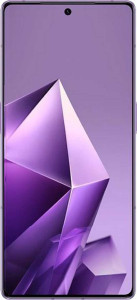
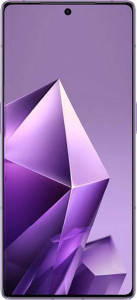
Welcome to our in-depth comparison of the Infinix Note 50 Pro 4G and the Infinix Note 50 Pro Plus 5G. Both phones share the same striking display, battery setup, and software experience, yet they diverge sharply when it comes to raw processing power, camera versatility, and connectivity. Read on to see how these two siblings stack up across every key specification.

Common Features

  • Both phones have an IP64 ingress protection rating and are water resistant.
  • Neither phone has a rugged build or can be folded.
  • Both phones feature a 6.78″ OLED/AMOLED display with a 393 ppi pixel density.
  • Both phones share a 1080 x 2436 px resolution and a 144Hz refresh rate.
  • Neither phone has branded damage-resistant glass, HDR10, or HDR10+ support.
  • Both phones come with 256GB of internal storage and 12GB of RAM.
  • Both phones support LTE, 64-bit processing, big.LITTLE technology, and HMP.
  • Both phones have 8 CPU threads and integrated graphics.
  • Both phones run Android 15 with theme customization, clipboard warnings, and location and camera/microphone privacy options.
  • Neither phone supports Mail Privacy Protection or blocks cross-site tracking, but both can block app tracking.
  • Both phones have a 5200 mAh battery with 90W wired fast charging.
  • Both phones support wireless charging at 30W and reverse wireless charging at 7.5W.
  • Both phones come with a charger included.
  • Both phones have a multi-lens main camera with a 32MP front camera and optical image stabilization.
  • Both phones support continuous autofocus when recording and use a CMOS sensor.
  • Neither phone has a 3.5mm audio jack, but both have stereo speakers and a radio.
  • Neither phone supports aptX, aptX HD, aptX Adaptive, aptX Lossless, or LDAC.
  • Both phones support Wi-Fi 4 and Wi-Fi 5, Bluetooth 5.4, USB Type-C (USB 2.0), NFC, and dual SIM.
  • Both phones have a fingerprint scanner and do not support emergency SOS via satellite.
  • Both phones have a video light, no sapphire glass display, no curved display, and no e-paper display.

Main Differences

  • Weight is 198g on the Infinix Note 50 Pro 4G and 209g on the Infinix Note 50 Pro Plus 5G.
  • Thickness is 7.3mm on the Infinix Note 50 Pro 4G and 8mm on the Infinix Note 50 Pro Plus 5G.
  • Volume is 88.69 cm³ on the Infinix Note 50 Pro 4G and 97.39 cm³ on the Infinix Note 50 Pro Plus 5G.
  • The chipset is the MediaTek Helio G100 on the Infinix Note 50 Pro 4G and the MediaTek Dimensity 8350 on the Infinix Note 50 Pro Plus 5G.
  • AnTuTu benchmark score is 438,000 on the Infinix Note 50 Pro 4G and 1,420,000 on the Infinix Note 50 Pro Plus 5G.
  • CPU speed is 2 x 2.2 & 6 x 2 GHz on the Infinix Note 50 Pro 4G and 1 x 3.35 & 3 x 3.2 & 4 x 2.2 GHz on the Infinix Note 50 Pro Plus 5G.
  • The GPU is the Mali G57 on the Infinix Note 50 Pro 4G and the Mali G615 MC6 on the Infinix Note 50 Pro Plus 5G.
  • GPU clock speed is 1000 MHz on the Infinix Note 50 Pro 4G and 1400 MHz on the Infinix Note 50 Pro Plus 5G.
  • Semiconductor size is 6nm on the Infinix Note 50 Pro 4G and 4nm on the Infinix Note 50 Pro Plus 5G.
  • Maximum memory bandwidth is 17.1 GB/s on the Infinix Note 50 Pro 4G and 68.2 GB/s on the Infinix Note 50 Pro Plus 5G.
  • RAM speed is 4266 MHz on the Infinix Note 50 Pro 4G and 8533 MHz on the Infinix Note 50 Pro Plus 5G.
  • DDR memory version is DDR4 on the Infinix Note 50 Pro 4G and DDR5 on the Infinix Note 50 Pro Plus 5G.
  • Maximum supported memory amount is 12GB on the Infinix Note 50 Pro 4G and 24GB on the Infinix Note 50 Pro Plus 5G.
  • DirectX version is DirectX 11 on the Infinix Note 50 Pro 4G and DirectX 12 on the Infinix Note 50 Pro Plus 5G.
  • The main camera is a dual-lens 50 & 8 MP setup on the Infinix Note 50 Pro 4G, while the Infinix Note 50 Pro Plus 5G features a triple-lens 50 & 50 & 8 MP setup.
  • Optical zoom is not available on the Infinix Note 50 Pro 4G, while the Infinix Note 50 Pro Plus 5G offers 3x optical zoom.
  • Maximum video recording resolution is 1440p at 30 fps on the Infinix Note 50 Pro 4G and 2160p at 60 fps on the Infinix Note 50 Pro Plus 5G.
  • 5G support is available on the Infinix Note 50 Pro Plus 5G but not on the Infinix Note 50 Pro 4G.
  • A heart rate monitor is present on the Infinix Note 50 Pro 4G but not available on the Infinix Note 50 Pro Plus 5G.
  • An infrared sensor is present on the Infinix Note 50 Pro Plus 5G but not available on the Infinix Note 50 Pro 4G.
Specs Comparison
Infinix Note 50 Pro 4G

Infinix Note 50 Pro 4G

Infinix Note 50 Pro Plus 5G

Infinix Note 50 Pro Plus 5G

Design:
water resistance Water resistant Water resistant
weight 198 g 209 g
thickness 7.3 mm 8 mm
width 74.4 mm 74.5 mm
height 163.3 mm 163.4 mm
volume 88.691496 cm³ 97.3864 cm³
Ingress Protection (IP) rating IP64 IP64
has a rugged build
can be folded

Both the Infinix Note 50 Pro 4G and the Note 50 Pro Plus 5G share the same footprint in terms of height and width — 163.3–163.4 mm tall and approximately 74.4–74.5 mm wide — making them virtually identical to hold in one hand. The key physical difference lies in thickness and weight: the Pro 4G measures just 7.3 mm thick and weighs 198 g, while the Pro Plus 5G is 8 mm thick and weighs 209 g. That 11-gram difference and 0.7 mm extra girth are attributable to the 5G model likely housing a larger battery or additional radio hardware, and while these gaps are modest on paper, over a full day of use the slimmer, lighter Pro 4G will feel noticeably more comfortable for extended one-handed use or pocketing.

Both devices share an IP64 rating, meaning they offer the same level of protection: full dust resistance and protection against water splashes from any direction. Neither has a rugged build or a foldable form factor, so they occupy the same conventional, everyday-use design category. For users who want splash and dust peace of mind without premium ruggedization, both deliver equally here.

On design, the Infinix Note 50 Pro 4G holds a clear ergonomic edge — it is meaningfully slimmer and lighter without sacrificing any protection rating. The Pro Plus 5G's added bulk is a trade-off that comes with its 5G capabilities, not a design advantage. If portability and in-hand comfort are priorities, the 4G model wins this category.

Display:
Display type OLED/AMOLED OLED/AMOLED
screen size 6.78" 6.78"
pixel density 393 ppi 393 ppi
resolution 1080 x 2436 px 1080 x 2436 px
refresh rate 144Hz 144Hz
has branded damage-resistant glass
supports HDR10
supports HDR10+
Always-On Display
supports Dolby Vision
Has a secondary screen
has a touch screen

The display category is a straight tie. Both the Infinix Note 50 Pro 4G and the Note 50 Pro Plus 5G are equipped with identical 6.78″ OLED/AMOLED panels running at 1080 x 2436 px resolution and a pixel density of 393 ppi — sharp enough that individual pixels are indistinguishable at normal viewing distances. The 144Hz refresh rate means scrolling, animations, and gaming all feel exceptionally fluid, a feature that was once reserved for flagship devices.

Neither screen supports HDR10, HDR10+, or Dolby Vision, which means content from streaming platforms will not unlock premium dynamic range tiers. That is a shared limitation worth noting for media-heavy users. On the positive side, both include an Always-On Display, which allows glanceable notifications and clock info without fully waking the screen — a practical day-to-day convenience that works well with OLED technology since only active pixels consume power.

There is no differentiator to call here: every display spec is identical across both devices. Users choosing between the two can rule out the screen as a deciding factor entirely — this group is a complete tie.

Performance:
internal storage 256GB 256GB
RAM 12GB 12GB
AnTuTu benchmark score 438000 1420000
Chipset (SoC) name MediaTek Helio G100 MediaTek Dimensity 8350
GPU name Mali G57 Mali G615 MC6
CPU speed 2 x 2.2 & 6 x 2 GHz 1 x 3.35 & 3 x 3.2 & 4 x 2.2 GHz
GPU clock speed 1000 MHz 1400 MHz
Has integrated LTE
RAM speed 4266 MHz 8533 MHz
semiconductor size 6 nm 4 nm
Supports 64-bit
DirectX version DirectX 11 DirectX 12
Has integrated graphics
Uses big.LITTLE technology
CPU threads 8 threads 8 threads
Uses HMP
Has TrustZone
maximum memory bandwidth 17.1 GB/s 68.2 GB/s
OpenCL version 2 2
maximum memory amount 12GB 24GB
DDR memory version 4 5

This is where the two phones diverge most dramatically. The Note 50 Pro 4G runs on a MediaTek Helio G100 built on a 6 nm process, while the Pro Plus 5G steps up to the MediaTek Dimensity 8350 on a more advanced 4 nm node. The smaller fabrication process is not just a number — it translates directly into greater power efficiency and thermal headroom, allowing the Dimensity 8350 to sustain higher performance without throttling under sustained workloads. The AnTuTu scores tell the story bluntly: 438,000 for the Pro 4G versus 1,420,000 for the Pro Plus 5G — the 5G model scores more than three times higher, placing it in a genuinely different performance tier.

The memory architecture gap is equally significant. The Pro 4G uses DDR4 RAM at 4266 MHz with a maximum bandwidth of 17.1 GB/s, whereas the Pro Plus 5G deploys DDR5 RAM at 8533 MHz and delivers up to 68.2 GB/s of bandwidth — four times as much. In practice, this means faster app launches, smoother multitasking, and quicker data-heavy operations. The Pro Plus 5G also supports up to 24 GB of maximum RAM versus the Pro 4G's 12 GB ceiling, giving it far more headroom for future configurations. On the GPU side, the Mali G615 MC6 clocked at 1400 MHz in the Pro Plus 5G outpaces the Pro 4G's Mali G57 at 1000 MHz, and its support for DirectX 12 versus DirectX 11 means better compatibility with modern graphics workloads and gaming APIs.

The verdict here is unambiguous: the Infinix Note 50 Pro Plus 5G wins the performance category by a wide margin across every measurable dimension — CPU speed, GPU capability, memory bandwidth, and overall benchmark throughput. The Pro 4G is adequate for everyday tasks, but users who game, multitask heavily, or want longevity as apps grow more demanding will find the Pro Plus 5G in a different league entirely.
Cameras:
megapixels (main camera) 50 & 8 MP 50 & 50 & 8 MP
wide aperture (main camera) 2.2 & 1.9f 1.9f
Has a dual-lens (or multi-lens) main camera
megapixels (front camera) 32MP 32MP
has built-in optical image stabilization
video recording (main camera) 1440 x 30 fps 2160 x 60 fps
Has a dual-tone LED flash
number of flash LEDs 2 2
has a BSI sensor
has a CMOS sensor
has continuous autofocus when recording movies
Has phase-detection autofocus for photos
supports slow-motion video recording
has a built-in HDR mode
has manual exposure
has a flash
optical zoom 0x 3x
has manual ISO
has a serial shot mode
has manual focus
has a front camera
Has laser autofocus
Shoots 360° panorama
has manual white balance
shoots raw
has touch autofocus
has manual shutter speed
can create panoramas in-camera
wide aperture (front camera) 2.2f 2.2f
Has timelapse function
Has a front-facing LED flash
has a dual-lens (or multi-lens) front camera
supports HDR10 recording
supports Dolby Vision recording
has a front-facing camera under the display
Has a RGB LED flash
has 3D photo/video recording capabilities

The rear camera systems share a 50 MP primary sensor and an 8 MP lens in common, but the Note 50 Pro Plus 5G adds a third shooter — a dedicated 50 MP telephoto lens — that fundamentally changes what the camera system can do. Paired with 3x optical zoom, this gives the Pro Plus 5G true lossless zoom capability, meaning portraits, distant subjects, and compressed-perspective shots are all captured with genuine optical magnification rather than digital cropping. The Pro 4G offers 0x optical zoom, so any zoom beyond the native focal length degrades image quality. For users who care about versatility and shooting flexibility, this is a meaningful gap.

Video recording tells a similar story. The Pro 4G tops out at 1440p at 30 fps, while the Pro Plus 5G records up to 4K at 60 fps — a substantial jump that matters for anyone shooting content intended for large screens or post-production cropping. Both phones support OIS, phase-detection autofocus, continuous autofocus during recording, slow-motion, HDR mode, and a broad set of manual controls, so the shooting experience and feature parity are strong across both devices at their respective resolution ceilings.

The front camera and flash configurations are identical at 32 MP with a 2.2f aperture, and neither device offers a front-facing flash or under-display camera. The conclusion here is clear: the Infinix Note 50 Pro Plus 5G holds a decisive camera advantage, driven by its triple-lens system with optical zoom and significantly higher video resolution ceiling. The Pro 4G is competent, but it lacks the hardware to compete on zoom range or video quality.

Operating system:
Android version Android 15 Android 15
has clipboard warnings
has location privacy options
has camera/microphone privacy options
has Mail Privacy Protection
has theme customization
can block app tracking
blocks cross-site tracking
has on-device machine learning
has notification permissions
has media picker
Can play games while they download
has dark mode
has Wi-Fi password sharing
has battery health check
has an extra dim mode
has focus modes
has dynamic theming
can offload apps
Has customizable notifications
has Live Text
has full-page screenshots
supports split screen
gets direct OS updates
has PiP
Can be used as a PC
Has sharing intents
has a child lock
Supports widgets
Is free and open source
Has offline voice recognition
has voice commands
Tracks the current position of a mobile device
is a multi-user system
has Quick Start

Running Android 15 on both devices, the software experience is functionally identical across the board. Neither phone receives direct OS updates from Google — both rely on Infinix's own update cadence — which is a shared limitation worth keeping in mind for users who prioritize timely security patches and feature rollouts. Beyond that, the feature set is extensive and modern: on-device machine learning, dynamic theming, Live Text, Picture-in-Picture, split-screen multitasking, and full-page screenshots are all present on both handsets.

Privacy-conscious users will find the same toolkit on either device — camera and microphone access controls, location privacy options, app tracking blocks, and clipboard warnings are all included. Notable shared absences include cross-site tracking protection and Wi-Fi password sharing, two features increasingly common on competing platforms. Neither omission is a dealbreaker, but they are consistent gaps across the lineup.

Since every single software specification is mirrored exactly between the two phones, the operating system category is a complete tie. The choice between the Note 50 Pro 4G and the Pro Plus 5G will not be influenced in any way by software — users on either device get the same Android 15 experience, the same privacy controls, and the same feature set out of the box.

Battery:
battery power 5200 mAh 5200 mAh
has wireless charging
Supports fast charging
charging speed 90W 90W
wireless charging speed 30W 30W
has reverse wireless charging
reverse wireless charging speed 7.5W 7.5W
comes with a charger
has a removable battery
has a battery level indicator
has a rechargeable battery

Matching spec for spec, both the Infinix Note 50 Pro 4G and the Note 50 Pro Plus 5G carry a 5200 mAh battery — a generous capacity that comfortably supports full-day usage for most users, and often stretches into a second day under moderate workloads. Wired fast charging tops out at 90W on both devices, which at that speed typically means a near-full charge in well under an hour, significantly reducing the friction of daily charging routines.

The charging versatility is equally matched. Both phones support 30W wireless charging, a rate that is fast enough for practical overnight or desk-based top-ups without being tethered to a cable. More notably, both include reverse wireless charging at 7.5W, allowing either device to act as a wireless charging pad for accessories like earbuds or a friend's phone — a feature that remains uncommon at this price tier. A charger is included in the box with both models, which is worth highlighting given the industry trend of omitting it.

There is nothing to separate these two phones on battery: every specification — capacity, wired speed, wireless speed, reverse charging, and bundled accessories — is identical. This category is a complete tie, and battery life or charging capability should play no role in deciding between the two models.

Audio:
has a socket for a 3.5 mm audio jack
has stereo speakers
has aptX
has LDAC
has aptX HD
has aptX Adaptive
has aptX Lossless
Has a radio

Audio hardware is identical on both devices, so the listening experience starts from the same foundation. Neither the Note 50 Pro 4G nor the Pro Plus 5G includes a 3.5 mm headphone jack, which means wired audio requires a USB-C adapter — a trade-off that has become commonplace but still matters to users with existing wired headphone collections. On the positive side, both feature stereo speakers, which produce noticeably wider, more immersive sound compared to mono setups — particularly relevant for media consumption, gaming, and speakerphone calls.

Wireless audio quality is capped identically on both phones. The absence of aptX, LDAC, aptX HD, or any high-resolution Bluetooth audio codec means that even premium wireless headphones supporting these standards will fall back to standard SBC or AAC transmission. For casual listeners this is unlikely to matter, but audiophiles pairing high-end Bluetooth headphones should be aware of this shared ceiling. A built-in FM radio is present on both, a feature increasingly rare on modern smartphones that adds offline listening utility without consuming data.

With no differentiating spec anywhere in this category, audio is another complete tie. Neither device holds an advantage — the shared strengths and shared limitations apply equally to both, and audio preference should carry no weight in the buying decision between these two models.

Connectivity & Features:
release date March 2025 March 2025
has 5G support
Wi-Fi version Wi-Fi 4 (802.11n), Wi-Fi 5 (802.11ac) Wi-Fi 4 (802.11n), Wi-Fi 5 (802.11ac)
SIM cards 2 SIM 2 SIM
Bluetooth version 5.4 5.4
Has USB Type-C
USB version 2 2
has NFC
Has a fingerprint scanner
has emergency SOS via satellite
has crash detection
is DLNA-certified
has a gyroscope
supports ANT+
Has a heart rate monitor
has GPS
has a compass
supports Wi-Fi
Has an infrared sensor
has an accelerometer
has a cellular module
Has a barometer
has an HDMI output
Uses 3D facial recognition
Has an iris scanner
Stylus included
supports Galileo
Has motion tracking
Has optical tracking
Has a built-in projector

The most consequential difference in this category is right in the product names: the Note 50 Pro Plus 5G supports 5G connectivity while the Pro 4G does not. For users in areas with 5G coverage, this means significantly faster mobile data speeds and lower latency — relevant not just today but increasingly so as 5G infrastructure continues to expand. Beyond cellular, both phones share the same Wi-Fi 5 (802.11ac) and Bluetooth 5.4 support, so wireless performance on local networks is evenly matched.

Two smaller but notable divergences separate the feature sets further. The Pro 4G includes a heart rate monitor, which the Pro Plus 5G lacks — a somewhat unusual reversal where the less powerful model carries an extra health sensor. Going the other direction, the Pro Plus 5G adds an infrared sensor, absent on the Pro 4G, enabling it to function as a universal remote control for TVs and appliances — a practical convenience that a dedicated segment of users genuinely values. These swapped features partially offset each other depending on individual priorities.

Shared fundamentals — NFC, fingerprint scanner, GPS with Galileo support, gyroscope, accelerometer, dual SIM, and USB Type-C — are present on both, ensuring neither device feels stripped down for everyday use. Overall though, the Note 50 Pro Plus 5G holds the connectivity edge, primarily due to 5G support, which represents a more future-proof and broadly impactful advantage than the heart rate sensor the Pro 4G carries in return.

Miscellaneous:
has a video light
Has sapphire glass display
Has a curved display
Has an e-paper display

The miscellaneous category offers very little to analyze — both the Infinix Note 50 Pro 4G and the Note 50 Pro Plus 5G share every spec listed here without exception. Both include a video light, useful for illuminating subjects during video calls or recording in low-light conditions, and neither features a sapphire glass display, curved screen, or e-paper panel.

This is a complete tie with no differentiators present. The data in this group carries no weight in the decision between the two models.

Comparison Summary & Verdict

After examining every specification, the two phones emerge as distinct choices for different types of users. The Infinix Note 50 Pro 4G stands out for those who value a lighter, slimmer design, a built-in heart rate monitor, and a more affordable entry point into the Infinix Note 50 Pro lineup. It handles everyday tasks competently, though its MediaTek Helio G100 chipset trails significantly in benchmark performance. The Infinix Note 50 Pro Plus 5G, on the other hand, is the clear pick for power users: its MediaTek Dimensity 8350 delivers over three times the AnTuTu score, its triple-lens camera adds 3x optical zoom and 4K 60fps video, and 5G connectivity future-proofs the device. If performance, camera capability, and 5G support are your priorities, the Plus 5G wins decisively; if you prefer a lighter handset with a heart rate sensor and 4G suffices, the standard 4G model is a sensible choice.

Infinix Note 50 Pro 4G
Buy Infinix Note 50 Pro 4G if...

Buy the Infinix Note 50 Pro 4G if you prefer a lighter, slimmer phone and want a built-in heart rate monitor, and have no need for 5G connectivity.

Infinix Note 50 Pro Plus 5G
Buy Infinix Note 50 Pro Plus 5G if...

Buy the Infinix Note 50 Pro Plus 5G if you want significantly faster performance, a triple-lens camera with 3x optical zoom and 4K 60fps video, and future-proof 5G connectivity.