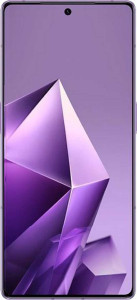
Connectivity is where the naming difference between these two devices becomes most consequential. The Note 50s 5G supports 5G networks, while the Note 50 Pro 4G is capped at 4G LTE — a distinction that affects not just current speeds but future-proofing as 5G coverage continues to expand. The gap is further reinforced by Wi-Fi: the 5G model supports Wi-Fi 6 (802.11ax) in addition to Wi-Fi 4 and 5, whereas the Pro 4G tops out at Wi-Fi 5. Wi-Fi 6 delivers higher throughput, lower latency, and better performance in congested environments like offices or public spaces. The practical upshot is reflected in the cellular data speeds — the Note 50s 5G lists a peak download of 3270 Mbits/s versus the Pro 4G's 650 Mbits/s, a difference that will matter for heavy data users even as real-world speeds vary by network conditions.
Away from raw speed, the two devices trade small but specific advantages. The Note 50 Pro 4G includes a heart rate monitor, which the 5G model omits — a meaningful addition for fitness-conscious users who want biometric tracking without a separate wearable. Conversely, the Note 50s 5G carries an infrared sensor, enabling it to function as a universal remote for TVs and home appliances, a feature the Pro 4G lacks. Both share NFC, Bluetooth 5.4, USB Type-C (USB 2.0), dual SIM, GPS, gyroscope, and Galileo support — a solid common baseline.
Overall, the Note 50s 5G holds a clear connectivity advantage, with 5G and Wi-Fi 6 offering tangibly faster and more future-ready wireless performance. The Pro 4G's heart rate monitor is a useful niche feature, but it cannot offset the breadth of the 5G model's networking superiority for most users.