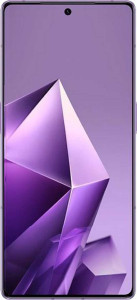
Infinix Note 50 Pro 4G
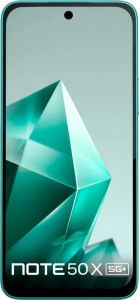
Infinix Note 50x 5G

Infinix Note 50 Pro 4G Infinix Note 50x 5G

Common Features

  • Both products are water resistant.
  • Both products have an IP64 Ingress Protection rating.
  • Neither product has a rugged build.
  • Neither product can be folded.
  • Both products have a touch screen.
  • Both products support 64-bit technology.
  • Both products have integrated LTE support.
  • Both products have integrated graphics.
  • Both products use big.LITTLE technology.
  • Both products have 8 CPU threads.
  • Both products support HMP technology.
  • Both products have a CMOS sensor in the main camera.
  • Both products support continuous autofocus when recording movies.
  • Both products have phase-detection autofocus for photos.
  • Both products support slow-motion video recording.
  • Both products have a built-in HDR mode in the camera.
  • Both products have manual exposure control in the camera.
  • Both products support fast charging.
  • Both products have a rechargeable battery.
  • Both products support USB Type-C.

Main Differences

  • Infinix Note 50 Pro 4G weighs 198 g, while Infinix Note 50x 5G weighs 198.9 g.
  • Infinix Note 50 Pro 4G has a thickness of 7.3 mm, while Infinix Note 50x 5G has a thickness of 8 mm.
  • Infinix Note 50 Pro 4G has a width of 74.4 mm, while Infinix Note 50x 5G has a width of 76.4 mm.
  • Infinix Note 50 Pro 4G has a height of 163.3 mm, while Infinix Note 50x 5G has a height of 165.4 mm.
  • Infinix Note 50 Pro 4G has a volume of 88.69 cm³, while Infinix Note 50x 5G has a volume of 101.09 cm³.
  • Infinix Note 50 Pro 4G has an OLED/AMOLED display, while Infinix Note 50x 5G has an LCD, IPS display.
  • Infinix Note 50 Pro 4G has a screen size of 6.78″, while Infinix Note 50x 5G has a screen size of 6.67″.
  • Infinix Note 50 Pro 4G has a pixel density of 393 ppi, while Infinix Note 50x 5G has a pixel density of 263 ppi.
  • Infinix Note 50 Pro 4G has a resolution of 1080 x 2436 px, while Infinix Note 50x 5G has a resolution of 720 x 1600 px.
  • Infinix Note 50 Pro 4G has a 144Hz refresh rate, while Infinix Note 50x 5G has a 120Hz refresh rate.
  • Infinix Note 50 Pro 4G has an Always-On Display feature, while Infinix Note 50x 5G does not.
  • Infinix Note 50 Pro 4G has 256GB of internal storage, while Infinix Note 50x 5G has 128GB of internal storage.
  • Infinix Note 50 Pro 4G has 12GB of RAM, while Infinix Note 50x 5G has 8GB of RAM.
  • Infinix Note 50 Pro 4G has an AnTuTu benchmark score of 438000, while Infinix Note 50x 5G has a score of 720000.
  • Infinix Note 50 Pro 4G has a MediaTek Helio G100 chipset, while Infinix Note 50x 5G has a MediaTek Dimensity 7300 chipset.
  • Infinix Note 50 Pro 4G has a Mali G57 GPU, while Infinix Note 50x 5G has a Mali G615 MC2 GPU.
  • Infinix Note 50 Pro 4G has a CPU speed of 2 x 2.2 & 6 x 2 GHz, while Infinix Note 50x 5G has a CPU speed of 4 x 2.5 & 4 x 2 GHz.
  • Infinix Note 50 Pro 4G has a GPU clock speed of 1000 MHz, while Infinix Note 50x 5G has a GPU clock speed of 1047 MHz.
  • Infinix Note 50 Pro 4G has a RAM speed of 4266 MHz, while Infinix Note 50x 5G has a RAM speed of 6400 MHz.
  • Infinix Note 50 Pro 4G has a semiconductor size of 6 nm, while Infinix Note 50x 5G has a semiconductor size of 4 nm.
  • Infinix Note 50 Pro 4G supports DirectX 11, while Infinix Note 50x 5G supports DirectX 12.
  • Infinix Note 50 Pro 4G has a maximum memory amount of 12GB, while Infinix Note 50x 5G has a maximum memory amount of 16GB.
  • Infinix Note 50 Pro 4G uses DDR memory version 4, while Infinix Note 50x 5G uses DDR memory version 5.
  • Infinix Note 50 Pro 4G has a 50 & 8 MP main camera, while Infinix Note 50x 5G has a 50 MP main camera.
  • Infinix Note 50 Pro 4G has a wide aperture of 2.2 & 1.9f in the main camera, while Infinix Note 50x 5G has a wide aperture of 1.6f in the main camera.
  • Infinix Note 50 Pro 4G has a dual-lens main camera, while Infinix Note 50x 5G has a single-lens main camera.
  • Infinix Note 50 Pro 4G has a 32MP front camera, while Infinix Note 50x 5G has an 8MP front camera.
  • Infinix Note 50 Pro 4G has built-in optical image stabilization, while Infinix Note 50x 5G does not.
  • Infinix Note 50 Pro 4G records video at 1440 x 30 fps, while Infinix Note 50x 5G records video at 2160 x 30 fps.
  • Infinix Note 50 Pro 4G has 2 flash LEDs, while Infinix Note 50x 5G has 1 flash LED.
  • Infinix Note 50 Pro 4G has a wide aperture of 2.2f on the front camera, while Infinix Note 50x 5G has a wide aperture of 2f on the front camera.
  • Infinix Note 50 Pro 4G has wireless charging, while Infinix Note 50x 5G does not.
  • Infinix Note 50 Pro 4G supports 90W charging speed, while Infinix Note 50x 5G supports 45W charging speed.
  • Infinix Note 50 Pro 4G has a heart rate monitor, while Infinix Note 50x 5G does not.
  • Infinix Note 50 Pro 4G does not have an infrared sensor, while Infinix Note 50x 5G does.
Specs Comparison
Infinix Note 50 Pro 4G

Infinix Note 50 Pro 4G

Infinix Note 50x 5G

Infinix Note 50x 5G

Design:
water resistance Water resistant Water resistant
weight 198 g 198.9 g
thickness 7.3 mm 8 mm
width 74.4 mm 76.4 mm
height 163.3 mm 165.4 mm
volume 88.691496 cm³ 101.09248 cm³
Ingress Protection (IP) rating IP64 IP64
has a rugged build
can be folded

Both the Infinix Note 50 Pro 4G and the Note 50x 5G share the same IP64 water resistance rating, meaning neither is fully submersible but both can handle splashes and light rain with confidence. Neither adopts a rugged build or a foldable form factor, so they sit squarely in the standard slab smartphone category.

Where the two diverge meaningfully is in physical footprint. Despite weighing almost identically — 198 g versus 198.9 g — the Note 50 Pro 4G is noticeably more compact: at 7.3 mm thick, it undercuts the Note 50x 5G's 8 mm by a significant 0.7 mm, and it is also narrower (74.4 mm vs 76.4 mm) and shorter (163.3 mm vs 165.4 mm). This compounds into a volume difference of roughly 88.7 cm³ against 101.1 cm³ — the Note 50 Pro 4G occupies about 12% less space. In the hand, that slimmer profile and tighter frame will feel noticeably easier to grip one-handed and more pocketable day-to-day.

On design, the Note 50 Pro 4G holds a clear edge: it achieves the same weight class and identical weather protection in a significantly slimmer and more refined chassis, which translates directly to better ergonomics and portability.

Display:
Display type OLED/AMOLED LCD, IPS
screen size 6.78" 6.67"
pixel density 393 ppi 263 ppi
resolution 1080 x 2436 px 720 x 1600 px
refresh rate 144Hz 120Hz
brightness (typical) 550 nits 560 nits
has branded damage-resistant glass
supports HDR10
supports HDR10+
Always-On Display
supports Dolby Vision
Has a secondary screen
has a touch screen

The display is arguably where the gap between these two phones is most dramatic. The Note 50 Pro 4G uses an OLED/AMOLED panel, while the Note 50x 5G relies on an LCD IPS screen — a fundamental technology difference that shapes the entire viewing experience. OLED delivers true blacks, higher contrast, and more vivid colors because each pixel produces its own light, while LCD depends on a backlight that limits both contrast depth and power efficiency. For media consumption, dark-theme apps, and anything color-sensitive, the OLED panel is in a different league.

The resolution gap reinforces this advantage. The Note 50 Pro 4G resolves at 1080 x 2436 px and 393 ppi, versus the Note 50x 5G's 720 x 1600 px at just 263 ppi — a difference that is plainly visible to the naked eye when reading text or viewing detailed images. The Pro 4G also steps up to a 144Hz refresh rate compared to 120Hz on the 50x 5G, meaning slightly smoother scrolling and animations, though both are above the threshold where most users notice diminishing returns. One additional exclusive on the Pro 4G is its Always-On Display support, a convenience feature the 50x 5G lacks entirely.

Brightness is the one area where the two are essentially tied — 550 nits versus 560 nits — so outdoor legibility is comparable. But on every other meaningful display metric, the Note 50 Pro 4G holds an overwhelming advantage, making it the clear choice for anyone who prioritizes screen quality.

Performance:
internal storage 256GB 128GB
RAM 12GB 8GB
AnTuTu benchmark score 438000 720000
Chipset (SoC) name MediaTek Helio G100 MediaTek Dimensity 7300
GPU name Mali G57 Mali G615 MC2
CPU speed 2 x 2.2 & 6 x 2 GHz 4 x 2.5 & 4 x 2 GHz
GPU clock speed 1000 MHz 1047 MHz
Has integrated LTE
RAM speed 4266 MHz 6400 MHz
semiconductor size 6 nm 4 nm
Supports 64-bit
DirectX version DirectX 11 DirectX 12
Has integrated graphics
Uses big.LITTLE technology
CPU threads 8 threads 8 threads
Uses HMP
maximum memory amount 12GB 16GB
DDR memory version 4 5

Under the hood, the Note 50x 5G pulls decisively ahead. Its MediaTek Dimensity 7300 chip is built on a 4 nm process versus the Note 50 Pro 4G's MediaTek Helio G100 on 6 nm — a smaller node translates directly to better power efficiency and thermal headroom. The benchmark numbers tell the same story: the Note 50x 5G scores approximately 720,000 on AnTuTu against the Note 50 Pro 4G's 438,000, a gap of over 60% that is large enough to be felt in demanding games, heavy multitasking, and sustained app performance.

The memory architecture also favors the Note 50x 5G at every level. It pairs its chip with DDR5 RAM at 6400 MHz, while the Pro 4G uses DDR4 at 4266 MHz — faster memory reduces latency and improves how quickly data is fed to the processor. The Note 50x 5G's GPU also supports DirectX 12 versus DirectX 11 on the Pro 4G, meaning it is better positioned for modern graphics workloads. Where the Note 50 Pro 4G does hold a concrete advantage is raw storage and starting RAM: it ships with 256 GB of internal storage and 12 GB of RAM, compared to 128 GB and 8 GB on the Note 50x 5G. For users who prioritize onboard space and multitasking headroom without relying on speed, that matters.

Overall, the Note 50x 5G holds a clear performance edge in processing power, memory speed, and GPU capability. The Note 50 Pro 4G counters with more storage and slightly more RAM, but for raw compute performance the Dimensity 7300 outclasses the Helio G100 by a substantial margin.

Cameras:
megapixels (main camera) 50 & 8 MP 50 MP
wide aperture (main camera) 2.2 & 1.9f 1.6f
Has a dual-lens (or multi-lens) main camera
megapixels (front camera) 32MP 8MP
has built-in optical image stabilization
video recording (main camera) 1440 x 30 fps 2160 x 30 fps
Has a dual-tone LED flash
number of flash LEDs 2 1
has a BSI sensor
has a CMOS sensor
has continuous autofocus when recording movies
Has phase-detection autofocus for photos
supports slow-motion video recording
has a built-in HDR mode
has manual exposure
has a flash
optical zoom 0x 0x
has manual ISO
has a serial shot mode
has manual focus
has a front camera
Has laser autofocus
Shoots 360° panorama
has manual white balance
shoots raw
has touch autofocus
has manual shutter speed
can create panoramas in-camera
wide aperture (front camera) 2.2f 2f
Has timelapse function
Has a front-facing LED flash
has a dual-lens (or multi-lens) front camera
supports HDR10 recording
supports Dolby Vision recording
has a front-facing camera under the display
Has a RGB LED flash
has 3D photo/video recording capabilities

The camera comparison here is genuinely split, with each phone winning in distinct areas. On the rear, both share a 50 MP primary sensor, but the Note 50x 5G's main lens opens to f/1.6 — meaningfully wider than the Note 50 Pro 4G's f/1.9 — which allows more light to hit the sensor and should yield better results in dim conditions. The Note 50x 5G also edges ahead on video, capturing up to 4K at 30 fps versus the Pro 4G's 1440p at 30 fps, a real advantage for users who shoot video and want higher-resolution footage.

The Note 50 Pro 4G fights back in two important ways. First, it includes optical image stabilization (OIS), which the Note 50x 5G lacks entirely — OIS physically compensates for hand movement, producing noticeably sharper handheld photos and smoother video without relying purely on software. Second, it adds a secondary 8 MP lens, expanding its versatility beyond a single focal length. Its front camera is also a significant step up: 32 MP against just 8 MP on the Note 50x 5G, making it a considerably stronger choice for selfies and video calls.

The verdict depends on use case. For main-camera low-light photography and video resolution, the Note 50x 5G has the edge. For overall versatility — stabilized shots, multi-lens flexibility, and a far superior selfie camera — the Note 50 Pro 4G is the stronger all-rounder.

Operating system:
Android version Android 15 Android 15
has clipboard warnings
has location privacy options
has camera/microphone privacy options
has Mail Privacy Protection
has theme customization
can block app tracking
blocks cross-site tracking
has on-device machine learning
has notification permissions
has media picker
Can play games while they download
has dark mode
has Wi-Fi password sharing
has battery health check
has an extra dim mode
has focus modes
has dynamic theming
can offload apps
Has customizable notifications
has Live Text
has full-page screenshots
supports split screen
gets direct OS updates
has PiP
Can be used as a PC
Has sharing intents
has a child lock
Supports widgets
Is free and open source
Has offline voice recognition
has voice commands
Tracks the current position of a mobile device
is a multi-user system
has Quick Start

On the software front, these two phones are identical in every measurable way. Both ship with Android 15 and offer the same complete set of privacy controls — including location permissions, camera and microphone access management, and app tracking blocks — giving users equivalent control over their data on either device.

The feature parity extends throughout the OS experience: both support split-screen multitasking, Picture-in-Picture, dynamic theming, widgets, offline voice recognition, and on-device machine learning. Neither receives direct OS updates from Google, and neither includes Wi-Fi password sharing or focus modes. In short, there is no software capability that one phone has and the other lacks.

This group is a complete tie. A buyer's software experience will be functionally indistinguishable between the two, so the operating system should carry no weight in the decision between the Infinix Note 50 Pro 4G and the Note 50x 5G.

Battery:
battery power 5200 mAh 5500 mAh
has wireless charging
Supports fast charging
charging speed 90W 45W
has a removable battery
has a battery level indicator
has a rechargeable battery

Battery capacity is close but not identical: the Note 50x 5G carries a 5500 mAh cell versus 5200 mAh in the Note 50 Pro 4G. The 300 mAh difference is modest and unlikely to translate to dramatically different screen-on time in practice, though the Note 50x 5G holds a marginal edge for raw endurance — particularly relevant given that its 5G radio can draw more power during connectivity.

Where the two diverge sharply is in charging. The Note 50 Pro 4G supports 90W wired fast charging and adds wireless charging — a combination the Note 50x 5G cannot match. At 90W, the Pro 4G's slightly smaller battery will charge to full in a fraction of the time it takes the Note 50x 5G at 45W. Wireless charging, while typically slower, adds meaningful convenience for users with compatible pads at home or the office. The Note 50x 5G's 45W charging is respectable but is outpaced on both wired speed and charging flexibility.

This group has no single outright winner — it depends on priorities. For maximum endurance and minimal charging anxiety, the Note 50x 5G's larger battery is the safer bet. For faster top-ups and charging versatility, the Note 50 Pro 4G's 90W wired and wireless charging system is the stronger package.

Audio:
has a socket for a 3.5 mm audio jack
has stereo speakers
has aptX
has LDAC
has aptX HD
has aptX Adaptive
has aptX Lossless
Has a radio

Audio is another category where the two phones are in complete lockstep. Both feature stereo speakers and a built-in FM radio, while neither offers a 3.5 mm headphone jack — meaning wired headphone users on either device will need a USB-C adapter or a wireless solution.

On the wireless audio quality front, neither phone supports any high-resolution Bluetooth codecs: aptX, aptX HD, LDAC, aptX Adaptive, and aptX Lossless are all absent on both. Users who rely on Bluetooth headphones will be limited to standard codecs, which is a shared limitation rather than a differentiator between the two.

This group is a complete tie. Every audio specification is identical across the Infinix Note 50 Pro 4G and the Note 50x 5G, so sound capability should play no role in choosing between them.

Connectivity & Features:
release date March 2025 March 2025
has 5G support
Wi-Fi version Wi-Fi 4 (802.11n), Wi-Fi 5 (802.11ac) Wi-Fi 4 (802.11n), Wi-Fi 5 (802.11ac), Wi-Fi 6 (802.11ax)
SIM cards 2 SIM 2 SIM
Bluetooth version 5.4 5.4
Has USB Type-C
USB version 2 2
has NFC
download speed 650 MBits/s 3270 MBits/s
upload speed 150 MBits/s 3270 MBits/s
Has a fingerprint scanner
has emergency SOS via satellite
has crash detection
is DLNA-certified
has a gyroscope
supports ANT+
Has a heart rate monitor
has GPS
has a compass
supports Wi-Fi
Has an infrared sensor
has an accelerometer
has a cellular module
Has a barometer
has an HDMI output
Uses 3D facial recognition
Has an iris scanner
Stylus included
supports Galileo
Has motion tracking
Has optical tracking
Has a built-in projector

Cellular and wireless connectivity is where the Note 50x 5G justifies its name most clearly. It supports 5G — which the Note 50 Pro 4G entirely lacks — and pairs that with Wi-Fi 6 (802.11ax), while the Pro 4G tops out at Wi-Fi 5. The real-world impact is substantial: the Note 50x 5G's theoretical download and upload speeds reach 3270 Mbits/s, compared to 650 Mbits/s down and 150 Mbits/s up on the Pro 4G. For users in 5G-covered areas or on congested Wi-Fi 6 networks, that headroom translates to faster downloads, smoother streaming, and lower latency.

Shared foundations are solid on both sides: each phone includes NFC, Bluetooth 5.4, dual-SIM support, USB Type-C, GPS with Galileo, a fingerprint scanner, and a gyroscope and accelerometer. The Note 50x 5G also adds an infrared sensor, useful for controlling TVs and home appliances — a small but practical bonus. The Note 50 Pro 4G counters with a heart rate monitor, absent on the Note 50x 5G, which may appeal to health-conscious users who want basic biometric tracking without a wearable.

Connectivity overall goes decisively to the Note 50x 5G — its 5G support and Wi-Fi 6 capability represent a genuine generational step forward in network performance. The Pro 4G's heart rate monitor is a niche advantage, but it cannot offset the breadth of the Note 50x 5G's connectivity lead.

Miscellaneous:
has a video light
Has sapphire glass display
Has a curved display
Has an e-paper display

The miscellaneous specs for these two phones offer no points of differentiation whatsoever. Both include a video light, and neither features a sapphire glass display, a curved screen, or an e-paper panel — four for four, identical across the board.

This is a complete tie. Nothing in this specification group should factor into a decision between the Infinix Note 50 Pro 4G and the Note 50x 5G.

Comparison Summary & Verdict

This is a specification comparison between Infinix Note 50 Pro 4G and Infinix Note 50x 5G. Both products are water resistant, have a CMOS sensor in the main camera, and support fast charging. The Infinix Note 50 Pro 4G has a 12GB RAM configuration, while the Infinix Note 50x 5G features 8GB of RAM. Additionally, the Infinix Note 50 Pro 4G has an OLED/AMOLED display, while the Infinix Note 50x 5G uses an LCD, IPS display. The battery capacity is 5200 mAh in the Pro model compared to 5500 mAh in the 5G model, and the Pro model supports 90W charging speed versus 45W on the 5G model.