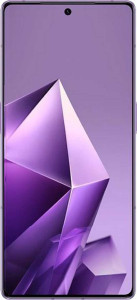
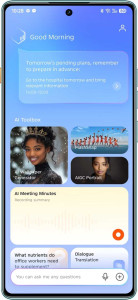
Infinix Note 50 Pro 4G
Tecno Camon 40

Infinix Note 50 Pro 4G Tecno Camon 40

Overview

Welcome to our in-depth comparison of the Infinix Note 50 Pro 4G and the Tecno Camon 40 — two mid-range contenders sharing the same chipset and display panel type, yet diverging in some meaningful ways. From charging speed and wireless power delivery to display refresh rates and water resistance ratings, this head-to-head breaks down every key specification to help you make a confident, informed choice between these two closely matched smartphones.

Common Features

  • Both phones are water resistant.
  • Both phones have a thickness of 7.3 mm.
  • Neither phone has a rugged build.
  • Neither phone can be folded.
  • Both phones feature an OLED/AMOLED display.
  • Both phones have a screen size of 6.78″.
  • Both phones have a pixel density of 393 ppi.
  • Both phones have a resolution of 1080 x 2436 px.
  • Neither phone has branded damage-resistant glass.
  • HDR10 support is not available on either phone.
  • HDR10+ support is not available on either phone.
  • Always-On Display is available on both phones.
  • Both phones have 256GB of internal storage.
  • Both phones are powered by the MediaTek Helio G100 chipset.
  • Both phones use the Mali G57 GPU.
  • Both phones have a CPU speed of 2 x 2.2 & 6 x 2 GHz.
  • Both phones have a GPU clock speed of 1000 MHz.
  • Both phones have integrated LTE.
  • Both phones have a RAM speed of 4266 MHz.
  • Both phones are built on a 6 nm semiconductor process.
  • Both phones have a main camera with 50 & 8 MP.
  • Both phones feature a dual-lens main camera.
  • Both phones have a 32 MP front camera.
  • Optical image stabilization is built into both phones.
  • Neither phone has a dual-tone LED flash.
  • Both phones have 2 flash LEDs.
  • Neither phone has a BSI sensor.
  • Both phones have a CMOS sensor.
  • Both phones run Android 15.
  • Clipboard warnings are present on both phones.
  • Location privacy options are available on both phones.
  • Camera and microphone privacy options are available on both phones.
  • Mail Privacy Protection is not available on either phone.
  • Theme customization is available on both phones.
  • Both phones can block app tracking.
  • Cross-site tracking blocking is not available on either phone.
  • Both phones have a 5200 mAh battery.
  • Fast charging is supported on both phones.
  • Both phones come with a charger.
  • Neither phone has a removable battery.
  • Both phones have a battery level indicator.
  • Both phones have a rechargeable battery.
  • Neither phone has a 3.5 mm audio jack.
  • Both phones have stereo speakers.
  • aptX support is not available on either phone.
  • LDAC support is not available on either phone.
  • aptX HD support is not available on either phone.
  • aptX Adaptive support is not available on either phone.
  • aptX Lossless support is not available on either phone.
  • Both phones have a built-in radio.
  • Neither phone supports 5G.
  • Both phones support dual SIM cards.
  • Both phones have a USB Type-C port.
  • Both phones use USB version 2.
  • NFC is available on both phones.
  • Both phones have a download speed of 650 MBits/s.
  • Both phones have an upload speed of 150 MBits/s.
  • Both phones have a fingerprint scanner.
  • Both phones have a video light.
  • Neither phone has a sapphire glass display.
  • Neither phone has an e-paper display.

Main Differences

  • Weight is 198 g on Infinix Note 50 Pro 4G and 177.2 g on Tecno Camon 40.
  • Width is 74.4 mm on Infinix Note 50 Pro 4G and 74.6 mm on Tecno Camon 40.
  • Height is 163.3 mm on Infinix Note 50 Pro 4G and 164.1 mm on Tecno Camon 40.
  • Volume is 88.691496 cm³ on Infinix Note 50 Pro 4G and 89.365578 cm³ on Tecno Camon 40.
  • The IP rating is IP64 on Infinix Note 50 Pro 4G and IP66 on Tecno Camon 40.
  • Refresh rate is 144Hz on Infinix Note 50 Pro 4G and 120Hz on Tecno Camon 40.
  • RAM is 12GB on Infinix Note 50 Pro 4G and 8GB on Tecno Camon 40.
  • AnTuTu benchmark score is 438000 on Infinix Note 50 Pro 4G and 415000 on Tecno Camon 40.
  • Wireless charging is available on Infinix Note 50 Pro 4G but not available on Tecno Camon 40.
  • Charging speed is 90W on Infinix Note 50 Pro 4G and 45W on Tecno Camon 40.
  • A heart rate monitor is present on Infinix Note 50 Pro 4G but not available on Tecno Camon 40.
  • A curved display is present on Tecno Camon 40 but not available on Infinix Note 50 Pro 4G.
Specs Comparison
Infinix Note 50 Pro 4G

Infinix Note 50 Pro 4G

Tecno Camon 40

Tecno Camon 40

Design:
water resistance Water resistant Water resistant
weight 198 g 177.2 g
thickness 7.3 mm 7.3 mm
width 74.4 mm 74.6 mm
height 163.3 mm 164.1 mm
volume 88.691496 cm³ 89.365578 cm³
Ingress Protection (IP) rating IP64 IP66
has a rugged build
can be folded

In terms of physical footprint, the Infinix Note 50 Pro 4G and the Tecno Camon 40 are nearly twins. Both share an identical 7.3 mm thickness and almost the same width and height, meaning neither phone will feel noticeably larger in hand or pocket. This parity extends to their overall volume, which differs by less than 1%, so form factor alone is not a deciding factor between the two.

Where a meaningful real-world gap opens up is weight and water resistance. The Camon 40 comes in at 177.2 g versus the Note 50 Pro 4G's 198 g — a roughly 21 g difference that, while it may sound minor on paper, is noticeable during extended single-handed use or long calls. More significantly, the Camon 40 carries an IP66 rating compared to the Note 50 Pro 4G's IP64. Both protect against dust, but IP66 adds resistance to powerful water jets, whereas IP64 only covers water splashes. In practice, this means the Camon 40 can better survive an accidental rinse or exposure to heavy rain.

Overall, the Tecno Camon 40 holds a clear edge in this category. Its lighter build reduces fatigue during prolonged use, and its superior IP66 rating offers meaningfully stronger protection against water ingress — a practical advantage for everyday durability that the Infinix Note 50 Pro 4G simply does not match.

Display:
Display type OLED/AMOLED OLED/AMOLED
screen size 6.78" 6.78"
pixel density 393 ppi 393 ppi
resolution 1080 x 2436 px 1080 x 2436 px
refresh rate 144Hz 120Hz
has branded damage-resistant glass
supports HDR10
supports HDR10+
Always-On Display
supports Dolby Vision
Has a secondary screen
has a touch screen

These two phones are remarkably matched on display fundamentals. Both sport a 6.78″ OLED/AMOLED panel at an identical 1080 x 2436 px resolution and 393 ppi pixel density — meaning sharpness, color vibrancy, and deep blacks will look virtually indistinguishable side by side. Neither device supports HDR10, HDR10+, or Dolby Vision, and both include an Always-On Display for at-a-glance notifications without fully waking the screen.

The sole differentiator in this category is the refresh rate. The Infinix Note 50 Pro 4G runs at 144Hz, while the Tecno Camon 40 tops out at 120Hz. In practice, the jump from 120Hz to 144Hz produces marginally smoother scrolling and slightly more fluid animations — a difference most users will only notice when switching directly between the two devices. For gaming, however, the 144Hz ceiling can be a genuine perk, as supported titles will feel more responsive on the Infinix.

The Infinix Note 50 Pro 4G takes a narrow but clear edge here purely on the strength of its higher refresh rate. That said, for the majority of users — those primarily browsing, streaming, or using social media — the 120Hz Camon 40 display will feel just as fluid in day-to-day use. The advantage is real but modest.

Performance:
internal storage 256GB 256GB
RAM 12GB 8GB
AnTuTu benchmark score 438000 415000
Chipset (SoC) name MediaTek Helio G100 MediaTek Helio G100
GPU name Mali G57 Mali G57
CPU speed 2 x 2.2 & 6 x 2 GHz 2 x 2.2 & 6 x 2 GHz
GPU clock speed 1000 MHz 1000 MHz
Has integrated LTE
RAM speed 4266 MHz 4266 MHz
semiconductor size 6 nm 6 nm
Supports 64-bit
DirectX version DirectX 11 DirectX 11
Has integrated graphics
OpenGL ES version 3.2 3.2
Uses big.LITTLE technology
CPU threads 8 threads 8 threads
Uses HMP
Has TrustZone
maximum memory bandwidth 17.1 GB/s 17.1 GB/s
OpenCL version 2 2
maximum memory amount 12GB 12GB
Thermal Design Power (TDP) 5W 5W
DDR memory version 4 4

At the silicon level, these two phones are built from the same blueprint. Both run on the MediaTek Helio G100 chipset — same CPU configuration, same Mali G57 GPU at 1000 MHz, same 6 nm fabrication process, and identical memory bandwidth. Their AnTuTu scores reflect this shared foundation: the Infinix Note 50 Pro 4G scores 438,000 against the Tecno Camon 40's 415,000 — a gap of roughly 5.5%, which in practical terms is imperceptible during everyday tasks like browsing, streaming, or running standard apps.

The one area where a tangible difference emerges is RAM. The Infinix ships with 12 GB of RAM, while the Camon 40 comes equipped with 8 GB. That 4 GB gap matters in specific scenarios: heavier multitasking, keeping more apps alive in the background, and future-proofing against increasingly memory-hungry applications. For users who habitually switch between many apps or run demanding games alongside background processes, the Infinix's extra headroom translates into fewer reloads and a smoother sustained experience. Internal storage is identical at 256 GB on both devices.

The Infinix Note 50 Pro 4G holds the clear advantage in this category. While the underlying processor delivers essentially the same raw performance on both phones, the additional RAM gives the Infinix a meaningful edge in multitasking endurance and long-term usability — a difference that becomes more pronounced as software demands grow over time.

Cameras:
megapixels (main camera) 50 & 8 MP 50 & 8 MP
Has a dual-lens (or multi-lens) main camera
megapixels (front camera) 32MP 32MP
has built-in optical image stabilization
Has a dual-tone LED flash
number of flash LEDs 2 2
has a BSI sensor
has a CMOS sensor
has continuous autofocus when recording movies
Has phase-detection autofocus for photos
supports slow-motion video recording
has a built-in HDR mode
has manual exposure
has a flash
optical zoom 0x 0x
has manual ISO
has a serial shot mode
has manual focus
has a front camera
Has laser autofocus
Shoots 360° panorama
has manual white balance
shoots raw
has touch autofocus
has manual shutter speed
can create panoramas in-camera
Has timelapse function
Has a front-facing LED flash
has a dual-lens (or multi-lens) front camera
supports HDR10 recording
supports Dolby Vision recording
has a front-facing camera under the display
Has a RGB LED flash
has 3D photo/video recording capabilities

Rarely does a camera comparison yield such a definitive result: the Infinix Note 50 Pro 4G and the Tecno Camon 40 are spec-for-spec identical across every single camera attribute in this dataset. Both feature a dual-lens rear system at 50 & 8 MP, a 32 MP front camera, and built-in optical image stabilization — which helps reduce blur from hand tremor in photos and video alike. Autofocus coverage is equally matched, with phase-detection and touch autofocus present on both for fast, accurate subject locking.

The manual controls landscape is also a mirror image. Both phones offer manual exposure, ISO, focus, and white balance, giving enthusiast photographers a degree of hands-on control typically appreciated in this segment. Shared support for slow-motion recording, HDR mode, timelapse, and in-camera panoramas rounds out a capable and consistent feature set on each device.

This category is an unambiguous tie. There is no differentiator — not in resolution, stabilization, autofocus method, flash configuration, or shooting modes — that gives either phone an advantage over the other. A buyer choosing between these two devices based on camera specs alone has no reason to favor one over the other.

Operating system:
Android version Android 15 Android 15
has clipboard warnings
has location privacy options
has camera/microphone privacy options
has Mail Privacy Protection
has theme customization
can block app tracking
blocks cross-site tracking
has on-device machine learning
has notification permissions
has media picker
Can play games while they download
has dark mode
has Wi-Fi password sharing
has battery health check
has an extra dim mode
has focus modes
has dynamic theming
can offload apps
Has customizable notifications
has Live Text
has full-page screenshots
supports split screen
gets direct OS updates
has PiP
Can be used as a PC
Has sharing intents
has a child lock
Supports widgets
Is free and open source
Has offline voice recognition
has voice commands
Tracks the current position of a mobile device
is a multi-user system
has Quick Start

From a software standpoint, the Infinix Note 50 Pro 4G and the Tecno Camon 40 are running the exact same playbook. Both ship with Android 15 and share an identical feature set across every tracked attribute — including privacy controls, productivity tools, and personalization options. Notably, both offer camera and microphone privacy toggles, app tracking blockers, and location privacy options, which together form a solid baseline of user data control that matters increasingly to privacy-conscious buyers.

On the usability side, the shared feature list is genuinely well-rounded. Dynamic theming, dark mode, split-screen multitasking, Picture-in-Picture, customizable notifications, and offline voice recognition are all present on both devices. The inclusion of on-device machine learning on each means certain smart features — like Live Text for extracting text from images — process locally without relying on a server connection, which benefits both speed and privacy. Neither phone receives direct OS updates, meaning software patches are routed through the respective manufacturer rather than pushed straight from Google.

This is another clean tie. Every single software feature in the dataset is shared between the two devices, with no exception. A user's OS experience — from privacy granularity to daily workflow tools — will be functionally identical on either phone based on the available data.

Battery:
battery power 5200 mAh 5200 mAh
has wireless charging
Supports fast charging
charging speed 90W 45W
comes with a charger
has a removable battery
has a battery level indicator
has a rechargeable battery

Both phones pack an identical 5200 mAh battery, so expected screen-on time and overall endurance should be comparable day-to-day. The real divergence lies in how quickly each device recovers from a dead battery. The Infinix Note 50 Pro 4G supports 90W wired fast charging, exactly double the 45W ceiling on the Tecno Camon 40. In practical terms, this means the Infinix can reach a full charge in roughly half the time — a significant convenience advantage for users who charge on the go or rely on short top-up windows during the day.

Beyond wired speed, the Infinix also adds wireless charging — a feature entirely absent on the Camon 40. Wireless charging introduces genuine flexibility: dropping the phone on a pad at a desk or nightstand without fumbling for a cable. While wireless charging is generally slower than wired, its convenience factor makes it a valued addition for many users, and its presence on the Infinix at this price tier is a notable differentiator.

The Infinix Note 50 Pro 4G wins this category decisively. With twice the wired charging speed and the added convenience of wireless charging, it offers a meaningfully more versatile and faster charging experience — while neither phone holds any edge on raw battery capacity.

Audio:
has a socket for a 3.5 mm audio jack
has stereo speakers
has aptX
has LDAC
has aptX HD
has aptX Adaptive
has aptX Lossless
Has a radio

The audio specs for these two phones leave nothing to debate. The Infinix Note 50 Pro 4G and the Tecno Camon 40 share an identical audio profile across every tracked attribute: both feature stereo speakers, a built-in FM radio, no 3.5 mm headphone jack, and no support for any high-resolution Bluetooth audio codec — including aptX, LDAC, or their variants. Users who rely on wired headphones will need a USB-C adapter on either device.

The presence of stereo speakers on both is worth acknowledging as a positive shared trait — it delivers wider, more immersive sound for media consumption compared to a single mono driver. The absence of high-res wireless audio codecs means Bluetooth headphone users are limited to standard quality transmission on each phone, which is a notable omission for audiophiles but a non-issue for casual listeners using mainstream earbuds.

This category is a complete tie. The data provides no basis to favor either device — every capability and every limitation is shared equally between the two.

Connectivity & Features:
release date March 2025 March 2025
has 5G support
SIM cards 2 SIM 2 SIM
Has USB Type-C
USB version 2 2
has NFC
download speed 650 MBits/s 650 MBits/s
upload speed 150 MBits/s 150 MBits/s
Has a fingerprint scanner
has emergency SOS via satellite
has crash detection
is DLNA-certified
has a gyroscope
supports ANT+
Has a heart rate monitor
has GPS
has a compass
supports Wi-Fi
Has an infrared sensor
has an accelerometer
has a cellular module
Has a barometer
has an HDMI output
Uses 3D facial recognition
Has an iris scanner
Stylus included
supports Galileo
Has motion tracking
Has optical tracking
Has a built-in projector

Across the broad sweep of connectivity, both phones are closely matched. Dual SIM, USB Type-C, NFC, Wi-Fi, GPS with Galileo support, fingerprint scanner, gyroscope, accelerometer, and compass — all present on both the Infinix Note 50 Pro 4G and the Tecno Camon 40. Neither supports 5G, which is expected at this segment and tier, and both share identical LTE download and upload speeds. NFC is worth highlighting as a shared strength, enabling contactless payments and quick device pairing for users in supported markets.

Dig into the sensor list, however, and one quiet differentiator surfaces: the Infinix includes a heart rate monitor, while the Camon 40 does not. For users interested in basic fitness tracking directly from the phone — without a wearable — this sensor adds a layer of health utility that the Tecno simply cannot offer based on the available data.

The Infinix Note 50 Pro 4G takes a narrow edge here. The connectivity foundations are identical, but the addition of a heart rate monitor gives it a functional advantage for health-conscious users. It is a single differentiator in an otherwise evenly matched category, but one that carries real-world relevance for a specific and growing segment of buyers.

Miscellaneous:
has a video light
Has sapphire glass display
Has a curved display
Has an e-paper display

This is a compact spec group with limited data points, but one meaningful distinction emerges. Both the Infinix Note 50 Pro 4G and the Tecno Camon 40 share a video light — useful for illuminating close-up video subjects in low light — and neither features sapphire glass or an e-paper display, which are niche traits rarely found at this price tier.

The single differentiator here is display curvature. The Camon 40 sports a curved display, while the Infinix Note 50 Pro 4G has a flat panel. Curved screens offer a more premium aesthetic and can feel more natural in hand during one-handed use, as the edges flow into the frame. The trade-off is that curved displays can be slightly more susceptible to edge glare and are sometimes harder to protect with standard screen protectors — though whether that is a drawback depends entirely on the user's priorities.

Based strictly on this data, the Tecno Camon 40 holds a marginal stylistic edge thanks to its curved display, which lends a more upscale look and feel. For users who prioritize flat, protector-friendly screens, however, the Infinix's flat panel may actually be the preferred choice. This is ultimately a matter of personal taste rather than a clear functional advantage for either device.

Comparison Summary & Verdict

After a thorough review of the specifications, both phones prove to be remarkably similar in their foundations — identical chipsets, matching storage, and the same 5200 mAh battery capacity. However, the differences are where each device carves out its identity. The Infinix Note 50 Pro 4G stands out with its 90W fast charging, wireless charging support, 12GB of RAM, a smoother 144Hz display, and a built-in heart rate monitor, making it the stronger pick for power users who demand performance headroom and versatile charging. On the other hand, the Tecno Camon 40 appeals with its lighter 177.2 g build, a curved display, and a superior IP66 water resistance rating, offering better protection against the elements in a more pocketable form. Choose the Infinix if raw performance and charging flexibility matter most; choose the Tecno Camon 40 if durability, design aesthetics, and a lighter feel are your priorities.

Infinix Note 50 Pro 4G
Buy Infinix Note 50 Pro 4G if...

Buy the Infinix Note 50 Pro 4G if you want faster 90W charging, wireless charging support, more RAM, and a higher 144Hz refresh rate for a smoother, more powerful everyday experience.

Tecno Camon 40
Buy Tecno Camon 40 if...

Buy the Tecno Camon 40 if you prefer a lighter handset with a curved display and a stronger IP66 water resistance rating for better protection in wet conditions.