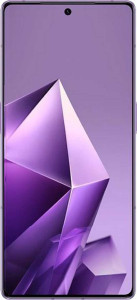
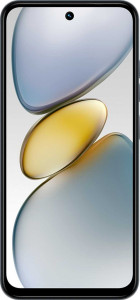
Starting with the rear camera system, both phones share a 50 MP primary sensor, identical maximum video resolution at 1440p 30fps, and a common set of manual controls. The meaningful divergence begins with the Note 50 Pro adding a second 8 MP lens — giving it compositional versatility the single-lens Spark 40 cannot match — and crucially, optical image stabilization (OIS). OIS physically counteracts hand movement during capture, resulting in sharper photos in low light and smoother handheld video; its absence on the Spark 40 means it relies entirely on digital stabilization, which is a less effective substitute.
The selfie camera gap is stark. The Note 50 Pro offers a 32 MP front camera versus just 8 MP on the Spark 40 — a fourfold resolution difference that directly impacts the detail, cropping flexibility, and overall quality of self-portraits and video calls. Beyond resolution, the Note 50 Pro further extends its camera feature set with slow-motion video recording, a built-in HDR mode, and a timelapse function, none of which are present on the Spark 40. These are not obscure capabilities — slow-motion and HDR in particular are regularly used features for everyday shooters.
The Infinix Note 50 Pro 4G takes this category decisively. Its advantages span hardware (OIS, dual rear lenses, higher-resolution front camera) and software features (HDR, slow-motion, timelapse), leaving the Spark 40 with no meaningful camera advantage to speak of.