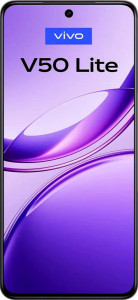
Across the core connectivity stack, these two phones share a great deal in common — dual SIM, USB Type-C 2.0, NFC, Wi-Fi 5, and identical upload speeds of 150 Mbits/s. Neither supports 5G, which is expected at this tier. The divergences, however, are meaningful. The Infinix Note 50 Pro 4G runs Bluetooth 5.4 versus the Vivo V50 Lite 4G's Bluetooth 5.0 — a newer version that brings improvements in connection efficiency and coexistence with other wireless signals, benefiting users who rely on wireless audio or peripherals throughout the day.
The LTE download speed gap is also notable: the Infinix pulls ahead at 650 Mbits/s compared to the Vivo's 390 Mbits/s. While real-world speeds are always capped by carrier infrastructure, a higher ceiling means the Infinix is better positioned to take advantage of strong network conditions — faster file downloads, smoother streaming, and quicker cloud syncs when signal quality allows. On the sensors front, the Infinix adds a heart rate monitor, a hardware feature entirely absent on the Vivo, which extends its utility toward basic health and fitness tracking without needing a wearable.
Taken together, the Infinix Note 50 Pro 4G holds a clear advantage in this category. Its newer Bluetooth version, significantly higher LTE download ceiling, and the inclusion of a heart rate monitor all represent concrete functional additions over the Vivo. The Vivo matches it on the essentials — NFC, GPS, fingerprint scanner — but cannot close the gap on these three differentiators, each of which has real-world relevance for a different type of user.