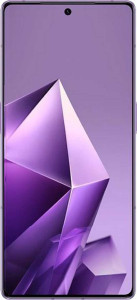
Infinix Note 50 Pro 4G
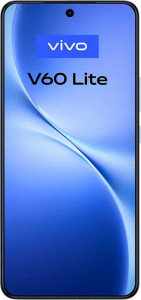
Vivo V60 Lite 4G

Infinix Note 50 Pro 4G Vivo V60 Lite 4G

Overview

Welcome to our in-depth comparison of the Infinix Note 50 Pro 4G and the Vivo V60 Lite 4G — two mid-range Android 15 smartphones that share a surprising amount of common ground while diverging sharply in key areas. From display refresh rate and camera capabilities to battery capacity and chipset choice, each device makes distinct trade-offs worth examining closely before you decide which one deserves a place in your pocket.

Common Features

  • Both phones are water resistant.
  • Neither phone has a rugged build.
  • Neither phone can be folded.
  • Both phones feature an OLED/AMOLED display.
  • Neither phone has branded damage-resistant glass.
  • HDR10 support is not available on either phone.
  • HDR10+ support is not available on either phone.
  • Dolby Vision support is not available on either phone.
  • Neither phone has a secondary screen.
  • Both phones have a touchscreen.
  • Both phones come with 256GB of internal storage.
  • Both phones have integrated LTE.
  • Both phones use a 6 nm semiconductor.
  • Both phones support 64-bit processing.
  • Both phones have integrated graphics.
  • Both phones support OpenGL ES version 3.2.
  • Both phones use big.LITTLE technology.
  • Both phones have 8 CPU threads.
  • Both phones have a 50 & 8 MP main camera.
  • Both phones have a dual-lens main camera.
  • Both phones have a 32 MP front camera.
  • Neither phone has a dual-tone LED flash.
  • Neither phone has a BSI sensor.
  • Both phones have a CMOS sensor.
  • Both phones support continuous autofocus when recording movies.
  • Both phones have phase-detection autofocus for photos.
  • Both phones run Android 15.
  • Both phones have clipboard warnings.
  • Both phones have location privacy options.
  • Both phones have camera and microphone privacy options.
  • Mail Privacy Protection is not available on either phone.
  • Both phones support theme customization.
  • Both phones can block app tracking.
  • Cross-site tracking blocking is not available on either phone.
  • Both phones support fast charging at 90W.
  • Both phones come with a charger.
  • Neither phone has a removable battery.
  • Both phones have a battery level indicator.
  • Both phones have a rechargeable battery.
  • Neither phone has a 3.5 mm audio jack.
  • Both phones have stereo speakers.
  • aptX support is not available on either phone.
  • LDAC support is not available on either phone.
  • Neither phone supports 5G.
  • Both phones support Wi-Fi 4 (802.11n) and Wi-Fi 5 (802.11ac).
  • Both phones support 2 SIM cards.
  • Both phones have USB Type-C with USB version 2.
  • Both phones have NFC.
  • Both phones have an upload speed of 150 MBits/s.
  • Both phones have a fingerprint scanner.
  • Both phones have a video light.
  • Neither phone has a sapphire glass display.
  • Neither phone has a curved display.
  • Neither phone has an e-paper display.

Main Differences

  • Weight is 198 g on Infinix Note 50 Pro 4G and 194 g on Vivo V60 Lite 4G.
  • Thickness is 7.3 mm on Infinix Note 50 Pro 4G and 7.6 mm on Vivo V60 Lite 4G.
  • Width is 74.4 mm on Infinix Note 50 Pro 4G and 76.3 mm on Vivo V60 Lite 4G.
  • Height is 163.3 mm on Infinix Note 50 Pro 4G and 163.8 mm on Vivo V60 Lite 4G.
  • Volume is 88.69 cm³ on Infinix Note 50 Pro 4G and 94.98 cm³ on Vivo V60 Lite 4G.
  • IP rating is IP64 on Infinix Note 50 Pro 4G and IP65 on Vivo V60 Lite 4G.
  • Screen size is 6.78″ on Infinix Note 50 Pro 4G and 6.77″ on Vivo V60 Lite 4G.
  • Pixel density is 393 ppi on Infinix Note 50 Pro 4G and 388 ppi on Vivo V60 Lite 4G.
  • Resolution is 1080 x 2436 px on Infinix Note 50 Pro 4G and 1080 x 2392 px on Vivo V60 Lite 4G.
  • Refresh rate is 144Hz on Infinix Note 50 Pro 4G and 120Hz on Vivo V60 Lite 4G.
  • Always-On Display is available on Infinix Note 50 Pro 4G but not on Vivo V60 Lite 4G.
  • RAM is 12GB on Infinix Note 50 Pro 4G and 8GB on Vivo V60 Lite 4G.
  • The chipset is MediaTek Helio G100 on Infinix Note 50 Pro 4G and Qualcomm Snapdragon 685 4G on Vivo V60 Lite 4G.
  • The GPU is Mali G57 on Infinix Note 50 Pro 4G and Adreno 610 on Vivo V60 Lite 4G.
  • CPU speed is 2 x 2.2 & 6 x 2 GHz on Infinix Note 50 Pro 4G and 4 x 2.8 & 4 x 1.9 GHz on Vivo V60 Lite 4G.
  • GPU clock speed is 1000 MHz on Infinix Note 50 Pro 4G and 1260 MHz on Vivo V60 Lite 4G.
  • RAM speed is 4266 MHz on Infinix Note 50 Pro 4G and 2133 MHz on Vivo V60 Lite 4G.
  • DirectX version is DirectX 11 on Infinix Note 50 Pro 4G and DirectX 12 on Vivo V60 Lite 4G.
  • Maximum memory bandwidth is 17.1 GB/s on Infinix Note 50 Pro 4G and 17 GB/s on Vivo V60 Lite 4G.
  • Maximum memory amount is 12GB on Infinix Note 50 Pro 4G and 16GB on Vivo V60 Lite 4G.
  • Wide aperture of the main camera is 2.2 & 1.9f on Infinix Note 50 Pro 4G and 2.2 & 1.8f on Vivo V60 Lite 4G.
  • Optical image stabilization is present on Infinix Note 50 Pro 4G but not available on Vivo V60 Lite 4G.
  • Video recording resolution is 1440 x 30 fps on Infinix Note 50 Pro 4G and 1080 x 30 fps on Vivo V60 Lite 4G.
  • Number of flash LEDs is 2 on Infinix Note 50 Pro 4G and 1 on Vivo V60 Lite 4G.
  • Slow-motion video recording is supported on Infinix Note 50 Pro 4G but not on Vivo V60 Lite 4G.
  • Front camera aperture is 2.2f on Infinix Note 50 Pro 4G and 2.5f on Vivo V60 Lite 4G.
  • Timelapse function is available on Infinix Note 50 Pro 4G but not on Vivo V60 Lite 4G.
  • Battery power is 5200 mAh on Infinix Note 50 Pro 4G and 6500 mAh on Vivo V60 Lite 4G.
  • Wireless charging is supported on Infinix Note 50 Pro 4G but not on Vivo V60 Lite 4G.
  • Reverse wireless charging is available on Infinix Note 50 Pro 4G but not on Vivo V60 Lite 4G.
  • A built-in radio is present on Infinix Note 50 Pro 4G but not on Vivo V60 Lite 4G.
  • Bluetooth version is 5.4 on Infinix Note 50 Pro 4G and 5.0 on Vivo V60 Lite 4G.
  • Download speed is 650 MBits/s on Infinix Note 50 Pro 4G and 390 MBits/s on Vivo V60 Lite 4G.
  • A heart rate monitor is present on Infinix Note 50 Pro 4G but not available on Vivo V60 Lite 4G.
Specs Comparison
Infinix Note 50 Pro 4G

Infinix Note 50 Pro 4G

Vivo V60 Lite 4G

Vivo V60 Lite 4G

Design:
water resistance Water resistant Water resistant
weight 198 g 194 g
thickness 7.3 mm 7.6 mm
width 74.4 mm 76.3 mm
height 163.3 mm 163.8 mm
volume 88.691496 cm³ 94.984344 cm³
Ingress Protection (IP) rating IP64 IP65
has a rugged build
can be folded

Both the Infinix Note 50 Pro 4G and the Vivo V60 Lite 4G share a broadly similar physical footprint — tall, slim slabs of comparable height (163.3 mm vs 163.8 mm) — but meaningful differences emerge when you look beyond that single dimension. The Note 50 Pro is noticeably narrower at 74.4 mm versus the V60 Lite's 76.3 mm, and thinner too at 7.3 mm against 7.6 mm. In practice, those ~2 mm in width translate directly to one-handed reachability and pocket comfort, giving the Infinix a more ergonomic grip profile.

The volume figures tell the fuller story: the Note 50 Pro displaces 88.69 cm³ compared to the V60 Lite's 94.98 cm³ — a roughly 7% smaller physical envelope. Yet despite being the more compact device, the Note 50 Pro is actually 4 g heavier (198 g vs 194 g), suggesting denser internal construction. Neither phone tips into heavy territory, but the slight weight edge goes to the Vivo.

On water resistance, both carry an IP rating, but the V60 Lite holds a IP65 certification versus the Note 50 Pro's IP64. The difference is subtle yet real: IP65 adds protection against low-pressure water jets from any direction, while IP64 only covers water splashes. For everyday use — rain, spills, sweaty workouts — both are adequate, but the Vivo offers a modest real-world edge in wet conditions. Overall, the Infinix wins on compactness and handling, while the Vivo counters with a slight weight advantage and stronger water resistance certification — making this category closely contested with no dominant winner.

Display:
Display type OLED/AMOLED OLED/AMOLED
screen size 6.78" 6.77"
pixel density 393 ppi 388 ppi
resolution 1080 x 2436 px 1080 x 2392 px
refresh rate 144Hz 120Hz
has branded damage-resistant glass
supports HDR10
supports HDR10+
Always-On Display
supports Dolby Vision
Has a secondary screen
has a touch screen

At the panel level, these two phones are nearly identical on paper — both use OLED/AMOLED technology and sport virtually the same screen size (6.78″ vs 6.77″) at near-identical pixel densities (393 ppi vs 388 ppi). The practical upshot is that sharpness, contrast, and color vibrancy will feel indistinguishable to the vast majority of users. Neither supports HDR10, HDR10+, or Dolby Vision, so neither has an advantage in premium streaming content rendering.

Where the Infinix Note 50 Pro pulls ahead is refresh rate: its 144Hz panel versus the V60 Lite's 120Hz means smoother scrolling, more fluid animations, and a more responsive feel in fast-paced games. While the jump from 60Hz to 120Hz is immediately perceptible to most users, the difference between 120Hz and 144Hz is subtler — but it is still a measurable, real advantage for users sensitive to display motion.

The other meaningful differentiator is Always-On Display, which the Note 50 Pro supports and the V60 Lite does not. This feature allows glanceable info — time, notifications — without waking the full screen, a genuine convenience in daily use. Taken together, the Infinix Note 50 Pro holds a clear edge in this category, combining a higher refresh rate with Always-On Display support while matching the Vivo on every other display dimension.

Performance:
internal storage 256GB 256GB
RAM 12GB 8GB
Chipset (SoC) name MediaTek Helio G100 Qualcomm Snapdragon 685 4G
GPU name Mali G57 Adreno 610
CPU speed 2 x 2.2 & 6 x 2 GHz 4 x 2.8 & 4 x 1.9 GHz
GPU clock speed 1000 MHz 1260 MHz
Has integrated LTE
RAM speed 4266 MHz 2133 MHz
semiconductor size 6 nm 6 nm
Supports 64-bit
DirectX version DirectX 11 DirectX 12
Has integrated graphics
OpenGL ES version 3.2 3.2
Uses big.LITTLE technology
CPU threads 8 threads 8 threads
Has TrustZone
maximum memory bandwidth 17.1 GB/s 17 GB/s
OpenCL version 2 2
maximum memory amount 12GB 16GB
DDR memory version 4 4

Chipset rivalry defines this category: the Infinix Note 50 Pro runs on a MediaTek Helio G100 while the Vivo V60 Lite 4G is powered by a Qualcomm Snapdragon 685, and neither is a straightforward winner. The Snapdragon 685 carries a CPU frequency advantage — its four performance cores clock at 2.8 GHz versus the Helio G100's peak of 2.2 GHz — which translates to snappier single-core tasks like app launches and web browsing. The Vivo's Adreno 610 GPU also runs at a higher clock speed (1260 MHz vs 1000 MHz) and supports DirectX 12 versus DirectX 11, giving it a meaningful edge in graphics-intensive gaming and compute workloads.

Flip the lens to memory, and the Infinix reclaims ground. Its 12 GB of RAM against the V60 Lite's 8 GB is a significant real-world advantage for heavy multitaskers — more apps stay resident in memory, reducing reload times when switching between them. Critically, the Note 50 Pro's RAM operates at 4266 MHz, more than double the V60 Lite's 2133 MHz, meaning data moves between the CPU and memory far faster. Effective memory bandwidth ends up nearly identical (17.1 vs 17.0 GB/s), but the higher-frequency RAM benefits latency-sensitive workloads.

This is a genuinely split matchup that depends on use case. For raw CPU throughput and GPU gaming performance, the Vivo V60 Lite holds the edge. For sustained multitasking and memory-hungry workloads, the Infinix Note 50 Pro's larger, faster RAM gives it the advantage. Users who game heavily should lean toward the Vivo; power multitaskers will appreciate what the Infinix brings to the table.

Cameras:
megapixels (main camera) 50 & 8 MP 50 & 8 MP
wide aperture (main camera) 2.2 & 1.9f 2.2 & 1.8f
Has a dual-lens (or multi-lens) main camera
megapixels (front camera) 32MP 32MP
has built-in optical image stabilization
video recording (main camera) 1440 x 30 fps 1080 x 30 fps
Has a dual-tone LED flash
number of flash LEDs 2 1
has a BSI sensor
has a CMOS sensor
has continuous autofocus when recording movies
Has phase-detection autofocus for photos
supports slow-motion video recording
has a built-in HDR mode
has manual exposure
has a flash
optical zoom 0x 0x
has manual ISO
has a serial shot mode
has manual focus
has a front camera
Has laser autofocus
Shoots 360° panorama
has manual white balance
shoots raw
has touch autofocus
has manual shutter speed
can create panoramas in-camera
wide aperture (front camera) 2.2f 2.5f
Has timelapse function
Has a front-facing LED flash
has a dual-lens (or multi-lens) front camera
supports HDR10 recording
supports Dolby Vision recording
has a front-facing camera under the display
Has a RGB LED flash
has 3D photo/video recording capabilities

On the surface, the two cameras look like carbon copies — both pack a 50 MP + 8 MP dual rear setup and a 32 MP front camera. But the secondary lens aperture already hints at a divergence: the Vivo V60 Lite's f/1.8 secondary aperture is wider than the Infinix Note 50 Pro's f/1.9, letting in marginally more light. Meanwhile, the front camera tells the opposite story — the Infinix's f/2.2 selfie aperture outgathers the Vivo's f/2.5, which is a meaningful advantage for selfies in dim environments.

The Infinix pulls decisively ahead in two areas that matter greatly to video shooters and action photographers. First, it includes optical image stabilization (OIS), which the V60 Lite entirely lacks — OIS physically compensates for hand movement, producing noticeably steadier handheld video and sharper shots at slower shutter speeds. Second, the Infinix records up to 1440p at 30 fps compared to the Vivo's cap of 1080p at 30 fps, a full resolution tier higher that delivers more detail and greater flexibility for cropping in post. The Infinix also supports slow-motion video recording, a feature absent on the Vivo, adding creative versatility.

A few smaller but real differences round out the picture: the Infinix has two flash LEDs versus one on the Vivo, and it supports timelapse recording while the Vivo does not. The Vivo has no meaningful exclusive camera advantage based on the provided specs. The Infinix Note 50 Pro is the clear winner in this category, outperforming across stabilization, video resolution, and feature breadth.

Operating system:
Android version Android 15 Android 15
has clipboard warnings
has location privacy options
has camera/microphone privacy options
has Mail Privacy Protection
has theme customization
can block app tracking
blocks cross-site tracking
has on-device machine learning
has notification permissions
has media picker
Can play games while they download
has dark mode
has Wi-Fi password sharing
has battery health check
has an extra dim mode
has focus modes
has dynamic theming
can offload apps
Has customizable notifications
has Live Text
has full-page screenshots
supports split screen
gets direct OS updates
has PiP
Can be used as a PC
Has sharing intents
has a child lock
Supports widgets
Is free and open source
Has offline voice recognition
has voice commands
Tracks the current position of a mobile device
is a multi-user system
has Quick Start

This is one of the rare categories that ends in a definitive draw. The Infinix Note 50 Pro 4G and the Vivo V60 Lite 4G run identical OS specifications across every single data point provided — both launch on Android 15 and share the exact same feature set, from privacy controls like location and camera/microphone permissions, to usability features like split-screen, Picture-in-Picture, dynamic theming, and offline voice recognition.

Notably, neither device receives direct OS updates — meaning both rely on the manufacturer's update pipeline rather than receiving Android patches straight from Google. This is a shared limitation worth flagging for users who prioritize long-term software support and timely security patches, as update cadence will depend entirely on Infinix and Vivo respectively, rather than a guaranteed schedule.

With no differentiating specs anywhere in this group, the operating system category is a complete tie. The software experience, privacy toolset, and feature availability are identical on paper, and neither phone holds any OS-level advantage over the other based on the provided data.

Battery:
battery power 5200 mAh 6500 mAh
has wireless charging
Supports fast charging
charging speed 90W 90W
has reverse wireless charging
comes with a charger
has a removable battery
has a battery level indicator
has a rechargeable battery

Raw capacity is where the Vivo V60 Lite 4G makes its strongest statement in this entire comparison: its 6500 mAh battery dwarfs the Infinix Note 50 Pro 4G's 5200 mAh, a 25% larger reservoir that translates directly into longer time between charges. For users who travel frequently, work long shifts away from a plug, or simply dislike the anxiety of a draining battery, that gap is tangible and meaningful in daily use.

Both phones match exactly on wired fast charging at 90W, so despite the Vivo's larger battery, refill times from empty should be broadly comparable — a larger tank filled at the same rate takes proportionally longer, but 90W is fast enough that neither phone will keep you waiting long. Where the Infinix reclaims ground is in charging flexibility: it supports both wireless charging and reverse wireless charging, neither of which the V60 Lite offers. Wireless charging adds the convenience of pad-based top-ups, while reverse wireless charging lets the Note 50 Pro act as a power source for other devices — a genuinely useful feature for charging earbuds or a friend's phone in a pinch.

The verdict here hinges on priorities. If raw endurance and screen-on time are paramount, the Vivo V60 Lite's 6500 mAh cell is the clear winner. If charging versatility and ecosystem convenience matter more, the Infinix Note 50 Pro's wireless charging support gives it a lifestyle edge. For most users optimizing for longevity, the Vivo holds the stronger hand in this category.

Audio:
has a socket for a 3.5 mm audio jack
has stereo speakers
has aptX
has LDAC
has aptX HD
has aptX Adaptive
has aptX Lossless
Has a radio

Audio is a lean category for both devices, and they share most of their traits. Neither the Infinix Note 50 Pro 4G nor the Vivo V60 Lite 4G includes a 3.5 mm headphone jack, so wired listening requires an adapter or USB-C earphones on both. On the speaker side, both deliver stereo speakers, which is the most impactful audio spec for media consumption — stereo separation produces a noticeably wider, more immersive soundstage compared to a single mono driver, whether you're watching video or playing games.

Neither phone supports any high-resolution Bluetooth audio codec — no aptX, no LDAC, no aptX HD or Adaptive — meaning wireless audio quality is capped at standard Bluetooth performance on both devices. This is a shared limitation that wireless audiophiles should be aware of, though for casual everyday listening it is unlikely to matter in practice.

The sole differentiator in this group is the Infinix Note 50 Pro's built-in FM radio, which the Vivo V60 Lite lacks entirely. Radio is a niche but genuinely useful feature in areas with poor data connectivity or during emergencies where network infrastructure is compromised. It edges the Infinix to a narrow win in this category — not a transformative advantage, but a real one for users who value it.

Connectivity & Features:
release date March 2025 September 2025
has 5G support
Wi-Fi version Wi-Fi 4 (802.11n), Wi-Fi 5 (802.11ac) Wi-Fi 4 (802.11n), Wi-Fi 5 (802.11ac)
SIM cards 2 SIM 2 SIM
Bluetooth version 5.4 5
Has USB Type-C
USB version 2 2
has NFC
download speed 650 MBits/s 390 MBits/s
upload speed 150 MBits/s 150 MBits/s
Has a fingerprint scanner
has emergency SOS via satellite
has crash detection
is DLNA-certified
has a gyroscope
supports ANT+
Has a heart rate monitor
has GPS
has a compass
supports Wi-Fi
Has an infrared sensor
has an accelerometer
has a cellular module
Has a barometer
has an HDMI output
Uses 3D facial recognition
Has an iris scanner
Stylus included
supports Galileo
Has motion tracking
Has optical tracking
Has a built-in projector

Shared foundations dominate this category — both phones support dual SIM, Wi-Fi 5, NFC, USB Type-C 2.0, GPS with Galileo, and an identical sensor suite including gyroscope, accelerometer, and compass. NFC is worth highlighting as a shared win: it enables contactless payments and quick device pairing, a feature still absent on many budget-tier competitors. That said, meaningful gaps do emerge on closer inspection.

The Infinix Note 50 Pro 4G carries a notably newer Bluetooth 5.4 versus the Vivo V60 Lite 4G's Bluetooth 5.0. Each successive Bluetooth generation brings improvements in connection stability, range, and energy efficiency, so the Infinix offers a more future-proof and reliable wireless peripheral experience. More striking is the cellular download speed gap: the Note 50 Pro reaches 650 Mbits/s against the V60 Lite's 390 Mbits/s — a 67% higher peak throughput that translates to faster file downloads, smoother streaming on congested networks, and snappier cloud operations when signal conditions allow.

The Infinix also adds a heart rate monitor, absent on the Vivo — a niche but tangible hardware differentiator for health-conscious users who want basic biometric tracking without a separate wearable. Taken together, the Infinix Note 50 Pro is the clear winner in this category, leading on Bluetooth version, download speeds, and sensor capability, while neither phone concedes anything on the core connectivity checklist.
Miscellaneous:
has a video light
Has sapphire glass display
Has a curved display
Has an e-paper display

The Miscellaneous category offers very little to differentiate the two devices. Every spec in this group is identical — both the Infinix Note 50 Pro 4G and the Vivo V60 Lite 4G include a video light, and neither features a sapphire glass display, curved display, or e-paper display. This is an unambiguous tie with no data points favoring either phone.

The shared video light is worth a brief note: it functions as a continuous illumination source during video recording rather than a still-photo flash, useful for close-up filming in low-light conditions. Its presence on both devices means neither has a practical advantage here either.

Based strictly on the provided specs, this category is a complete draw. Prospective buyers should weigh the findings from other specification groups — design, performance, cameras, and connectivity — where the two phones do meaningfully diverge, as nothing here tips the scales in either direction.

Comparison Summary & Verdict

After examining every specification, it is clear that both phones serve different types of users. The Infinix Note 50 Pro 4G stands out for those who value a premium multimedia experience, thanks to its 144Hz display, Always-On Display, optical image stabilization, slow-motion video, wireless and reverse wireless charging, and a higher RAM speed of 4266 MHz. It also edges ahead with Bluetooth 5.4, a faster download speed of 650 MBits/s, and a built-in heart rate monitor. On the other hand, the Vivo V60 Lite 4G is the better pick for users who prioritize longer battery life, offering a significantly larger 6500 mAh cell, along with a more powerful GPU clock speed of 1260 MHz, DirectX 12 support, and a higher maximum memory ceiling of 16GB — all in a slightly lighter body with an IP65 rating.

Infinix Note 50 Pro 4G
Buy Infinix Note 50 Pro 4G if...

Buy the Infinix Note 50 Pro 4G if you want a smoother 144Hz display, wireless charging, optical image stabilization, and a richer feature set including a heart rate monitor and slow-motion video recording.

Vivo V60 Lite 4G
Buy Vivo V60 Lite 4G if...

Buy the Vivo V60 Lite 4G if long battery life is your top priority, as its 6500 mAh cell significantly outlasts the competition, and you also benefit from a stronger GPU and DirectX 12 support.