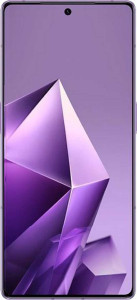
Infinix Note 50 Pro 4G
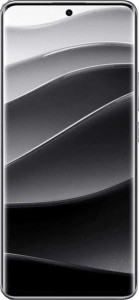
Xiaomi Redmi Note 14 Pro 5G (Global)

Infinix Note 50 Pro 4G Xiaomi Redmi Note 14 Pro 5G (Global)

Overview

Welcome to our in-depth comparison of the Infinix Note 50 Pro 4G and the Xiaomi Redmi Note 14 Pro 5G (Global) — two compelling mid-range smartphones that share a surprising amount of common ground while diverging sharply in several critical areas. From display quality and charging speed to chipset performance and connectivity, both devices offer distinct advantages worth examining closely before making your purchase decision.

Common Features

  • Both phones share the same width of 74.4 mm.
  • Neither phone has a rugged build.
  • Neither phone can be folded.
  • Both phones feature an OLED/AMOLED display type.
  • Both phones support Always-On Display.
  • Neither phone has a secondary screen.
  • Both phones have a touchscreen.
  • Both phones come with 12GB of RAM.
  • Both phones have integrated LTE support.
  • Both phones support 64-bit processing.
  • Both phones use big.LITTLE technology with 8 CPU threads and HMP support.
  • Both phones have a multi-lens main camera with built-in optical image stabilization.
  • Both phones have a CMOS sensor and support phase-detection autofocus and continuous autofocus during video recording.
  • Both phones support slow-motion video recording.
  • Both phones include clipboard warnings and location privacy options.
  • Both phones offer camera and microphone privacy options, theme customization, and the ability to block app tracking.
  • On-device machine learning is available on both phones.
  • Both phones support fast charging and come with a charger included.
  • Neither phone has a removable battery, and both have a rechargeable battery with a battery level indicator.
  • Both phones have stereo speakers but no 3.5 mm audio jack.
  • Both phones support Bluetooth 5.4, USB Type-C with USB 2.0, NFC, dual SIM, and have a fingerprint scanner.
  • Neither phone supports emergency SOS via satellite or crash detection.
  • Both phones have a video light, no sapphire glass display, and no e-paper display.

Main Differences

  • Water resistance is rated as Water resistant (IP64) on Infinix Note 50 Pro 4G, while the Xiaomi Redmi Note 14 Pro 5G (Global) is Waterproof (IP68).
  • Weight is 198 g on Infinix Note 50 Pro 4G and 190 g on Xiaomi Redmi Note 14 Pro 5G (Global).
  • Thickness is 7.3 mm on Infinix Note 50 Pro 4G and 8.4 mm on Xiaomi Redmi Note 14 Pro 5G (Global).
  • Height is 163.3 mm on Infinix Note 50 Pro 4G and 162.3 mm on Xiaomi Redmi Note 14 Pro 5G (Global).
  • Screen size is 6.78″ on Infinix Note 50 Pro 4G and 6.67″ on Xiaomi Redmi Note 14 Pro 5G (Global).
  • Pixel density is 393 ppi on Infinix Note 50 Pro 4G and 446 ppi on Xiaomi Redmi Note 14 Pro 5G (Global).
  • Resolution is 1080 x 2436 px on Infinix Note 50 Pro 4G and 1220 x 2712 px on Xiaomi Redmi Note 14 Pro 5G (Global).
  • Refresh rate is 144Hz on Infinix Note 50 Pro 4G and 120Hz on Xiaomi Redmi Note 14 Pro 5G (Global).
  • Brightness (typical) is 550 nits on Infinix Note 50 Pro 4G and 3000 nits on Xiaomi Redmi Note 14 Pro 5G (Global).
  • Damage-resistant glass is present on Xiaomi Redmi Note 14 Pro 5G (Global) but not available on Infinix Note 50 Pro 4G.
  • HDR10, HDR10+, and Dolby Vision support are present on Xiaomi Redmi Note 14 Pro 5G (Global) but not available on Infinix Note 50 Pro 4G.
  • Internal storage is 256GB on Infinix Note 50 Pro 4G and 512GB on Xiaomi Redmi Note 14 Pro 5G (Global).
  • AnTuTu benchmark score is 438000 on Infinix Note 50 Pro 4G and 720000 on Xiaomi Redmi Note 14 Pro 5G (Global).
  • The chipset is MediaTek Helio G100 on Infinix Note 50 Pro 4G and MediaTek Dimensity 7300 on Xiaomi Redmi Note 14 Pro 5G (Global).
  • RAM speed is 4266 MHz on Infinix Note 50 Pro 4G and 6400 MHz on Xiaomi Redmi Note 14 Pro 5G (Global), with DDR4 vs DDR5 respectively.
  • Semiconductor size is 6 nm on Infinix Note 50 Pro 4G and 4 nm on Xiaomi Redmi Note 14 Pro 5G (Global).
  • Main camera resolution is 50 & 8 MP on Infinix Note 50 Pro 4G and 200 & 8 & 2 MP on Xiaomi Redmi Note 14 Pro 5G (Global).
  • Front camera resolution is 32MP on Infinix Note 50 Pro 4G and 20MP on Xiaomi Redmi Note 14 Pro 5G (Global).
  • Maximum video recording is 1440 x 30 fps on Infinix Note 50 Pro 4G and 2160 x 30 fps on Xiaomi Redmi Note 14 Pro 5G (Global).
  • Android version is Android 15 on Infinix Note 50 Pro 4G and Android 14 on Xiaomi Redmi Note 14 Pro 5G (Global).
  • App offloading is supported on Infinix Note 50 Pro 4G but not available on Xiaomi Redmi Note 14 Pro 5G (Global).
  • Battery capacity is 5200 mAh on Infinix Note 50 Pro 4G and 5110 mAh on Xiaomi Redmi Note 14 Pro 5G (Global).
  • Wireless charging is supported on Infinix Note 50 Pro 4G but not available on Xiaomi Redmi Note 14 Pro 5G (Global).
  • Charging speed is 90W on Infinix Note 50 Pro 4G and 45W on Xiaomi Redmi Note 14 Pro 5G (Global).
  • aptX and LDAC audio support are present on Xiaomi Redmi Note 14 Pro 5G (Global) but not available on Infinix Note 50 Pro 4G.
  • A radio is available on Infinix Note 50 Pro 4G but not present on Xiaomi Redmi Note 14 Pro 5G (Global).
  • 5G support is available on Xiaomi Redmi Note 14 Pro 5G (Global) but not present on Infinix Note 50 Pro 4G.
  • Wi-Fi 6 (802.11ax) support is available on Xiaomi Redmi Note 14 Pro 5G (Global) but not on Infinix Note 50 Pro 4G, which supports up to Wi-Fi 5.
  • Download speed is 650 MBits/s on Infinix Note 50 Pro 4G and 3270 MBits/s on Xiaomi Redmi Note 14 Pro 5G (Global).
  • A heart rate monitor is available on Infinix Note 50 Pro 4G but not present on Xiaomi Redmi Note 14 Pro 5G (Global).
  • An infrared sensor is present on Xiaomi Redmi Note 14 Pro 5G (Global) but not available on Infinix Note 50 Pro 4G.
  • A curved display is featured on Xiaomi Redmi Note 14 Pro 5G (Global) but not on Infinix Note 50 Pro 4G.
Specs Comparison
Infinix Note 50 Pro 4G

Infinix Note 50 Pro 4G

Xiaomi Redmi Note 14 Pro 5G (Global)

Xiaomi Redmi Note 14 Pro 5G (Global)

Design:
water resistance Water resistant Waterproof
weight 198 g 190 g
thickness 7.3 mm 8.4 mm
width 74.4 mm 74.4 mm
height 163.3 mm 162.3 mm
volume 88.691496 cm³ 101.431008 cm³
Ingress Protection (IP) rating IP64 IP68
has a rugged build
can be folded

Both phones share an identical 74.4 mm width and nearly the same height, making them feel comparable in the hand. Where they diverge meaningfully is in thickness and weight: the Infinix Note 50 Pro 4G is notably slimmer at 7.3 mm versus the Redmi Note 14 Pro 5G's 8.4 mm, which translates to a sleeker, more pocketable profile. However, despite being thinner, the Infinix is actually heavier at 198 g compared to the Xiaomi's 190 g — a counterintuitive result likely due to internal component density. Neither difference is dramatic, but users sensitive to in-hand feel will notice the Infinix's slimmer frame while the Xiaomi feels slightly lighter on extended use.

The most consequential design difference lies in water protection. The Infinix carries an IP64 rating, meaning it resists dust and can handle water splashes and jets from any direction — solid everyday protection, but not submersion-safe. The Xiaomi steps up to IP68, which adds full dust ingress protection and the ability to withstand submersion in water up to a defined depth and duration. In practical terms, IP68 provides genuine peace of mind in rain, near pools, or accidental drops in water, whereas IP64 covers only incidental exposure.

Overall, the Xiaomi Redmi Note 14 Pro 5G holds a clear edge in this category. Its superior IP68 rating is a meaningful real-world advantage that the Infinix's slimmer build cannot offset. The lighter weight adds a secondary benefit. The Infinix Note 50 Pro 4G's thinner chassis is a design win, but for users who prioritize durability and environmental resilience, the Xiaomi is the stronger choice here.

Display:
Display type OLED/AMOLED OLED/AMOLED
screen size 6.78" 6.67"
pixel density 393 ppi 446 ppi
resolution 1080 x 2436 px 1220 x 2712 px
refresh rate 144Hz 120Hz
brightness (typical) 550 nits 3000 nits
has branded damage-resistant glass
supports HDR10
supports HDR10+
Always-On Display
supports Dolby Vision
Has a secondary screen
has a touch screen

Both phones use OLED/AMOLED panels, so the baseline visual quality — deep blacks, vivid colors, good contrast — is shared. The Infinix Note 50 Pro 4G offers a larger 6.78″ screen versus the Redmi Note 14 Pro 5G's 6.67″, which gives it a modest edge for media consumption and gaming real estate. However, the Xiaomi counters with a noticeably sharper display: its 446 ppi pixel density versus 393 ppi on the Infinix means text and fine details render more crisply, a difference that becomes perceptible when reading small text or viewing detailed images up close.

The starkest gap between these two panels is brightness. The Infinix tops out at 550 nits typical brightness, which is adequate indoors but can struggle under direct sunlight. The Xiaomi's 3000 nits peak capability is in an entirely different league — it remains comfortably legible even in harsh outdoor conditions. Compounding this, the Redmi Note 14 Pro 5G supports HDR10, HDR10+, and Dolby Vision, unlocking richer dynamic range on compatible streaming content, while the Infinix supports none of these formats. The Xiaomi also includes branded damage-resistant glass, adding a layer of everyday scratch protection that the Infinix lacks. On the flip side, the Infinix's 144Hz refresh rate beats the Xiaomi's 120Hz, delivering marginally smoother scrolling and animations — though this is the only display metric where the Infinix leads.

The Xiaomi Redmi Note 14 Pro 5G wins this category decisively. Its dramatically higher brightness, superior pixel density, full HDR format support, and protective glass collectively outweigh the Infinix's size and refresh rate advantages. For anyone who regularly uses their phone outdoors or consumes premium streaming content, the Xiaomi's display is the substantially stronger choice.

Performance:
internal storage 256GB 512GB
RAM 12GB 12GB
AnTuTu benchmark score 438000 720000
Chipset (SoC) name MediaTek Helio G100 MediaTek Dimensity 7300
GPU name Mali G57 Mali G615 MC2
CPU speed 2 x 2.2 & 6 x 2 GHz 4 x 2.5 & 4 x 2 GHz
GPU clock speed 1000 MHz 1047 MHz
Has integrated LTE
RAM speed 4266 MHz 6400 MHz
semiconductor size 6 nm 4 nm
Supports 64-bit
DirectX version DirectX 11 DirectX 12
Has integrated graphics
Uses big.LITTLE technology
CPU threads 8 threads 8 threads
Uses HMP
maximum memory amount 12GB 16GB
DDR memory version 4 5

The chipset gap here is significant. The Infinix Note 50 Pro 4G runs on the MediaTek Helio G100, built on a 6 nm process, while the Xiaomi Redmi Note 14 Pro 5G uses the MediaTek Dimensity 7300 on a more advanced 4 nm node. A smaller semiconductor process generally means greater power efficiency and thermal headroom — the Xiaomi's chip can sustain performance longer under load while consuming less energy. The AnTuTu scores make the real-world gap concrete: the Redmi Note 14 Pro 5G scores approximately 720,000 versus the Infinix's 438,000 — a roughly 64% lead that translates to noticeably faster app launches, smoother multitasking, and more headroom for demanding games.

Memory architecture further widens the divide. Both phones ship with 12 GB of RAM, but the Xiaomi uses the faster DDR5 standard at 6400 MHz, compared to the Infinix's DDR4 at 4266 MHz. Faster RAM reduces bottlenecks when switching between apps or loading large assets. The Xiaomi also doubles the Infinix on storage, offering 512 GB versus 256 GB, which matters for users who store large media libraries or avoid cloud reliance. Additionally, the Redmi Note 14 Pro 5G supports DirectX 12 through its Mali G615 MC2 GPU, versus DirectX 11 on the Infinix — a forward-looking advantage for graphically intensive applications.

There is no close call in this category: the Xiaomi Redmi Note 14 Pro 5G wins Performance decisively. Its newer chip architecture, substantially higher benchmark score, faster RAM, and larger storage combine to make it the meaningfully more capable device for users who push their phones hard or plan to keep their device running smoothly over several years.

Cameras:
megapixels (main camera) 50 & 8 MP 200 & 8 & 2 MP
wide aperture (main camera) 2.2 & 1.9f 1.7 & 2.2 & 2.4f
Has a dual-lens (or multi-lens) main camera
megapixels (front camera) 32MP 20MP
has built-in optical image stabilization
video recording (main camera) 1440 x 30 fps 2160 x 30 fps
Has a dual-tone LED flash
number of flash LEDs 2 1
has a BSI sensor
has a CMOS sensor
has continuous autofocus when recording movies
Has phase-detection autofocus for photos
supports slow-motion video recording
has a built-in HDR mode
has manual exposure
has a flash
optical zoom 0x 0x
has manual ISO
has a serial shot mode
has manual focus
has a front camera
Has laser autofocus
Shoots 360° panorama
has manual white balance
shoots raw
has touch autofocus
has manual shutter speed
can create panoramas in-camera
wide aperture (front camera) 2.2f 2.2f
Has timelapse function
Has a front-facing LED flash
has a dual-lens (or multi-lens) front camera
supports HDR10 recording
supports Dolby Vision recording
has a front-facing camera under the display
Has a RGB LED flash
has 3D photo/video recording capabilities

The rear camera systems tell very different stories. The Infinix Note 50 Pro 4G offers a dual-lens setup led by a 50 MP main sensor, while the Xiaomi Redmi Note 14 Pro 5G fields a triple-lens array headlined by a 200 MP primary sensor. Beyond the raw megapixel gap, the Xiaomi's main lens carries a wider f/1.7 aperture compared to the Infinix's f/1.9 — a meaningful difference in low-light situations, as a wider aperture admits more light and typically yields brighter, less noisy shots in dim conditions. The Xiaomi also adds a dedicated third lens at f/2.4, giving it more compositional versatility than the Infinix's two-lens arrangement.

Video capability is another area where the two phones diverge sharply. The Xiaomi records at 4K (2160p) at 30 fps, while the Infinix caps out at 1440p at 30 fps — a full resolution tier below. For users who shoot video for social media, travel, or any scenario where footage quality matters, 4K recording provides significantly more detail and better cropping flexibility in post. The Infinix does fight back on the selfie side, packing a 32 MP front camera versus the Xiaomi's 20 MP — an advantage for users who prioritize self-portraits or video calls. Both cameras share identical front apertures and feature sets, so the difference is purely in resolution.

On balance, the Xiaomi Redmi Note 14 Pro 5G holds a clear overall edge in cameras. Its superior main sensor resolution, wider aperture, additional rear lens, and 4K video recording outweigh the Infinix's front-camera resolution lead for most use cases. The Infinix is the better pick exclusively for selfie-focused users, but as a complete camera package, the Xiaomi is the stronger performer.

Operating system:
Android version Android 15 Android 14
has clipboard warnings
has location privacy options
has camera/microphone privacy options
has Mail Privacy Protection
has theme customization
can block app tracking
blocks cross-site tracking
has on-device machine learning
has notification permissions
has media picker
Can play games while they download
has dark mode
has Wi-Fi password sharing
has battery health check
has an extra dim mode
has focus modes
has dynamic theming
can offload apps
Has customizable notifications
has Live Text
has full-page screenshots
supports split screen
gets direct OS updates
has PiP
Can be used as a PC
Has sharing intents
has a child lock
Supports widgets
Is free and open source
Has offline voice recognition
has voice commands
Tracks the current position of a mobile device
is a multi-user system
has Quick Start

Across the operating system feature set, these two phones are remarkably alike — privacy controls, dynamic theming, split-screen, widgets, offline voice recognition, and picture-in-picture are all present on both. The practical differentiator comes down to two points. First, the Infinix Note 50 Pro 4G ships with Android 15, a full generation ahead of the Xiaomi Redmi Note 14 Pro 5G's Android 14. A newer Android version typically brings incremental security patches, privacy refinements, and UI improvements baked in from the factory — meaning the Infinix starts its lifecycle on more current software foundations.

The second difference is the ability to offload apps, which the Infinix supports and the Xiaomi does not. App offloading allows users to free up storage by removing an app's installation files while retaining its data, so reinstalling later picks up exactly where things left off. This is a meaningful quality-of-life feature for users managing limited storage, though it is less critical on the Xiaomi given its 512 GB base storage as noted in performance specs. Notably, neither phone receives direct OS updates, meaning both rely on manufacturer-mediated update rollouts rather than guaranteed timely patches straight from Google.

The Infinix Note 50 Pro 4G holds a narrow edge here, courtesy of its newer Android version and app offloading support. That said, given how closely matched the two phones are across every other software feature, this is one of the least decisive category gaps in the entire comparison — users strongly tied to either product should not let OS specs alone sway their decision.

Battery:
battery power 5200 mAh 5110 mAh
has wireless charging
Supports fast charging
charging speed 90W 45W
comes with a charger
has a removable battery
has a battery level indicator
has a rechargeable battery

Raw capacity is nearly identical here — the Infinix Note 50 Pro 4G packs a 5200 mAh cell versus the Xiaomi Redmi Note 14 Pro 5G's 5110 mAh. The 90 mAh difference is negligible in practice and will not produce any perceptible gap in daily endurance. Where the two phones genuinely diverge is in how quickly they replenish that capacity. The Infinix supports 90W wired fast charging, compared to the Xiaomi's 45W — exactly double the charging speed. In real-world terms, this translates to roughly half the time spent tethered to a wall, a significant convenience advantage for users with busy schedules or those who frequently top up on the go.

The Infinix also supports wireless charging, a feature the Xiaomi omits entirely. Wireless charging adds meaningful flexibility — the ability to top up on a pad at a desk or nightstand without fumbling for a cable. While wireless charging is generally slower than wired, having the option at all is a distinct lifestyle advantage that many users come to rely on. Both phones include a charger in the box and share a non-removable battery design, so those factors are a wash.

The Infinix Note 50 Pro 4G wins the Battery category clearly. Its faster 90W wired charging and the addition of wireless charging give it a compelling practical edge over the Xiaomi, despite the near-identical battery capacities. For users who value charging flexibility and speed, the Infinix is the stronger choice in this department.

Audio:
has a socket for a 3.5 mm audio jack
has stereo speakers
has aptX
has LDAC
has aptX HD
has aptX Adaptive
has aptX Lossless
Has a radio

Shared ground first: neither phone includes a 3.5 mm headphone jack, and both deliver stereo speakers for built-in audio output. The meaningful split comes with wireless audio codec support. The Xiaomi Redmi Note 14 Pro 5G supports both aptX and LDAC, while the Infinix Note 50 Pro 4G supports neither. For everyday Bluetooth listening this makes no difference, but for users with high-quality wireless headphones or earbuds that support these codecs, it matters considerably. LDAC in particular transmits audio at up to three times the bitrate of standard Bluetooth audio, preserving significantly more detail — making the Xiaomi the clearly superior choice for audiophiles using compatible gear.

The Infinix counters with one exclusive feature: a built-in FM radio. This is a niche but genuinely useful capability for users who rely on local broadcasts, follow live sports or news over the air, or simply want reception in areas with poor data coverage. The Xiaomi has no radio support at all. For the majority of users this will be a non-factor, but for those who actively use radio it represents a real functional advantage.

Weighing these differences, the Xiaomi Redmi Note 14 Pro 5G holds the edge in Audio for most users. LDAC and aptX support deliver a tangible quality upgrade for wireless listening that affects daily use far more broadly than FM radio access. The Infinix's radio inclusion is a meaningful perk for a specific audience, but as a general audio package, the Xiaomi is the more capable device.

Connectivity & Features:
release date March 2025 January 2025
has 5G support
Wi-Fi version Wi-Fi 4 (802.11n), Wi-Fi 5 (802.11ac) Wi-Fi 4 (802.11n), Wi-Fi 6 (802.11ax), Wi-Fi 5 (802.11ac)
SIM cards 2 SIM 2 SIM
Bluetooth version 5.4 5.4
Has USB Type-C
USB version 2 2
has NFC
download speed 650 MBits/s 3270 MBits/s
upload speed 150 MBits/s 3270 MBits/s
Has a fingerprint scanner
has emergency SOS via satellite
has crash detection
is DLNA-certified
has a gyroscope
supports ANT+
Has a heart rate monitor
has GPS
has a compass
supports Wi-Fi
Has an infrared sensor
has an accelerometer
has a cellular module
Has a barometer
has an HDMI output
Uses 3D facial recognition
Has an iris scanner
Stylus included
supports Galileo
Has motion tracking
Has optical tracking
Has a built-in projector

Cellular connectivity is where the two phones part ways most fundamentally. The Infinix Note 50 Pro 4G is locked to 4G LTE, with a maximum download speed of 650 Mbits/s. The Xiaomi Redmi Note 14 Pro 5G adds 5G support and — more strikingly — achieves up to 3270 Mbits/s in both download and upload speeds, a gap that reflects not just 5G capability but a substantially more capable cellular modem. For users in 5G-covered areas, this translates to faster downloads, lower latency, and a more future-proof device as 4G networks gradually get deprioritized by carriers over time. The Xiaomi also supports Wi-Fi 6 alongside Wi-Fi 5 and 4, while the Infinix tops out at Wi-Fi 5 — Wi-Fi 6 delivers better throughput and reduced congestion on busy networks.

Both phones share Bluetooth 5.4, USB Type-C with USB 2.0, dual SIM, NFC, and an identical sensor suite including GPS, gyroscope, accelerometer, and compass. The differentiators at the feature level cut in opposite directions: the Xiaomi adds an infrared sensor, enabling it to function as a universal remote for TVs and appliances — a handy everyday utility. The Infinix counters with a built-in heart rate monitor, which the Xiaomi lacks, offering a basic biometric capability without needing a wearable.

Taken together, the Xiaomi Redmi Note 14 Pro 5G holds a decisive connectivity edge. Its 5G support, dramatically higher data speeds, and Wi-Fi 6 compatibility represent a generational leap in network capability over the Infinix. The infrared sensor is a practical bonus on top. The Infinix's heart rate monitor is a noteworthy exclusive, but it cannot offset how significantly the Xiaomi outpaces it in core connectivity infrastructure.
Miscellaneous:
has a video light
Has sapphire glass display
Has a curved display
Has an e-paper display

This is a slim spec group with limited data points, and most of them are shared. Both phones include a video light and neither features sapphire glass or an e-paper display. The sole differentiator is that the Xiaomi Redmi Note 14 Pro 5G sports a curved display, while the Infinix Note 50 Pro 4G uses a flat panel. A curved screen lends a more premium aesthetic and can make edge-to-edge swiping feel more natural in hand, though it can also make screen protector application trickier and introduces a marginally higher risk of edge damage from drops compared to flat glass.

Given how few specs this group contains, the Xiaomi holds a narrow edge by virtue of its curved display being the only distinguishing feature present. Whether that detail matters is highly subjective — users who prefer the sleek look and feel of a curved panel will favor the Xiaomi, while those who prioritize screen protector compatibility or simply prefer flat displays may see this as a neutral or even negative trait. Either way, this category carries little weight in the overall comparison between these two devices.

Comparison Summary & Verdict

After reviewing all specifications, both phones target different types of users. The Infinix Note 50 Pro 4G stands out with its 90W fast charging, wireless charging support, higher 144Hz refresh rate, larger battery, a heart rate monitor, and a newer Android 15 out of the box — making it a strong pick for users who prioritize battery versatility and health features. The Xiaomi Redmi Note 14 Pro 5G (Global), on the other hand, dominates in display quality with its 3000-nit brightness, HDR10+ and Dolby Vision support, a significantly higher AnTuTu score of 720,000, superior IP68 waterproofing, 4K video recording, and 5G connectivity — making it the better choice for power users, content creators, and anyone who demands top-tier performance and durability.

Infinix Note 50 Pro 4G
Buy Infinix Note 50 Pro 4G if...

Buy the Infinix Note 50 Pro 4G if you want faster 90W wired charging, wireless charging support, a higher 144Hz refresh rate, and useful extras like a heart rate monitor and FM radio.

Xiaomi Redmi Note 14 Pro 5G (Global)
Buy Xiaomi Redmi Note 14 Pro 5G (Global) if...

Buy the Xiaomi Redmi Note 14 Pro 5G (Global) if you prioritize superior display brightness, 5G connectivity, stronger overall performance, IP68 waterproofing, and 4K video recording capability.