Infinix Note 50 Pro 4G
ZTE Nubia Neo 3 GT

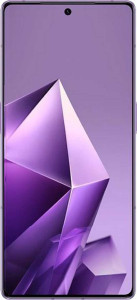
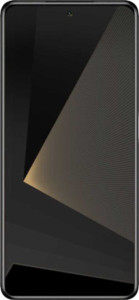
Infinix Note 50 Pro 4G ZTE Nubia Neo 3 GT

Overview

Welcome to our in-depth comparison of the Infinix Note 50 Pro 4G and the ZTE Nubia Neo 3 GT — two Android 15 mid-rangers that share a surprising amount of common ground while diverging sharply in areas like raw performance, camera versatility, battery capacity, and connectivity features. Whether you prioritize a smoother display experience, a more capable chipset, or future-proof network support, this breakdown will help you decide which device truly fits your needs.

Common Features

  • Both phones feature an OLED/AMOLED display type.
  • Neither phone has branded damage-resistant glass on the display.
  • Always-On Display is available on both phones.
  • Neither phone supports HDR10, HDR10+, or Dolby Vision.
  • Both phones have a touchscreen display.
  • Neither phone has a secondary screen.
  • Both phones offer 256GB of internal storage.
  • Both phones come with 12GB of RAM.
  • Both phones use a 6nm semiconductor process.
  • Both phones support 64-bit processing and use big.LITTLE technology with 8 CPU threads.
  • Both phones have integrated LTE and integrated graphics.
  • Both phones have a multi-lens main camera with a CMOS sensor and phase-detection autofocus.
  • Both phones support slow-motion video recording and have a built-in HDR mode.
  • Both phones run Android 15 and share the same privacy features including location and camera/microphone privacy options.
  • Neither phone has Mail Privacy Protection or blocks cross-site tracking, but both support theme customization and can block app tracking.
  • Both phones support fast charging and come with a charger included.
  • Neither phone has a removable battery, and both have a rechargeable battery with a battery level indicator.
  • Both phones lack a 3.5mm audio jack but feature stereo speakers.
  • Neither phone supports aptX, LDAC, aptX HD, aptX Adaptive, aptX Lossless.
  • Both phones support dual SIM, USB Type-C, NFC, a fingerprint scanner, and have a gyroscope.
  • Neither phone supports emergency SOS via satellite or crash detection.
  • Both phones have a video light and neither has a sapphire glass, curved, or e-paper display.

Main Differences

  • Screen size is 6.78″ on the Infinix Note 50 Pro 4G and 6.8″ on the ZTE Nubia Neo 3 GT.
  • Pixel density is 393 ppi on the Infinix Note 50 Pro 4G and 386 ppi on the ZTE Nubia Neo 3 GT.
  • Resolution is 1080 x 2436 px on the Infinix Note 50 Pro 4G and 1080 x 2392 px on the ZTE Nubia Neo 3 GT.
  • Display refresh rate is 144Hz on the Infinix Note 50 Pro 4G and 120Hz on the ZTE Nubia Neo 3 GT.
  • AnTuTu benchmark score is 438000 on the Infinix Note 50 Pro 4G and 800000 on the ZTE Nubia Neo 3 GT.
  • The chipset is MediaTek Helio G100 on the Infinix Note 50 Pro 4G and Unisoc T9100 on the ZTE Nubia Neo 3 GT.
  • The GPU is Mali G57 on the Infinix Note 50 Pro 4G and Mali G57 MP4 on the ZTE Nubia Neo 3 GT.
  • CPU speed is 2 x 2.2 & 6 x 2 GHz on the Infinix Note 50 Pro 4G and 1 x 2.7 & 3 x 2.3 & 4 x 2.1 GHz on the ZTE Nubia Neo 3 GT.
  • RAM speed is 4266 MHz on the Infinix Note 50 Pro 4G and 2133 MHz on the ZTE Nubia Neo 3 GT.
  • OpenGL ES version is 3.2 on the Infinix Note 50 Pro 4G and 2.3 on the ZTE Nubia Neo 3 GT.
  • Maximum memory amount is 12GB on the Infinix Note 50 Pro 4G and 8GB on the ZTE Nubia Neo 3 GT.
  • Main camera megapixels are 50 & 8 MP on the Infinix Note 50 Pro 4G and 50 & 2 MP on the ZTE Nubia Neo 3 GT.
  • Main camera wide aperture is f/2.2 & f/1.9 on the Infinix Note 50 Pro 4G and f/2.4 & f/1.8 on the ZTE Nubia Neo 3 GT.
  • Front camera resolution is 32MP on the Infinix Note 50 Pro 4G and 16MP on the ZTE Nubia Neo 3 GT.
  • Optical image stabilization is present on the Infinix Note 50 Pro 4G but not available on the ZTE Nubia Neo 3 GT.
  • Main camera video recording supports 1440 x 30 fps on the Infinix Note 50 Pro 4G and 1080 x 30 fps on the ZTE Nubia Neo 3 GT.
  • The Infinix Note 50 Pro 4G has 2 flash LEDs while the ZTE Nubia Neo 3 GT has 1.
  • Front camera aperture is f/2.2 on the Infinix Note 50 Pro 4G and f/2.0 on the ZTE Nubia Neo 3 GT.
  • Battery capacity is 5200 mAh on the Infinix Note 50 Pro 4G and 6000 mAh on the ZTE Nubia Neo 3 GT.
  • Wireless charging is supported on the Infinix Note 50 Pro 4G but not available on the ZTE Nubia Neo 3 GT.
  • Charging speed is 90W on the Infinix Note 50 Pro 4G and 80W on the ZTE Nubia Neo 3 GT.
  • FM radio is present on the Infinix Note 50 Pro 4G but not available on the ZTE Nubia Neo 3 GT.
  • 5G support is not available on the Infinix Note 50 Pro 4G but is present on the ZTE Nubia Neo 3 GT.
  • Wi-Fi versions supported are Wi-Fi 4 and Wi-Fi 5 on the Infinix Note 50 Pro 4G, while the ZTE Nubia Neo 3 GT also adds Wi-Fi 6 support.
  • Bluetooth version is 5.4 on the Infinix Note 50 Pro 4G and 5.2 on the ZTE Nubia Neo 3 GT.
  • Download speed is 650 Mbits/s on the Infinix Note 50 Pro 4G and 750 Mbits/s on the ZTE Nubia Neo 3 GT.
  • Upload speed is 150 Mbits/s on the Infinix Note 50 Pro 4G and 210 Mbits/s on the ZTE Nubia Neo 3 GT.
  • A heart rate monitor is present on the Infinix Note 50 Pro 4G but not available on the ZTE Nubia Neo 3 GT.
Specs Comparison
Infinix Note 50 Pro 4G

Infinix Note 50 Pro 4G

ZTE Nubia Neo 3 GT

ZTE Nubia Neo 3 GT

Design:
has a rugged build
can be folded

In terms of design fundamentals, the Infinix Note 50 Pro 4G and the ZTE Nubia Neo 3 GT share identical footing: neither offers a rugged build nor a foldable form factor. This means both are standard, flat-slab smartphones without reinforced durability certifications or the premium flexibility of a folding display.

The absence of rugged construction on both devices signals that neither is aimed at users who work in harsh environments or need drop and dust resistance beyond typical consumer-grade protection. Similarly, the lack of a foldable design keeps both firmly in the conventional smartphone category, which is entirely expected at their respective market segments.

With no differentiating design specs between them in this category, the two products are evenly matched on design fundamentals. Neither holds an advantage here, and prospective buyers should look to other spec groups — such as display, performance, or build materials — to find meaningful distinctions.

Display:
Display type OLED/AMOLED OLED/AMOLED
screen size 6.78" 6.8"
pixel density 393 ppi 386 ppi
resolution 1080 x 2436 px 1080 x 2392 px
refresh rate 144Hz 120Hz
has branded damage-resistant glass
supports HDR10
supports HDR10+
Always-On Display
supports Dolby Vision
Has a secondary screen
has a touch screen

Both the Infinix Note 50 Pro 4G and the ZTE Nubia Neo 3 GT feature OLED/AMOLED panels at nearly identical screen sizes — 6.78″ versus 6.8″ — so users on either device get the same core OLED benefits: deep blacks, vivid colors, and power-efficient rendering of dark content. At this level of similarity, screen size and panel type are essentially a wash.

Where a real difference emerges is the refresh rate. The Infinix Note 50 Pro 4G steps up to 144Hz, compared to the Nubia Neo 3 GT's 120Hz. In practice, 144Hz delivers noticeably smoother scrolling and more fluid animations, which is particularly impactful in gaming and fast-paced UI interactions. The pixel density gap — 393 ppi vs. 386 ppi — is negligible and imperceptible to the naked eye, so it is the refresh rate that matters here. Both devices share Always-On Display support, and neither carries branded damage-resistant glass or HDR10/Dolby Vision certification, leveling the playing field on those fronts.

The Infinix Note 50 Pro 4G holds a clear edge in this category, driven entirely by its higher refresh rate. For everyday users the difference may be subtle, but for anyone who prioritizes display smoothness — especially mobile gamers — the 144Hz panel is a meaningful advantage that the Nubia Neo 3 GT cannot match.

Performance:
internal storage 256GB 256GB
RAM 12GB 12GB
AnTuTu benchmark score 438000 800000
Chipset (SoC) name MediaTek Helio G100 Unisoc T9100
GPU name Mali G57 Mali G57 MP4
CPU speed 2 x 2.2 & 6 x 2 GHz 1 x 2.7 & 3 x 2.3 & 4 x 2.1 GHz
Has integrated LTE
RAM speed 4266 MHz 2133 MHz
semiconductor size 6 nm 6 nm
Supports 64-bit
Has integrated graphics
OpenGL ES version 3.2 2.3
Uses big.LITTLE technology
CPU threads 8 threads 8 threads
Uses HMP
Has TrustZone
OpenCL version 2 2
maximum memory amount 12GB 8GB
DDR memory version 4 4

On paper, the Infinix Note 50 Pro 4G and the ZTE Nubia Neo 3 GT share the same RAM amount, storage capacity, process node, and even the same thread count — but the AnTuTu benchmark scores tell a starkly different story. The Nubia Neo 3 GT's Unisoc T9100 scores approximately 800,000, nearly double the Infinix's 438,000 on the MediaTek Helio G100. That gap is not a rounding error — it translates to meaningfully faster app launches, smoother multitasking under load, and superior sustained performance in demanding tasks like gaming or video rendering.

A few specs push back in the Infinix's favor, though not enough to close the gap. Its RAM runs at 4266 MHz versus the Nubia Neo 3 GT's 2133 MHz, making the Note 50 Pro 4G faster at feeding data to its processor — a real advantage in memory-bandwidth-sensitive workloads. The Infinix also supports OpenGL ES 3.2 compared to the Nubia's 2.3, meaning broader compatibility with modern graphics APIs and potentially better visual fidelity in supported games. The Nubia Neo 3 GT's maximum addressable memory is also capped at 8GB despite its 12GB physical RAM, while the Infinix can utilize the full 12GB.

Taken together, the ZTE Nubia Neo 3 GT holds a decisive performance edge for raw processing power, and no amount of faster RAM or graphics API support on the Infinix fully offsets an ~83% AnTuTu advantage. Users who prioritize peak computational speed and gaming performance should lean toward the Nubia Neo 3 GT; the Infinix Note 50 Pro 4G is more competitive in memory efficiency, but its chipset is simply outclassed here.

Cameras:
megapixels (main camera) 50 & 8 MP 50 & 2 MP
wide aperture (main camera) 2.2 & 1.9f 2.4 & 1.8f
Has a dual-lens (or multi-lens) main camera
megapixels (front camera) 32MP 16MP
has built-in optical image stabilization
video recording (main camera) 1440 x 30 fps 1080 x 30 fps
Has a dual-tone LED flash
number of flash LEDs 2 1
has a BSI sensor
has a CMOS sensor
has continuous autofocus when recording movies
Has phase-detection autofocus for photos
supports slow-motion video recording
has a built-in HDR mode
has manual exposure
has a flash
optical zoom 0x 0x
has manual ISO
has a serial shot mode
has manual focus
has a front camera
Has laser autofocus
Shoots 360° panorama
has manual white balance
shoots raw
has touch autofocus
has manual shutter speed
can create panoramas in-camera
wide aperture (front camera) 2.2f 2f
Has timelapse function
Has a front-facing LED flash
has a dual-lens (or multi-lens) front camera
supports HDR10 recording
supports Dolby Vision recording
has a front-facing camera under the display
Has a RGB LED flash
has 3D photo/video recording capabilities

The main sensors are identical at 50MP, but the supporting hardware tells a more revealing story. The Infinix Note 50 Pro 4G pairs its primary lens with an 8MP secondary camera, while the ZTE Nubia Neo 3 GT offers just 2MP — a depth-assist sensor in all but name, adding little real photographic utility. More critically, the Infinix includes optical image stabilization (OIS), which the Nubia entirely lacks. OIS is not a luxury feature; it physically compensates for hand movement during capture, producing sharper handheld shots in low light and dramatically steadier video footage.

Speaking of video, the gap widens further. The Infinix records at 1440p @ 30fps versus the Nubia's ceiling of 1080p @ 30fps — a full resolution tier higher, preserving more detail for cropping, editing, or simply future-proofing content. On the selfie side, the Infinix's 32MP front camera doubles the Nubia's 16MP, making it the stronger choice for portrait selfies and video calls. The Nubia does edge out a marginally wider front aperture at f/2.0 versus f/2.2, which theoretically aids low-light selfies — but that minor advantage is unlikely to offset the resolution gap in practice.

Across nearly every meaningful camera dimension, the Infinix Note 50 Pro 4G holds a clear and consistent advantage: superior secondary camera utility, OIS for stability, higher video resolution, and a higher-resolution front sensor. The Nubia Neo 3 GT matches it only on shared fundamentals like phase-detection autofocus and manual controls, which do not differentiate the two.
Operating system:
Android version Android 15 Android 15
has clipboard warnings
has location privacy options
has camera/microphone privacy options
has Mail Privacy Protection
has theme customization
can block app tracking
blocks cross-site tracking
has on-device machine learning
has notification permissions
has media picker
Can play games while they download
has dark mode
has Wi-Fi password sharing
has battery health check
has an extra dim mode
has focus modes
has dynamic theming
can offload apps
Has customizable notifications
has Live Text
has full-page screenshots
supports split screen
gets direct OS updates
has PiP
Can be used as a PC
Has sharing intents
has a child lock
Supports widgets
Is free and open source
Has offline voice recognition
has voice commands
Tracks the current position of a mobile device
is a multi-user system
has Quick Start

Running Android 15 on both devices, the Infinix Note 50 Pro 4G and the ZTE Nubia Neo 3 GT arrive at an uncommon situation in comparative analysis: a complete feature tie across every single tracked operating system attribute. From privacy controls — including location, camera, and microphone permissions — to productivity features like split screen, Picture-in-Picture, and widget support, the two devices are specification-for-specification identical in this category.

It is worth noting what both devices share that carries real user value. On-device machine learning enables smarter features like Live Text and offline voice recognition without sending data to the cloud — a meaningful privacy and reliability benefit. Both also support dynamic theming and extensive notification customization, reflecting Android 15's matured personalization layer. Notably, neither device gets direct OS updates from Google, meaning update delivery depends on each manufacturer's own schedule — a consideration for long-term software support.

With no differentiating data points to separate them, this category is an absolute tie. Any distinction in the actual day-to-day software experience between these two phones would come down to each manufacturer's custom Android skin — which falls outside the scope of the provided specs.

Battery:
battery power 5200 mAh 6000 mAh
has wireless charging
Supports fast charging
charging speed 90W 80W
comes with a charger
has a removable battery
has a battery level indicator
has a rechargeable battery

Battery capacity is where the ZTE Nubia Neo 3 GT reasserts itself after its performance lead. Its 6000 mAh cell outpaces the Infinix Note 50 Pro 4G's 5200 mAh by a meaningful 800 mAh — roughly a 15% larger reserve. In real-world terms, that translates to noticeably longer screen-on time, more headroom for heavy gaming sessions, and greater confidence going into a second day without reaching for a charger.

The charging story, however, is more nuanced. The Infinix counters with a slightly faster 90W wired charging speed versus the Nubia's 80W — a modest difference that will shave only a few minutes off a full charge cycle. Far more significant is the Infinix's support for wireless charging, a convenience feature the Nubia Neo 3 GT lacks entirely. For users who rely on wireless pads at a desk or bedside, this is a genuine quality-of-life advantage that the raw wattage comparison alone does not capture.

This category comes down to a trade-off rather than a clean winner. The Nubia Neo 3 GT offers superior battery longevity thanks to its larger cell, while the Infinix Note 50 Pro 4G wins on charging versatility with wireless support. Users who prioritize endurance and rarely use wireless charging will favor the Nubia; those who value the flexibility of cable-free top-ups will find the Infinix more compelling despite its smaller battery.

Audio:
has a socket for a 3.5 mm audio jack
has stereo speakers
has aptX
has LDAC
has aptX HD
has aptX Adaptive
has aptX Lossless
Has a radio

Shared limitations define much of this category. Both the Infinix Note 50 Pro 4G and the ZTE Nubia Neo 3 GT drop the 3.5mm headphone jack, pushing users toward Bluetooth or USB-C audio. Neither device supports high-resolution Bluetooth codecs like LDAC, aptX HD, or any aptX variant, which means audiophiles relying on wireless headphones will be capped at standard Bluetooth audio quality on both phones. On the speaker front, both offer stereo speakers — a welcome baseline for media consumption that ensures sound comes from two directions rather than a single mono driver.

The sole differentiator in this group is the built-in FM radio, present on the Infinix but absent on the Nubia Neo 3 GT. While radio is a niche feature for many markets, it carries genuine practical value in regions with strong FM broadcasting infrastructure, during emergencies when internet connectivity is unavailable, or simply for users who prefer listening without consuming mobile data.

The Infinix Note 50 Pro 4G takes a narrow edge here on the strength of its FM radio inclusion. It is the only point of divergence in an otherwise identical audio feature set, and whether it matters depends entirely on the user's listening habits. For anyone who never touches FM radio, this category is effectively a tie.

Connectivity & Features:
release date March 2025 March 2025
has 5G support
Wi-Fi version Wi-Fi 4 (802.11n), Wi-Fi 5 (802.11ac) Wi-Fi 4 (802.11n), Wi-Fi 5 (802.11ac), Wi-Fi 6 (802.11ax)
SIM cards 2 SIM 2 SIM
Bluetooth version 5.4 5.2
Has USB Type-C
has NFC
download speed 650 MBits/s 750 MBits/s
upload speed 150 MBits/s 210 MBits/s
Has a fingerprint scanner
has emergency SOS via satellite
has crash detection
is DLNA-certified
has a gyroscope
supports ANT+
Has a heart rate monitor
has GPS
has a compass
supports Wi-Fi
Has an infrared sensor
has an accelerometer
has a cellular module
Has a barometer
has an HDMI output
Uses 3D facial recognition
Has an iris scanner
Stylus included
supports Galileo
Has motion tracking
Has optical tracking
Has a built-in projector

The most consequential divide in this category is cellular generation. The ZTE Nubia Neo 3 GT supports 5G, while the Infinix Note 50 Pro 4G is capped at 4G LTE. This gap extends beyond raw speed — it is a future-proofing question. As 5G networks continue to expand globally, a 4G-only device will increasingly find itself on slower, more congested bands. The Nubia also pulls ahead on wireless with Wi-Fi 6 support alongside Wi-Fi 4 and 5, whereas the Infinix tops out at Wi-Fi 5. Wi-Fi 6 delivers better throughput and significantly reduced congestion in dense environments like offices or apartments with many connected devices. The Nubia's higher download (750 Mbps vs 650 Mbps) and upload (210 Mbps vs 150 Mbps) speeds reinforce this connectivity advantage on both cellular and wireless fronts.

The Infinix strikes back in two areas. Its Bluetooth 5.4 is a newer version than the Nubia's 5.2, offering improved connection stability and efficiency — a meaningful perk for users who are constantly paired to wireless earbuds or peripherals. More distinctively, the Infinix includes a heart rate monitor, a health sensor entirely absent on the Nubia Neo 3 GT. For users interested in basic biometric tracking without a separate wearable, this is a genuine hardware differentiator.

Weighing the full picture, the ZTE Nubia Neo 3 GT holds the stronger overall connectivity edge — 5G and Wi-Fi 6 are platform-level advantages that affect daily use across the device's entire lifespan. The Infinix's newer Bluetooth and heart rate sensor are notable but narrower wins, unlikely to outweigh the Nubia's superior network capabilities for most users.

Miscellaneous:
has a video light
Has sapphire glass display
Has a curved display
Has an e-paper display

The miscellaneous specs for the Infinix Note 50 Pro 4G and the ZTE Nubia Neo 3 GT are identical across every tracked attribute. Both include a video light — useful for illuminating subjects during video recording — and neither features a sapphire glass display, curved screen, or e-paper panel. These absences are entirely expected at this market tier, where such components remain rare and costly.

This category is a complete tie, with no data points separating the two devices. Buyers should weight other specification groups — particularly performance, cameras, and connectivity — when making their final decision.

Comparison Summary & Verdict

After examining every specification, it becomes clear that these two phones target subtly different users. The Infinix Note 50 Pro 4G stands out with its 144Hz display, optical image stabilization, 32MP front camera, wireless charging, higher OpenGL ES support, and a heart rate monitor — making it a well-rounded choice for content creators and multimedia enthusiasts who want a feature-rich experience. The ZTE Nubia Neo 3 GT, on the other hand, dominates in raw processing power with a significantly higher AnTuTu score, offers a larger 6000 mAh battery, 5G connectivity, and Wi-Fi 6 support, making it the stronger pick for performance-focused users and those who want future-proof networking. Both phones share 256GB storage, 12GB RAM, OLED displays, and Android 15, ensuring a solid baseline experience across the board.

Infinix Note 50 Pro 4G
Buy Infinix Note 50 Pro 4G if...

Buy the Infinix Note 50 Pro 4G if you want a feature-packed experience with a 144Hz display, optical image stabilization, wireless charging, a heart rate monitor, and a superior front camera for selfies.

ZTE Nubia Neo 3 GT
Buy ZTE Nubia Neo 3 GT if...

Buy the ZTE Nubia Neo 3 GT if you prioritize raw performance, a larger battery, 5G connectivity, and Wi-Fi 6 support for a faster and more future-proof smartphone experience.