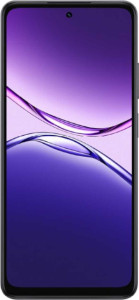
Infinix Note 50s 5G 128GB
Oppo A5i Pro

Infinix Note 50s 5G 128GB Oppo A5i Pro

Overview

Welcome to our in-depth comparison of the Infinix Note 50s 5G 128GB and the Oppo A5i Pro — two mid-range smartphones that take notably different approaches to the everyday mobile experience. From display technology and camera performance to connectivity and audio features, these two devices each bring a distinct set of strengths to the table. Whether you care most about screen quality and processing power or battery endurance and build, this comparison will help you decide which phone best fits your lifestyle.

Common Features

  • Both phones are water resistant.
  • Neither phone has a rugged build.
  • Neither phone can be folded.
  • Both phones have a touch screen.
  • Both phones have branded damage-resistant glass.
  • Neither phone supports HDR10.
  • Neither phone supports HDR10+.
  • Neither phone supports Dolby Vision.
  • Neither phone has a secondary screen.
  • Both phones come with 128GB internal storage and 8GB RAM.
  • Both phones have integrated LTE.
  • Both phones use a 4 nm semiconductor.
  • Both phones support 64-bit processing.
  • Both phones support DirectX 12.
  • Both phones have integrated graphics.
  • Both phones use big.LITTLE technology.
  • Both phones have a dual-lens main camera.
  • Neither phone has a BSI sensor.
  • Both phones have a CMOS sensor.
  • Both phones support continuous autofocus when recording movies.
  • Both phones have phase-detection autofocus for photos.
  • Both phones support slow-motion video recording.
  • Both phones have a built-in HDR mode.
  • Both phones support manual exposure.
  • Both phones have clipboard warnings.
  • Both phones have location privacy options.
  • Both phones have camera and microphone privacy options.
  • Neither phone has Mail Privacy Protection.
  • Both phones have theme customization.
  • Both phones can block app tracking.
  • Neither phone blocks cross-site tracking.
  • Both phones have on-device machine learning.
  • Neither phone supports wireless charging.
  • Both phones support fast charging at 45W.
  • Both phones come with a charger.
  • Neither phone has a removable battery.
  • Both phones have a battery level indicator.
  • Both phones have a rechargeable battery.
  • Neither phone has LDAC.
  • Neither phone has aptX HD, aptX Adaptive, or aptX Lossless.
  • Neither phone has a radio.
  • Both phones support dual SIM cards.
  • Neither phone has an external memory slot.
  • Both phones have USB Type-C with USB version 2.
  • Both phones have NFC.
  • Both phones have a fingerprint scanner.
  • Neither phone has emergency SOS via satellite.
  • Neither phone has crash detection.
  • Both phones have a video light.
  • Neither phone has a sapphire glass display.
  • Neither phone has an e-paper display.

Main Differences

  • Weight is 180 g on Infinix Note 50s 5G 128GB and 193 g on Oppo A5i Pro.
  • Thickness is 7.6 mm on Infinix Note 50s 5G 128GB and 8 mm on Oppo A5i Pro.
  • Width is 74.5 mm on Infinix Note 50s 5G 128GB and 76.2 mm on Oppo A5i Pro.
  • Height is 164.3 mm on Infinix Note 50s 5G 128GB and 165.7 mm on Oppo A5i Pro.
  • Volume is 93.03 cm³ on Infinix Note 50s 5G 128GB and 101.01 cm³ on Oppo A5i Pro.
  • IP rating is IP64 on Infinix Note 50s 5G 128GB and IP65 on Oppo A5i Pro.
  • Display type is OLED/AMOLED on Infinix Note 50s 5G 128GB and LCD IPS on Oppo A5i Pro.
  • Screen size is 6.78″ on Infinix Note 50s 5G 128GB and 6.67″ on Oppo A5i Pro.
  • Pixel density is 393 ppi on Infinix Note 50s 5G 128GB and 264 ppi on Oppo A5i Pro.
  • Resolution is 1080 x 2436 px on Infinix Note 50s 5G 128GB and 720 x 1604 px on Oppo A5i Pro.
  • Refresh rate is 144Hz on Infinix Note 50s 5G 128GB and 90Hz on Oppo A5i Pro.
  • Gorilla Glass version is Gorilla Glass 5 on Infinix Note 50s 5G 128GB and Gorilla Glass 7i on Oppo A5i Pro.
  • Always-On Display is available on Infinix Note 50s 5G 128GB but not on Oppo A5i Pro.
  • Chipset is MediaTek Dimensity 7300 on Infinix Note 50s 5G 128GB and Qualcomm Snapdragon 6 Gen 1 on Oppo A5i Pro.
  • GPU is Mali G615 MC2 on Infinix Note 50s 5G 128GB and Adreno 710 on Oppo A5i Pro.
  • CPU speed is 4 x 2.5 & 4 x 2 GHz on Infinix Note 50s 5G 128GB and 4 x 2.2 & 4 x 1.8 GHz on Oppo A5i Pro.
  • Geekbench 6 multi-core score is 2932 on Infinix Note 50s 5G 128GB and 2748 on Oppo A5i Pro.
  • Geekbench 6 single-core score is 1026 on Infinix Note 50s 5G 128GB and 943 on Oppo A5i Pro.
  • GPU clock speed is 1047 MHz on Infinix Note 50s 5G 128GB and 800 MHz on Oppo A5i Pro.
  • RAM speed is 6400 MHz on Infinix Note 50s 5G 128GB and 2750 MHz on Oppo A5i Pro.
  • Maximum memory is 16GB on Infinix Note 50s 5G 128GB and 12GB on Oppo A5i Pro.
  • Main camera resolution is 64 & 2 MP on Infinix Note 50s 5G 128GB and 50 & 2 MP on Oppo A5i Pro.
  • Main camera wide aperture is f/1.8 on Infinix Note 50s 5G 128GB and f/2.4 & f/1.8 on Oppo A5i Pro.
  • Front camera resolution is 13MP on Infinix Note 50s 5G 128GB and 5MP on Oppo A5i Pro.
  • Optical image stabilization is present on Oppo A5i Pro but not available on Infinix Note 50s 5G 128GB.
  • Main camera video recording is 2160p at 30 fps on Infinix Note 50s 5G 128GB and 1080p at 30 fps on Oppo A5i Pro.
  • Dual-tone LED flash is present on Infinix Note 50s 5G 128GB but not on Oppo A5i Pro.
  • Number of flash LEDs is 2 on Infinix Note 50s 5G 128GB and 1 on Oppo A5i Pro.
  • Android version is Android 15 on Infinix Note 50s 5G 128GB and Android 16 on Oppo A5i Pro.
  • Battery capacity is 5500 mAh on Infinix Note 50s 5G 128GB and 6000 mAh on Oppo A5i Pro.
  • A 3.5 mm audio jack is available on Oppo A5i Pro but not on Infinix Note 50s 5G 128GB.
  • Stereo speakers are present on Infinix Note 50s 5G 128GB but not on Oppo A5i Pro.
  • aptX support is present on Oppo A5i Pro but not available on Infinix Note 50s 5G 128GB.
  • 5G support is present on Infinix Note 50s 5G 128GB but not available on Oppo A5i Pro.
  • Wi-Fi version supports Wi-Fi 6 (802.11ax) on Infinix Note 50s 5G 128GB but only up to Wi-Fi 5 (802.11ac) on Oppo A5i Pro.
  • Bluetooth version is 5.4 on Infinix Note 50s 5G 128GB and 5.0 on Oppo A5i Pro.
  • Download speed is 3270 Mbits/s on Infinix Note 50s 5G 128GB and 2900 Mbits/s on Oppo A5i Pro.
  • Upload speed is 3270 Mbits/s on Infinix Note 50s 5G 128GB and 900 Mbits/s on Oppo A5i Pro.
  • An infrared sensor is present on Infinix Note 50s 5G 128GB but not on Oppo A5i Pro.
  • A curved display is featured on Infinix Note 50s 5G 128GB but not on Oppo A5i Pro.
Specs Comparison
Infinix Note 50s 5G 128GB

Infinix Note 50s 5G 128GB

Oppo A5i Pro

Oppo A5i Pro

Design:
water resistance Water resistant Water resistant
weight 180 g 193 g
thickness 7.6 mm 8 mm
width 74.5 mm 76.2 mm
height 164.3 mm 165.7 mm
volume 93.02666 cm³ 101.01072 cm³
Ingress Protection (IP) rating IP64 IP65
has a rugged build
can be folded

In terms of physical footprint, both phones are similarly sized, but the Infinix Note 50s 5G is the more compact and lighter of the two. At 180 g and 7.6 mm thick, it undercuts the Oppo A5i Pro's 193 g and 8 mm profile by a meaningful margin. That 13-gram difference is noticeable during extended one-handed use or long sessions, and the slimmer chassis contributes to a more premium, pocketable feel in everyday carry.

On water resistance, both carry an IP6X-class rating, but they differ at the second digit: the Infinix holds an IP64 rating, while the Oppo reaches IP65. In practical terms, both are fully dust-tight, but the Oppo's IP65 certification adds resistance against low-pressure water jets from any direction, versus the Infinix's IP64 which only covers water splashes. For most users this distinction is minor, but it gives the Oppo a slight edge in situations like rain or accidental sink splashes. Neither device has a rugged build or a foldable form factor.

Overall, the design category is competitive but split: the Infinix Note 50s 5G wins on ergonomics with its lighter weight and slimmer profile, while the Oppo A5i Pro edges ahead on water protection with its superior IP65 rating. Which advantage matters more depends on the user — those prioritizing comfort and portability will prefer the Infinix, while those wanting slightly better peace of mind around water exposure may lean toward the Oppo.

Display:
Display type OLED/AMOLED LCD, IPS
screen size 6.78" 6.67"
pixel density 393 ppi 264 ppi
resolution 1080 x 2436 px 720 x 1604 px
refresh rate 144Hz 90Hz
has branded damage-resistant glass
Gorilla Glass version Gorilla Glass 5 Gorilla Glass 7i
supports HDR10
supports HDR10+
Always-On Display
supports Dolby Vision
Has a secondary screen
has a touch screen

The display category is where these two phones diverge most sharply. The Infinix Note 50s 5G uses an AMOLED panel while the Oppo A5i Pro relies on an IPS LCD — a fundamental difference in display technology. AMOLED produces true blacks, higher contrast, and more vibrant colors by lighting pixels individually, whereas IPS LCD uses a backlight and generally delivers a flatter, less punchy image. For media consumption, gaming, or simply reading in varied lighting, the Infinix's panel is the more immersive of the two.

The resolution gap compounds this advantage significantly. The Infinix renders at 1080 x 2436 px — a Full HD+ standard — yielding a sharp 393 ppi pixel density. The Oppo, by contrast, tops out at 720 x 1604 px (HD+), translating to just 264 ppi. That 129 ppi difference is clearly visible when reading small text or viewing detailed images; the Oppo's display will appear noticeably softer at typical viewing distances. The Infinix also runs at a 144Hz refresh rate versus the Oppo's 90Hz, meaning smoother scrolling and more fluid animations throughout the UI. The Oppo does counter with Gorilla Glass 7i — a newer scratch-resistance generation than the Infinix's Gorilla Glass 5 — offering slightly better everyday durability for the screen surface itself.

The verdict here is unambiguous: the Infinix Note 50s 5G holds a decisive edge in the display category across nearly every meaningful dimension — panel technology, resolution, pixel density, and refresh rate. The Oppo's newer Gorilla Glass is a real but narrow consolation. Users who prioritize screen quality will find the Infinix the clear choice.

Performance:
internal storage 128GB 128GB
RAM 8GB 8GB
Chipset (SoC) name MediaTek Dimensity 7300 Qualcomm Snapdragon 6 Gen 1
GPU name Mali G615 MC2 Adreno 710
CPU speed 4 x 2.5 & 4 x 2 GHz 4 x 2.2 & 4 x 1.8 GHz
Geekbench 6 result (multi) 2932 2748
Geekbench 6 result (single) 1026 943
GPU clock speed 1047 MHz 800 MHz
Has integrated LTE
RAM speed 6400 MHz 2750 MHz
semiconductor size 4 nm 4 nm
Supports 64-bit
DirectX version DirectX 12 DirectX 12
Has integrated graphics
Uses big.LITTLE technology
CPU threads 8 threads 8 threads
Uses HMP
maximum memory amount 16GB 12GB
DDR memory version 5 5

Both phones are built on a 4 nm process and ship with 8GB of RAM and 128GB of storage, so the platform-level parity is real — but the details reveal a consistent performance edge for the Infinix Note 50s 5G. Its MediaTek Dimensity 7300 scores 2932 multi-core and 1026 single-core on Geekbench 6, compared to the Oppo A5i Pro's Snapdragon 6 Gen 1 at 2748 and 943 respectively. The Infinix also leads on CPU clock speeds — its performance cores run at 2.5 GHz versus the Oppo's 2.2 GHz — which translates to snappier app launches and more responsive multitasking in everyday use.

The GPU picture follows the same pattern. The Infinix's Mali G615 MC2 operates at a notably higher 1047 MHz clock versus the Adreno 710's 800 MHz, suggesting a tangible advantage in graphics-intensive tasks like gaming or video rendering. Equally significant is the RAM bandwidth gap: the Infinix uses LPDDR5 at 6400 MHz, more than double the Oppo's 2750 MHz, which means data is fed to the processor far faster — reducing bottlenecks during demanding workloads. The Infinix also supports up to 16GB maximum memory versus the Oppo's 12GB ceiling, giving it more headroom for future software demands or extended virtual RAM configurations.

Across every measurable performance dimension — CPU throughput, GPU clock speed, RAM bandwidth, and memory ceiling — the Infinix Note 50s 5G holds a clear and consistent advantage. The Oppo A5i Pro is no slouch for everyday tasks, but users who game, multitask heavily, or simply want more long-term headroom will find the Infinix the stronger performer here.

Cameras:
megapixels (main camera) 64 & 2 MP 50 & 2 MP
wide aperture (main camera) 1.8f 2.4 & 1.8f
Has a dual-lens (or multi-lens) main camera
megapixels (front camera) 13MP 5MP
has built-in optical image stabilization
video recording (main camera) 2160 x 30 fps 1080 x 30 fps
Has a dual-tone LED flash
number of flash LEDs 2 1
has a BSI sensor
has a CMOS sensor
has continuous autofocus when recording movies
Has phase-detection autofocus for photos
supports slow-motion video recording
has a built-in HDR mode
has manual exposure
has a flash
optical zoom 0x 0x
has manual ISO
has a serial shot mode
has manual focus
has a front camera
Has laser autofocus
Shoots 360° panorama
has manual white balance
shoots raw
has touch autofocus
has manual shutter speed
can create panoramas in-camera
wide aperture (front camera) 2.2f 2.2f
Has a front-facing LED flash
has a dual-lens (or multi-lens) front camera
supports HDR10 recording
supports Dolby Vision recording
has a front-facing camera under the display
Has a RGB LED flash
has 3D photo/video recording capabilities

The main cameras tell an interesting story. The Infinix Note 50s 5G shoots at 64 MP with an f/1.8 aperture, while the Oppo A5i Pro offers 50 MP at a narrower f/2.4. The aperture gap matters most in low-light conditions — a wider f/1.8 lens lets in significantly more light, which typically yields brighter, less noisy shots without flash. The Oppo does, however, include optical image stabilization (OIS) — a feature the Infinix lacks entirely. OIS physically compensates for hand movement during capture, making a real difference for handheld low-light photos and especially for video stability.

Video recording is a clear win for the Infinix: it tops out at 2160p (4K) at 30 fps, while the Oppo is capped at 1080p at 30 fps. For users who care about video quality — whether for social media, travel clips, or archiving memories — that is a meaningful gap. The selfie camera difference is equally stark: the Infinix offers a 13 MP front shooter versus the Oppo's 5 MP, which will produce noticeably sharper, more detailed self-portraits and video calls.

The camera category is split on priorities. The Oppo A5i Pro counters with OIS, which is a genuinely useful stabilization tool. But the Infinix Note 50s 5G wins on more fronts — higher resolution, wider aperture, 4K video, and a far superior selfie camera — making it the stronger overall camera package for most users, particularly those who shoot video or take selfies frequently.

Operating system:
Android version Android 15 Android 16
has clipboard warnings
has location privacy options
has camera/microphone privacy options
has Mail Privacy Protection
has theme customization
can block app tracking
blocks cross-site tracking
has on-device machine learning
has notification permissions
has media picker
Can play games while they download
has dark mode
has Wi-Fi password sharing
has battery health check
has an extra dim mode
has focus modes
has dynamic theming
can offload apps
Has customizable notifications
has Live Text
has full-page screenshots
supports split screen
gets direct OS updates
has PiP
Can be used as a PC
Has sharing intents
has a child lock
Supports widgets
Is free and open source
Has offline voice recognition
has voice commands
Tracks the current position of a mobile device
is a multi-user system
has Quick Start

The operating system category is remarkably uniform between these two devices — with one exception that stands out. The Oppo A5i Pro ships with Android 16, while the Infinix Note 50s 5G launches on Android 15. A newer Android version means access to the latest security patches, privacy improvements, and system-level features from day one, without waiting for an update. It also signals a slightly longer runway before the device falls behind on OS support, assuming update cadences are otherwise similar.

Beyond that single difference, the two phones are functionally identical across every listed software feature. Both offer the same privacy controls, dynamic theming, split-screen multitasking, Picture-in-Picture, on-device machine learning, battery health checks, and the full suite of Android productivity tools. Neither receives direct OS updates from Google, and neither supports features like Wi-Fi password sharing or focus modes — so no advantage emerges on either side from the broader feature checklist.

Given how closely matched these two are in software capabilities, the Oppo A5i Pro takes a narrow but real edge in this category purely by virtue of its newer Android 16 base. For users who value being current on the Android release cycle at the time of purchase, that distinction is worth noting — though for day-to-day usability, the practical difference will be minimal.

Battery:
battery power 5500 mAh 6000 mAh
has wireless charging
Supports fast charging
charging speed 45W 45W
comes with a charger
has a removable battery
has a battery level indicator
has a rechargeable battery

Charging speed and ecosystem features are perfectly matched here — both phones support 45W fast charging, come bundled with a charger, and lack wireless charging. The one differentiator is battery capacity: the Oppo A5i Pro packs a 6000 mAh cell versus the Infinix Note 50s 5G's 5500 mAh. That 500 mAh gap represents roughly 9% more stored energy, which in practice could translate to an extra hour or so of screen-on time depending on usage patterns.

It is worth contextualizing that gap, though. The Infinix drives a more demanding AMOLED display at 144Hz and 1080p, while the Oppo powers a lower-resolution 90Hz LCD — meaning the Infinix's larger power draw may partially offset its smaller battery advantage in real-world endurance. The raw mAh figure alone does not tell the full battery life story across these two different platforms.

Taken purely on the specs provided, the Oppo A5i Pro holds the edge in this category by virtue of its larger 6000 mAh battery, with neither phone offering a compensating advantage like wireless charging. Users for whom all-day or multi-day battery life is a top priority will find the Oppo's bigger cell an appealing insurance policy.

Audio:
has a socket for a 3.5 mm audio jack
has stereo speakers
has aptX
has LDAC
has aptX HD
has aptX Adaptive
has aptX Lossless
Has a radio

Audio is a tale of two different philosophies. The Infinix Note 50s 5G drops the headphone jack entirely but gains stereo speakers, while the Oppo A5i Pro takes the opposite approach — retaining the 3.5 mm audio jack and supporting aptX Bluetooth audio, but offering only a single mono speaker. These are genuinely competing priorities rather than one phone simply outclassing the other.

Stereo speakers create a wider, more immersive soundstage for media consumption — videos, music, and gaming all benefit from having audio come from two directions rather than one. AptX, on the other hand, improves Bluetooth audio quality by reducing compression artifacts and latency when paired with compatible wireless headphones, which is meaningful for users who rely on Bluetooth audio regularly. The 3.5 mm jack remains the most universally compatible wired audio option, requiring no adapters and supporting any standard headphones or earphones without loss of quality.

This category comes down squarely to user habit. Those who consume media through the phone's own speakers will find the Infinix Note 50s 5G and its stereo output the stronger choice. Users who primarily listen through headphones — particularly wired ones — will appreciate the Oppo A5i Pro's headphone jack and aptX support. Neither phone holds a universal edge; the advantage belongs to whichever audio workflow matches the individual user.

Connectivity & Features:
release date April 2025 June 2025
has 5G support
Wi-Fi version Wi-Fi 4 (802.11n), Wi-Fi 5 (802.11ac), Wi-Fi 6 (802.11ax) Wi-Fi 4 (802.11n), Wi-Fi 5 (802.11ac)
SIM cards 2 SIM 2 SIM
Bluetooth version 5.4 5
has an external memory slot
Has USB Type-C
USB version 2 2
has NFC
download speed 3270 MBits/s 2900 MBits/s
upload speed 3270 MBits/s 900 MBits/s
Has a fingerprint scanner
has emergency SOS via satellite
has crash detection
is DLNA-certified
has a gyroscope
supports ANT+
Has a heart rate monitor
has GPS
has a compass
supports Wi-Fi
Has an infrared sensor
has an accelerometer
has a cellular module
Has a barometer
has an HDMI output
Uses 3D facial recognition
Has an iris scanner
Stylus included
supports Galileo
Has motion tracking
Has optical tracking
Has a built-in projector

The most consequential difference here is cellular connectivity: the Infinix Note 50s 5G supports 5G, while the Oppo A5i Pro is limited to 4G LTE. For users in areas with 5G coverage, this means significantly faster mobile data speeds and better future-proofing as 5G networks continue to expand. The Infinix also carries this advantage into Wi-Fi, supporting Wi-Fi 6 (802.11ax) versus the Oppo's maximum of Wi-Fi 5 — Wi-Fi 6 delivers better throughput and reduced congestion on busy networks. Its Bluetooth 5.4 implementation is also a step ahead of the Oppo's Bluetooth 5.0, offering improvements in connection stability and energy efficiency.

The upload speed gap is particularly striking: the Infinix reaches 3270 Mbps upload versus the Oppo's 900 Mbps — a more than threefold difference that matters for anyone who frequently uploads large files, video calls, or live streams on mobile data. The Infinix also includes an infrared sensor, allowing it to function as a universal remote for TVs and appliances, a feature absent on the Oppo. Both phones share NFC, dual SIM, USB Type-C, fingerprint scanning, and the core sensor suite including GPS, gyroscope, and compass.

The Infinix Note 50s 5G holds a clear and broad advantage in this category. Across mobile connectivity, Wi-Fi generation, Bluetooth version, upload speeds, and extra hardware features like the IR sensor, it outpoints the Oppo A5i Pro at nearly every turn. For users who prioritize staying connected at the fastest available speeds, the Infinix is the stronger choice by a meaningful margin.

Miscellaneous:
has a video light
Has sapphire glass display
Has a curved display
Has an e-paper display

The miscellaneous category is sparse, with both phones sharing a video light and neither featuring sapphire glass or an e-paper display. The only differentiator is the Infinix Note 50s 5G's curved display, which the Oppo A5i Pro does not have. A curved screen gives the device a more premium, sculpted aesthetic and can make edge-to-edge swiping feel more natural in the hand — though it can also make screen protectors slightly harder to fit and may increase vulnerability at the edges if dropped.

Whether the curved display reads as an advantage or a trade-off depends largely on personal preference. Some users prize the sleek, modern look it delivers; others prefer the simplicity and repairability of a flat panel. From a purely design-forward standpoint, however, it does distinguish the Infinix as the more visually refined of the two.

Given how limited the data is in this group, the Infinix Note 50s 5G takes a minor edge solely on the basis of its curved display — the one meaningful differentiator present. For most buyers, this category will carry little weight in the overall decision, but it does add a subtle premium touch to the Infinix's physical presentation.

Comparison Summary & Verdict

After examining every specification, a clear picture emerges for each device. The Infinix Note 50s 5G 128GB is the stronger choice for users who prioritize a premium multimedia experience: its OLED display with 144Hz refresh rate, higher pixel density, 5G connectivity, faster RAM, stereo speakers, and superior upload speeds make it ideal for content consumers and power users who want a snappier, more immersive device. On the other hand, the Oppo A5i Pro appeals to those who value longevity and practicality — its 6000 mAh battery, optical image stabilization, 3.5 mm headphone jack, higher IP65 water resistance rating, and Android 16 out of the box make it a dependable daily driver for users who prioritize battery life, durability, and versatility over raw performance metrics.

Infinix Note 50s 5G 128GB
Buy Infinix Note 50s 5G 128GB if...

Buy the Infinix Note 50s 5G 128GB if you want a superior OLED display with a 144Hz refresh rate, 5G support, faster RAM, and stereo speakers for an immersive multimedia and browsing experience.

Oppo A5i Pro
Buy Oppo A5i Pro if...

Buy the Oppo A5i Pro if you prioritize a larger 6000 mAh battery, a 3.5 mm headphone jack, optical image stabilization, and a higher IP65 water resistance rating for reliable all-day use.