Infinix Note 50s 5G
Xiaomi Redmi Note 14 Pro 4G (Global)

Infinix Note 50s 5G Xiaomi Redmi Note 14 Pro 4G (Global)

Overview

Welcome to our in-depth spec comparison between the Infinix Note 50s 5G and the Xiaomi Redmi Note 14 Pro 4G (Global) — two mid-range contenders that share a surprising amount of common ground while diverging sharply in key areas. From raw processing performance and connectivity to camera versatility and display quality, each device makes a compelling case for a different type of user. Read on to see how they truly stack up.

Common Features

  • Both phones are water resistant with an IP64 ingress protection rating.
  • Both phones weigh 180 g.
  • Neither phone has a rugged build or can be folded.
  • Both phones feature an OLED/AMOLED display type.
  • Both displays have branded damage-resistant glass.
  • Always-On Display is available on both phones.
  • Neither phone has a secondary screen.
  • Both phones have integrated LTE and support 64-bit processing.
  • Both phones use big.LITTLE technology with 8 CPU threads and HMP.
  • Both phones feature a dual-lens or multi-lens main camera.
  • Neither phone has built-in optical image stabilization.
  • Both phones support 4K video recording at 30 fps on the main camera.
  • Both phones support slow-motion video recording and continuous autofocus when recording.
  • Both phones have phase-detection autofocus for photos.
  • Both phones run on Android with clipboard warnings, location privacy options, and camera/microphone privacy options.
  • Both phones have a 5500 mAh battery with 45W fast charging and come with a charger included.
  • Neither phone supports wireless charging or has a removable battery.
  • Both phones have stereo speakers but lack aptX HD, aptX Adaptive, and aptX Lossless support.
  • Both phones support dual SIM, NFC, USB Type-C (USB 2.0), and have a fingerprint scanner.
  • Both phones have a curved display and a video light, but neither has sapphire glass or an e-paper display.

Main Differences

  • Thickness is 7.6 mm on Infinix Note 50s 5G and 8.2 mm on Xiaomi Redmi Note 14 Pro 4G (Global).
  • Height is 164.3 mm on Infinix Note 50s 5G and 162.2 mm on Xiaomi Redmi Note 14 Pro 4G (Global).
  • Volume is 93.03 cm³ on Infinix Note 50s 5G and 99.62 cm³ on Xiaomi Redmi Note 14 Pro 4G (Global).
  • Screen size is 6.78″ on Infinix Note 50s 5G and 6.67″ on Xiaomi Redmi Note 14 Pro 4G (Global).
  • Refresh rate is 144Hz on Infinix Note 50s 5G and 120Hz on Xiaomi Redmi Note 14 Pro 4G (Global).
  • Gorilla Glass version is Gorilla Glass 5 on Infinix Note 50s 5G and Gorilla Glass Victus 2 on Xiaomi Redmi Note 14 Pro 4G (Global).
  • HDR10, HDR10+, and Dolby Vision support are present on Xiaomi Redmi Note 14 Pro 4G (Global) but not available on Infinix Note 50s 5G.
  • Internal storage is 256GB on Infinix Note 50s 5G and 512GB on Xiaomi Redmi Note 14 Pro 4G (Global).
  • RAM is 8GB on Infinix Note 50s 5G and 12GB on Xiaomi Redmi Note 14 Pro 4G (Global).
  • AnTuTu benchmark score is 675,134 on Infinix Note 50s 5G and 420,000 on Xiaomi Redmi Note 14 Pro 4G (Global).
  • The chipset is MediaTek Dimensity 7300 (4 nm) on Infinix Note 50s 5G and MediaTek Helio G100 (6 nm) on Xiaomi Redmi Note 14 Pro 4G (Global).
  • Main camera resolution is 64 & 2 MP on Infinix Note 50s 5G and 200 & 8 & 2 MP on Xiaomi Redmi Note 14 Pro 4G (Global).
  • Front camera is 13 MP on Infinix Note 50s 5G and 32 MP on Xiaomi Redmi Note 14 Pro 4G (Global).
  • A dual-tone LED flash is present on Infinix Note 50s 5G but not available on Xiaomi Redmi Note 14 Pro 4G (Global).
  • Infinix Note 50s 5G runs Android 15 while Xiaomi Redmi Note 14 Pro 4G (Global) runs Android 14.
  • App offloading is supported on Infinix Note 50s 5G but not available on Xiaomi Redmi Note 14 Pro 4G (Global).
  • A 3.5 mm audio jack is present on Xiaomi Redmi Note 14 Pro 4G (Global) but not available on Infinix Note 50s 5G.
  • LDAC and aptX audio support are present on Xiaomi Redmi Note 14 Pro 4G (Global) but not available on Infinix Note 50s 5G.
  • 5G support is present on Infinix Note 50s 5G but not available on Xiaomi Redmi Note 14 Pro 4G (Global).
  • Download speed reaches 3270 Mbits/s on Infinix Note 50s 5G and 650 Mbits/s on Xiaomi Redmi Note 14 Pro 4G (Global).
Specs Comparison
Infinix Note 50s 5G

Infinix Note 50s 5G

Xiaomi Redmi Note 14 Pro 4G (Global)

Xiaomi Redmi Note 14 Pro 4G (Global)

Design:
water resistance Water resistant Water resistant
weight 180 g 180 g
thickness 7.6 mm 8.2 mm
width 74.5 mm 74.9 mm
height 164.3 mm 162.2 mm
volume 93.02666 cm³ 99.619996 cm³
Ingress Protection (IP) rating IP64 IP64
has a rugged build
can be folded

At a glance, these two phones share a striking number of design traits: both weigh exactly 180 g, carry an IP64 water-resistance rating, and neither adopts a rugged or foldable form factor. For users prioritizing durability fundamentals, IP64 means protection against dust and splashing water from any direction — solid for everyday use, though not suited for submersion.

Where the designs diverge is in their dimensions. The Infinix Note 50s 5G is measurably slimmer at 7.6 mm thick versus the Redmi Note 14 Pro 4G's 8.2 mm — a 0.6 mm gap that, while modest on paper, translates to a noticeably sleeker in-hand feel, especially during extended use. This also results in a meaningfully smaller overall volume: 93.03 cm³ compared to 99.62 cm³ for the Redmi. The Infinix is slightly taller (164.3 mm vs 162.2 mm) and marginally narrower (74.5 mm vs 74.9 mm), so its compactness comes from that thinner profile rather than a shorter footprint.

Overall, the Infinix Note 50s 5G holds a clear edge in design ergonomics for this group. Despite identical weight and protection ratings, its slimmer, lower-volume body makes it the more pocketable and refined choice. The Redmi Note 14 Pro 4G offers no compensating design advantage based on the available specs, making this a straightforward win for the Infinix on physical form.

Display:
Display type OLED/AMOLED OLED/AMOLED
screen size 6.78" 6.67"
pixel density 393 ppi 395 ppi
resolution 1080 x 2436 px 1080 x 2400 px
refresh rate 144Hz 120Hz
has branded damage-resistant glass
Gorilla Glass version Gorilla Glass 5 Gorilla Glass Victus 2
supports HDR10
supports HDR10+
Always-On Display
supports Dolby Vision
Has a secondary screen
has a touch screen

Both phones use OLED/AMOLED panels with 1080p resolution and near-identical pixel densities (~393–395 ppi), so sharpness and color quality are essentially equivalent in everyday use. The Infinix Note 50s 5G offers a larger 6.78″ screen versus the Redmi Note 14 Pro 4G's 6.67″, which marginally benefits media consumption and readability, though neither difference alone is a dealbreaker.

The more consequential split is elsewhere. The Infinix leads on refresh rate at 144Hz — compared to the Redmi's 120Hz — delivering smoother scrolling and more responsive gaming. However, the Redmi punches back hard on content fidelity: it supports HDR10, HDR10+, and Dolby Vision, while the Infinix supports none of these standards. In practice, this means streaming HDR content from platforms like Netflix or Amazon Prime will look noticeably more vivid and dynamic on the Redmi. On top of that, the Redmi is protected by Gorilla Glass Victus 2 — a significantly more recent and drop-resistant generation — versus the Infinix's Gorilla Glass 5.

This group is genuinely split, but the Xiaomi Redmi Note 14 Pro 4G holds the stronger overall display package. Its triple HDR standard support and superior glass protection are high-impact real-world advantages. The Infinix's 144Hz edge is real but relatively narrow in practical terms, and it cannot compensate for the Redmi's clear lead in content quality and screen durability.

Performance:
internal storage 256GB 512GB
RAM 8GB 12GB
AnTuTu benchmark score 675134 420000
Chipset (SoC) name MediaTek Dimensity 7300 MediaTek Helio G100
GPU name Mali G615 MC2 Mali G57
CPU speed 4 x 2.5 & 4 x 2 GHz 2 x 2.2 & 6 x 2 GHz
GPU clock speed 1047 MHz 1000 MHz
Has integrated LTE
RAM speed 6400 MHz 4266 MHz
semiconductor size 4 nm 6 nm
Supports 64-bit
DirectX version DirectX 12 DirectX 11
Has integrated graphics
Uses big.LITTLE technology
CPU threads 8 threads 8 threads
Uses HMP
maximum memory amount 16GB 12GB
DDR memory version 5 4

The performance gap between these two devices is substantial and unambiguous. The Infinix Note 50s 5G is powered by the MediaTek Dimensity 7300, built on a modern 4 nm process node, while the Redmi Note 14 Pro 4G relies on the MediaTek Helio G100, fabbed on an older 6 nm process. A smaller node generally translates to better power efficiency and thermal management — meaning the Infinix can sustain performance under load while consuming less battery. The AnTuTu scores tell the story plainly: 675,134 for the Infinix versus approximately 420,000 for the Redmi — a ~60% lead that places these chips in meaningfully different performance tiers.

The advantages compound further when looking at memory. The Infinix runs LPDDR5 RAM at 6400 MHz, compared to the Redmi's LPDDR4 at 4266 MHz — faster memory directly reduces latency in app switching and multitasking. The Infinix also supports up to 16 GB of maximum RAM versus the Redmi's cap of 12 GB. On graphics, the Infinix's GPU supports DirectX 12 while the Redmi is limited to DirectX 11, which matters for modern gaming workloads. The Redmi does offer more base storage at 512 GB versus the Infinix's 256 GB, and ships with 12 GB of RAM compared to 8 GB — so it has more headroom for simultaneous app juggling despite its slower chip.

The Infinix Note 50s 5G wins this category decisively on every core performance dimension: faster chipset, newer process node, quicker RAM, and a commanding benchmark lead. The Redmi Note 14 Pro 4G counters only with more base storage and higher stock RAM, but those advantages cannot offset a ~60% deficit in raw processing power for users who prioritize speed and gaming capability.

Cameras:
megapixels (main camera) 64 & 2 MP 200 & 8 & 2 MP
wide aperture (main camera) 1.8f 1.7 & 2.2 & 2.4f
Has a dual-lens (or multi-lens) main camera
megapixels (front camera) 13MP 32MP
has built-in optical image stabilization
video recording (main camera) 2160 x 30 fps 2160 x 30 fps
Has a dual-tone LED flash
number of flash LEDs 2 1
has a BSI sensor
has a CMOS sensor
has continuous autofocus when recording movies
Has phase-detection autofocus for photos
supports slow-motion video recording
has a built-in HDR mode
has manual exposure
has a flash
optical zoom 0x 0x
has manual ISO
has a serial shot mode
has manual focus
has a front camera
Has laser autofocus
Shoots 360° panorama
has manual white balance
shoots raw
has touch autofocus
has manual shutter speed
can create panoramas in-camera
wide aperture (front camera) 2.2f 2.2f
Has a front-facing LED flash
has a dual-lens (or multi-lens) front camera
supports HDR10 recording
supports Dolby Vision recording
has a front-facing camera under the display
Has a RGB LED flash
has 3D photo/video recording capabilities

The camera hardware gap here is significant. The Xiaomi Redmi Note 14 Pro 4G fields a triple-lens rear system headlined by a 200 MP main sensor with an f/1.7 aperture, paired with an 8 MP and a 2 MP auxiliary lens. The Infinix Note 50s 5G counters with a dual-lens setup at 64 MP and 2 MP. In real-world terms, a 200 MP sensor captures dramatically more detail and offers far greater flexibility for cropping without visible quality loss — a genuine advantage for users who shoot landscapes, large group scenes, or anything they plan to print or zoom into. The Redmi's wider f/1.7 aperture on the main lens also admits more light than the Infinix's f/1.8, which translates to a modest but real benefit in low-light conditions.

The Redmi's advantage extends to the front camera as well: 32 MP versus the Infinix's 13 MP, a difference that will be plainly visible in selfie sharpness and the ability to crop or reframe shots after the fact. Both phones max out at 4K 30fps video, share the same core shooting modes, and neither offers optical image stabilization or optical zoom — so the parity ends there. The Infinix does include a dual-tone LED flash, which can produce slightly more natural-looking skin tones in flash photography, though this is a minor offset.

The Xiaomi Redmi Note 14 Pro 4G takes this category clearly, driven by its class-leading 200 MP main sensor, the extra versatility of a third lens, a brighter main aperture, and a substantially higher-resolution selfie camera. For photography-focused buyers, the Redmi's camera system is in a different league on paper based on these specs alone.

Operating system:
Android version Android 15 Android 14
has clipboard warnings
has location privacy options
has camera/microphone privacy options
has Mail Privacy Protection
has theme customization
can block app tracking
blocks cross-site tracking
has on-device machine learning
has notification permissions
has media picker
Can play games while they download
has dark mode
has Wi-Fi password sharing
has battery health check
has an extra dim mode
has focus modes
has dynamic theming
can offload apps
Has customizable notifications
has Live Text
has full-page screenshots
supports split screen
gets direct OS updates
has PiP
Can be used as a PC
Has sharing intents
has a child lock
Supports widgets
Is free and open source
Has offline voice recognition
has voice commands
Tracks the current position of a mobile device
is a multi-user system
has Quick Start

Software-wise, these two phones are remarkably similar in feature set, but one version number makes a meaningful difference: the Infinix Note 50s 5G ships with Android 15, while the Redmi Note 14 Pro 4G launches on Android 14. Starting on a newer OS version matters because it extends the window before a device falls behind on security patches and feature updates — a practical longevity advantage for buyers planning to hold onto their phone for several years.

Digging into the feature list, the overlap is nearly total: both devices offer the same privacy controls, dark mode, dynamic theming, split-screen multitasking, Picture-in-Picture, widgets, and on-device machine learning, among others. The one functional difference worth noting is app offloading — the Infinix supports it, the Redmi does not. Offloading allows rarely used apps to be temporarily removed while preserving their data, which is a handy storage management tool, particularly useful on the Infinix's 256 GB base storage.

The Infinix Note 50s 5G edges this category on the strength of its newer Android version and app offloading support. Neither difference is dramatic, but starting one OS generation ahead is a tangible real-world benefit that compounds over the device's lifespan. The Redmi offers no compensating software advantage based on the provided specs.

Battery:
battery power 5500 mAh 5500 mAh
has wireless charging
Supports fast charging
charging speed 45W 45W
comes with a charger
has a removable battery
Has an ultra power-saving mode
has a battery level indicator
has a rechargeable battery

Rarely does a spec group produce a result this definitive: the Infinix Note 50s 5G and the Xiaomi Redmi Note 14 Pro 4G are in complete lockstep across every single battery specification provided. Both carry a 5500 mAh cell, charge at 45W, bundle a charger in the box, and share the same feature set — fast charging, ultra power-saving mode, and a non-removable, rechargeable battery. There is no differentiator to analyze here.

In practical terms, 5500 mAh is a generously sized capacity that should comfortably support a full day of mixed use for most users, and 45W wired charging is a capable mid-range speed — enough to recover significant charge in roughly an hour. Neither phone supports wireless charging, which may be a consideration for users invested in that ecosystem.

This category is an absolute tie. Buyers cannot use battery specifications as a tiebreaker between these two devices — the decision will have to rest entirely on how the other spec groups stack up against their priorities.

Audio:
has a socket for a 3.5 mm audio jack
has stereo speakers
has aptX
has LDAC
has aptX HD
has aptX Adaptive
has aptX Lossless
Has a radio

Stereo speakers are the one point of parity here — both phones deliver them, which is a meaningful baseline for media consumption and gaming. Beyond that, the Xiaomi Redmi Note 14 Pro 4G pulls ahead on every remaining audio dimension. It retains a 3.5 mm headphone jack, which the Infinix Note 50s 5G omits entirely. For users with wired headphones or earphones — whether for audio quality, latency, or simply avoiding the need to charge another device — this is a practical, everyday convenience that the Infinix cannot replicate without a dongle.

The Redmi also supports aptX and LDAC Bluetooth audio codecs, while the Infinix supports neither. This matters most for wireless listening: LDAC in particular transmits audio at up to three times the bitrate of standard Bluetooth, delivering noticeably higher fidelity on compatible headphones and speakers. aptX similarly improves on the default SBC codec for better quality and lower latency. Users with mid-to-high-end wireless headphones will get more out of their hardware on the Redmi.

The Xiaomi Redmi Note 14 Pro 4G wins this category clearly and without much contest. Its combination of a headphone jack, aptX, and LDAC support makes it the significantly more versatile audio device — catering to both wired and high-quality wireless listeners. The Infinix offers no compensating audio advantage based on the provided specs.

Connectivity & Features:
release date April 2025 January 2025
has 5G support
Wi-Fi version Wi-Fi 4 (802.11n), Wi-Fi 5 (802.11ac), Wi-Fi 6 (802.11ax) Wi-Fi 4 (802.11n), Wi-Fi 6 (802.11ax), Wi-Fi 5 (802.11ac)
SIM cards 2 SIM 2 SIM
Bluetooth version 5.4 5.3
has an external memory slot
Has USB Type-C
USB version 2 2
has NFC
download speed 3270 MBits/s 650 MBits/s
upload speed 3270 MBits/s 150 MBits/s
Has a fingerprint scanner
has emergency SOS via satellite
has crash detection
is DLNA-certified
has a gyroscope
supports ANT+
Has a heart rate monitor
has GPS
has a compass
supports Wi-Fi
Has an infrared sensor
has an accelerometer
has a cellular module
Has a barometer
has an HDMI output
Uses 3D facial recognition
Has an iris scanner
Stylus included
supports Galileo
Has motion tracking
Has optical tracking
Has a built-in projector

The single most consequential difference in this category is cellular generation: the Infinix Note 50s 5G supports 5G, while the Xiaomi Redmi Note 14 Pro 4G is limited to 4G LTE. This gap is reflected starkly in their peak speeds — the Infinix reaches up to 3270 Mbits/s for both download and upload, versus just 650 Mbits/s down and 150 Mbits/s up for the Redmi. Even in markets where 5G coverage is still expanding, buying a 5G-capable phone is a meaningful form of future-proofing, and the upload speed disparity alone is significant for users who stream, video call, or back up large files on mobile networks.

The Infinix also edges ahead on Bluetooth 5.4 versus the Redmi's 5.3 — a minor generational step that offers marginally improved connection stability and efficiency, though unlikely to produce a noticeable real-world difference for most users. Where these phones genuinely converge is on the rest of the feature checklist: both support Wi-Fi 6, NFC, USB Type-C (USB 2.0), dual SIM, GPS with Galileo, an infrared sensor, fingerprint scanner, gyroscope, accelerometer, and compass. That is a comprehensive and well-matched shared foundation.

The Infinix Note 50s 5G wins this category, and it is not particularly close. Its 5G capability and dramatically higher cellular speeds are future-facing advantages that will matter increasingly as networks mature. The Redmi's connectivity package is solid but firmly rooted in the 4G era, and there is no feature in its column that compensates for that structural limitation.

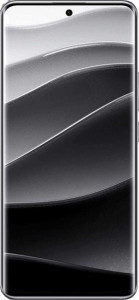
Miscellaneous:
has a video light
Has sapphire glass display
Has a curved display
Has an e-paper display

Much like the battery category, this group offers no differentiation between the two devices whatsoever. Both the Infinix Note 50s 5G and the Xiaomi Redmi Note 14 Pro 4G share a curved display design and a video light, and neither features sapphire glass or an e-paper display. Every data point is identical.

This is a complete tie. With only four specs in this group and zero divergence between them, there is simply nothing to separate the two phones here. Buyers should weight this category as neutral and focus their decision on the more substantive spec groups covered elsewhere in this comparison.

Comparison Summary & Verdict

After a thorough comparison, both phones prove to be solid mid-range options, but they cater to distinctly different priorities. The Infinix Note 50s 5G stands out with its superior AnTuTu benchmark score, faster 5G connectivity, a smoother 144Hz display, and a newer Android 15 OS — making it the stronger choice for performance-focused users. The Xiaomi Redmi Note 14 Pro 4G (Global), on the other hand, wins on camera versatility with its 200 MP triple camera system, a higher-resolution 32 MP front camera, Gorilla Glass Victus 2 protection, full HDR10+ and Dolby Vision display support, a 3.5 mm headphone jack, and LDAC audio — making it ideal for content creators and multimedia enthusiasts who value image quality and richer media experiences.

Infinix Note 50s 5G
Buy Infinix Note 50s 5G if...

Buy the Infinix Note 50s 5G if you want faster 5G connectivity, superior chipset performance, a smoother 144Hz display, and a more up-to-date Android 15 experience.

Xiaomi Redmi Note 14 Pro 4G (Global)
Buy Xiaomi Redmi Note 14 Pro 4G (Global) if...

Buy the Xiaomi Redmi Note 14 Pro 4G (Global) if you prioritize a versatile 200 MP triple camera, a larger 32 MP selfie camera, HDR10+ and Dolby Vision display support, a headphone jack, and LDAC audio quality.