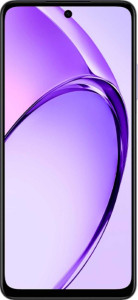
Shared ground here includes Wi-Fi 5 support, USB Type-C, a fingerprint scanner, GPS with Galileo, and an accelerometer — a solid common baseline. The divergences, however, are significant and spread across multiple dimensions. Most striking is the cellular data throughput gap: the Oppo A5i supports download speeds up to 2900 Mbits/s compared to just 300 Mbits/s on the Infinix Smart 10 HD. While real-world speeds depend on carrier infrastructure, this gap reflects a fundamentally more capable modem in the A5i — one better equipped to take advantage of fast LTE networks where available.
The A5i also adds NFC and a gyroscope, both absent on the Infinix. NFC enables contactless payments and quick device pairing — increasingly essential for tap-to-pay functionality. The gyroscope unlocks motion-sensitive gaming, navigation with proper orientation tracking, and augmented reality applications; without it, the Smart 10 HD is locked out of a meaningful slice of the app ecosystem. The A5i further supports dual SIM, useful for separating personal and work lines or using a local data SIM while travelling. In exchange, the Infinix retains a microSD card slot — a practical counterpoint for users who want expandable storage, especially given its more limited 64 GB base capacity.
The trade-off is real but asymmetric. The Infinix's expandable storage is a useful convenience; the A5i's NFC, gyroscope, dual SIM, and vastly superior modem speeds are features that affect a wider range of daily use cases. The Oppo A5i wins this category comfortably, offering a substantially more capable and future-ready connectivity profile.