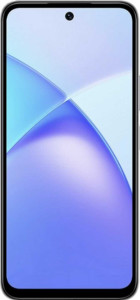
Infinix Smart 10 HD
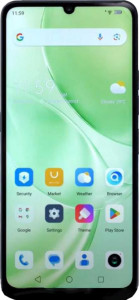
Umidigi G9x

Infinix Smart 10 HD Umidigi G9x

Overview

Welcome to our detailed spec showdown between the Infinix Smart 10 HD and the Umidigi G9x, two budget-friendly Android 14 smartphones vying for your attention. Both share a 90Hz LCD IPS display, a 5000 mAh battery, and a 13 MP main camera, but they diverge sharply when it comes to RAM and storage, chipset performance, and key features like water resistance and Wi-Fi capability. Read on to discover which device is the better fit for your needs.

Common Features

  • Neither product has a rugged build.
  • Neither product can be folded.
  • Both products feature an LCD IPS display type.
  • Both products have a 90Hz refresh rate.
  • Neither product has branded damage-resistant glass.
  • Neither product supports HDR10.
  • Neither product supports HDR10+.
  • Neither product has an Always-On Display.
  • Neither product supports Dolby Vision.
  • Neither product has a secondary screen.
  • Both products have integrated LTE.
  • Both products support 64-bit processing.
  • Both products have integrated graphics.
  • Both products support OpenGL ES version 3.2.
  • Both products use big.LITTLE technology.
  • Both products have 8 CPU threads.
  • Both products support OpenCL version 2.
  • Both products use eMMC version 5.1.
  • Both products have a 13 MP main camera.
  • Neither product has a dual-lens or multi-lens main camera.
  • Neither product has built-in optical image stabilization.
  • Neither product has a BSI sensor.
  • Both products have a CMOS sensor.
  • Both products support slow-motion video recording.
  • Both products have manual exposure.
  • Both products have a flash.
  • Both products run Android 14.
  • Both products have clipboard warnings.
  • Both products have location privacy options.
  • Both products have camera and microphone privacy options.
  • Neither product has Mail Privacy Protection.
  • Both products have theme customization.
  • Both products can block app tracking.
  • Neither product blocks cross-site tracking.
  • Both products have a 5000 mAh battery.
  • Neither product supports wireless charging.
  • Both products support fast charging at 10W.
  • Neither product has a removable battery.
  • Both products have a battery level indicator.
  • Both products have a rechargeable battery.
  • Neither product has stereo speakers.
  • Neither product supports aptX.
  • Neither product supports LDAC.
  • Neither product supports aptX HD.
  • Neither product supports aptX Adaptive.
  • Neither product supports aptX Lossless.
  • Both products have a radio.
  • Neither product supports 5G.
  • Both products support a single SIM card.
  • Both products have an external memory slot.
  • Both products have USB Type-C.
  • Neither product has NFC.
  • Both products have a download speed of 300 MBits/s.
  • Both products have an upload speed of 150 MBits/s.
  • Both products have a fingerprint scanner.
  • Both products have a video light.
  • Neither product has a sapphire glass display.
  • Neither product has a curved display.
  • Neither product has an e-paper display.

Main Differences

  • Water resistance is present on Infinix Smart 10 HD but not available on Umidigi G9x.
  • Weight is 184 g on Infinix Smart 10 HD and 190 g on Umidigi G9x.
  • Thickness is 8.5 mm on Infinix Smart 10 HD and 8.1 mm on Umidigi G9x.
  • Width is 75.6 mm on Infinix Smart 10 HD and 78 mm on Umidigi G9x.
  • Height is 163.6 mm on Infinix Smart 10 HD and 168.3 mm on Umidigi G9x.
  • Volume is 105.13 cm³ on Infinix Smart 10 HD and 106.33 cm³ on Umidigi G9x.
  • Screen size is 6.6″ on Infinix Smart 10 HD and 6.75″ on Umidigi G9x.
  • Pixel density is 267 ppi on Infinix Smart 10 HD and 260 ppi on Umidigi G9x.
  • Resolution is 720 x 1612 px on Infinix Smart 10 HD and 720 x 1600 px on Umidigi G9x.
  • Internal storage is 64GB on Infinix Smart 10 HD and 128GB on Umidigi G9x.
  • RAM is 2GB on Infinix Smart 10 HD and 4GB on Umidigi G9x.
  • The chipset is Unisoc T7250 on Infinix Smart 10 HD and Unisoc SC9863A on Umidigi G9x.
  • The GPU is Mali G57 on Infinix Smart 10 HD and PowerVR GE8322 on Umidigi G9x.
  • CPU speed is 2 x 1.8 & 6 x 1.6 GHz on Infinix Smart 10 HD and 4 x 1.6 & 4 x 1.2 GHz on Umidigi G9x.
  • Geekbench 6 multi-core score is 1461 on Infinix Smart 10 HD and 725 on Umidigi G9x.
  • Geekbench 6 single-core score is 437 on Infinix Smart 10 HD and 164 on Umidigi G9x.
  • Geekbench 5 multi-core score is 1350 on Infinix Smart 10 HD and 2956 on Umidigi G9x.
  • Geekbench 5 single-core score is 357 on Infinix Smart 10 HD and 901 on Umidigi G9x.
  • GPU clock speed is 850 MHz on Infinix Smart 10 HD and 550 MHz on Umidigi G9x.
  • RAM speed is 1866 MHz on Infinix Smart 10 HD and 933 MHz on Umidigi G9x.
  • Semiconductor size is 12 nm on Infinix Smart 10 HD and 28 nm on Umidigi G9x.
  • Front camera resolution is 8 MP on Infinix Smart 10 HD and 5 MP on Umidigi G9x.
  • A dual-tone LED flash is present on Infinix Smart 10 HD but not available on Umidigi G9x.
  • Number of flash LEDs is 4 on Infinix Smart 10 HD and 1 on Umidigi G9x.
  • A built-in HDR mode is present on Infinix Smart 10 HD but not available on Umidigi G9x.
  • Wi-Fi support includes Wi-Fi 4 and Wi-Fi 5 on Infinix Smart 10 HD, while Umidigi G9x supports only Wi-Fi 4.
  • A compass is present on Infinix Smart 10 HD but not available on Umidigi G9x.
Specs Comparison
Infinix Smart 10 HD

Infinix Smart 10 HD

Umidigi G9x

Umidigi G9x

Design:
water resistance Water resistant None
weight 184 g 190 g
thickness 8.5 mm 8.1 mm
width 75.6 mm 78 mm
height 163.6 mm 168.3 mm
volume 105.12936 cm³ 106.33194 cm³
has a rugged build
can be folded

The most meaningful differentiator in this group is water resistance: the Infinix Smart 10 HD carries a water-resistant rating, while the Umidigi G9x offers no water protection at all. In practical terms, this means the Smart 10 HD can better survive splashes, rain, or accidental spills — a tangible real-world advantage for users who are active outdoors or simply prone to accidents, and a noteworthy edge at what are typically budget price points.

On physical form, the two phones tell a slightly different story. The G9x is taller (168.3 mm) and wider (78 mm) than the Smart 10 HD (163.6 × 75.6 mm), giving it a larger overall footprint that some users may find less comfortable for one-handed use. The Smart 10 HD is also marginally lighter at 184 g vs 190 g, a modest but noticeable difference during extended use. The G9x does recoup a little ground by being slightly thinner at 8.1 mm vs 8.5 mm, which can affect how the phone feels slipping in and out of a pocket, though the 0.4 mm gap is unlikely to be perceptible in daily handling.

Overall, the Infinix Smart 10 HD holds a clear design advantage in this group. Its water resistance is a practical feature the G9x simply lacks, and it is simultaneously more compact and lighter — making it the more ergonomic and durable choice based strictly on these specs.

Display:
Display type LCD, IPS LCD, IPS
screen size 6.6" 6.75"
pixel density 267 ppi 260 ppi
resolution 720 x 1612 px 720 x 1600 px
refresh rate 90Hz 90Hz
has branded damage-resistant glass
supports HDR10
supports HDR10+
Always-On Display
supports Dolby Vision
Has a secondary screen
has a touch screen

Both phones share the same LCD IPS panel technology and an identical 90Hz refresh rate, which at this price tier is a welcome feature — smoother scrolling and more fluid animations compared to a standard 60Hz display. Neither supports HDR10, Dolby Vision, or any branded damage-resistant glass, so these shared limitations level the playing field considerably.

Where the two diverge is in the balance between screen size and sharpness. The Umidigi G9x sports a slightly larger 6.75″ panel, but the Infinix Smart 10 HD counters with a higher pixel density of 267 ppi vs 260 ppi, thanks to its taller 720 x 1612 resolution squeezed into a smaller 6.6″ footprint. In practice, both figures sit close enough that the sharpness difference will be imperceptible to most users — at 260–267 ppi, text and images will look reasonably crisp but not pin-sharp by modern standards.

This group is effectively a near-tie. The G9x offers marginally more screen real estate, useful for media consumption, while the Smart 10 HD edges ahead on pixel density — but neither gap is large enough to be a decisive factor. Users prioritizing a bigger canvas will lean toward the G9x; those who prefer a slightly denser image in a smaller frame will favor the Smart 10 HD.

Performance:
internal storage 64GB 128GB
RAM 2GB 4GB
Chipset (SoC) name Unisoc T7250 Unisoc SC9863A
GPU name Mali G57 PowerVR GE8322
CPU speed 2 x 1.8 & 6 x 1.6 GHz 4 x 1.6 & 4 x 1.2 GHz
Geekbench 6 result (multi) 1461 725
Geekbench 6 result (single) 437 164
Geekbench 5 result (multi) 1350 2956
Geekbench 5 result (single) 357 901
GPU clock speed 850 MHz 550 MHz
Has integrated LTE
RAM speed 1866 MHz 933 MHz
semiconductor size 12 nm 28 nm
Supports 64-bit
Has integrated graphics
OpenGL ES version 3.2 3.2
Uses big.LITTLE technology
CPU threads 8 threads 8 threads
OpenCL version 2 2
eMMC version 5.1 5.1
maximum memory amount 12GB 6GB
GPU execution units 2 4
Thermal Design Power (TDP) 10W 3W
DDR memory version 4 4
shading units 64 128
L3 cache 1 MB 0.512 MB

The chipset story here is nuanced. The Infinix Smart 10 HD runs on the Unisoc T7250 (12nm), a significantly more modern fabrication process than the 28nm Unisoc SC9863A inside the Umidigi G9x. That 12nm vs 28nm gap is not trivial — a newer node generally means better power efficiency and more headroom for sustained performance. This is reflected clearly in Geekbench 6 scores, where the Smart 10 HD pulls far ahead with 1461 multi-core and 437 single-core versus the G9x's 725 and 164 respectively. Geekbench 5 tells the opposite story (G9x scores higher there), but Geekbench 6 is the more current benchmark and better represents real-world workloads on modern Android.

Where the G9x fights back is in memory and storage. Its 4GB of RAM is a meaningful practical advantage over the Smart 10 HD's 2GB — at this tier, 2GB is genuinely constraining for running multiple apps simultaneously or keeping background processes alive, while 4GB allows for considerably smoother everyday multitasking. The G9x also ships with 128GB of internal storage compared to just 64GB on the Smart 10 HD, doubling the space for apps, photos, and media without relying on a microSD card. Notably, the Smart 10 HD supports up to 12GB maximum memory (likely through virtual RAM expansion) versus 6GB on the G9x, partially offsetting its lower base RAM.

Declaring a winner here depends on what the user values most. For raw CPU throughput and chip modernity, the Smart 10 HD holds a clear edge. But for day-to-day usability — where having enough RAM to keep apps open and ample storage to fill freely matters more than benchmark peaks — the G9x's 4GB RAM and 128GB storage make a compelling practical case, particularly given how tight 2GB of RAM can feel on modern Android.

Cameras:
megapixels (main camera) 13 MP 13 MP
Has a dual-lens (or multi-lens) main camera
megapixels (front camera) 8MP 5MP
has built-in optical image stabilization
Has a dual-tone LED flash
number of flash LEDs 4 1
has a BSI sensor
has a CMOS sensor
supports slow-motion video recording
has a built-in HDR mode
has manual exposure
has a flash
optical zoom 0x 0x
has manual ISO
has manual focus
has a front camera
Has laser autofocus
Shoots 360° panorama
has manual white balance
shoots raw
has touch autofocus
has manual shutter speed
can create panoramas in-camera
Has a front-facing LED flash
has a dual-lens (or multi-lens) front camera
supports HDR10 recording
supports Dolby Vision recording
has a front-facing camera under the display
Has a RGB LED flash
has 3D photo/video recording capabilities

On the rear, both phones are evenly matched at 13 MP with a single-lens setup, no optical image stabilization, and identical manual controls — exposure, ISO, focus, and white balance are available on each. Slow-motion video and in-camera panoramas are also shared features. For everyday shooting, the rear camera experience will be broadly similar on both devices.

The differences emerge in the details. The Smart 10 HD includes a built-in HDR mode, which helps recover detail in high-contrast scenes — a feature entirely absent on the G9x. More visibly, the Smart 10 HD's flash setup is considerably more capable, with 4 dual-tone LEDs compared to the G9x's single LED flash. More flash LEDs and dual-tone output translate to better-lit, more natural-looking low-light shots, a meaningful practical gap for users who frequently photograph in dim environments.

The front camera gap is also notable: the Smart 10 HD offers an 8 MP selfie shooter versus just 5 MP on the G9x, which means more detail and flexibility when cropping or shooting in varying light. Taken together, the Infinix Smart 10 HD holds a clear camera advantage — not because of the main sensor, where parity reigns, but through its stronger flash hardware, HDR support, and higher-resolution front camera.

Operating system:
Android version Android 14 Android 14
has clipboard warnings
has location privacy options
has camera/microphone privacy options
has Mail Privacy Protection
has theme customization
can block app tracking
blocks cross-site tracking
has on-device machine learning
has notification permissions
has media picker
Can play games while they download
has dark mode
has Wi-Fi password sharing
has battery health check
has an extra dim mode
has focus modes
has dynamic theming
can offload apps
Has customizable notifications
has Live Text
has full-page screenshots
supports split screen
gets direct OS updates
has PiP
Can be used as a PC
Has sharing intents
has a child lock
Supports widgets
Is free and open source
Has offline voice recognition
has voice commands
Tracks the current position of a mobile device
is a multi-user system
has Quick Start

This is a rare case of a true dead heat. Every single operating system specification provided is identical across the Infinix Smart 10 HD and the Umidigi G9x — both run Android 14, and both carry the exact same feature set, from privacy controls (location, camera/microphone, app tracking) to usability features like split-screen, Picture-in-Picture, dark mode, and dynamic theming.

The shared software profile is fairly well-rounded for budget devices. The inclusion of on-device machine learning, offline voice recognition, and Live Text adds genuine utility, while notification permissions and customizable notifications reflect Android 14's stronger privacy posture. Neither phone receives direct OS updates, which is a shared limitation worth noting — long-term software support will depend entirely on each manufacturer's own update cadence.

With no differentiating data point to be found, this group is an absolute tie. Any perceived software differences between these two devices in real-world use would stem from manufacturer customizations layered on top of Android, which fall outside the scope of the provided specs.

Battery:
battery power 5000 mAh 5000 mAh
has wireless charging
Supports fast charging
charging speed 10W 10W
has a removable battery
has a battery level indicator
has a rechargeable battery

Battery is another category where these two phones are completely inseparable. Both the Infinix Smart 10 HD and the Umidigi G9x pack a 5000 mAh cell, support 10W fast charging, and share every other battery attribute in the provided specs — non-removable, rechargeable, with a battery level indicator. There is simply no differentiator to analyze here.

A 5000 mAh capacity is a solid offering at this tier, typically translating to all-day or even two-day battery life under moderate use, particularly given the modest LCD displays and budget-class chipsets both phones carry. The 10W charging speed is functional but unhurried by current standards — a full charge from empty will take roughly two hours, which is acceptable but noticeably slower than the faster charging options found on higher-end devices.

This group is a complete tie in every measurable dimension. Battery life and charging behavior, based strictly on these specs, will be effectively identical on both devices.

Audio:
has stereo speakers
has aptX
has LDAC
has aptX HD
has aptX Adaptive
has aptX Lossless
Has a radio

Audio is a brief chapter in this comparison. The Infinix Smart 10 HD and the Umidigi G9x are identical across every provided spec: neither offers stereo speakers, and neither supports any high-resolution Bluetooth audio codec — no aptX, LDAC, aptX HD, or any variant. Both do include a built-in FM radio, a feature increasingly rare on smartphones and genuinely useful in areas with limited data connectivity.

The absence of stereo speakers means audio output on both devices will be mono — adequate for notifications and casual media, but noticeably flat compared to phones with dual-speaker setups. Users who care about speaker quality will want to rely on headphones. The lack of any premium Bluetooth codec support is also a shared limitation, meaning wired or wireless audio will be delivered at standard quality rather than audiophile-grade fidelity — though this is entirely expected at this price tier.

With no differentiating spec to separate them, this group is a complete tie. Both phones offer the same modest but functional audio profile, and neither holds any advantage over the other based on the available data.

Connectivity & Features:
release date June 2025 June 2025
has 5G support
Wi-Fi version Wi-Fi 4 (802.11n), Wi-Fi 5 (802.11ac) Wi-Fi 4 (802.11n)
SIM cards 1 SIM 1 SIM
has an external memory slot
Has USB Type-C
has NFC
download speed 300 MBits/s 300 MBits/s
upload speed 150 MBits/s 150 MBits/s
Has a fingerprint scanner
has emergency SOS via satellite
has crash detection
is DLNA-certified
has a gyroscope
supports ANT+
Has a heart rate monitor
has GPS
has a compass
supports Wi-Fi
Has an infrared sensor
has an accelerometer
has a cellular module
Has a barometer
has an HDMI output
Uses 3D facial recognition
Has an iris scanner
Stylus included
supports Galileo
Has motion tracking
Has optical tracking
Has a built-in projector

Most connectivity fundamentals are shared between these two devices — single SIM, USB Type-C, microSD expansion, fingerprint scanner, GPS with Galileo support, and identical cellular download and upload speeds. Neither supports 5G or NFC, which are expected omissions at this price point.

Two meaningful differences do emerge, however. The Infinix Smart 10 HD supports both Wi-Fi 4 and Wi-Fi 5 (802.11ac), while the Umidigi G9x is limited to Wi-Fi 4 only. Wi-Fi 5 delivers faster throughput and handles congested networks more gracefully — a practical advantage in homes or offices with multiple connected devices or a modern router. The Smart 10 HD also includes a digital compass, which the G9x lacks entirely. A compass enables accurate map orientation without needing to move the phone to calibrate direction — a small but genuinely useful feature for navigation apps.

Based strictly on these specs, the Infinix Smart 10 HD holds a clear edge in this group. Its Wi-Fi 5 support and built-in compass are both functional, real-world advantages over the G9x, which trails on both counts despite being otherwise comparable across the rest of the connectivity feature set.

Miscellaneous:
has a video light
Has sapphire glass display
Has a curved display
Has an e-paper display

The miscellaneous category offers nothing to separate these two phones. The Infinix Smart 10 HD and the Umidigi G9x are identical across every provided spec: both include a video light, and neither features a sapphire glass display, curved screen, or e-paper panel — all of which are firmly premium or niche territory, so their absence is entirely expected here.

This group is a complete tie with no differentiating factors present in the data.

Comparison Summary & Verdict

After examining every specification, it is clear that each phone targets a slightly different type of buyer. The Infinix Smart 10 HD stands out with its water resistance, superior Geekbench 6 benchmark scores, a more modern 12 nm chipset, Wi-Fi 5 support, a compass, an 8 MP front camera, dual-tone flash, and built-in HDR mode, making it the stronger choice for users who want a more feature-complete, future-ready experience. The Umidigi G9x, on the other hand, counters with double the RAM (4 GB) and 128 GB of internal storage, along with a larger 6.75″ screen, offering noticeably more headroom for multitasking and media storage. If day-to-day smoothness and ample storage matter most to you, the G9x delivers. If you value richer camera features, better connectivity, and a more refined chipset, the Infinix Smart 10 HD is the smarter pick.

Infinix Smart 10 HD
Buy Infinix Smart 10 HD if...

Buy the Infinix Smart 10 HD if you want water resistance, stronger benchmark performance, Wi-Fi 5 support, a compass, and a more capable front camera and flash setup.

Umidigi G9x
Buy Umidigi G9x if...

Buy the Umidigi G9x if you prioritize having more RAM (4 GB) and double the internal storage (128 GB) for smoother multitasking and more space for apps and media.