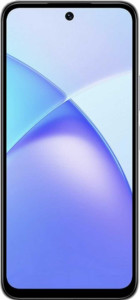
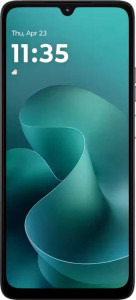
The connectivity foundations are identical: both phones run on 4G LTE only, support Wi-Fi 5, carry USB Type-C 2.0, include NFC, a fingerprint scanner, GPS with Galileo support, and an external memory slot. For the vast majority of use cases — mobile payments, file transfers, location services — these two phones will behave exactly the same way.
Three specific points separate them. First, the Moto G06 Power supports dual SIM while the Infinix Smart 10 Plus is limited to a single SIM — a significant advantage for users who need to maintain two numbers, balance personal and work lines, or use a local data SIM abroad without giving up their primary number. Second, the Infinix counters with a higher upload speed of 150 Mbits/s versus the Moto's 100 Mbits/s, which benefits users who frequently upload large files, video content, or use cloud backups on mobile data. Third, the Infinix includes a digital compass, which the Moto lacks — a small but practical omission that can affect the accuracy of map orientation in navigation apps.
This category is close, but the Infinix Smart 10 Plus holds a narrow overall edge. Its faster upload speeds and built-in compass give it a slight practical advantage in everyday use. That said, for anyone who relies on carrying two SIM cards, the Moto G06 Power's dual-SIM support is a hard requirement the Infinix simply cannot meet — making that single feature the deciding factor for a meaningful segment of buyers.