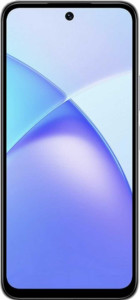
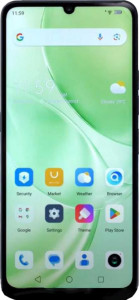
Wireless connectivity is where the Infinix Smart 10 Plus pulls ahead most visibly in this group. It supports both Wi-Fi 4 and Wi-Fi 5, while the Umidigi G9x is limited to Wi-Fi 4 only. Wi-Fi 5 (802.11ac) offers faster throughput and better performance in congested environments — a meaningful advantage for streaming, large file transfers, or households with many connected devices. Beyond Wi-Fi, the Infinix also includes NFC, which the G9x entirely lacks. NFC enables contactless payments, quick device pairing, and transit card functionality — features that have become a baseline expectation for many users.
The Infinix further adds a digital compass, which the G9x omits. While this may seem minor, a compass is a dependency for accurate map orientation and navigation apps — without it, navigation software must estimate direction from movement alone, which is less reliable when stationary. Both phones share the same LTE speeds, single SIM configuration, USB Type-C, expandable storage, fingerprint scanner, GPS with Galileo support, and accelerometer, so the foundational connectivity and sensor suite is otherwise well-matched.
Across every point of differentiation in this category, the Infinix Smart 10 Plus holds the advantage. Its faster Wi-Fi standard, NFC support, and compass collectively represent a more complete and future-ready connectivity package — particularly NFC, which alone is a deciding factor for users who rely on mobile payments.