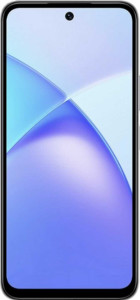
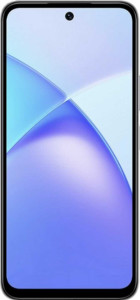
Infinix Smart 10
Infinix Smart 10 HD

Infinix Smart 10 Infinix Smart 10 HD

Overview

Welcome to our in-depth comparison of the Infinix Smart 10 and the Infinix Smart 10 HD. While these two budget-friendly smartphones share the same chipset and overall platform, they diverge in some meaningful areas — including display refresh rate, storage capacity, camera configuration, and everyday usability features. Whether you are chasing smoother scrolling, more storage, or a better camera, this side-by-side breakdown will help you decide which model truly fits your needs.

Common Features

  • Both phones are water resistant with an IP64 ingress protection rating.
  • Neither phone has a rugged build.
  • Neither phone can be folded.
  • Both phones feature an LCD IPS display type.
  • Neither phone has branded damage-resistant glass.
  • HDR10 support is not available on either phone.
  • HDR10+ support is not available on either phone.
  • Always-On Display is not available on either phone.
  • Dolby Vision support is not available on either phone.
  • Both phones have a touchscreen.
  • Both phones are powered by the Unisoc T7250 chipset with a Mali G57 GPU.
  • Both phones share the same CPU speed of 2 x 1.8 and 6 x 1.6 GHz.
  • Both phones have a single-lens main camera.
  • Both phones have an 8MP front camera.
  • Neither phone has built-in optical image stabilization.
  • Both phones have a dual-tone LED flash.
  • Both phones have a CMOS sensor.
  • Both phones support continuous autofocus when recording movies.
  • Both phones support phase-detection autofocus for photos.
  • Both phones run on Android with clipboard warnings available.
  • Both phones offer location privacy options.
  • Both phones offer camera and microphone privacy options.
  • Mail Privacy Protection is not available on either phone.
  • Both phones support theme customization and can block app tracking.
  • Cross-site tracking blocking is not available on either phone.
  • Both phones have on-device machine learning.
  • Both phones have a 5000 mAh battery.
  • Neither phone supports wireless charging.
  • Both phones support fast charging.
  • Neither phone has a removable battery.
  • Both phones have a 3.5mm audio jack and a built-in radio.
  • Neither phone supports aptX, LDAC, aptX HD, aptX Adaptive, aptX Lossless.
  • Neither phone supports 5G.
  • Both phones support Wi-Fi 4 (802.11n) and Wi-Fi 5 (802.11ac).
  • Both phones have a single SIM card slot.
  • Both phones have an external memory slot and a USB Type-C port (USB 2.0).
  • Both phones support download speeds of 300 MBits/s and upload speeds of 150 MBits/s.
  • Both phones have a video light.
  • Neither phone has a sapphire glass display, curved display, or e-paper display.

Main Differences

  • Weight is 187g on the Infinix Smart 10 and 184g on the Infinix Smart 10 HD.
  • Thickness is 8.3mm on the Infinix Smart 10 and 8.5mm on the Infinix Smart 10 HD.
  • Width is 77mm on the Infinix Smart 10 and 75.6mm on the Infinix Smart 10 HD.
  • Height is 165.6mm on the Infinix Smart 10 and 163.6mm on the Infinix Smart 10 HD.
  • Screen size is 6.67″ on the Infinix Smart 10 and 6.6″ on the Infinix Smart 10 HD.
  • Pixel density is 263 ppi on the Infinix Smart 10 and 267 ppi on the Infinix Smart 10 HD.
  • Resolution is 720 x 1600 px on the Infinix Smart 10 and 720 x 1612 px on the Infinix Smart 10 HD.
  • Refresh rate is 120Hz on the Infinix Smart 10 and 90Hz on the Infinix Smart 10 HD.
  • Internal storage is 256GB on the Infinix Smart 10 and 64GB on the Infinix Smart 10 HD.
  • RAM is 4GB on the Infinix Smart 10 and 2GB on the Infinix Smart 10 HD.
  • Main camera resolution is 8MP on the Infinix Smart 10 and 13MP on the Infinix Smart 10 HD.
  • Main camera aperture is f/2 on the Infinix Smart 10 and f/1.9 on the Infinix Smart 10 HD.
  • Maximum video recording resolution is 1440 x 30fps on the Infinix Smart 10 and 1080 x 30fps on the Infinix Smart 10 HD.
  • The number of flash LEDs is 2 on the Infinix Smart 10 and 4 on the Infinix Smart 10 HD.
  • The Infinix Smart 10 runs Android 15 while the Infinix Smart 10 HD runs Android 14.
  • App offloading is supported on the Infinix Smart 10 but not available on the Infinix Smart 10 HD.
  • Charging speed is 15W on the Infinix Smart 10 and 10W on the Infinix Smart 10 HD.
  • Stereo speakers are present on the Infinix Smart 10 but not available on the Infinix Smart 10 HD.
  • NFC is present on the Infinix Smart 10 but not available on the Infinix Smart 10 HD.
Specs Comparison
Infinix Smart 10

Infinix Smart 10

Infinix Smart 10 HD

Infinix Smart 10 HD

Design:
water resistance Water resistant Water resistant
weight 187 g 184 g
thickness 8.3 mm 8.5 mm
width 77 mm 75.6 mm
height 165.6 mm 163.6 mm
volume 105.83496 cm³ 105.12936 cm³
Ingress Protection (IP) rating IP64 IP64
has a rugged build
can be folded

Both the Infinix Smart 10 and the Infinix Smart 10 HD share the same IP64 water resistance rating, meaning neither rugged build nor foldable form factor differentiates them here — they are equally protected against dust and water splashes in everyday scenarios. This is a meaningful shared feature for budget devices, offering a degree of real-world durability that many similarly priced phones omit.

Where the two diverge is in their physical dimensions and feel in the hand. The Smart 10 HD is marginally lighter at 184 g versus 187 g, and slightly more compact — it is 2 mm shorter and 1.4 mm narrower — making it a touch easier to grip and pocket. The Smart 10, however, is 0.2 mm thinner at 8.3 mm, which contributes to a sleeker side profile even though its footprint is larger. The overall volume of both devices is nearly identical (roughly 105 cm³), so the differences are more about shape distribution than actual bulk.

In practice, neither phone has a decisive design advantage — the differences are subtle enough that most users would not notice them day-to-day. That said, the Smart 10 HD's slightly lighter weight and more compact footprint give it a marginal ergonomic edge, particularly for users with smaller hands or those who prioritize one-handed usability.

Display:
Display type LCD, IPS LCD, IPS
screen size 6.67" 6.6"
pixel density 263 ppi 267 ppi
resolution 720 x 1600 px 720 x 1612 px
refresh rate 120Hz 90Hz
has branded damage-resistant glass
supports HDR10
supports HDR10+
Always-On Display
supports Dolby Vision
Has a secondary screen
has a touch screen

On paper, these two displays look nearly identical — both use an LCD IPS panel, sit at 720p resolution, and land at almost the same pixel density (263 vs. 267 ppi). At this density level, sharpness is acceptable for casual use but fine text and detailed images will lack the crispness of a 1080p screen. The absence of any HDR support or damage-resistant glass on either device is expected at this price tier, so neither phone stands out there.

The most meaningful difference is the refresh rate. The Smart 10 runs at 120Hz while the Smart 10 HD steps down to 90Hz. In real-world use, a higher refresh rate translates to noticeably smoother scrolling, more fluid animations, and a snappier overall feel — particularly visible when browsing social feeds or navigating the UI. The Smart 10 also edges ahead with a slightly larger 6.67-inch screen compared to the HD's 6.6 inches, offering a marginally more immersive viewing area for video and gaming.

The Smart 10 holds a clear display advantage. Its 120Hz refresh rate is the single most impactful spec in this group for everyday usability, and its slightly larger screen reinforces that edge. The Smart 10 HD's marginally higher pixel density is too small a gap to perceive in practice and does not offset the smoother experience the Smart 10 delivers.

Performance:
internal storage 256GB 64GB
RAM 4GB 2GB
Chipset (SoC) name Unisoc T7250 Unisoc T7250
GPU name Mali G57 Mali G57
CPU speed 2 x 1.8 & 6 x 1.6 GHz 2 x 1.8 & 6 x 1.6 GHz
Geekbench 6 result (multi) 1461 1461
Geekbench 6 result (single) 437 437
Geekbench 5 result (multi) 1350 1350
Geekbench 5 result (single) 357 357
GPU clock speed 850 MHz 850 MHz
Has integrated LTE
RAM speed 1866 MHz 1866 MHz
semiconductor size 12 nm 12 nm
Supports 64-bit
Has integrated graphics
OpenGL version 3.2 3.2
OpenGL ES version 3.2 3.2
Uses big.LITTLE technology
CPU threads 8 threads 8 threads
Has TrustZone
OpenCL version 2 2
eMMC version 5.1 5.1
maximum memory amount 12GB 12GB
uses multithreading
GPU execution units 2 2
Thermal Design Power (TDP) 10W 10W
DDR memory version 4 4
shading units 64 64
L3 cache 1 MB 1 MB

The Infinix Smart 10 and Infinix Smart 10 HD are both powered by the same Unisoc T7250 chipset, featuring a Mali G57 GPU. The CPU configuration includes two high-performance cores at 1.8 GHz and six efficiency cores at 1.6 GHz. Both phones share the same GPU clock speed of 850 MHz, and they support 64-bit processing and integrated LTE. Additionally, both devices are capable of multithreading with 8 CPU threads, use big.LITTLE technology, and feature TrustZone for security.

The key differences between the two devices lie in their memory and storage. The Smart 10 comes with 4GB of RAM and 256GB of internal storage, while the Smart 10 HD is equipped with 2GB of RAM and 64GB of internal storage. Both devices support a maximum memory expansion up to 12GB and have a 1866 MHz RAM speed. The Smart 10 also offers superior storage capacity, which may be beneficial for users needing more space.

As for benchmarking performance, both phones deliver identical results. In Geekbench 6, both devices score 1461 in multi-core performance and 437 in single-core performance. They also show the same Geekbench 5 results with 1350 in multi-core and 357 in single-core performance. Other technical features, such as the GPU execution units (2), L3 cache (1 MB), and eMMC version (5.1), are the same for both devices.

Cameras:
megapixels (main camera) 8 MP 13 MP
wide aperture (main camera) 2f 1.9f
Has a dual-lens (or multi-lens) main camera
megapixels (front camera) 8MP 8MP
has built-in optical image stabilization
video recording (main camera) 1440 x 30 fps 1080 x 30 fps
Has a dual-tone LED flash
number of flash LEDs 2 4
has a BSI sensor
has a CMOS sensor
has continuous autofocus when recording movies
Has phase-detection autofocus for photos
supports slow-motion video recording
has a built-in HDR mode
has manual exposure
has a flash
optical zoom 0x 0x
has manual ISO
has a serial shot mode
has manual focus
has a front camera
Has laser autofocus
Shoots 360° panorama
has manual white balance
shoots raw
has touch autofocus
has manual shutter speed
can create panoramas in-camera
wide aperture (front camera) 2f 2f
Has timelapse function
Has a front-facing LED flash
continuous shooting (mechanical) 0 fps 0 fps
has a dual-lens (or multi-lens) front camera
supports HDR10 recording
supports Dolby Vision recording
has a front-facing camera under the display
Has a RGB LED flash
has 3D photo/video recording capabilities

The rear camera is where these two devices diverge most sharply. The Smart 10 HD packs a 13 MP main sensor versus the Smart 10's 8 MP, and pairs it with a slightly wider f/1.9 aperture compared to the Smart 10's f/2.0. More megapixels mean finer detail in well-lit shots and more flexibility when cropping, while the marginally wider aperture allows a touch more light to hit the sensor — a combination that gives the HD a meaningful edge in photo quality, especially in mixed or dim lighting. The Smart 10 HD also features 4 flash LEDs versus 2 on the Smart 10, which translates to more even and powerful flash illumination for indoor or nighttime shots.

Video tells a different story. Despite its lower-resolution stills sensor, the Smart 10 records at up to 1440p at 30 fps, while the Smart 10 HD tops out at 1080p at 30 fps. For users who frequently shoot video — whether for social media or personal archiving — the Smart 10's higher video resolution captures more detail and offers more room for cropping in post. Both front cameras are identical at 8 MP with the same f/2.0 aperture, and the broader manual control feature set (exposure, ISO, white balance, focus) is shared equally across both models.

Choosing a winner here depends on use case. For still photography, the Smart 10 HD holds a clear advantage with its higher-resolution sensor and wider aperture. For video recording, the Smart 10 punches above its weight. Users who prioritize photos will prefer the HD; those who shoot more video will find the standard Smart 10 the stronger tool.

Operating system:
Android version Android 15 Android 14
has clipboard warnings
has location privacy options
has camera/microphone privacy options
has Mail Privacy Protection
has theme customization
can block app tracking
blocks cross-site tracking
has on-device machine learning
has notification permissions
has media picker
Can play games while they download
has dark mode
has Wi-Fi password sharing
has battery health check
has an extra dim mode
has focus modes
has dynamic theming
can offload apps
Has customizable notifications
has Live Text
has full-page screenshots
supports split screen
gets direct OS updates
has PiP
Can be used as a PC
Has sharing intents
has a child lock
Supports widgets
Is free and open source
Has offline voice recognition
has voice commands
Tracks the current position of a mobile device
is a multi-user system
has Quick Start

The most consequential difference in this group is the Android version. The Smart 10 ships with Android 15 while the Smart 10 HD runs Android 14. A newer Android version means access to the latest security patches, privacy improvements, and platform features from day one — and since neither device receives direct OS updates, whatever version they launch with is largely what users will be living with long-term. Starting a generation ahead on Android gives the Smart 10 a durability advantage in terms of software relevance.

The other meaningful difference is app offloading. The Smart 10 supports app offloading — the ability to remove an app's installation files while retaining its data — a handy storage management tool that the Smart 10 HD lacks. On budget devices where internal storage tends to be limited, this feature can meaningfully extend how comfortably the phone handles a full app library over time. Every other software feature in this group — dark mode, dynamic theming, split screen, privacy controls, widgets, offline voice recognition, and more — is shared identically between the two.

The Smart 10 has a clear edge here. The combination of a newer Android 15 base and support for app offloading makes it the more future-proof and storage-flexible choice, with no software trade-offs compared to the Smart 10 HD.

Battery:
battery power 5000 mAh 5000 mAh
has wireless charging
Supports fast charging
charging speed 15W 10W
has a removable battery
has a battery level indicator
has a rechargeable battery

Capacity-wise, these two phones are in perfect lockstep — both carry a 5000 mAh battery, which is a healthy size for this class of device and should comfortably support a full day of moderate use. Neither supports wireless charging, and neither has a removable battery, so the playing field is level on those fronts.

Where the Smart 10 pulls ahead is charging speed. Its 15W fast charging is notably faster than the Smart 10 HD's 10W, a 50% difference in wattage that adds up meaningfully in practice. Charging a 5000 mAh cell from low to full at 10W is a slow process — typically taking well over two hours — while 15W trims that window more noticeably. For users who top up during short breaks or need a quick charge before heading out, that extra wattage is a genuine convenience advantage.

The Smart 10 earns the edge in this group. With identical battery capacity but faster 15W charging, it offers the same endurance with less time tethered to a cable — a practical, everyday benefit that the Smart 10 HD simply cannot match at 10W.

Audio:
has a socket for a 3.5 mm audio jack
has stereo speakers
has aptX
has LDAC
has aptX HD
has aptX Adaptive
has aptX Lossless
Has a radio

Audio is an area where a single spec separates these two devices clearly. Both share a 3.5 mm headphone jack and a built-in FM radio — welcome inclusions at this price point — and neither supports high-resolution Bluetooth codecs like aptX or LDAC, so wireless audio quality is on equal footing. But the Smart 10 adds stereo speakers, while the Smart 10 HD makes do with a mono setup.

That distinction matters more than it might seem. Stereo speakers produce sound from two separate channels, creating a sense of width and spatial separation that mono simply cannot replicate. Whether watching videos, gaming, or listening to music without headphones, stereo output delivers a noticeably more immersive experience. Mono speakers, by contrast, sound flat and directional — adequate for calls and basic media, but underwhelming for anything more engaging.

The Smart 10 holds a clear advantage here. Its stereo speaker configuration is a meaningful quality-of-life upgrade for anyone who regularly consumes media on their phone without headphones, and it comes with no trade-offs compared to the Smart 10 HD on any other audio spec.

Connectivity & Features:
release date June 2025 June 2025
has 5G support
Wi-Fi version Wi-Fi 4 (802.11n), Wi-Fi 5 (802.11ac) Wi-Fi 4 (802.11n), Wi-Fi 5 (802.11ac)
SIM cards 1 SIM 1 SIM
has an external memory slot
Has USB Type-C
USB version 2 2
has NFC
download speed 300 MBits/s 300 MBits/s
upload speed 150 MBits/s 150 MBits/s
Has a fingerprint scanner
has emergency SOS via satellite
has crash detection
is DLNA-certified
has a gyroscope
supports ANT+
Has a heart rate monitor
has GPS
has a compass
supports Wi-Fi
Has an infrared sensor
has an accelerometer
has a cellular module
Has a barometer
has an HDMI output
Uses 3D facial recognition
Has an iris scanner
Stylus included
supports Galileo
Has motion tracking
Has optical tracking
Has a built-in projector

Across most connectivity specs, these two phones are virtually identical — both support Wi-Fi 5, USB Type-C 2.0, expandable storage, a fingerprint scanner, GPS with Galileo, and the same download and upload speeds. Neither offers 5G, which is expected at this tier, and both are limited to a single SIM slot. For the vast majority of everyday tasks, connectivity is a wash.

The one spec that breaks the tie is NFC. The Smart 10 includes it; the Smart 10 HD does not. NFC enables contactless payments, quick Bluetooth pairing, and tap-to-transfer functionality — conveniences that have become increasingly mainstream. For users who rely on mobile payments through services like Google Pay, or who regularly interact with NFC-enabled accessories, its absence on the Smart 10 HD is a tangible limitation rather than a minor omission.

The Smart 10 takes this group on the strength of its NFC support alone. It is the only differentiating spec here, but it is a practically meaningful one — and the Smart 10 HD offers nothing in return to offset it.

Miscellaneous:
has a video light
Has sapphire glass display
Has a curved display
Has an e-paper display

The miscellaneous specs for the Infinix Smart 10 and Infinix Smart 10 HD are completely identical. Both include a video light, and neither features a sapphire glass display, curved screen, or e-paper display — all of which are premium or niche characteristics not expected at this price point.

This group offers no basis for differentiation. The two devices are fully tied across every listed spec, and no individual feature here gives either phone a meaningful advantage over the other.

Comparison Summary & Verdict

After examining every specification, it is clear that both phones serve different types of users. The Infinix Smart 10 stands out for power users on a budget: it offers a 120Hz refresh rate, a generous 256GB of internal storage with 4GB of RAM, faster 15W charging, stereo speakers, NFC, and the latest Android 15 — making it the more feature-complete package overall. The Infinix Smart 10 HD, on the other hand, appeals to those who prioritize camera quality, as its 13MP main camera with a wider f/1.9 aperture and four-LED flash deliver a meaningful photography upgrade. It is also slightly lighter and more compact. In short, choose the Infinix Smart 10 if you want a snappier, more storage-rich daily driver; opt for the Infinix Smart 10 HD if photography is your top priority and you can live with fewer connectivity perks.

Infinix Smart 10
Buy Infinix Smart 10 if...

Buy the Infinix Smart 10 if you want a smoother 120Hz display, significantly more storage (256GB), faster 15W charging, stereo speakers, and NFC support for a well-rounded everyday experience.

Infinix Smart 10 HD
Buy Infinix Smart 10 HD if...

Buy the Infinix Smart 10 HD if a higher-resolution 13MP main camera with a wider aperture is your top priority and you prefer a slightly lighter, more compact device.