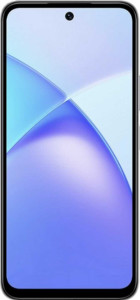
Infinix Smart 10
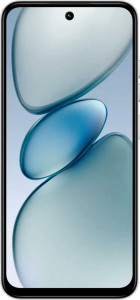
Tecno Spark Go 2

Infinix Smart 10 Tecno Spark Go 2

Overview

Welcome to our in-depth spec comparison of the Infinix Smart 10 and the Tecno Spark Go 2 — two budget-friendly Android 15 smartphones that share a surprisingly similar foundation. Both pack the same Unisoc T7250 chipset, a 6.67″ 120Hz IPS display, and a 5000 mAh battery with 15W fast charging. Yet beneath that common ground, meaningful differences in camera hardware, audio, and connectivity could make one a significantly better fit for your needs than the other.

Common Features

  • Both phones are water resistant with an IP64 Ingress Protection rating.
  • Both devices share the same dimensions: 8.3 mm thick, 77 mm wide, and 165.6 mm tall.
  • Neither phone has a rugged build or a foldable form factor.
  • Both feature a 6.67″ LCD IPS display with a resolution of 720 x 1600 px and a pixel density of 263 ppi.
  • Both displays support a 120Hz refresh rate.
  • Damage-resistant branded glass is not available on either device.
  • HDR10 and HDR10+ support are not available on either phone.
  • Both are powered by the Unisoc T7250 chipset with a Mali G57 GPU and a CPU speed of 2 x 1.8 & 6 x 1.6 GHz.
  • Both phones come with 4GB of RAM and 256GB of internal storage.
  • Geekbench 6 multi-core score is 1461 and single-core score is 437 on both devices.
  • Neither phone has a dual-lens main camera or built-in optical image stabilization.
  • Both have an 8MP front camera and a CMOS sensor.
  • Phase-detection autofocus for photos and continuous autofocus during video recording are available on both phones.
  • Both run Android 15 and share the same privacy features including clipboard warnings, location privacy options, and camera/microphone privacy options.
  • App tracking can be blocked on both devices, though neither blocks cross-site tracking.
  • Both phones have a 5000 mAh battery with 15W fast charging and no wireless charging support.
  • Neither phone has a removable battery.
  • Both include a 3.5 mm audio jack and an FM radio, but neither supports aptX, LDAC, aptX HD, aptX Adaptive, aptX Lossless.
  • Both phones support 4G only with no 5G connectivity, and share the same download speed of 300 Mbits/s and upload speed of 150 Mbits/s.
  • Both feature a fingerprint scanner, USB Type-C, and an external memory slot.

Main Differences

  • The main camera is 8 MP on the Infinix Smart 10 and 13 MP on the Tecno Spark Go 2.
  • The main camera aperture is f/2 on the Infinix Smart 10 and f/1.8 on the Tecno Spark Go 2.
  • Maximum video recording resolution is 1440 x 30 fps on the Infinix Smart 10 and 1080 x 30 fps on the Tecno Spark Go 2.
  • Dual-tone LED flash is present on the Infinix Smart 10 but not available on the Tecno Spark Go 2.
  • Stereo speakers are available on the Infinix Smart 10 but not on the Tecno Spark Go 2.
  • The Infinix Smart 10 supports both Wi-Fi 4 (802.11n) and Wi-Fi 5 (802.11ac), while the Tecno Spark Go 2 supports only Wi-Fi 4 (802.11n).
  • NFC is present on the Infinix Smart 10 but not available on the Tecno Spark Go 2.
  • The Infinix Smart 10 supports 1 SIM card, while the Tecno Spark Go 2 supports 2 SIM cards.
Specs Comparison
Infinix Smart 10

Infinix Smart 10

Tecno Spark Go 2

Tecno Spark Go 2

Design:
water resistance Water resistant Water resistant
thickness 8.3 mm 8.3 mm
width 77 mm 77 mm
height 165.6 mm 165.6 mm
volume 105.83496 cm³ 105.83496 cm³
Ingress Protection (IP) rating IP64 IP64
has a rugged build
can be folded

In terms of design, the Infinix Smart 10 and the Tecno Spark Go 2 are identical across every measurable dimension. Both share the same 165.6 × 77 × 8.3 mm footprint and an identical volume of 105.83 cm³, meaning they are physically indistinguishable in hand — same reach, same pocket feel, and the same moderate 8.3 mm thickness that sits comfortably in the mid-range slab category.

On durability, both devices carry an IP64 rating, which provides solid protection against dust ingress and resistance to water splashes from any direction. This is a meaningful real-world advantage — it means both phones can handle rain, accidental spills, and dusty environments without issue, though neither is rated for submersion. Neither phone offers a rugged build or a foldable form factor, keeping them squarely in conventional smartphone territory.

With every single design specification — dimensions, volume, water resistance, IP rating, and build type — being a perfect match, this category is a complete tie. There is no design-based reason to choose one over the other; any differentiators between these two products must be found in other specification groups.

Display:
Display type LCD, IPS LCD, IPS
screen size 6.67" 6.67"
pixel density 263 ppi 263 ppi
resolution 720 x 1600 px 720 x 1600 px
refresh rate 120Hz 120Hz
has branded damage-resistant glass
supports HDR10
supports HDR10+
Always-On Display
supports Dolby Vision
Has a secondary screen
has a touch screen

Both the Infinix Smart 10 and the Tecno Spark Go 2 sport an identical 6.67″ LCD IPS panel running at 720 × 1600 px with a pixel density of 263 ppi. At this screen size, 263 ppi lands in acceptable territory for everyday use — text and images are reasonably sharp, though noticeably softer than Full HD displays when viewed up close. The IPS technology ensures decent color accuracy and wide viewing angles, which is a genuine advantage over basic TN panels common at this price tier.

The more noteworthy shared feature is the 120Hz refresh rate. For budget-segment devices, this is a meaningful inclusion — scrolling feels fluid, UI animations are smoother, and casual gaming benefits from the increased responsiveness compared to a standard 60Hz screen. Neither phone offers HDR10, Dolby Vision, or damage-resistant glass, so content richness and scratch protection remain limitations for both.

As with the Design category, the Display group is a complete tie — every specification is a mirror image. The 120Hz refresh rate is a shared highlight worth noting positively, but it offers no basis for choosing one device over the other. Buyers should look to other spec groups for any meaningful differentiation.

Performance:
internal storage 256GB 256GB
RAM 4GB 4GB
Chipset (SoC) name Unisoc T7250 Unisoc T7250
GPU name Mali G57 Mali G57
CPU speed 2 x 1.8 & 6 x 1.6 GHz 2 x 1.8 & 6 x 1.6 GHz
Geekbench 6 result (multi) 1461 1461
Geekbench 6 result (single) 437 437
Geekbench 5 result (multi) 1350 1350
Geekbench 5 result (single) 357 357
GPU clock speed 850 MHz 850 MHz
Has integrated LTE
RAM speed 1866 MHz 1866 MHz
semiconductor size 12 nm 12 nm
Supports 64-bit
Has integrated graphics
OpenGL version 3.2 3.2
OpenGL ES version 3.2 3.2
Uses big.LITTLE technology
CPU threads 8 threads 8 threads
Has TrustZone
OpenCL version 2 2
eMMC version 5.1 5.1
maximum memory amount 12GB 12GB
uses multithreading
GPU execution units 2 2
Thermal Design Power (TDP) 10W 10W
DDR memory version 4 4
shading units 64 64
L3 cache 1 MB 1 MB

Under the hood, the Infinix Smart 10 and the Tecno Spark Go 2 are powered by the exact same silicon — the Unisoc T7250, built on a 12nm process with an octa-core big.LITTLE CPU configuration (2 × 1.8 GHz performance cores + 6 × 1.6 GHz efficiency cores) paired with a Mali G57 GPU. The 12nm node is a reasonable choice for an entry-level chip, offering a workable balance between performance and power efficiency, though it trails behind the more modern 6nm and 4nm processes found in mid-range and flagship devices.

Benchmark results confirm the parity: both devices score identically — 437 single-core and 1461 multi-core on Geekbench 6. These figures place them firmly in basic daily-driver territory — adequate for social media, messaging, and light multitasking, but not built for demanding gaming or heavy workloads. The 4GB of RAM at 1866 MHz DDR4 and 256GB of eMMC 5.1 storage round out a performance profile that is consistent and predictable, if unspectacular.

Performance is yet another complete tie. Every metric — chipset, CPU, GPU, RAM, storage, and benchmark scores — is identical. There is no performance-based advantage to be found on either side, and buyers sensitive to raw processing capability will find no reason to favor one over the other from this data alone.

Cameras:
megapixels (main camera) 8 MP 13 MP
wide aperture (main camera) 2f 1.8f
Has a dual-lens (or multi-lens) main camera
megapixels (front camera) 8MP 8MP
has built-in optical image stabilization
video recording (main camera) 1440 x 30 fps 1080 x 30 fps
Has a dual-tone LED flash
number of flash LEDs 2 2
has a BSI sensor
has a CMOS sensor
has continuous autofocus when recording movies
Has phase-detection autofocus for photos
supports slow-motion video recording
has a built-in HDR mode
has manual exposure
has a flash
optical zoom 0x 0x
has manual ISO
has a serial shot mode
has manual focus
has a front camera
Has laser autofocus
Shoots 360° panorama
has manual white balance
shoots raw
has touch autofocus
has manual shutter speed
can create panoramas in-camera
Has timelapse function
Has a front-facing LED flash
has a dual-lens (or multi-lens) front camera
supports HDR10 recording
supports Dolby Vision recording
has a front-facing camera under the display
Has a RGB LED flash
has 3D photo/video recording capabilities

The camera category is the first group in this comparison to reveal meaningful differences. The Tecno Spark Go 2 leads on the main sensor with 13MP and a wider f/1.8 aperture, compared to the Infinix Smart 10's 8MP at f/2.0. Both factors matter in practice: more megapixels allow for greater detail and more flexibility when cropping shots, while a wider aperture lets in significantly more light — an advantage that becomes especially noticeable in dim or indoor conditions where low-light performance typically separates capable cameras from mediocre ones.

The Infinix Smart 10 counters in video, however, topping out at 1440 × 30fps versus the Spark Go 2's ceiling of 1080 × 30fps. For users who prioritize video capture, that higher resolution output from the Infinix is a genuine differentiator. Additionally, the Infinix includes a dual-tone LED flash, which produces more natural-looking skin tones in flash photography compared to a single-tone flash — a small but real quality-of-life advantage for portrait shots in the dark. The front cameras are identical at 8MP on both devices, and the broader feature set — phase-detection autofocus, HDR mode, slow motion, panorama, and manual controls — is evenly matched.

This category is genuinely split: the Tecno Spark Go 2 holds the edge in still photography thanks to its higher-resolution sensor and wider aperture, while the Infinix Smart 10 is the stronger choice for video recording. Buyers who primarily shoot photos, especially in low light, will lean toward the Tecno; those who value video quality should favor the Infinix.

Operating system:
Android version Android 15 Android 15
has clipboard warnings
has location privacy options
has camera/microphone privacy options
has Mail Privacy Protection
has theme customization
can block app tracking
blocks cross-site tracking
has on-device machine learning
has notification permissions
has media picker
Can play games while they download
has dark mode
has Wi-Fi password sharing
has battery health check
has an extra dim mode
has focus modes
has dynamic theming
can offload apps
Has customizable notifications
has Live Text
has full-page screenshots
supports split screen
gets direct OS updates
has PiP
Can be used as a PC
Has sharing intents
has a child lock
Supports widgets
Is free and open source
Has offline voice recognition
has voice commands
Tracks the current position of a mobile device
is a multi-user system
has Quick Start

The Infinix Smart 10 and Tecno Spark Go 2 run on Android 15 and share almost identical operating system features. Both phones include clipboard warnings, location privacy options, camera/microphone privacy options, and theme customization. They also allow users to block app tracking, support on-device machine learning, and have notification and media picker options. Additionally, both devices can play games while they download, support dark mode, and offer a battery health check and extra dim mode.

Other features such as blocking cross-site tracking, dynamic theming, offloading apps, customizable notifications, Live Text, full-page screenshots, split screen support, PiP (Picture-in-Picture), sharing intents, a child lock, widgets, offline voice recognition, voice commands, and device position tracking are available on both devices. Neither phone provides Wi-Fi password sharing, focus modes, Quick Start, or the ability to be used as a PC.

Both models are free and open source, and they support multi-user systems, making them quite similar in terms of operating system functionality. There is no noticeable difference in the OS features between the Infinix Smart 10 and the Tecno Spark Go 2 based on the provided specifications.

Battery:
battery power 5000 mAh 5000 mAh
has wireless charging
Supports fast charging
charging speed 15W 15W
has a removable battery
has a battery level indicator
has a rechargeable battery

Powering both devices is a 5000 mAh battery — a capacity that sits comfortably above the budget-segment average and, paired with the modest Unisoc T7250 chipset and HD-resolution display seen in both phones, should translate to reliable all-day and potentially into two-day battery life under typical usage patterns. For users who are frequently away from a charger, this is a reassuring figure.

Charging is equally matched at 15W on both sides, with neither device supporting wireless charging. At 15W, charge times will be moderate rather than fast by current standards — adequate for overnight top-ups but not the kind of rapid replenishment that higher-wattage competitors offer. The non-removable battery on both units is a standard trade-off at this price point.

Battery is another complete tie. Capacity, charging speed, and every other battery-related attribute are identical between the Infinix Smart 10 and the Tecno Spark Go 2. Endurance and charging convenience will be the same experience on either device, and this category offers no grounds for preferring one over the other.

Audio:
has a socket for a 3.5 mm audio jack
has stereo speakers
has aptX
has LDAC
has aptX HD
has aptX Adaptive
has aptX Lossless
Has a radio

Audio is where the Infinix Smart 10 pulls ahead for the first time in a shared category. The critical differentiator is stereo speakers — a feature the Infinix has and the Tecno Spark Go 2 lacks. In practice, stereo speakers make a noticeable difference for media consumption: videos, music, and games sound spatially wider and more immersive compared to the mono output of the Spark Go 2, which projects sound from a single point and can feel flat by comparison. For users who regularly watch content or play games without headphones, this is a meaningful daily-use advantage.

Where the two phones converge, both retain a 3.5mm headphone jack — a welcome inclusion at this segment, ensuring compatibility with wired headphones without an adapter. Both also feature a built-in FM radio, useful in markets where over-the-air radio remains relevant. Neither device supports high-resolution Bluetooth audio codecs such as aptX or LDAC, which is expected at this price tier.

The Infinix Smart 10 takes a clear edge in this category, solely on the strength of its stereo speaker setup. For buyers who care about speaker audio quality — whether for entertainment or hands-free calls — the Infinix delivers a more capable out-of-box listening experience than the mono-speaker Tecno Spark Go 2.

Connectivity & Features:
release date June 2025 June 2025
has 5G support
Wi-Fi version Wi-Fi 4 (802.11n), Wi-Fi 5 (802.11ac) Wi-Fi 4 (802.11n)
SIM cards 1 SIM 2 SIM
has an external memory slot
Has USB Type-C
has NFC
download speed 300 MBits/s 300 MBits/s
upload speed 150 MBits/s 150 MBits/s
Has a fingerprint scanner
has emergency SOS via satellite
has crash detection
is DLNA-certified
supports ANT+
Has a heart rate monitor
has GPS
supports Wi-Fi
Has an infrared sensor
has an accelerometer
has a cellular module
Has a barometer
has an HDMI output
Uses 3D facial recognition
Has an iris scanner
Stylus included
supports Galileo
Has motion tracking
Has optical tracking
Has a built-in projector

Connectivity is where these two devices diverge most sharply. The Infinix Smart 10 supports both Wi-Fi 4 and Wi-Fi 5 (802.11ac), while the Tecno Spark Go 2 is limited to Wi-Fi 4 (802.11n) only. Wi-Fi 5 delivers faster throughput and handles network congestion more effectively in dense environments — a real advantage in homes or offices with many connected devices. The Infinix also includes NFC, which the Spark Go 2 entirely lacks; depending on the market, NFC enables contactless payments, quick device pairing, and tap-to-share functionality — a feature set that adds tangible everyday convenience.

The Tecno Spark Go 2 counters with dual SIM support, compared to the Infinix Smart 10's single SIM slot. For users in markets where carrying two numbers — personal and work, or local and international — is common practice, this is a practical and significant advantage that the Infinix simply cannot match.

This group has no overall winner — the advantage depends entirely on the buyer's priorities. The Infinix Smart 10 is the stronger choice for users who value wireless connectivity quality and NFC utility, while the Tecno Spark Go 2 is preferable for those who need dual SIM flexibility. Both share USB Type-C, expandable storage, a fingerprint scanner, and GPS with Galileo support, so the decision hinges squarely on which missing feature — NFC or dual SIM — matters more to the individual user.

Miscellaneous:
has a video light
Has sapphire glass display
Has a curved display
Has an e-paper display

The Miscellaneous category offers very limited data points, and what little is provided tells the same story seen across most of this comparison — the Infinix Smart 10 and the Tecno Spark Go 2 are identical. Both include a video light, a useful functional feature that doubles as a torch and assists in low-light video recording, and neither carries premium display treatments such as sapphire glass, a curved screen, or an e-paper panel — all of which are firmly outside the scope of this device segment regardless.

This is a complete tie with no differentiating factors. The shared specs here are too few and too uniform to meaningfully influence a purchase decision in either direction.

Comparison Summary & Verdict

After examining every specification, both the Infinix Smart 10 and the Tecno Spark Go 2 prove to be closely matched entry-level devices sharing the same display, chipset, battery, and Android 15 software experience. However, their differences draw a clear line between two types of users. The Infinix Smart 10 stands out for those who value a richer multimedia and connectivity setup, thanks to its stereo speakers, NFC support, Wi-Fi 5 compatibility, and higher maximum video resolution. The Tecno Spark Go 2, on the other hand, appeals to users who prioritize photography and everyday versatility, offering a 13MP main camera with a wider f/1.8 aperture and the convenience of dual SIM support. Neither phone is an outright winner — your ideal choice ultimately depends on whether seamless connectivity and audio matter more to you, or whether a better camera and dual-SIM flexibility take priority.

Infinix Smart 10
Buy Infinix Smart 10 if...

Buy the Infinix Smart 10 if you want stereo speakers, NFC, Wi-Fi 5 support, and a dual-tone LED flash for a richer all-around multimedia and connectivity experience.

Tecno Spark Go 2
Buy Tecno Spark Go 2 if...

Buy the Tecno Spark Go 2 if you prioritize a higher-resolution 13MP camera with a wider f/1.8 aperture and need the flexibility of dual SIM card support.