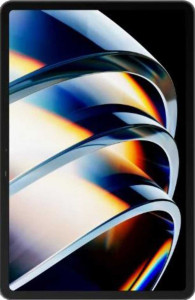
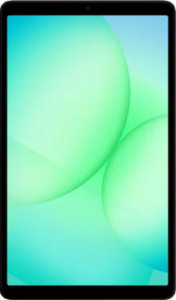
Across the broad sweep of software features and privacy controls, these two tablets are remarkably alike — both support split screen, Picture-in-Picture, dark mode, dynamic theming, widgets, customizable notifications, on-device machine learning, and a full suite of privacy tools. For everyday usability and Android feature depth, neither holds an edge over the other.
Where the comparison diverges meaningfully is on connectivity hardware. The Samsung Galaxy Tab A11 includes a cellular module and GPS, while the Infinix Xpad GT has neither. This is a significant practical distinction: the Tab A11 can connect to mobile networks independently of Wi-Fi and navigate with satellite positioning, making it a genuinely portable device in the fullest sense. The Xpad GT, by contrast, is Wi-Fi only and lacks native location tracking — limiting its usefulness on the go unless tethered to a phone. On the flip side, the Xpad GT's listed Wi-Fi speeds are dramatically higher at 7500 Mbps download and 3000 Mbps upload, versus the Tab A11's 650 Mbps and 150 Mbps respectively — suggesting support for a newer, faster Wi-Fi standard that benefits users in high-bandwidth home or office environments.
The conclusion here depends entirely on use case. For users who need untethered connectivity and location services on the move, the Samsung Galaxy Tab A11 has a clear functional advantage. For those who stay within Wi-Fi range and prioritize raw wireless throughput, the Xpad GT's faster Wi-Fi specification tips the balance back. Neither is a universal winner — the right choice hinges on whether cellular independence or Wi-Fi speed matters more to the buyer.