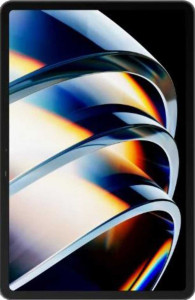
Infinix Xpad GT
Samsung Galaxy Tab A11 Wi-Fi 128GB

Infinix Xpad GT Samsung Galaxy Tab A11 Wi-Fi 128GB

Overview

Choosing between the Infinix Xpad GT and the Samsung Galaxy Tab A11 Wi-Fi 128GB is no simple task, as these two tablets take very different approaches to design, display, and raw power. In this head-to-head comparison, we put their key battlegrounds under the microscope — from screen size and refresh rate to chipset performance and battery capacity — to help you decide which device truly fits your lifestyle and needs.

Common Features

  • Neither product includes a stylus.
  • Neither product has a detachable keyboard.
  • Neither product has a backlit keyboard.
  • Neither product offers water resistance.
  • Neither product has tilt sensitivity.
  • Both products have a touchscreen.
  • Neither product has branded damage-resistant glass.
  • Neither product has a sapphire glass display.
  • Neither product supports HDR10+.
  • Neither product supports Dolby Vision.
  • Neither product has an e-paper display.
  • Both products come with 8GB of RAM.
  • Both products support 64-bit processing.
  • Both products have integrated LTE.
  • Both products use big.LITTLE technology.
  • Both products have integrated graphics.
  • Both products have 8 CPU threads.
  • Both products have TrustZone support.
  • Both products run Android 15.
  • Both products have a front camera.
  • Both products have a flash.
  • Both products have a built-in HDR mode.
  • Neither product can create panoramas in-camera.
  • Both products support slow-motion video recording.
  • Both products have touch autofocus.
  • Both products have manual white balance.
  • Both products support continuous autofocus when recording movies.
  • Both products have stereo speakers.
  • Neither product has a 3.5mm audio jack.
  • Neither product has a radio.
  • Both products support fast charging.
  • Neither product has wireless charging.
  • Both products have a battery level indicator.
  • Both products have a rechargeable battery.
  • Neither product has a removable battery.
  • Both products have on-device machine learning.
  • Both products have clipboard warnings.
  • Both products have location privacy options.
  • Both products have camera and microphone privacy options.
  • Both products can block app tracking.
  • Neither product blocks cross-site tracking.
  • Both products support split screen.

Main Differences

  • Weight is 655 g on Infinix Xpad GT and 335 g on Samsung Galaxy Tab A11 Wi-Fi 128GB.
  • Thickness is 6.5 mm on Infinix Xpad GT and 8 mm on Samsung Galaxy Tab A11 Wi-Fi 128GB.
  • Screen size is 13″ on Infinix Xpad GT and 8.7″ on Samsung Galaxy Tab A11 Wi-Fi 128GB.
  • Resolution is 2880 x 1840 px on Infinix Xpad GT and 1340 x 800 px on Samsung Galaxy Tab A11 Wi-Fi 128GB.
  • Pixel density is 263 ppi on Infinix Xpad GT and 179 ppi on Samsung Galaxy Tab A11 Wi-Fi 128GB.
  • Display type is LCD, IPS on Infinix Xpad GT and LCD on Samsung Galaxy Tab A11 Wi-Fi 128GB.
  • Refresh rate is 144Hz on Infinix Xpad GT and 90Hz on Samsung Galaxy Tab A11 Wi-Fi 128GB.
  • HDR10 support is present on Infinix Xpad GT but not available on Samsung Galaxy Tab A11 Wi-Fi 128GB.
  • Internal storage is 256GB on Infinix Xpad GT and 128GB on Samsung Galaxy Tab A11 Wi-Fi 128GB.
  • Chipset is Qualcomm Snapdragon 888 on Infinix Xpad GT and Mediatek Helio G99 on Samsung Galaxy Tab A11 Wi-Fi 128GB.
  • GPU is Adreno 660 on Infinix Xpad GT and Mali G57 on Samsung Galaxy Tab A11 Wi-Fi 128GB.
  • CPU speed is 1 x 2.84 & 3 x 2.42 & 4 x 1.8 GHz on Infinix Xpad GT and 2 x 2.2 & 6 x 2 GHz on Samsung Galaxy Tab A11 Wi-Fi 128GB.
  • Geekbench 6 multi-core score is 3014 on Infinix Xpad GT and 1979 on Samsung Galaxy Tab A11 Wi-Fi 128GB.
  • Geekbench 6 single-core score is 1002 on Infinix Xpad GT and 729 on Samsung Galaxy Tab A11 Wi-Fi 128GB.
  • Semiconductor size is 5 nm on Infinix Xpad GT and 6 nm on Samsung Galaxy Tab A11 Wi-Fi 128GB.
  • DirectX version is DirectX 12 on Infinix Xpad GT and DirectX 11 on Samsung Galaxy Tab A11 Wi-Fi 128GB.
  • RAM speed is 3200 MHz on Infinix Xpad GT and 4266 MHz on Samsung Galaxy Tab A11 Wi-Fi 128GB.
  • GPU turbo speed is 840 MHz on Infinix Xpad GT and 2133 MHz on Samsung Galaxy Tab A11 Wi-Fi 128GB.
  • Maximum memory amount is 16GB on Infinix Xpad GT and 12GB on Samsung Galaxy Tab A11 Wi-Fi 128GB.
  • Thermal Design Power (TDP) is 8W on Infinix Xpad GT and 5W on Samsung Galaxy Tab A11 Wi-Fi 128GB.
  • Main camera resolution is 13 MP on Infinix Xpad GT and 8 MP on Samsung Galaxy Tab A11 Wi-Fi 128GB.
  • Front camera resolution is 9 MP on Infinix Xpad GT and 5 MP on Samsung Galaxy Tab A11 Wi-Fi 128GB.
  • Battery capacity is 10000 mAh on Infinix Xpad GT and 5100 mAh on Samsung Galaxy Tab A11 Wi-Fi 128GB.
  • Download speed is 7500 MBits/s on Infinix Xpad GT and 650 MBits/s on Samsung Galaxy Tab A11 Wi-Fi 128GB.
  • Upload speed is 3000 MBits/s on Infinix Xpad GT and 150 MBits/s on Samsung Galaxy Tab A11 Wi-Fi 128GB.
  • DDR memory version is DDR5 on Infinix Xpad GT and DDR4 on Samsung Galaxy Tab A11 Wi-Fi 128GB.
Specs Comparison
Infinix Xpad GT

Infinix Xpad GT

Samsung Galaxy Tab A11 Wi-Fi 128GB

Samsung Galaxy Tab A11 Wi-Fi 128GB

Design:
weight 655 g 335 g
thickness 6.5 mm 8 mm
Stylus included
Has a detachable keyboard
Has a backlit keyboard
water resistance None None
Has tilt sensitivity

The most striking difference in this design group is weight. The Infinix Xpad GT comes in at 655 g, nearly double the 335 g of the Samsung Galaxy Tab A11 Wi-Fi. In practical terms, this gap is immediately felt during extended handheld use — reading, browsing, or media consumption over 30+ minutes will be noticeably more fatiguing with the Xpad GT. The Samsung's lighter build makes it a far more comfortable companion for one-handed or on-the-go use.

The one area where the Infinix Xpad GT counters is thickness: at 6.5 mm it is slimmer than the Samsung's 8 mm profile, giving it a sleeker, more premium feel in the hand despite its heavier mass. However, a 1.5 mm difference in thickness is subtle in daily use and unlikely to offset the weight disadvantage for most users.

Both tablets share the same accessories story — no included stylus, no detachable or backlit keyboard, and no water resistance — so neither holds an advantage on those fronts. Overall, the Samsung Galaxy Tab A11 Wi-Fi has a clear design edge for portability and everyday comfort, driven almost entirely by its significantly lower weight.

Display:
screen size 13" 8.7"
resolution 2880 x 1840 px 1340 x 800 px
pixel density 263 ppi 179 ppi
Display type LCD, IPS LCD
refresh rate 144Hz 90Hz
has branded damage-resistant glass
supports HDR10
has a touch screen
Has sapphire glass display
supports HDR10+
supports Dolby Vision
Has an e-paper display

Screen size and resolution tell very different stories here. The Infinix Xpad GT sports a large 13-inch panel at 2880 x 1840 px, yielding a pixel density of 263 ppi — sharp enough that individual pixels are essentially invisible at normal viewing distances. The Samsung Galaxy Tab A11 Wi-Fi's 8.7-inch screen resolves at just 1340 x 800 px and 179 ppi, a density where text and fine details are noticeably softer, particularly in side-by-side comparisons or when reading small print.

The refresh rate gap further widens the Xpad GT's lead for dynamic content. A 144Hz panel makes scrolling, animations, and fast-paced gaming feel distinctly fluid, while the Tab A11's 90Hz display, though smoother than a standard 60Hz screen, simply cannot match that level of responsiveness. The Xpad GT also supports HDR10, meaning compatible video content is rendered with a wider contrast range and more vibrant highlights — a meaningful perk for streaming. The Tab A11 lacks HDR support entirely.

Both tablets use LCD technology and neither offers damage-resistant branded glass, so those factors are a wash. Still, across every meaningful display metric — size, sharpness, refresh rate, and HDR capability — the Infinix Xpad GT holds a commanding advantage, making it the clear winner in this category for users who prioritize screen quality.

Performance:
internal storage 256GB 128GB
RAM 8GB 8GB
Chipset (SoC) name Qualcomm Snapdragon 888 Mediatek Helio G99
GPU name Adreno 660 Mali G57
CPU speed 1 x 2.84 & 3 x 2.42 & 4 x 1.8 GHz 2 x 2.2 & 6 x 2 GHz
Geekbench 6 result (multi) 3014 1979
Geekbench 6 result (single) 1002 729
semiconductor size 5 nm 6 nm
Supports 64-bit
Has integrated LTE
Uses big.LITTLE technology
DirectX version DirectX 12 DirectX 11
Has integrated graphics
CPU threads 8 threads 8 threads
RAM speed 3200 MHz 4266 MHz
Has TrustZone
GPU turbo 840 MHz 2133 MHz
maximum memory amount 16GB 12GB
Android version Android 15 Android 15
Thermal Design Power (TDP) 8W 5W
maximum memory bandwidth 51.2 GB/s 17.1 GB/s
OpenGL ES version 3.2 3.2
OpenCL version 2 2

The chipset gap here is substantial. The Infinix Xpad GT runs on the Qualcomm Snapdragon 888, a flagship-tier processor built on a 5 nm process, while the Samsung Galaxy Tab A11 Wi-Fi relies on the Mediatek Helio G99, a capable mid-range chip on a 6 nm node. The Geekbench 6 scores make the performance delta concrete: the Xpad GT scores 1002 single-core and 3014 multi-core, versus the Tab A11's 729 and 1979 respectively. That roughly 37% single-core advantage translates directly into snappier app launches, faster UI responses, and smoother multitasking in everyday use.

For graphics-intensive workloads, the Xpad GT's Adreno 660 GPU paired with DirectX 12 support positions it well above the Tab A11's Mali G57 and its DirectX 11 ceiling. Modern mobile games increasingly leverage newer graphics APIs, so this distinction matters for users who game seriously on their tablet. The Xpad GT also doubles down on storage with 256 GB of internal space versus the Tab A11's 128 GB, and supports a higher maximum memory bandwidth of 51.2 GB/s compared to just 17.1 GB/s — meaning the Snapdragon platform can feed data to the CPU and GPU far more rapidly under load.

Both tablets ship with 8 GB of RAM and run Android 15, so day-to-day multitasking headroom is nominally equal. The Tab A11's higher RAM speed and lower TDP do hint at better power efficiency under light loads, but raw throughput across every major performance dimension firmly favors the Infinix Xpad GT, which is the clear winner in this category.

Cameras:
megapixels (main camera) 13 MP 8 MP
megapixels (front camera) 9MP 5MP
has a flash
has a front camera
has a built-in HDR mode
can create panoramas in-camera
supports slow-motion video recording
has touch autofocus
has manual white balance
has continuous autofocus when recording movies
Has a front-facing LED flash
has manual ISO
Shoots 360° panorama
has a serial shot mode
has built-in optical image stabilization
has 3D photo/video recording capabilities
Has a dual-tone LED flash
has manual focus
Has a RGB LED flash
has manual exposure
has manual shutter speed

Tablet cameras are rarely a primary purchase driver, but the specs here still reveal a meaningful gap. The Infinix Xpad GT offers a 13 MP main camera and a 9 MP front shooter, compared to the Samsung Galaxy Tab A11 Wi-Fi's 8 MP rear and 5 MP front. Higher megapixel counts alone don't guarantee better image quality, but they do allow for more detail retention when cropping shots or capturing documents and whiteboards — common tablet use cases.

Where the two tablets are genuinely equal is in their manual controls and shooting features. Both support manual ISO, white balance, focus, and exposure, alongside continuous autofocus during video recording and slow-motion capture. Neither includes optical image stabilization or a front-facing flash, so low-light selfies and video calls will face the same constraints on both devices. This parity means the camera experience in terms of flexibility and feature set is essentially identical.

Given that the feature sets are matched and the only concrete differentiator is resolution, the Infinix Xpad GT holds a modest edge in this category — primarily useful for users who rely on their tablet camera for document scanning or occasional photography where extra detail matters.

Audio:
has stereo speakers
has a socket for a 3.5 mm audio jack
Has a radio

Audio is the rare category where these two tablets are in complete lockstep. Both the Infinix Xpad GT and the Samsung Galaxy Tab A11 Wi-Fi feature stereo speakers, lack a 3.5 mm headphone jack, and omit an FM radio — there is no differentiator to speak of across any of the provided specs.

The absence of a headphone jack on both devices means wired audio listeners will need either a USB-C adapter or a Bluetooth pair of headphones, so neither tablet offers an advantage for that use case. Stereo speakers, meanwhile, are a meaningful baseline for media consumption, providing left-right channel separation that makes video and music noticeably more immersive than mono alternatives.

This category is a complete tie. Based solely on the available specs, neither tablet holds any audio advantage over the other, and the choice between them on this dimension should have no bearing on a purchase decision.

Battery:
battery power 10000 mAh 5100 mAh
Supports fast charging
has wireless charging
has a battery level indicator
has a rechargeable battery
has a removable battery

Battery capacity is where the Infinix Xpad GT asserts one of its most tangible real-world advantages. Its 10000 mAh cell is nearly double the 5100 mAh found in the Samsung Galaxy Tab A11 Wi-Fi. Paired with the Xpad GT's larger, power-hungry 13-inch display and flagship-tier processor, a bigger battery is not just a bonus — it is a necessity. For the Tab A11, the smaller cell aligns with its more modest screen and efficient mid-range chip, so raw capacity alone does not tell the full efficiency story. That said, users who need extended screen-on time without reaching for a charger will find the Xpad GT's reserve far more reassuring.

Both tablets support fast charging and share the same limitations: no wireless charging and no removable battery. These are standard trade-offs at this product tier, and neither device offers an edge on charging flexibility beyond the wired fast-charging baseline they both provide.

On battery, the Infinix Xpad GT holds a clear advantage in raw capacity. Even accounting for its larger display drawing more power, a 10000 mAh reserve gives it a meaningful buffer for all-day or multi-day use that the Tab A11's 5100 mAh simply cannot match.

Connectivity & Features:
release date May 2025 September 2025
has Mail Privacy Protection
has on-device machine learning
has clipboard warnings
has location privacy options
has camera/microphone privacy options
can block app tracking
blocks cross-site tracking
supports split screen
has Live Text
has notification permissions
has full-page screenshots
has Quick Start
has theme customization
has Wi-Fi password sharing
has PiP
Can play games while they download
has an extra dim mode
can offload apps
has focus modes
has media picker
has dynamic theming
has dark mode
has battery health check
Has USB Type-C
has a cellular module
has 5G support
is a multi-user system
gets direct OS updates
has GPS
has a child lock
has an HDMI output
has NFC
Has a fingerprint scanner
Supports widgets
download speed 7500 MBits/s 650 MBits/s
Is free and open source
Has offline voice recognition
upload speed 3000 MBits/s 150 MBits/s
supports Wi-Fi
Has sharing intents
Has customizable notifications
Uses 3D facial recognition
supports Galileo
has voice commands
Has an iris scanner
Has a built-in projector
supports Ethernet
Has an infrared sensor
Tracks the current position of a mobile device

Across the vast majority of connectivity and software features, these two tablets are virtually identical — both support split-screen multitasking, Picture-in-Picture, dark mode, dynamic theming, widgets, customizable notifications, USB Type-C, and the same suite of privacy controls. Neither includes NFC, GPS, HDMI output, a fingerprint scanner, or a cellular module, so they share the same limitations on hardware connectivity as well.

The one standout differentiator is Wi-Fi throughput. The Infinix Xpad GT supports a theoretical download speed of 7500 Mbits/s and upload speed of 3000 Mbits/s, pointing to Wi-Fi 6E or equivalent high-band capability. The Samsung Galaxy Tab A11 Wi-Fi caps out at 650 Mbits/s down and 150 Mbits/s up — figures consistent with Wi-Fi 5. In practice, this gap matters most in environments with a capable router and high network demand: large file transfers, 4K streaming, or cloud gaming will benefit meaningfully from the Xpad GT's headroom, while the Tab A11 may bottleneck on faster home or office networks.

Given the near-total feature parity elsewhere, the Infinix Xpad GT takes a clear edge in this category on the strength of its substantially faster Wi-Fi speeds alone — a meaningful advantage for users who regularly push their network connection.

Miscellaneous:
DDR memory version 5 4

This group comes down to a single but technically meaningful data point: memory generation. The Infinix Xpad GT uses DDR5 RAM, while the Samsung Galaxy Tab A11 Wi-Fi relies on the older DDR4 standard. DDR5 offers higher peak bandwidth and improved power efficiency at the memory controller level compared to DDR4, which means the Xpad GT's processor can access data faster and with less energy overhead — a quiet but real contributor to its overall responsiveness under sustained workloads.

In day-to-day light use the difference may not be perceptible, but in memory-intensive scenarios — rapid app switching, large file handling, or multitasking with several heavy apps open simultaneously — DDR5's bandwidth advantage can help prevent the subtle slowdowns that arise when the CPU is starved for data. It also represents a more forward-looking memory architecture as software demands continue to grow.

With only this one spec in the group, the verdict is straightforward: the Infinix Xpad GT holds the edge here by virtue of its newer DDR5 memory generation, which complements its already stronger overall performance profile.

Comparison Summary & Verdict

After examining every major specification, these two tablets clearly target different types of users. The Infinix Xpad GT dominates in nearly every performance and display metric: its larger 13-inch 144Hz IPS screen, Snapdragon 888 chipset with significantly higher Geekbench scores, 256GB storage, 13 MP main camera, and a massive 10000 mAh battery make it a compelling choice for power users who demand a premium multimedia and gaming experience. The Samsung Galaxy Tab A11 Wi-Fi 128GB, on the other hand, wins on portability, weighing nearly half as much at just 335 g, and draws notably less power with its 5W TDP. Its compact 8.7-inch form factor and lighter footprint make it ideal for everyday casual use, reading, and on-the-go productivity. Both share a solid Android 15 foundation with stereo speakers and fast charging, but their respective strengths point to very distinct audiences.

Infinix Xpad GT
Buy Infinix Xpad GT if...

Buy the Infinix Xpad GT if you want a large 13-inch 144Hz display, stronger chipset performance, and a massive 10000 mAh battery for gaming and multimedia use.

Samsung Galaxy Tab A11 Wi-Fi 128GB
Buy Samsung Galaxy Tab A11 Wi-Fi 128GB if...

Buy the Samsung Galaxy Tab A11 Wi-Fi 128GB if you prioritize a lightweight, compact tablet for everyday casual use and easy portability at just 335 g.