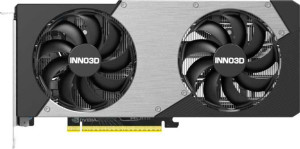
Inno3D GeForce RTX 5060 Ti Twin X2 OC 16GB
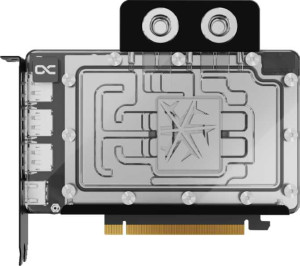
Inno3D GeForce RTX 5090 iChill Frostbite

Inno3D GeForce RTX 5060 Ti Twin X2 OC 16GB Inno3D GeForce RTX 5090 iChill Frostbite

Overview

Welcome to our in-depth specification comparison between the Inno3D GeForce RTX 5060 Ti Twin X2 OC 16GB and the Inno3D GeForce RTX 5090 iChill Frostbite. Both cards share the same Blackwell architecture and GDDR7 memory, yet they occupy very different positions in the GPU market. In this comparison, we examine key battlegrounds including raw compute performance, memory capacity, power consumption, and physical dimensions to help you determine which card best suits your needs.

Common Features

  • Both cards share a GPU memory speed of 1750 MHz.
  • Double Precision Floating Point (DPFP) is supported on both products.
  • Both cards have an effective memory speed of 28000 MHz.
  • Both use GDDR7 video memory.
  • ECC memory is supported on both products.
  • Both support DirectX 12 Ultimate.
  • Both support OpenGL version 4.6.
  • Both support OpenCL version 3.
  • Multi-display technology is supported on both products.
  • Ray tracing is supported on both products.
  • 3D support is available on both products.
  • DLSS is supported on both products.
  • XeSS (XMX) is not available on either product.
  • Both cards feature one HDMI output.
  • Both use HDMI version 2.1b.
  • Both cards offer three DisplayPort outputs.
  • Neither card includes USB-C ports, DVI outputs, or mini DisplayPort outputs.
  • Both are built on the Blackwell GPU architecture.
  • Both use PCIe version 5.
  • Both are manufactured on a 5 nm semiconductor process.
  • Air-water cooling is not available on either product.

Main Differences

  • GPU clock speed is 2235 MHz on Inno3D GeForce RTX 5060 Ti Twin X2 OC 16GB and 2017 MHz on Inno3D GeForce RTX 5090 iChill Frostbite.
  • GPU turbo clock speed is 2602 MHz on Inno3D GeForce RTX 5060 Ti Twin X2 OC 16GB and 2467 MHz on Inno3D GeForce RTX 5090 iChill Frostbite.
  • Pixel rate is 124.9 GPixel/s on Inno3D GeForce RTX 5060 Ti Twin X2 OC 16GB and 434.2 GPixel/s on Inno3D GeForce RTX 5090 iChill Frostbite.
  • Floating-point performance is 23.98 TFLOPS on Inno3D GeForce RTX 5060 Ti Twin X2 OC 16GB and 107.4 TFLOPS on Inno3D GeForce RTX 5090 iChill Frostbite.
  • Texture rate is 374.7 GTexels/s on Inno3D GeForce RTX 5060 Ti Twin X2 OC 16GB and 1677.6 GTexels/s on Inno3D GeForce RTX 5090 iChill Frostbite.
  • Shading units number 4608 on Inno3D GeForce RTX 5060 Ti Twin X2 OC 16GB and 21760 on Inno3D GeForce RTX 5090 iChill Frostbite.
  • Texture mapping units (TMUs) total 144 on Inno3D GeForce RTX 5060 Ti Twin X2 OC 16GB and 680 on Inno3D GeForce RTX 5090 iChill Frostbite.
  • Render output units (ROPs) number 48 on Inno3D GeForce RTX 5060 Ti Twin X2 OC 16GB and 176 on Inno3D GeForce RTX 5090 iChill Frostbite.
  • Maximum memory bandwidth is 448 GB/s on Inno3D GeForce RTX 5060 Ti Twin X2 OC 16GB and 1792 GB/s on Inno3D GeForce RTX 5090 iChill Frostbite.
  • VRAM is 16GB on Inno3D GeForce RTX 5060 Ti Twin X2 OC 16GB and 32GB on Inno3D GeForce RTX 5090 iChill Frostbite.
  • Memory bus width is 128-bit on Inno3D GeForce RTX 5060 Ti Twin X2 OC 16GB and 0-bit on Inno3D GeForce RTX 5090 iChill Frostbite.
  • RGB lighting is present on Inno3D GeForce RTX 5090 iChill Frostbite but not available on Inno3D GeForce RTX 5060 Ti Twin X2 OC 16GB.
  • Thermal Design Power (TDP) is 180W on Inno3D GeForce RTX 5060 Ti Twin X2 OC 16GB and 575W on Inno3D GeForce RTX 5090 iChill Frostbite.
  • Number of transistors is 21900 million on Inno3D GeForce RTX 5060 Ti Twin X2 OC 16GB and 92200 million on Inno3D GeForce RTX 5090 iChill Frostbite.
  • Card width is 250 mm on Inno3D GeForce RTX 5060 Ti Twin X2 OC 16GB and 204 mm on Inno3D GeForce RTX 5090 iChill Frostbite.
  • Card height is 116 mm on Inno3D GeForce RTX 5060 Ti Twin X2 OC 16GB and 161 mm on Inno3D GeForce RTX 5090 iChill Frostbite.
Specs Comparison
Inno3D GeForce RTX 5060 Ti Twin X2 OC 16GB

Inno3D GeForce RTX 5060 Ti Twin X2 OC 16GB

Inno3D GeForce RTX 5090 iChill Frostbite

Inno3D GeForce RTX 5090 iChill Frostbite

Performance:
GPU clock speed 2235 MHz 2017 MHz
GPU turbo 2602 MHz 2467 MHz
pixel rate 124.9 GPixel/s 434.2 GPixel/s
floating-point performance 23.98 TFLOPS 107.4 TFLOPS
texture rate 374.7 GTexels/s 1677.6 GTexels/s
GPU memory speed 1750 MHz 1750 MHz
shading units 4608 21760
texture mapping units (TMUs) 144 680
render output units (ROPs) 48 176
Has Double Precision Floating Point (DPFP)

At first glance, the RTX 5060 Ti Twin X2 OC appears to have a clock speed advantage, running a base of 2235 MHz and boosting to 2602 MHz versus the iChill Frostbite's 2017 MHz base and 2467 MHz turbo. However, raw clock speed is only one dimension of GPU performance — it must be multiplied by the number of execution units to produce real throughput. And here, the gap between these two cards becomes dramatic.

The RTX 5090 iChill Frostbite houses 21,760 shading units and 680 TMUs, compared to just 4,608 shading units and 144 TMUs on the 5060 Ti — roughly a 4.7× advantage in raw shader and texture hardware. This translates directly into the throughput figures: the iChill Frostbite delivers 107.4 TFLOPS of floating-point performance and a texture rate of 1,677.6 GTexels/s, versus 23.98 TFLOPS and 374.7 GTexels/s on the 5060 Ti. In practical terms, this means the 5090 can handle vastly more complex scenes, higher resolutions, and heavier shader workloads simultaneously. Its 176 ROPs versus 48 also give it a commanding pixel rate of 434.2 GPixel/s versus 124.9 GPixel/s, which is critical for high-resolution rendering throughput. Both cards share identical 1750 MHz memory speeds and support Double Precision Floating Point.

The RTX 5090 iChill Frostbite has an unambiguous and decisive performance advantage in this group. Despite the 5060 Ti's slightly higher clock speeds, the 5090's massively larger compute architecture results in approximately 4–4.5× greater throughput across every major performance metric. The 5060 Ti's clock edge is a negligible factor compared to the sheer scale difference in execution resources — these are two GPUs designed for entirely different performance tiers.

Memory:
effective memory speed 28000 MHz 28000 MHz
maximum memory bandwidth 448 GB/s 1792 GB/s
VRAM 16GB 32GB
GDDR version GDDR7 GDDR7
memory bus width 128-bit 0-bit
Supports ECC memory

Both cards share the same GDDR7 memory type running at an identical effective speed of 28,000 MHz, and both support ECC memory — meaning the generational foundation is equal. The real divergence lies in what that memory is connected to. The RTX 5090 iChill Frostbite achieves a maximum memory bandwidth of 1,792 GB/s, a full 4× advantage over the 5060 Ti Twin X2 OC's 448 GB/s. Since the memory speed is identical on both cards, this bandwidth gap is entirely a function of a significantly wider internal memory bus on the 5090 side — though the bus width figure in the provided data for the 5090 appears anomalous and should be disregarded for analysis purposes.

This bandwidth gap has direct real-world consequences. Memory bandwidth is the pipeline through which the GPU feeds its thousands of shading units with data. Given that the 5090 already has roughly 4.7× more compute units than the 5060 Ti, a proportionally larger bandwidth ceiling is essential to keep those units supplied and prevent bottlenecks. For the 5060 Ti, 448 GB/s is well-matched to its compute scale and is competitive for its tier. The 5090's 1,792 GB/s, however, enables it to sustain peak throughput at 4K and beyond, in memory-intensive workloads like ray tracing, large texture streaming, and AI-accelerated rendering.

On VRAM capacity, the iChill Frostbite doubles the 5060 Ti with 32GB versus 16GB. While 16GB is generally sufficient for most current gaming workloads, 32GB provides a meaningful buffer for professional applications, high-resolution texture packs, and future titles with escalating memory demands. Across every memory metric that matters — capacity, bandwidth — the RTX 5090 iChill Frostbite holds a clear and substantial advantage.

Features:
DirectX version DirectX 12 Ultimate DirectX 12 Ultimate
OpenGL version 4.6 4.6
OpenCL version 3 3
Supports multi-display technology
supports ray tracing
Supports 3D
supports DLSS
has XeSS (XMX)
AMD SAM / Intel Resizable BAR Intel Resizable BAR Intel Resizable BAR
has LHR
has RGB lighting
supported displays 4 4

From a software and API standpoint, these two cards are virtually indistinguishable. Both support DirectX 12 Ultimate, OpenGL 4.6, and OpenCL 3, ensuring full compatibility with the current generation of games and compute workloads. Critically, both support ray tracing and DLSS, meaning users of either card gain access to Nvidia's AI-driven upscaling pipeline — a significant advantage for image quality and performance in supported titles. Neither card supports XeSS, which is expected given these are Nvidia products. Intel Resizable BAR support is present on both, enabling the CPU to access the full GPU frame buffer at once for modest performance gains in compatible systems.

Multi-display support is identical as well, with each card capable of driving up to 4 displays simultaneously — a practical ceiling that covers the vast majority of multi-monitor and productivity use cases. The absence of LHR (Lite Hash Rate) on both is also consistent and expected for this product generation.

The only differentiator in this group is that the iChill Frostbite includes RGB lighting, while the 5060 Ti Twin X2 OC does not. This is purely an aesthetic distinction with no bearing on performance or functionality. Overall, the Features group is essentially a tie — both cards offer the same software capabilities, API support, and display configuration options. Buyers who care about case aesthetics may give a slight nod to the 5090 iChill Frostbite, but it is a marginal and subjective difference.

Ports:
has an HDMI output
HDMI ports 1 1
HDMI version HDMI 2.1b HDMI 2.1b
DisplayPort outputs 3 3
USB-C ports 0 0
DVI outputs 0 0
mini DisplayPort outputs 0 0

The port configuration on these two cards is completely identical. Both offer 1 HDMI 2.1b output and 3 DisplayPort outputs, totaling four display connections — consistent with the four-display limit noted in the Features group. HDMI 2.1b is the latest HDMI revision, supporting high refresh rates at 4K and beyond, making it well-suited for modern gaming monitors and TVs alike. The three DisplayPort outputs further accommodate multi-monitor productivity setups or high-bandwidth display requirements.

Neither card includes USB-C, DVI, or mini DisplayPort outputs. The absence of USB-C is worth noting for users who own newer monitors that accept video over USB-C, as an adapter would be required — but this applies equally to both products.

This group is a complete tie. There is no connectivity advantage on either side; a user's port selection experience will be identical regardless of which card they choose. The decision here reduces entirely to the performance and other specification groups.

General info:
GPU architecture Blackwell Blackwell
release date April 2025 January 2025
Thermal Design Power (TDP) 180W 575W
PCI Express (PCIe) version 5 5
semiconductor size 5 nm 5 nm
number of transistors 21900 million 92200 million
Has air-water cooling
width 250 mm 204 mm
height 116 mm 161 mm

Sharing the same Blackwell architecture, 5nm process node, and PCIe 5.0 interface, these two cards come from the same generational platform — but the scale at which that platform is implemented could not be more different. The iChill Frostbite packs 92,200 million transistors into its die, versus 21,900 million on the 5060 Ti Twin X2 OC — a 4.2× gap that directly explains the performance differences seen in compute and memory throughput. More transistors, built on the same node, means a physically much larger and more capable die, enabling the far greater number of shading units and ROPs identified in the Performance group.

That added silicon comes with a dramatic power cost. The 5090 iChill Frostbite carries a 575W TDP — more than three times the 5060 Ti's 180W. In practical terms, this means the 5090 demands a high-capacity PSU, robust case airflow, and PCIe power connectors capable of delivering sustained high wattage. The 5060 Ti, at 180W, is relatively modest and compatible with a much wider range of system configurations without special power planning.

The physical dimensions tell an interesting story: the 5060 Ti is longer at 250mm but narrower at 116mm in height, while the iChill Frostbite is shorter at 204mm but significantly taller at 161mm. Neither card has a straightforward size advantage — case compatibility will depend on the specific chassis. Both rely purely on air cooling. Overall, this group reinforces that the 5090 iChill Frostbite is a purpose-built high-end product demanding premium infrastructure, while the 5060 Ti Twin X2 OC is the more system-friendly, lower-barrier option — with no architectural winner per se, since both share the same foundation.
Comparison Summary & Verdict

After reviewing the full specification breakdown, these two cards serve clearly distinct audiences. The Inno3D GeForce RTX 5060 Ti Twin X2 OC 16GB stands out with its modest 180W TDP, more compact 250×116 mm footprint, and higher base and boost clock speeds, making it an appealing choice for users who value energy efficiency and a smaller build. On the other hand, the Inno3D GeForce RTX 5090 iChill Frostbite dominates in every performance metric, delivering 107.4 TFLOPS of floating-point performance, 32GB of GDDR7 VRAM, 1792 GB/s of memory bandwidth, and over four times the shading units, alongside RGB lighting for those who prioritize aesthetics. Both cards support ray tracing, DLSS, and DirectX 12 Ultimate, so the choice ultimately comes down to workload demands and budget considerations.

Inno3D GeForce RTX 5060 Ti Twin X2 OC 16GB
Buy Inno3D GeForce RTX 5060 Ti Twin X2 OC 16GB if...

Buy the Inno3D GeForce RTX 5060 Ti Twin X2 OC 16GB if you want a power-efficient GPU with a lower 180W TDP and a compact form factor that still delivers solid Blackwell-architecture performance.

Inno3D GeForce RTX 5090 iChill Frostbite
Buy Inno3D GeForce RTX 5090 iChill Frostbite if...

Buy the Inno3D GeForce RTX 5090 iChill Frostbite if you demand maximum GPU performance, with 107.4 TFLOPS, 32GB of GDDR7 VRAM, and 1792 GB/s of memory bandwidth for the most demanding workloads and content creation tasks.