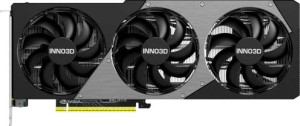
Inno3D GeForce RTX 5060 Ti X3 OC 16GB
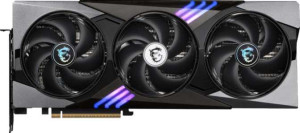
MSI GeForce RTX 5080 Gaming Trio OC

Inno3D GeForce RTX 5060 Ti X3 OC 16GB MSI GeForce RTX 5080 Gaming Trio OC

Overview

Welcome to our in-depth specification comparison between the Inno3D GeForce RTX 5060 Ti X3 OC 16GB and the MSI GeForce RTX 5080 Gaming Trio OC. Both cards share the same Blackwell architecture and 16GB of GDDR7 memory, yet they occupy very different positions in the GPU market. In this comparison, we examine the key battlegrounds of raw compute performance, memory bandwidth, power consumption, and physical dimensions to help you decide which card suits your needs best.

Common Features

  • Both cards support Double Precision Floating Point (DPFP).
  • Both cards come with 16GB of VRAM.
  • Both cards use GDDR7 memory.
  • ECC memory is supported on both cards.
  • Both cards support DirectX 12 Ultimate.
  • Both cards support OpenGL version 4.6.
  • Both cards support OpenCL version 3.
  • Multi-display technology is supported on both cards.
  • Ray tracing is supported on both cards.
  • 3D support is available on both cards.
  • DLSS is supported on both cards.
  • XeSS (XMX) is not available on either card.
  • Both cards have one HDMI output running HDMI version 2.1b.
  • Both cards have three DisplayPort outputs.
  • Neither card has USB-C ports, DVI outputs, or mini DisplayPort outputs.
  • Both cards are built on the Blackwell GPU architecture.
  • Both cards use PCIe version 5.
  • Both cards are manufactured on a 5 nm semiconductor process.
  • Neither card uses air-water cooling.

Main Differences

  • GPU base clock speed is 2407 MHz on the Inno3D GeForce RTX 5060 Ti X3 OC 16GB and 2295 MHz on the MSI GeForce RTX 5080 Gaming Trio OC.
  • GPU turbo clock speed is 2602 MHz on the Inno3D GeForce RTX 5060 Ti X3 OC 16GB and 2700 MHz on the MSI GeForce RTX 5080 Gaming Trio OC.
  • Pixel rate is 124.9 GPixel/s on the Inno3D GeForce RTX 5060 Ti X3 OC 16GB and 302.4 GPixel/s on the MSI GeForce RTX 5080 Gaming Trio OC.
  • Floating-point performance is 23.98 TFLOPS on the Inno3D GeForce RTX 5060 Ti X3 OC 16GB and 58.06 TFLOPS on the MSI GeForce RTX 5080 Gaming Trio OC.
  • Texture rate is 374.7 GTexels/s on the Inno3D GeForce RTX 5060 Ti X3 OC 16GB and 907.2 GTexels/s on the MSI GeForce RTX 5080 Gaming Trio OC.
  • GPU memory speed is 1750 MHz on the Inno3D GeForce RTX 5060 Ti X3 OC 16GB and 1875 MHz on the MSI GeForce RTX 5080 Gaming Trio OC.
  • Shading units number 4608 on the Inno3D GeForce RTX 5060 Ti X3 OC 16GB and 10752 on the MSI GeForce RTX 5080 Gaming Trio OC.
  • Texture mapping units (TMUs) total 144 on the Inno3D GeForce RTX 5060 Ti X3 OC 16GB and 336 on the MSI GeForce RTX 5080 Gaming Trio OC.
  • Render output units (ROPs) total 48 on the Inno3D GeForce RTX 5060 Ti X3 OC 16GB and 112 on the MSI GeForce RTX 5080 Gaming Trio OC.
  • Effective memory speed is 28000 MHz on the Inno3D GeForce RTX 5060 Ti X3 OC 16GB and 30000 MHz on the MSI GeForce RTX 5080 Gaming Trio OC.
  • Maximum memory bandwidth is 448 GB/s on the Inno3D GeForce RTX 5060 Ti X3 OC 16GB and 960 GB/s on the MSI GeForce RTX 5080 Gaming Trio OC.
  • Memory bus width is 128-bit on the Inno3D GeForce RTX 5060 Ti X3 OC 16GB and 256-bit on the MSI GeForce RTX 5080 Gaming Trio OC.
  • RGB lighting is present on the MSI GeForce RTX 5080 Gaming Trio OC but not available on the Inno3D GeForce RTX 5060 Ti X3 OC 16GB.
  • Thermal Design Power (TDP) is 180W on the Inno3D GeForce RTX 5060 Ti X3 OC 16GB and 360W on the MSI GeForce RTX 5080 Gaming Trio OC.
  • The number of transistors is 21900 million on the Inno3D GeForce RTX 5060 Ti X3 OC 16GB and 45600 million on the MSI GeForce RTX 5080 Gaming Trio OC.
  • Card width is 300 mm on the Inno3D GeForce RTX 5060 Ti X3 OC 16GB and 338 mm on the MSI GeForce RTX 5080 Gaming Trio OC.
  • Card height is 116 mm on the Inno3D GeForce RTX 5060 Ti X3 OC 16GB and 140 mm on the MSI GeForce RTX 5080 Gaming Trio OC.
Specs Comparison
Inno3D GeForce RTX 5060 Ti X3 OC 16GB

Inno3D GeForce RTX 5060 Ti X3 OC 16GB

MSI GeForce RTX 5080 Gaming Trio OC

MSI GeForce RTX 5080 Gaming Trio OC

Performance:
GPU clock speed 2407 MHz 2295 MHz
GPU turbo 2602 MHz 2700 MHz
pixel rate 124.9 GPixel/s 302.4 GPixel/s
floating-point performance 23.98 TFLOPS 58.06 TFLOPS
texture rate 374.7 GTexels/s 907.2 GTexels/s
GPU memory speed 1750 MHz 1875 MHz
shading units 4608 10752
texture mapping units (TMUs) 144 336
render output units (ROPs) 48 112
Has Double Precision Floating Point (DPFP)

Looking at raw compute muscle, the MSI RTX 5080 Gaming Trio OC holds a commanding lead across every throughput metric. Its 10,752 shading units dwarf the 4,608 found in the Inno3D RTX 5060 Ti X3 OC 16GB — a 2.3× advantage that flows directly into floating-point performance: 58.06 TFLOPS versus 23.98 TFLOPS. In practice, this gap translates to noticeably higher sustained frame rates at demanding resolutions, far greater headroom for ray tracing workloads, and significantly faster throughput in GPU-compute tasks like AI inference or video encoding.

The clock speed story is more nuanced. The 5060 Ti actually ships with a higher base clock (2,407 MHz vs. 2,295 MHz), but the RTX 5080 overtakes it at boost, reaching 2,700 MHz versus 2,602 MHz. Base clock matters less in real gaming scenarios where the GPU almost always runs at or near boost, so the 5080′s turbo advantage further compounds its lead in the derived throughput figures. The 5080 also carries a slight memory speed edge (1,875 MHz vs. 1,750 MHz), which contributes to its substantially higher texture and pixel fill rates — 907.2 GTexels/s and 302.4 GPixel/s respectively, versus 374.7 GTexels/s and 124.9 GPixel/s. Higher fill rates mean the GPU can shade and output more pixels per second, which is especially meaningful at 4K where fill-rate bottlenecks are more likely to surface.

Both cards support Double Precision Floating Point, so neither has an exclusive edge there. Overall, the RTX 5080 Gaming Trio OC has a clear and decisive performance advantage in this group — roughly 2.4× more raw compute and rasterization throughput across the board. The 5060 Ti is by no means slow, but buyers must weigh whether that 5080 performance delta justifies what is typically a much higher price premium.
Memory:
effective memory speed 28000 MHz 30000 MHz
maximum memory bandwidth 448 GB/s 960 GB/s
VRAM 16GB 16GB
GDDR version GDDR7 GDDR7
memory bus width 128-bit 256-bit
Supports ECC memory

The memory specifications of the Inno3D GeForce RTX 5060 Ti X3 OC 16GB and the MSI GeForce RTX 5080 Gaming Trio OC show some notable differences. Both cards feature 16GB of VRAM and utilize GDDR7 memory, but the effective memory speeds differ. The Inno3D card has an effective memory speed of 28000 MHz, while the MSI card offers a faster 30000 MHz.

In terms of memory bandwidth, the MSI card again takes the lead, offering 960 GB/s, significantly higher than the Inno3D card’s 448 GB/s. This difference indicates a substantial increase in data transfer capacity with the MSI card.

Both cards have a memory bus width of 128-bit (Inno3D) and 256-bit (MSI), which again highlights the MSI card’s superior bandwidth potential. However, both cards support ECC (Error Correcting Code) memory, which helps ensure data integrity in high-performance computing tasks.

Features:
DirectX version DirectX 12 Ultimate DirectX 12 Ultimate
OpenGL version 4.6 4.6
OpenCL version 3 3
Supports multi-display technology
supports ray tracing
Supports 3D
supports DLSS
has XeSS (XMX)
AMD SAM / Intel Resizable BAR Intel Resizable BAR Intel Resizable BAR
has LHR
has RGB lighting
supported displays 4 4

The Inno3D GeForce RTX 5060 Ti X3 OC 16GB and MSI GeForce RTX 5080 Gaming Trio OC both share several key features, including support for DirectX 12 Ultimate, OpenGL 4.6, and OpenCL 3, as well as multi-display technology, ray tracing, 3D support, and DLSS. Both cards also support Intel Resizable BAR and do not have LHR (Lite Hash Rate). The number of supported displays is the same for both, with each supporting up to 4 displays.

However, one notable difference is that the MSI card includes RGB lighting, while the Inno3D card does not. Additionally, both cards lack support for XeSS (XMX), so there are no differences in that regard.

Overall, the feature sets of these two cards are nearly identical, with the only distinction being the RGB lighting available on the MSI GeForce RTX 5080 Gaming Trio OC.

Ports:
has an HDMI output
HDMI ports 1 1
HDMI version HDMI 2.1b HDMI 2.1b
DisplayPort outputs 3 3
USB-C ports 0 0
DVI outputs 0 0
mini DisplayPort outputs 0 0

Both the Inno3D GeForce RTX 5060 Ti X3 OC 16GB and the MSI GeForce RTX 5080 Gaming Trio OC feature a similar selection of ports. Each card has one HDMI output, both using HDMI 2.1b, and three DisplayPort outputs. Neither card includes USB-C, DVI, or mini DisplayPort outputs.

Overall, the port configurations of the two cards are identical, with no differences in the number or types of ports provided.

General info:
GPU architecture Blackwell Blackwell
release date April 2025 January 2025
Thermal Design Power (TDP) 180W 360W
PCI Express (PCIe) version 5 5
semiconductor size 5 nm 5 nm
number of transistors 21900 million 45600 million
Has air-water cooling
width 300 mm 338 mm
height 116 mm 140 mm

The Inno3D GeForce RTX 5060 Ti X3 OC 16GB and MSI GeForce RTX 5080 Gaming Trio OC share the same GPU architecture, Blackwell, and both use a 5 nm semiconductor size. They also both support PCIe version 5. However, they differ significantly in their other general specifications.

The Inno3D card has a Thermal Design Power (TDP) of 180W, whereas the MSI card has a much higher TDP of 360W. This suggests that the MSI card requires more power to operate. The MSI card also has more transistors, with 45,600 million compared to the Inno3D card’s 21,900 million.

In terms of physical dimensions, the MSI card is larger, with a width of 338 mm and a height of 140 mm, compared to the Inno3D card’s 300 mm width and 116 mm height. Both cards lack air-water cooling systems.

Comparison Summary & Verdict

After examining all the evidence, these two cards serve distinctly different audiences. The Inno3D GeForce RTX 5060 Ti X3 OC 16GB stands out for its lower 180W TDP and more compact dimensions, making it an excellent choice for energy-conscious builds or smaller cases, while still delivering modern Blackwell features including ray tracing and DLSS. The MSI GeForce RTX 5080 Gaming Trio OC, on the other hand, dominates across every performance metric — with more than double the floating-point performance at 58.06 TFLOPS, a significantly wider 256-bit memory bus delivering 960 GB/s of bandwidth, 10752 shading units, and RGB lighting for enthusiasts who want a premium aesthetic. If budget and power efficiency are priorities, the Inno3D is a well-rounded option; if maximum performance is the goal and the higher 360W power draw is acceptable, the MSI is the clear step up.

Inno3D GeForce RTX 5060 Ti X3 OC 16GB
Buy Inno3D GeForce RTX 5060 Ti X3 OC 16GB if...

Buy the Inno3D GeForce RTX 5060 Ti X3 OC 16GB if you want a power-efficient Blackwell GPU with a 180W TDP and a compact form factor that still delivers 16GB of GDDR7 memory and full feature support.

MSI GeForce RTX 5080 Gaming Trio OC
Buy MSI GeForce RTX 5080 Gaming Trio OC if...

Buy the MSI GeForce RTX 5080 Gaming Trio OC if you demand top-tier performance, with over double the floating-point throughput, a 256-bit memory bus, 960 GB/s bandwidth, and RGB lighting for a flagship gaming or content creation build.