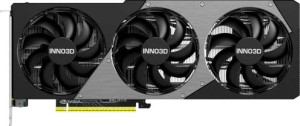
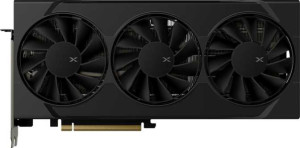
The most striking contrast between these two cards lies in their clock speed philosophy. The Inno3D RTX 5060 Ti runs a significantly higher base clock at 2407 MHz versus the XFX RX 9060 XT's 1900 MHz, suggesting more consistent sustained performance. However, the RX 9060 XT surges ahead under boost conditions, reaching 3320 MHz compared to the RTX 5060 Ti's 2602 MHz — a gap of over 700 MHz at peak. In practice, this means the AMD card can deliver sharper performance bursts in GPU-intensive scenes, while the NVIDIA card sustains a more stable clock floor, which can matter for workloads sensitive to frequency dips.
When looking at raw throughput metrics, the RX 9060 XT holds a meaningful lead across the board: its 27.2 TFLOPS of floating-point performance outpaces the RTX 5060 Ti's 23.98 TFLOPS by roughly 13%, while its pixel rate of 212.5 GPixel/s and texture rate of 425 GTexels/s are considerably higher. The AMD card also benefits from more render output units (64 ROPs vs 48) and faster memory at 2518 MHz vs 1750 MHz, which translates to better fill-rate and memory bandwidth potential — factors that directly impact rendering at higher resolutions. The RTX 5060 Ti counters with a much larger shading unit count (4608 vs 2048), which on paper suggests more parallel compute capacity, though this advantage is not reflected in its TFLOPS figure, pointing to architectural efficiency differences between the NVIDIA and AMD designs.
On balance, the XFX RX 9060 XT holds the performance edge within this spec group. Its higher TFLOPS, superior pixel and texture throughput, faster memory, and more ROPs collectively point to greater theoretical rendering horsepower. Both cards support Double Precision Floating Point, making neither stand out for compute workloads on that criterion alone. The RTX 5060 Ti's higher shading unit count is an interesting architectural footnote, but the headline throughput numbers favor the RX 9060 XT across the most impactful performance metrics.