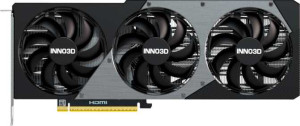
Inno3D GeForce RTX 5070 Ti X3
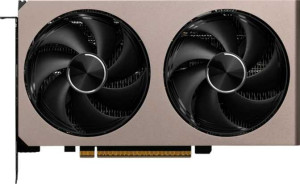
MSI GeForce RTX 5060 Ti Inspire 2X OC 16GB

Inno3D GeForce RTX 5070 Ti X3 MSI GeForce RTX 5060 Ti Inspire 2X OC 16GB

Overview

Welcome to our in-depth spec comparison between the Inno3D GeForce RTX 5070 Ti X3 and the MSI GeForce RTX 5060 Ti Inspire 2X OC 16GB. Both cards share the same Blackwell architecture, GDDR7 memory, and a 16GB VRAM configuration, yet they target very different segments of the GPU market. In this comparison, we examine their key battlegrounds: raw compute performance, memory bandwidth, power consumption, and physical dimensions to help you find the right fit.

Common Features

  • GPU memory speed is 1750 MHz on both Inno3D GeForce RTX 5070 Ti X3 and MSI GeForce RTX 5060 Ti Inspire 2X OC 16GB.
  • Double Precision Floating Point (DPFP) is supported on both products.
  • Effective memory speed is 28000 MHz on both products.
  • Both products come with 16GB of VRAM.
  • Both products use GDDR7 memory.
  • ECC memory is supported on both products.
  • Both products support DirectX 12 Ultimate.
  • OpenGL version 4.6 is available on both products.
  • OpenCL version 3 is available on both products.
  • Multi-display technology is supported on both products.
  • Ray tracing is supported on both products.
  • 3D technology is supported on both products.
  • DLSS is supported on both products.
  • XeSS (XMX) is not available on either product.
  • Both products feature one HDMI output running HDMI 2.1b.
  • Both products offer three DisplayPort outputs.
  • Neither product has a USB-C port, a DVI output, or a mini DisplayPort output.
  • Both products are built on the Blackwell GPU architecture.
  • Both products use a PCIe 5 interface.
  • Both products are manufactured on a 5 nm semiconductor process and do not feature air-water cooling.

Main Differences

  • GPU base clock speed is 2295 MHz on Inno3D GeForce RTX 5070 Ti X3 and 2407 MHz on MSI GeForce RTX 5060 Ti Inspire 2X OC 16GB.
  • GPU turbo clock is 2452 MHz on Inno3D GeForce RTX 5070 Ti X3 and 2617 MHz on MSI GeForce RTX 5060 Ti Inspire 2X OC 16GB.
  • Pixel rate is 235.4 GPixel/s on Inno3D GeForce RTX 5070 Ti X3 and 125.6 GPixel/s on MSI GeForce RTX 5060 Ti Inspire 2X OC 16GB.
  • Floating-point performance is 43.94 TFLOPS on Inno3D GeForce RTX 5070 Ti X3 and 24.12 TFLOPS on MSI GeForce RTX 5060 Ti Inspire 2X OC 16GB.
  • Texture rate is 686.6 GTexels/s on Inno3D GeForce RTX 5070 Ti X3 and 376.8 GTexels/s on MSI GeForce RTX 5060 Ti Inspire 2X OC 16GB.
  • Shading units number 8960 on Inno3D GeForce RTX 5070 Ti X3 and 4608 on MSI GeForce RTX 5060 Ti Inspire 2X OC 16GB.
  • Texture mapping units (TMUs) total 280 on Inno3D GeForce RTX 5070 Ti X3 and 144 on MSI GeForce RTX 5060 Ti Inspire 2X OC 16GB.
  • Render output units (ROPs) total 96 on Inno3D GeForce RTX 5070 Ti X3 and 48 on MSI GeForce RTX 5060 Ti Inspire 2X OC 16GB.
  • Maximum memory bandwidth is 896 GB/s on Inno3D GeForce RTX 5070 Ti X3 and 448 GB/s on MSI GeForce RTX 5060 Ti Inspire 2X OC 16GB.
  • Memory bus width is 256-bit on Inno3D GeForce RTX 5070 Ti X3 and 128-bit on MSI GeForce RTX 5060 Ti Inspire 2X OC 16GB.
  • Thermal Design Power (TDP) is 300W on Inno3D GeForce RTX 5070 Ti X3 and 180W on MSI GeForce RTX 5060 Ti Inspire 2X OC 16GB.
  • Transistor count is 45600 million on Inno3D GeForce RTX 5070 Ti X3 and 21900 million on MSI GeForce RTX 5060 Ti Inspire 2X OC 16GB.
  • Card width is 300 mm on Inno3D GeForce RTX 5070 Ti X3 and 204 mm on MSI GeForce RTX 5060 Ti Inspire 2X OC 16GB.
  • Card height is 116 mm on Inno3D GeForce RTX 5070 Ti X3 and 117 mm on MSI GeForce RTX 5060 Ti Inspire 2X OC 16GB.
Specs Comparison
Inno3D GeForce RTX 5070 Ti X3

Inno3D GeForce RTX 5070 Ti X3

MSI GeForce RTX 5060 Ti Inspire 2X OC 16GB

MSI GeForce RTX 5060 Ti Inspire 2X OC 16GB

Performance:
GPU clock speed 2295 MHz 2407 MHz
GPU turbo 2452 MHz 2617 MHz
pixel rate 235.4 GPixel/s 125.6 GPixel/s
floating-point performance 43.94 TFLOPS 24.12 TFLOPS
texture rate 686.6 GTexels/s 376.8 GTexels/s
GPU memory speed 1750 MHz 1750 MHz
shading units 8960 4608
texture mapping units (TMUs) 280 144
render output units (ROPs) 96 48
Has Double Precision Floating Point (DPFP)

At first glance, the MSI RTX 5060 Ti appears faster due to its higher base and boost clocks — 2407 MHz / 2617 MHz versus 2295 MHz / 2452 MHz on the Inno3D RTX 5070 Ti X3. However, clock speed alone is a poor proxy for GPU performance. What truly determines throughput is how many functional units are doing work at those clocks, and here the 5070 Ti X3 holds a commanding lead across the board.

The 5070 Ti X3 packs 8960 shading units and 280 TMUs — nearly double the 4608 shaders and 144 TMUs of the 5060 Ti. This translates directly into real-world compute headroom: 43.94 TFLOPS of floating-point performance versus just 24.12 TFLOPS, an 82% advantage. Similarly, the texture fill rate of 686.6 GTexels/s versus 376.8 GTexels/s means the 5070 Ti X3 can handle denser, higher-resolution texture workloads far more fluidly — critical in modern open-world games and ray-traced environments. With double the ROPs (96 vs 48), the pixel output rate also nearly doubles, directly benefiting high-resolution rendering and anti-aliasing performance.

Both cards share identical 1750 MHz memory speed and both support Double Precision Floating Point, so neither has an edge on those fronts. Overall, the Inno3D RTX 5070 Ti X3 has a clear and decisive performance advantage in this group — its higher clock-speed deficit is entirely overshadowed by its much larger shader array, making it the significantly more powerful GPU for demanding gaming, creative, and compute workloads.
Memory:
effective memory speed 28000 MHz 28000 MHz
maximum memory bandwidth 896 GB/s 448 GB/s
VRAM 16GB 16GB
GDDR version GDDR7 GDDR7
memory bus width 256-bit 128-bit
Supports ECC memory

Both the Inno3D RTX 5070 Ti X3 and the MSI RTX 5060 Ti share a surprisingly large set of memory fundamentals: both carry 16GB of GDDR7 VRAM and run at an identical effective speed of 28000 MHz, and both support ECC memory — a feature typically associated with workstation-class reliability. For users concerned about VRAM capacity alone, neither card has an edge.

Where the two diverge sharply is memory bandwidth, and the reason comes down entirely to bus width. The 5070 Ti X3 uses a 256-bit memory interface, while the 5060 Ti is fitted with a narrower 128-bit bus. Since bandwidth is a direct product of bus width and clock speed, the result is a 2:1 ratio: 896 GB/s versus 448 GB/s. In practice, memory bandwidth is one of the most critical bottlenecks in GPU-intensive scenarios — high-resolution textures, large frame buffers at 4K, ray tracing, and AI workloads all saturate memory bandwidth quickly. A wider pipe means the GPU spends less time waiting for data, keeping all those shaders fed and productive.

Despite identical VRAM amounts, the Inno3D RTX 5070 Ti X3 holds a clear memory advantage thanks to its doubled bandwidth. The 5060 Ti's narrower bus constrains how effectively it can leverage its 16GB pool at demanding resolutions and workloads, making the 5070 Ti X3 the stronger choice wherever memory throughput — not just capacity — is the deciding factor.

Features:
DirectX version DirectX 12 Ultimate DirectX 12 Ultimate
OpenGL version 4.6 4.6
OpenCL version 3 3
Supports multi-display technology
supports ray tracing
Supports 3D
supports DLSS
has XeSS (XMX)
AMD SAM / Intel Resizable BAR Intel Resizable BAR Intel Resizable BAR
has LHR
has RGB lighting
supported displays 4 4

Across every feature in this group, the Inno3D RTX 5070 Ti X3 and the MSI RTX 5060 Ti are a perfect match. Both support DirectX 12 Ultimate — the current gold standard for gaming APIs, enabling features like hardware-accelerated ray tracing, mesh shaders, and variable rate shading in compatible titles. Paired with OpenGL 4.6 and OpenCL 3, both cards are equally equipped for professional visualization tools and GPU-accelerated compute applications.

On the gaming and display side, both cards support ray tracing, DLSS, and up to 4 simultaneous displays — making either a capable choice for multi-monitor setups. The inclusion of Intel Resizable BAR on both means compatible systems can grant the CPU full access to VRAM, reducing CPU-side bottlenecks in certain games. Neither card carries LHR restrictions or RGB lighting, so those factors are non-issues for either camp.

This group is a clear tie — there is not a single feature differentiator between the two cards as defined by the provided data. A buyer's decision here should rest entirely on the performance and memory advantages examined in the other specification groups, rather than on software feature support.

Ports:
has an HDMI output
HDMI ports 1 1
HDMI version HDMI 2.1b HDMI 2.1b
DisplayPort outputs 3 3
USB-C ports 0 0
DVI outputs 0 0
mini DisplayPort outputs 0 0

Port configurations are identical on both cards: one HDMI 2.1b output and three DisplayPorts, totaling four display outputs — consistent with the four-display support noted in the Features group. HDMI 2.1b is the latest HDMI revision, supporting up to 4K at high refresh rates and 8K output, making both cards equally capable of connecting to modern TVs and monitors without adapters.

The trio of DisplayPort outputs is particularly useful for multi-monitor workstation or gaming setups, allowing three high-refresh-rate displays to run simultaneously alongside the HDMI port. Neither card offers USB-C, mini DisplayPort, or legacy DVI — so users dependent on older DVI monitors or USB-C displays will need an adapter regardless of which card they choose.

This is another complete tie. The port layouts of the Inno3D RTX 5070 Ti X3 and the MSI RTX 5060 Ti are indistinguishable, and connectivity should play no role in differentiating these two cards.

General info:
GPU architecture Blackwell Blackwell
release date February 2025 April 2025
Thermal Design Power (TDP) 300W 180W
PCI Express (PCIe) version 5 5
semiconductor size 5 nm 5 nm
number of transistors 45600 million 21900 million
Has air-water cooling
width 300 mm 204 mm
height 116 mm 117 mm

Sharing the same Blackwell architecture, 5nm process node, and PCIe 5.0 interface, both cards come from the same generational platform — which means they benefit equally from architectural improvements over previous generations. The silicon underneath them, however, tells very different stories: the Inno3D RTX 5070 Ti X3 packs 45,600 million transistors versus 21,900 million on the MSI RTX 5060 Ti. That more than 2:1 transistor ratio is the physical explanation behind every performance gap seen in the previous groups — more transistors means more compute units, more memory interface, and more on-die logic.

That larger die comes with a proportionally higher power demand. The 5070 Ti X3 carries a 300W TDP compared to the 5060 Ti's 180W, a 120W difference that has real practical implications. Users building or upgrading a system around the 5070 Ti X3 will need a more robust PSU and should expect higher heat output, potentially requiring better case airflow. The 5060 Ti's lower power envelope makes it a more practical fit for compact builds or systems with modest power supplies.

Physical size reinforces this divide: the 5070 Ti X3 measures 300mm in length versus the 5060 Ti's more compact 204mm, a nearly 10cm difference that could be decisive in smaller mid-tower or mini-ITX cases. For buyers prioritizing system compatibility and power efficiency, the MSI RTX 5060 Ti has a meaningful edge here; those willing to accommodate the larger footprint and higher power draw gain access to the considerably more capable silicon of the 5070 Ti X3.

Comparison Summary & Verdict

After examining the full specification breakdown, a clear picture emerges for each card. The Inno3D GeForce RTX 5070 Ti X3 holds a commanding lead in pure throughput, delivering 43.94 TFLOPS of floating-point performance, 896 GB/s of memory bandwidth via its 256-bit bus, and nearly double the shading units and TMUs — making it the clear choice for demanding workloads and high-resolution gaming. The MSI GeForce RTX 5060 Ti Inspire 2X OC 16GB, on the other hand, operates at a lower 180W TDP within a much more compact 204 mm footprint, and actually posts higher base and boost clock speeds, making it an attractive option for small form-factor builds or power-conscious users. Both cards share the same 16GB GDDR7 VRAM, full DirectX 12 Ultimate support, ray tracing, and DLSS, so neither compromises on modern feature support. Your choice ultimately comes down to whether you need maximum rendering power or a more efficient, space-friendly solution.

Inno3D GeForce RTX 5070 Ti X3
Buy Inno3D GeForce RTX 5070 Ti X3 if...

Buy the Inno3D GeForce RTX 5070 Ti X3 if you need maximum GPU horsepower, with nearly double the shading units, 896 GB/s of memory bandwidth, and 43.94 TFLOPS of floating-point performance for demanding gaming or compute workloads.

MSI GeForce RTX 5060 Ti Inspire 2X OC 16GB
Buy MSI GeForce RTX 5060 Ti Inspire 2X OC 16GB if...

Buy the MSI GeForce RTX 5060 Ti Inspire 2X OC 16GB if you want a power-efficient card with a compact 204 mm footprint and a 180W TDP, while still enjoying 16GB of GDDR7 memory and higher clock speeds in a smaller, more energy-conscious build.