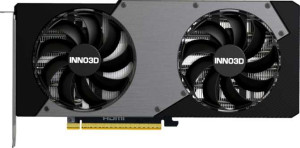
Inno3D GeForce RTX 5070 Twin X2 OC
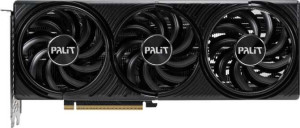
Palit GeForce RTX 5070 Infinity 3

Inno3D GeForce RTX 5070 Twin X2 OC Palit GeForce RTX 5070 Infinity 3

Overview

Welcome to our detailed specification face-off between the Inno3D GeForce RTX 5070 Twin X2 OC and the Palit GeForce RTX 5070 Infinity 3. Both cards are built on the cutting-edge Blackwell architecture and share the same 12GB GDDR7 memory configuration, but key differences in GPU turbo clock speeds and physical dimensions may make one a better fit for your specific setup than the other. Read on to see how they stack up across every major specification.

Common Features

  • Both cards share a base GPU clock speed of 2325 MHz.
  • Both cards have a GPU memory speed of 1750 MHz.
  • Both cards feature 6144 shading units.
  • Both cards have 192 texture mapping units (TMUs).
  • Both cards have 80 render output units (ROPs).
  • Double Precision Floating Point (DPFP) is supported on both cards.
  • Both cards have an effective memory speed of 28000 MHz.
  • Both cards offer a maximum memory bandwidth of 672 GB/s.
  • Both cards are equipped with 12GB of VRAM.
  • Both cards use GDDR7 memory.
  • Both cards have a 192-bit memory bus width.
  • ECC memory is supported on both cards.
  • Both cards support DirectX 12 Ultimate.
  • Both cards support OpenGL version 4.6.
  • Both cards support OpenCL version 3.
  • Multi-display technology is supported on both cards.
  • Ray tracing is supported on both cards.
  • 3D support is available on both cards.
  • DLSS is supported on both cards.
  • XeSS (XMX) is not available on either card.
  • Both cards include 1 HDMI port using HDMI version 2.1b.
  • Both cards feature 3 DisplayPort outputs.
  • Neither card has USB-C ports, DVI outputs, or mini DisplayPort outputs.
  • Both cards are built on the Blackwell GPU architecture.
  • Both cards have a Thermal Design Power (TDP) of 250W.
  • Both cards use PCIe version 5.
  • Both cards are manufactured on a 5 nm semiconductor process.
  • Both cards contain 31,100 million transistors.
  • Air-water cooling is not available on either card.

Main Differences

  • GPU turbo clock speed is 2542 MHz on Inno3D GeForce RTX 5070 Twin X2 OC and 2512 MHz on Palit GeForce RTX 5070 Infinity 3.
  • Pixel rate is 203.4 GPixel/s on Inno3D GeForce RTX 5070 Twin X2 OC and 201 GPixel/s on Palit GeForce RTX 5070 Infinity 3.
  • Floating-point performance is 31.24 TFLOPS on Inno3D GeForce RTX 5070 Twin X2 OC and 30.87 TFLOPS on Palit GeForce RTX 5070 Infinity 3.
  • Texture rate is 488.1 GTexels/s on Inno3D GeForce RTX 5070 Twin X2 OC and 482.3 GTexels/s on Palit GeForce RTX 5070 Infinity 3.
  • Card width is 250 mm on Inno3D GeForce RTX 5070 Twin X2 OC and 291.9 mm on Palit GeForce RTX 5070 Infinity 3.
  • Card height is 116 mm on Inno3D GeForce RTX 5070 Twin X2 OC and 116.6 mm on Palit GeForce RTX 5070 Infinity 3.
Specs Comparison
Inno3D GeForce RTX 5070 Twin X2 OC

Inno3D GeForce RTX 5070 Twin X2 OC

Palit GeForce RTX 5070 Infinity 3

Palit GeForce RTX 5070 Infinity 3

Performance:
GPU clock speed 2325 MHz 2325 MHz
GPU turbo 2542 MHz 2512 MHz
pixel rate 203.4 GPixel/s 201 GPixel/s
floating-point performance 31.24 TFLOPS 30.87 TFLOPS
texture rate 488.1 GTexels/s 482.3 GTexels/s
GPU memory speed 1750 MHz 1750 MHz
shading units 6144 6144
texture mapping units (TMUs) 192 192
render output units (ROPs) 80 80
Has Double Precision Floating Point (DPFP)

Both cards share the same 2325 MHz base clock, 6144 shading units, 192 TMUs, 80 ROPs, and 1750 MHz memory speed, confirming they are built on identical silicon with the same fundamental architecture. The real divergence lies entirely in how each card is factory-overclocked at boost: the Inno3D Twin X2 OC reaches a 2542 MHz turbo, while the Palit Infinity 3 tops out at 2512 MHz — a 30 MHz gap that cascades into small but consistent advantages across every throughput metric.

That 30 MHz difference translates to the Inno3D delivering 31.24 TFLOPS of floating-point performance versus 30.87 TFLOPS for the Palit, and a texture rate of 488.1 GTexels/s against 482.3 GTexels/s. In practice, these are roughly 1.2% margins — well within the noise floor of most gaming benchmarks and unlikely to produce a perceptible frame-rate difference in real-world use. Workloads that are sustained and compute-bound, such as GPU rendering or AI inference, are the only scenarios where such a gap might accumulate into a measurable result.

The Inno3D GeForce RTX 5070 Twin X2 OC holds a narrow but clear performance edge in this group, thanks solely to its higher factory boost clock. Both cards support Double Precision Floating Point, so neither has a qualitative advantage there. For a buyer prioritizing peak out-of-the-box throughput, the Inno3D wins — but the margin is slim enough that thermal behavior, cooling efficiency, and power delivery (not reflected in these specs) could easily close or reverse the gap under sustained load.

Memory:
effective memory speed 28000 MHz 28000 MHz
maximum memory bandwidth 672 GB/s 672 GB/s
VRAM 12GB 12GB
GDDR version GDDR7 GDDR7
memory bus width 192-bit 192-bit
Supports ECC memory

Across every memory specification, these two cards are in perfect lockstep. Both carry 12GB of GDDR7 over a 192-bit bus, running at an effective 28000 MHz to deliver 672 GB/s of memory bandwidth. That bandwidth figure is the critical one: at 672 GB/s, the RTX 5070 class sits in a strong position for 1440p and entry-level 4K workloads, feeding the GPU's shader array quickly enough to avoid memory bottlenecks in the vast majority of gaming and creative scenarios.

The GDDR7 standard is worth noting in context — it offers substantially higher data rates per pin than the GDDR6X found on previous-generation cards, which is how NVIDIA achieves this bandwidth despite using a narrower 192-bit interface rather than a wider, more expensive bus. The tradeoff is that 12GB of VRAM, while adequate today, is a consideration for users targeting very high-resolution texture packs or multi-monitor setups, where headroom can erode quickly. Both cards support ECC memory, which adds a layer of data integrity useful in professional or compute-adjacent workloads.

This group is an absolute tie. There is no differentiator — not in capacity, speed, bandwidth, bus width, memory type, or ECC support. A buyer's choice between the Inno3D Twin X2 OC and the Palit Infinity 3 should rest entirely on other spec groups, pricing, or cooling design, as memory configuration offers zero basis for distinction here.

Features:
DirectX version DirectX 12 Ultimate DirectX 12 Ultimate
OpenGL version 4.6 4.6
OpenCL version 3 3
Supports multi-display technology
supports ray tracing
Supports 3D
supports DLSS
has XeSS (XMX)
AMD SAM / Intel Resizable BAR Intel Resizable BAR Intel Resizable BAR
has LHR
has RGB lighting
supported displays 4 4

Feature parity is total between these two cards. Both run DirectX 12 Ultimate, which is the relevant API ceiling for modern gaming — enabling hardware-accelerated ray tracing, mesh shaders, and variable-rate shading without compromise. Paired with ray tracing support and DLSS, both cards are fully equipped for NVIDIA's current-generation rendering pipeline, where DLSS in particular delivers meaningful frame-rate gains with minimal image quality cost, especially at 4K.

Support for up to 4 simultaneous displays and multi-display technology makes either card a capable choice for productivity-oriented multi-monitor setups, not just gaming rigs. Intel Resizable BAR support is also shared, allowing the CPU to access the full GPU frame buffer at once — a feature that provides modest but real performance gains in a growing number of titles when paired with a compatible platform. Neither card carries LHR restrictions, so there are no artificial compute limitations to be aware of.

Much like the memory group, this comparison yields a flat tie. Every feature — from API support and upscaling to display count and RGB lighting — is identical. No advantage can be assigned to either the Inno3D Twin X2 OC or the Palit Infinity 3 on the basis of features alone, and buyers should look to other categories to inform their decision.

Ports:
has an HDMI output
HDMI ports 1 1
HDMI version HDMI 2.1b HDMI 2.1b
DisplayPort outputs 3 3
USB-C ports 0 0
DVI outputs 0 0
mini DisplayPort outputs 0 0

The output configuration on both cards is identical: one HDMI 2.1b port and three DisplayPort outputs, totaling four display connections — which aligns with the four-display limit noted in the Features group. HDMI 2.1b is the current standard ceiling, supporting 4K at high refresh rates and 8K output, making it fully future-proof for any consumer display available today.

The three DisplayPort outputs are the practical workhorse for most desktop setups, particularly for users running high-refresh-rate or high-resolution monitors where DisplayPort remains the preferred interface. The absence of USB-C is worth flagging for users who rely on a single cable to drive a USB-C or Thunderbolt-compatible display — both cards require a traditional adapter in that scenario, with no native support provided.

Once again, this group produces a complete tie. The port layout is a mirror image across both cards, and no advantage exists for either the Inno3D Twin X2 OC or the Palit Infinity 3 in connectivity. Display flexibility and output quality will be identical regardless of which card a buyer chooses.

General info:
GPU architecture Blackwell Blackwell
release date March 2025 March 2025
Thermal Design Power (TDP) 250W 250W
PCI Express (PCIe) version 5 5
semiconductor size 5 nm 5 nm
number of transistors 31100 million 31100 million
Has air-water cooling
width 250 mm 291.9 mm
height 116 mm 116.6 mm

Foundationally, these cards are cut from the same cloth. Both are built on the Blackwell architecture using a 5nm process with 31.1 billion transistors, draw the same 250W TDP, and connect via PCIe 5.0. The shared TDP means power supply requirements and expected system heat output are equivalent — buyers can plan their builds around a single wattage target regardless of which card they choose.

The one concrete differentiator in this group is physical length. The Inno3D Twin X2 OC measures 250 mm in width, while the Palit Infinity 3 stretches to 291.9 mm — a gap of nearly 42 mm. That difference is case-relevant: the Palit is a meaningfully longer card that may not fit in compact or mid-tower cases with restricted GPU clearance, whereas the shorter Inno3D offers noticeably more flexibility for tighter builds. Both cards share an almost identical height of roughly 116 mm, so vertical slot clearance is a non-issue for either.

For most full-tower and standard mid-tower cases, the Palit's length will not be a problem — but for small form factor or space-constrained builds, the Inno3D Twin X2 OC holds a clear physical advantage. On every other general specification, the two cards are indistinguishable, so case compatibility becomes the deciding factor within this group.

Comparison Summary & Verdict

After a thorough look at the specs, both the Inno3D GeForce RTX 5070 Twin X2 OC and the Palit GeForce RTX 5070 Infinity 3 share an identical memory configuration with 12GB GDDR7 at 672 GB/s bandwidth, the same 250W TDP, and full support for ray tracing and DLSS. However, the Inno3D card edges ahead with a higher GPU turbo clock of 2542 MHz versus 2512 MHz, resulting in a slightly better floating-point performance of 31.24 TFLOPS and texture rate of 488.1 GTexels/s. On the other hand, the Palit card is notably wider at 291.9 mm compared to the more compact 250 mm of the Inno3D. Choose the Inno3D GeForce RTX 5070 Twin X2 OC if you want the marginally higher peak performance and need a card that fits in tighter cases. Opt for the Palit GeForce RTX 5070 Infinity 3 if case clearance is not a concern and you are drawn to its distinct design at a potentially different price point.

Inno3D GeForce RTX 5070 Twin X2 OC
Buy Inno3D GeForce RTX 5070 Twin X2 OC if...

Buy the Inno3D GeForce RTX 5070 Twin X2 OC if you want slightly higher GPU turbo clock speeds and better raw performance figures, or if you need a more compact card at just 250 mm wide to fit a smaller PC case.

Palit GeForce RTX 5070 Infinity 3
Buy Palit GeForce RTX 5070 Infinity 3 if...

Buy the Palit GeForce RTX 5070 Infinity 3 if case size is not a constraint and you prefer an alternative design, while still getting the same core memory configuration and feature set as the Inno3D model.