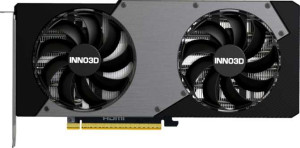
Inno3D GeForce RTX 5070 Twin X2 OC
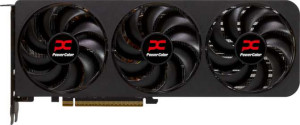
PowerColor Reaper Radeon RX 9070 XT

Inno3D GeForce RTX 5070 Twin X2 OC PowerColor Reaper Radeon RX 9070 XT

Overview

Welcome to our in-depth specification comparison between the Inno3D GeForce RTX 5070 Twin X2 OC and the PowerColor Reaper Radeon RX 9070 XT. These two mid-to-high-end graphics cards represent the latest GPU generations from NVIDIA and AMD respectively, and they take very different approaches to raw throughput, memory configuration, and feature sets. From shader counts and TFLOPS to VRAM capacity and software ecosystems, this page breaks down every key specification to help you make the right choice.

Common Features

  • Both products support Double Precision Floating Point (DPFP).
  • Both products support ECC memory.
  • Both products use OpenGL version 4.6.
  • Multi-display technology is supported on both products.
  • Ray tracing is supported on both products.
  • 3D support is available on both products.
  • XeSS (XMX) support is not available on either product.
  • LHR is not present on either product.
  • Both products support up to 4 displays simultaneously.
  • Both products have an HDMI output with 1 HDMI port using HDMI version 2.1b.
  • Both products include 3 DisplayPort outputs.
  • Neither product has a USB-C port.
  • Neither product has a DVI output.
  • Neither product has a mini DisplayPort output.
  • Both products use PCI Express (PCIe) version 5.
  • Neither product uses air-water cooling.

Main Differences

  • GPU base clock speed is 2325 MHz on Inno3D GeForce RTX 5070 Twin X2 OC and 1660 MHz on PowerColor Reaper Radeon RX 9070 XT.
  • GPU turbo clock speed is 2542 MHz on Inno3D GeForce RTX 5070 Twin X2 OC and 2970 MHz on PowerColor Reaper Radeon RX 9070 XT.
  • Pixel rate is 203.4 GPixel/s on Inno3D GeForce RTX 5070 Twin X2 OC and 380.2 GPixel/s on PowerColor Reaper Radeon RX 9070 XT.
  • Floating-point performance is 31.24 TFLOPS on Inno3D GeForce RTX 5070 Twin X2 OC and 48.66 TFLOPS on PowerColor Reaper Radeon RX 9070 XT.
  • Texture rate is 488.1 GTexels/s on Inno3D GeForce RTX 5070 Twin X2 OC and 760.3 GTexels/s on PowerColor Reaper Radeon RX 9070 XT.
  • GPU memory speed is 1750 MHz on Inno3D GeForce RTX 5070 Twin X2 OC and 2518 MHz on PowerColor Reaper Radeon RX 9070 XT.
  • Shading units number 6144 on Inno3D GeForce RTX 5070 Twin X2 OC and 4096 on PowerColor Reaper Radeon RX 9070 XT.
  • Texture mapping units (TMUs) total 192 on Inno3D GeForce RTX 5070 Twin X2 OC and 256 on PowerColor Reaper Radeon RX 9070 XT.
  • Render output units (ROPs) total 80 on Inno3D GeForce RTX 5070 Twin X2 OC and 128 on PowerColor Reaper Radeon RX 9070 XT.
  • Effective memory speed is 28000 MHz on Inno3D GeForce RTX 5070 Twin X2 OC and 20000 MHz on PowerColor Reaper Radeon RX 9070 XT.
  • Maximum memory bandwidth is 672 GB/s on Inno3D GeForce RTX 5070 Twin X2 OC and 644.6 GB/s on PowerColor Reaper Radeon RX 9070 XT.
  • VRAM is 12GB on Inno3D GeForce RTX 5070 Twin X2 OC and 16GB on PowerColor Reaper Radeon RX 9070 XT.
  • GDDR version is GDDR7 on Inno3D GeForce RTX 5070 Twin X2 OC and GDDR6 on PowerColor Reaper Radeon RX 9070 XT.
  • Memory bus width is 192-bit on Inno3D GeForce RTX 5070 Twin X2 OC and 256-bit on PowerColor Reaper Radeon RX 9070 XT.
  • DirectX version is DirectX 12 Ultimate on Inno3D GeForce RTX 5070 Twin X2 OC and DirectX 12 on PowerColor Reaper Radeon RX 9070 XT.
  • OpenCL version is 3 on Inno3D GeForce RTX 5070 Twin X2 OC and 2.2 on PowerColor Reaper Radeon RX 9070 XT.
  • DLSS support is present on Inno3D GeForce RTX 5070 Twin X2 OC but not available on PowerColor Reaper Radeon RX 9070 XT.
  • Resizable BAR technology is Intel Resizable BAR on Inno3D GeForce RTX 5070 Twin X2 OC and AMD SAM on PowerColor Reaper Radeon RX 9070 XT.
  • RGB lighting is present on Inno3D GeForce RTX 5070 Twin X2 OC but not available on PowerColor Reaper Radeon RX 9070 XT.
  • GPU architecture is Blackwell on Inno3D GeForce RTX 5070 Twin X2 OC and RDNA 4.0 on PowerColor Reaper Radeon RX 9070 XT.
  • Thermal Design Power (TDP) is 250W on Inno3D GeForce RTX 5070 Twin X2 OC and 304W on PowerColor Reaper Radeon RX 9070 XT.
  • Semiconductor size is 5 nm on Inno3D GeForce RTX 5070 Twin X2 OC and 4 nm on PowerColor Reaper Radeon RX 9070 XT.
  • Number of transistors is 31100 million on Inno3D GeForce RTX 5070 Twin X2 OC and 53900 million on PowerColor Reaper Radeon RX 9070 XT.
  • Card width is 250 mm on Inno3D GeForce RTX 5070 Twin X2 OC and 304 mm on PowerColor Reaper Radeon RX 9070 XT.
  • Card height is 116 mm on Inno3D GeForce RTX 5070 Twin X2 OC and 127 mm on PowerColor Reaper Radeon RX 9070 XT.
Specs Comparison
Inno3D GeForce RTX 5070 Twin X2 OC

Inno3D GeForce RTX 5070 Twin X2 OC

PowerColor Reaper Radeon RX 9070 XT

PowerColor Reaper Radeon RX 9070 XT

Performance:
GPU clock speed 2325 MHz 1660 MHz
GPU turbo 2542 MHz 2970 MHz
pixel rate 203.4 GPixel/s 380.2 GPixel/s
floating-point performance 31.24 TFLOPS 48.66 TFLOPS
texture rate 488.1 GTexels/s 760.3 GTexels/s
GPU memory speed 1750 MHz 2518 MHz
shading units 6144 4096
texture mapping units (TMUs) 192 256
render output units (ROPs) 80 128
Has Double Precision Floating Point (DPFP)

At first glance, the clock speed story seems split: the Inno3D RTX 5070 Twin X2 OC holds a significantly higher base clock at 2325 MHz versus the PowerColor Reaper RX 9070 XT's 1660 MHz, which typically means more consistent minimum performance. However, the RX 9070 XT surges ahead under boost conditions, hitting 2970 MHz compared to the RTX 5070's 2542 MHz — a gap of over 400 MHz at peak. In real-world gaming and GPU-intensive workloads, sustained boost clocks matter more than base clocks, so this is a meaningful lead for the PowerColor card in demanding scenarios.

The raw throughput metrics reinforce that advantage decisively. Despite having fewer shading units (4096 vs. 6144), the RX 9070 XT dramatically outpaces the RTX 5070 in every throughput category: its floating-point performance of 48.66 TFLOPS is roughly 56% higher than the RTX 5070's 31.24 TFLOPS, its texture rate of 760.3 GTexels/s outstrips the RTX 5070's 488.1 GTexels/s, and its pixel rate of 380.2 GPixel/s is nearly double the RTX 5070's 203.4 GPixel/s. This is explained by the RX 9070 XT's substantially higher ROP count (128 vs. 80) and TMU count (256 vs. 192), which are the units directly responsible for pixel output and texture throughput. These are not marginal differences — they point to a card built with a wider rendering pipeline. The faster memory clock on the RX 9070 XT (2518 MHz vs. 1750 MHz) further feeds that pipeline without becoming a bottleneck.

On paper, the PowerColor Reaper RX 9070 XT holds a clear and commanding performance advantage in this group. Its higher compute throughput, more render output units, and faster memory speed all point to superior raw GPU horsepower. The RTX 5070's higher shading unit count and more stable base clock are real attributes, but they are not enough to offset the RX 9070 XT's leads across the metrics that most directly translate to rendering speed and compute workloads.

Memory:
effective memory speed 28000 MHz 20000 MHz
maximum memory bandwidth 672 GB/s 644.6 GB/s
VRAM 12GB 16GB
GDDR version GDDR7 GDDR6
memory bus width 192-bit 256-bit
Supports ECC memory

The memory configurations of these two cards reflect fundamentally different engineering philosophies — and the tradeoffs are genuinely interesting. The RTX 5070 Twin X2 OC uses the newer GDDR7 standard at an effective speed of 28000 MHz, paired with a narrower 192-bit bus. The RX 9070 XT counters with GDDR6 at 20000 MHz but across a wider 256-bit bus. These are two different ways to solve the same problem — moving data fast — and the results are closer than the raw numbers suggest.

Maximum memory bandwidth is where those two approaches converge: the RTX 5070 achieves 672 GB/s while the RX 9070 XT delivers 644.6 GB/s — a difference of under 5%. In practice, bandwidth at this level is rarely a bottleneck in isolation, so neither card has a meaningful real-world edge here. What does diverge significantly is VRAM capacity: the RX 9070 XT offers 16GB versus the RTX 5070's 12GB. This gap matters in scenarios like high-resolution texture packs, large generative AI models running locally, or future game titles with aggressive VRAM demands — situations where running out of framebuffer forces expensive data swapping that tanks performance.

Both cards support ECC memory, which is a shared strength for users running precision-sensitive compute workloads. Overall though, the PowerColor RX 9070 XT holds the edge in this group, primarily due to its larger 16GB VRAM pool. With bandwidth essentially tied, the extra 4GB of headroom gives it a practical durability advantage for memory-hungry workloads and improves its longevity as games and applications continue to push VRAM requirements higher.

Features:
DirectX version DirectX 12 Ultimate DirectX 12
OpenGL version 4.6 4.6
OpenCL version 3 2.2
Supports multi-display technology
supports ray tracing
Supports 3D
supports DLSS
has XeSS (XMX)
AMD SAM / Intel Resizable BAR Intel Resizable BAR AMD SAM
has LHR
has RGB lighting
supported displays 4 4

The most consequential difference in this group comes down to upscaling and API support. The RTX 5070 Twin X2 OC supports DLSS, NVIDIA's AI-driven upscaling technology, while the RX 9070 XT does not support DLSS — and neither card supports XeSS. For users playing in titles with DLSS integration, this gives the RTX 5070 a tangible quality-of-life advantage: DLSS can recover significant frame rates at higher resolutions with minimal visual fidelity loss, effectively making the card punch above its native rendering weight. The RX 9070 XT has no equivalent listed in the provided specs, which is a notable omission for users who prioritize upscaling capabilities.

On the API front, the RTX 5070 also holds an edge: it supports DirectX 12 Ultimate compared to the RX 9070 XT's DirectX 12. The ″Ultimate″ tier adds support for features like mesh shaders, DirectX Raytracing tier 1.1, and variable rate shading at a specification level — all of which game developers can leverage for visual and performance improvements. Similarly, the RTX 5070's OpenCL 3 support is more current than the RX 9070 XT's OpenCL 2.2, which can matter for compute workloads and cross-platform software that targets newer OpenCL features. Both cards are on equal footing for multi-display setups, with support for up to 4 displays, ray tracing, and 3D output.

The RTX 5070 Twin X2 OC takes a clear edge in this group. Its DLSS support, newer DirectX 12 Ultimate compliance, and higher OpenCL version collectively represent a more feature-complete package — particularly for gaming and general-purpose GPU compute. The RX 9070 XT matches it on display flexibility and ray tracing support, but cannot close the gap on upscaling or API modernity based solely on the data provided here.
Ports:
has an HDMI output
HDMI ports 1 1
HDMI version HDMI 2.1b HDMI 2.1b
DisplayPort outputs 3 3
USB-C ports 0 0
DVI outputs 0 0
mini DisplayPort outputs 0 0

This is one of the rare groups where the comparison yields no differentiation whatsoever. Both the RTX 5070 Twin X2 OC and the RX 9070 XT ship with an identical port layout: 1 HDMI 2.1b output and 3 DisplayPort outputs, with no USB-C, DVI, or mini DisplayPort connections on either card. Users can drive up to four monitors simultaneously from either card without any adapter juggling.

The shared HDMI 2.1b standard is worth noting as a positive for both: it supports up to 10K resolution, high frame rate output at 4K, and features like Variable Refresh Rate — making both cards equally capable for high-end display setups and living-room gaming via HDMI. The triple DisplayPort configuration is likewise well-suited for multi-monitor workstation arrangements or daisy-chaining compatible displays.

This group is an unambiguous tie. Every port type, count, and version is identical across both cards, so connectivity should play no role in the decision between them.

General info:
GPU architecture Blackwell RDNA 4.0
release date March 2025 March 2025
Thermal Design Power (TDP) 250W 304W
PCI Express (PCIe) version 5 5
semiconductor size 5 nm 4 nm
number of transistors 31100 million 53900 million
Has air-water cooling
width 250 mm 304 mm
height 116 mm 127 mm

Looking under the hood, these two cards are built on different silicon with meaningfully different power profiles. The RX 9070 XT is fabbed on a 4 nm process and packs a remarkable 53,900 million transistors — nearly 74% more than the RTX 5070's 31,100 million on its 5 nm node. That transistor density gap directly explains the RX 9070 XT's superior raw throughput figures seen in the Performance group: AMD has simply packed more compute logic onto its die. The finer 4 nm process also generally enables better power efficiency per transistor, though that advantage is partially offset by the sheer scale of the chip.

Power consumption tells an important story for system builders. The RTX 5070 Twin X2 OC carries a TDP of 250W, while the RX 9070 XT draws 304W — a 54W difference that is far from trivial. That gap means the RX 9070 XT demands a more capable PSU and will contribute more heat to the case, which can affect cooling requirements and long-term noise levels. For users with tighter power budgets or smaller chassis, the RTX 5070's lower TDP is a genuine practical advantage. Physical size follows the same pattern: the RX 9070 XT is noticeably larger at 304 mm × 127 mm versus the RTX 5070's more compact 250 mm × 116 mm, which could be a limiting factor in smaller mid-tower or ITX-adjacent builds. Both cards share PCIe 5.0 compatibility, putting them on equal footing for current and near-future motherboard platforms.

There is no single winner in this group — it depends on what the user prioritizes. The RX 9070 XT's larger, more transistor-dense die is what enables its performance lead, but it comes at the cost of higher power draw and a bigger physical footprint. The RTX 5070 Twin X2 OC holds a clear advantage in efficiency and physical manageability, making it the more system-friendly option for constrained builds.

Comparison Summary & Verdict

Both cards are capable modern GPUs, but they suit different types of users. The Inno3D GeForce RTX 5070 Twin X2 OC stands out with its DLSS support, DirectX 12 Ultimate compatibility, higher effective memory speed, and a lower 250W TDP, making it an excellent pick for gamers who value power efficiency and NVIDIA’s software feature set. On the other hand, the PowerColor Reaper Radeon RX 9070 XT delivers superior raw performance with 48.66 TFLOPS, a higher pixel rate of 380.2 GPixel/s, more VRAM at 16GB, a wider 256-bit memory bus, and more ROPs and TMUs, favouring users who prioritise sheer rendering throughput. Your ideal choice ultimately depends on whether you value software ecosystem and efficiency or outright computational horsepower.

Inno3D GeForce RTX 5070 Twin X2 OC
Buy Inno3D GeForce RTX 5070 Twin X2 OC if...

Buy the Inno3D GeForce RTX 5070 Twin X2 OC if you want DLSS support, DirectX 12 Ultimate, a lower power draw of 250W, and a more compact card with faster effective memory speed.

PowerColor Reaper Radeon RX 9070 XT
Buy PowerColor Reaper Radeon RX 9070 XT if...

Buy the PowerColor Reaper Radeon RX 9070 XT if you prioritise higher floating-point performance, more VRAM, a wider memory bus, and greater raw throughput for demanding rendering workloads.