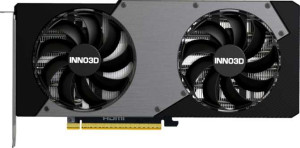
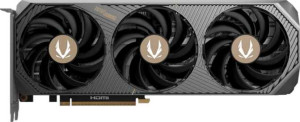
Memory is one area where there is simply nothing to separate these two cards — every single specification is identical. Both feature 12GB of GDDR7 VRAM running at an effective 28000 MHz across a 192-bit bus, delivering 672 GB/s of peak bandwidth. This is not a coincidence of similar positioning; it is a complete hardware match, since both cards use the same underlying GPU and memory configuration with no customization at the memory subsystem level.
The practical significance of this memory setup is worth appreciating. GDDR7 represents a generational leap in memory efficiency and throughput over GDDR6X, and 672 GB/s is a substantial bandwidth figure for a mid-to-high-range GPU. This supports high-resolution texture streaming, faster data movement between VRAM and the GPU cores, and more headroom for memory-intensive workloads like generative AI inference or 4K gaming with large asset pools. The 12GB capacity, while not class-leading, is adequate for most current titles at 1440p and 4K without aggressive texture compression.
Both cards also support ECC memory, a feature more relevant to professional and compute workloads than gaming, as it enables error detection and correction in VRAM — useful for tasks where data integrity is critical. This group is a definitive tie: buyers will experience zero difference in memory performance, capacity, or capability between the Inno3D Twin X2 OC and the Zotac Solid.