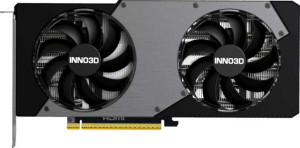
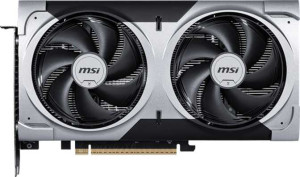
At first glance, the MSI RTX 5060 Ti Ventus 2X Plus appears to have a clock speed edge, running its base and boost clocks at 2407 / 2572 MHz versus the Inno3D RTX 5070 Twin X2's 2325 / 2512 MHz. However, raw clock speed is only one part of the performance equation — and in this case, it is the least important one. The RTX 5070 Twin X2 fields significantly more silicon: 6144 shading units, 192 TMUs, and 80 ROPs, compared to the 5060 Ti's 4608, 144, and 48 respectively. More shading units mean more parallel computation per clock, more TMUs handle textures faster, and more ROPs push pixels to the screen more efficiently.
These architectural advantages translate directly into the throughput numbers. The RTX 5070 Twin X2 delivers 30.87 TFLOPS of floating-point performance versus 23.7 TFLOPS for the 5060 Ti — a gap of roughly 30%. The texture rate tells a similar story: 482.3 GTexels/s versus 370.4 GTexels/s. Most telling is the pixel rate, where the 5070 Twin X2 reaches 201 GPixel/s against the 5060 Ti's 123.5 GPixel/s — a difference of over 60%, meaning the 5070 can push considerably more pixels per second, which matters especially at higher resolutions. Memory speed is identical at 1750 MHz on both cards, and both support Double Precision Floating Point, so neither has an advantage in those areas.
The Inno3D RTX 5070 Twin X2 holds a clear and decisive performance advantage in this group. The 5060 Ti's slightly higher clock speeds are entirely overshadowed by the 5070's larger shader array and superior throughput across every major compute and rasterization metric. Users prioritizing raw rendering performance — particularly at 1440p or 4K — will find the 5070 Twin X2 the stronger choice by a meaningful margin.