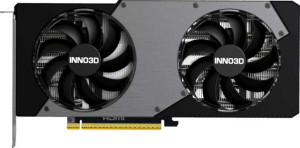
Inno3D GeForce RTX 5070 Twin X2
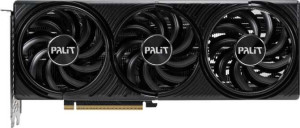
Palit GeForce RTX 5070 Infinity 3

Inno3D GeForce RTX 5070 Twin X2 Palit GeForce RTX 5070 Infinity 3

Overview

Welcome to our in-depth specification comparison between the Inno3D GeForce RTX 5070 Twin X2 and the Palit GeForce RTX 5070 Infinity 3. Both cards are built on the same Blackwell architecture and target the same performance tier, making their differences subtle but potentially decisive. In this head-to-head, we examine every shared specification and highlight where these two RTX 5070 cards diverge, particularly around physical dimensions and overall fit for your build.

Common Features

  • Both cards have a base GPU clock speed of 2325 MHz.
  • Both cards have a GPU turbo clock speed of 2512 MHz.
  • Both cards deliver a pixel rate of 201 GPixel/s.
  • Both cards offer a floating-point performance of 30.87 TFLOPS.
  • Both cards have a texture rate of 482.3 GTexels/s.
  • Both cards have a GPU memory speed of 1750 MHz.
  • Both cards feature 6144 shading units.
  • Both cards include 192 texture mapping units (TMUs).
  • Both cards have an effective memory speed of 28000 MHz.
  • Both cards provide a maximum memory bandwidth of 672 GB/s.
  • Both cards come with 12GB of VRAM.
  • Both cards use GDDR7 memory.
  • Both cards have a 192-bit memory bus width.
  • ECC memory support is available on both cards.
  • Both cards are based on the Blackwell GPU architecture.
  • Both cards have a Thermal Design Power (TDP) of 250W.
  • Both cards use a PCIe version 5 interface.
  • Both cards are manufactured on a 5 nm semiconductor process.
  • Both cards contain 31,100 million transistors.
  • Both cards support DirectX 12 Ultimate.
  • Both cards support OpenGL version 4.6.
  • Both cards support OpenCL version 3.
  • Multi-display technology is supported on both cards.
  • Ray tracing is supported on both cards.
  • 3D support is available on both cards.
  • DLSS support is available on both cards.
  • XeSS (XMX) support is not available on either card.
  • Both cards include one HDMI 2.1b output.
  • Both cards include three DisplayPort outputs.
  • Neither card has USB-C ports.
  • Neither card has DVI outputs.
  • Neither card has mini DisplayPort outputs.
  • Air-water cooling is not present on either card.

Main Differences

  • Width is 250 mm on the Inno3D GeForce RTX 5070 Twin X2 and 291.9 mm on the Palit GeForce RTX 5070 Infinity 3.
  • Height is 116 mm on the Inno3D GeForce RTX 5070 Twin X2 and 116.6 mm on the Palit GeForce RTX 5070 Infinity 3.
Specs Comparison
Inno3D GeForce RTX 5070 Twin X2

Inno3D GeForce RTX 5070 Twin X2

Palit GeForce RTX 5070 Infinity 3

Palit GeForce RTX 5070 Infinity 3

Performance:
GPU clock speed 2325 MHz 2325 MHz
GPU turbo 2512 MHz 2512 MHz
pixel rate 201 GPixel/s 201 GPixel/s
floating-point performance 30.87 TFLOPS 30.87 TFLOPS
texture rate 482.3 GTexels/s 482.3 GTexels/s
GPU memory speed 1750 MHz 1750 MHz
shading units 6144 6144
texture mapping units (TMUs) 192 192
render output units (ROPs) 80 80
Has Double Precision Floating Point (DPFP)

In terms of raw performance, the Inno3D GeForce RTX 5070 Twin X2 and the Palit GeForce RTX 5070 Infinity 3 are identical across every measurable spec. Both cards share a base clock of 2325 MHz, a boost clock of 2512 MHz, and deliver the same 30.87 TFLOPS of floating-point performance — meaning neither card has been factory overclocked to differentiate itself on paper.

Digging deeper into the rendering pipeline, both GPUs feature the same 6144 shading units, 192 TMUs, and 80 ROPs, producing identical pixel and texture throughput rates of 201 GPixel/s and 482.3 GTexels/s respectively. The ROPs figure is especially relevant to resolution scaling — at 4K, a higher ROP count directly impacts frame delivery, but since both cards are equal here, neither has a framebuffer advantage. Memory bandwidth potential is also matched with a 1750 MHz GDDR7 memory clock on both.

This group is a clear tie. Every performance metric — from shader throughput to boost frequency to double-precision support — is perfectly mirrored between the two cards. Any real-world performance difference between them will come down to thermal headroom and sustained clock stability under load, which is determined by cooling design rather than core specs. Buyers choosing between these two should look to other spec groups, such as cooling, power, or build quality, to make their decision.

Memory:
effective memory speed 28000 MHz 28000 MHz
maximum memory bandwidth 672 GB/s 672 GB/s
VRAM 12GB 12GB
GDDR version GDDR7 GDDR7
memory bus width 192-bit 192-bit
Supports ECC memory

Both the Inno3D RTX 5070 Twin X2 and the Palit RTX 5070 Infinity 3 are built around an identical memory configuration: 12GB of GDDR7 running across a 192-bit bus at an effective speed of 28000 MHz. That combination yields a peak bandwidth of 672 GB/s — a substantial step up from GDDR6X-based predecessors, and a direct result of GDDR7's improved signaling efficiency rather than a wider bus.

The 192-bit interface is a pragmatic choice for this tier — wide enough to sustain high-resolution texture streaming and keep the GPU fed in memory-intensive workloads like ray tracing or large open-world titles, but not as expansive as the 256-bit buses found on higher-end GPUs. At 1440p and even native 4K, 12GB of VRAM should prove sufficient for the majority of current titles, though users working with AI, video production, or heavily modded games may occasionally brush against that ceiling. The inclusion of ECC memory support on both cards is a noteworthy bonus — it adds a layer of data integrity protection typically associated with professional workstation GPUs, which could appeal to creators using these cards for semi-professional compute tasks.

As with the performance group, this is a definitive tie. Every memory specification — capacity, type, speed, bus width, and ECC support — is exactly mirrored across both cards. Neither the Twin X2 nor the Infinity 3 holds any memory subsystem advantage, and real-world VRAM performance will be functionally indistinguishable between them.

Features:
DirectX version DirectX 12 Ultimate DirectX 12 Ultimate
OpenGL version 4.6 4.6
OpenCL version 3 3
Supports multi-display technology
supports ray tracing
Supports 3D
supports DLSS
has XeSS (XMX)
AMD SAM / Intel Resizable BAR Intel Resizable BAR Intel Resizable BAR
has LHR
has RGB lighting
supported displays 4 4

Feature parity continues to define this comparison. Both the Inno3D Twin X2 and the Palit Infinity 3 support DirectX 12 Ultimate — the current gold standard for gaming APIs, enabling hardware-accelerated ray tracing, mesh shaders, and variable rate shading in compatible titles. Alongside this, both cards carry ray tracing and DLSS support, the latter being particularly impactful: DLSS allows the GPU to render at a lower internal resolution and reconstruct a higher-quality image using AI, delivering meaningfully higher frame rates with minimal visual compromise.

On the practical side, both cards support up to 4 simultaneous displays and include Intel Resizable BAR, which allows the CPU to access the full GPU frame buffer at once rather than in small chunks — a feature that can yield modest but real performance gains in supported games. Neither card carries a mining limiter (no LHR), and both include RGB lighting, which, while purely aesthetic, is a relevant consideration for system builders focused on visual cohesion. The absence of XeSS on both is expected — that is an Intel-specific upscaling technology and irrelevant to an NVIDIA GPU.

Once again, the verdict is a tie. The feature sets of the Twin X2 and the Infinity 3 are point-for-point identical — same API support, same upscaling technology, same display output count, and the same suite of modern GPU capabilities. Buyers will find no feature-based reason to prefer one over the other.
Ports:
has an HDMI output
HDMI ports 1 1
HDMI version HDMI 2.1b HDMI 2.1b
DisplayPort outputs 3 3
USB-C ports 0 0
DVI outputs 0 0
mini DisplayPort outputs 0 0

The port layout on both cards follows the same modern, practical template: 1 HDMI 2.1b output and 3 DisplayPort outputs, totaling four physical connections — which aligns with the four-display limit established in the features group. HDMI 2.1b is the latest revision of the standard, capable of handling 4K at high refresh rates and even 8K output, making it well-suited for both gaming monitors and living room TVs without any adapter needed.

The three DisplayPort outputs give multi-monitor users flexibility — a common setup for sim racers, traders, or creative professionals running a wide desktop across multiple panels. The complete absence of USB-C and legacy DVI outputs is worth noting: users with older DVI monitors or those hoping to daisy-chain displays via USB-C will need adapters. However, DVI is effectively obsolete at this tier, and USB-C video output, while convenient, is not a standard expectation for mid-to-high-range gaming GPUs.

Predictably, this group is another tie. The Inno3D Twin X2 and Palit Infinity 3 share an identical port configuration in every respect — same count, same types, same HDMI version. Connectivity will not factor into a decision between these two cards.

General info:
GPU architecture Blackwell Blackwell
release date March 2025 March 2025
Thermal Design Power (TDP) 250W 250W
PCI Express (PCIe) version 5 5
semiconductor size 5 nm 5 nm
number of transistors 31100 million 31100 million
Has air-water cooling
width 250 mm 291.9 mm
height 116 mm 116.6 mm

Sharing the same Blackwell architecture, 5nm process node, and 31.1 billion transistors, both cards are cut from identical silicon. A 250W TDP and PCIe 5.0 interface are likewise shared — the former sets expectations for power supply planning (a quality 750W PSU is the practical minimum), while PCIe 5.0 ensures maximum available bandwidth for current and near-future platform compatibility, even if PCIe 4.0 slots remain fully functional for these GPUs in practice.

Where the two cards finally diverge is physical size. The Inno3D Twin X2 measures 250mm in length, while the Palit Infinity 3 stretches to 291.9mm — a difference of nearly 42mm. That gap is meaningful in compact or mid-tower cases where GPU clearance is tight. Both cards share an identical height of approximately 116mm, so vertical slot compatibility is equivalent, but builders with smaller chassis should measure available GPU length carefully before committing to the Infinity 3.

This group finally produces a meaningful differentiator. For users in spacious full-tower builds, the size difference is inconsequential and the cards remain evenly matched on every other general spec. However, for small form factor or mid-tower builders with limited GPU clearance, the Inno3D Twin X2 holds a clear practical advantage by virtue of its more compact footprint.

Comparison Summary & Verdict

After a thorough review of all available specifications, the Inno3D GeForce RTX 5070 Twin X2 and the Palit GeForce RTX 5070 Infinity 3 are virtually identical in every meaningful performance metric, including 30.87 TFLOPS of floating-point performance, 12GB of GDDR7 memory, and a 250W TDP. The only measurable differences lie in their physical footprints: the Inno3D measures a more compact 250 mm in width, while the Palit stretches to 291.9 mm. Both cards share the same height of approximately 116 mm. This makes the Inno3D the stronger choice for space-constrained builds, while the Palit suits users who have no clearance concerns and simply want their preferred brand or cooler aesthetic. Neither card holds a raw performance advantage over the other.

Inno3D GeForce RTX 5070 Twin X2
Buy Inno3D GeForce RTX 5070 Twin X2 if...

Buy the Inno3D GeForce RTX 5070 Twin X2 if you have a compact or mid-tower case where GPU length clearance is limited, as its 250 mm width makes it notably easier to fit than its competitor.

Palit GeForce RTX 5070 Infinity 3
Buy Palit GeForce RTX 5070 Infinity 3 if...

Buy the Palit GeForce RTX 5070 Infinity 3 if you have a full-tower case with ample clearance and prefer the Palit brand, since both cards deliver identical performance at the same power envelope.