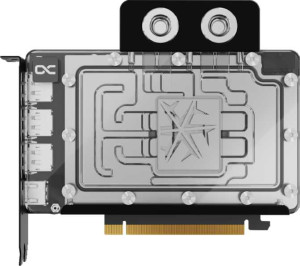
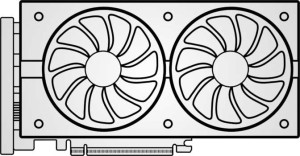
The raw compute numbers tell the clearest story here: the Inno3D RTX 5080 iChill Frostbite delivers 58.38 TFLOPS of floating-point performance versus just 19.2 TFLOPS for the RTX 5060 — a gap of roughly 3× in raw shader throughput. This is reinforced by the shading unit counts: 10,752 versus 3,840, meaning the 5080-based card can process far more parallel workloads per clock cycle, which directly translates to higher frame rates at demanding resolutions and settings, as well as significantly faster AI and compute tasks.
Clock speeds are actually quite close at base — 2,295 MHz vs 2,280 MHz — so the architectural advantage is almost entirely in the 5080′s much wider execution pipeline. Where the turbo clocks diverge more meaningfully (2,715 MHz vs 2,500 MHz), the 5080 card further extends its lead under sustained load. The texture rate gap (912.2 GTexels/s vs 300 GTexels/s) and pixel rate gap (304.1 GPixel/s vs 120 GPixel/s) confirm the 5080′s dominance in traditional rasterization workloads — higher texture rates mean richer surface detail rendered per second, while higher pixel rates support smoother output at 4K and above. Both cards share Double Precision Floating Point support, so neither has an exclusive edge for DPFP-dependent professional workloads.
The Inno3D RTX 5080 iChill Frostbite holds a decisive and unambiguous advantage across every performance metric in this group. The RTX 5060, with its narrower pipeline and lower turbo ceiling, is clearly positioned as a mainstream card, while the 5080-based card operates in a different performance tier entirely. Buyers prioritizing maximum rendering throughput, high-resolution gaming, or GPU compute workloads should consider the 5080 the clear winner here.