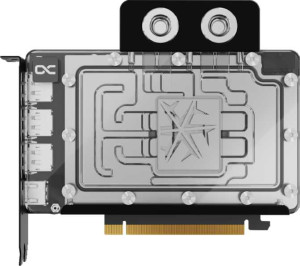
Inno3D GeForce RTX 5080 iChill Frostbite
Nvidia GeForce RTX 5070 Ti

Inno3D GeForce RTX 5080 iChill Frostbite Nvidia GeForce RTX 5070 Ti

Overview

Welcome to our in-depth spec comparison between the Inno3D GeForce RTX 5080 iChill Frostbite and the Nvidia GeForce RTX 5070 Ti. Both cards share the same Blackwell architecture and GDDR7 memory, yet they diverge meaningfully in raw compute power, turbo clock speeds, and physical design. Read on to explore how these two GPUs stack up across performance, memory bandwidth, features, and thermal characteristics.

Common Features

  • Both products support Double Precision Floating Point (DPFP).
  • Both cards come with 16GB of VRAM.
  • Both use GDDR7 memory.
  • Both feature a 256-bit memory bus width.
  • Both support ECC memory.
  • Both are built on the Blackwell GPU architecture.
  • Both use a 5 nm semiconductor manufacturing process.
  • Both contain 45,600 million transistors.
  • Both connect via PCI Express 5.
  • Both support DirectX 12 Ultimate.
  • Both support OpenGL version 4.6.
  • Both support OpenCL version 3.
  • Both support multi-display technology.
  • Ray tracing is supported on both products.
  • 3D support is available on both products.
  • DLSS support is available on both products.
  • XeSS (XMX) support is not available on either product.
  • Both cards include one HDMI 2.1b output.
  • Both cards feature three DisplayPort outputs.
  • Neither card includes USB-C, DVI, or mini DisplayPort outputs.
  • Air-water cooling is not available on either product.

Main Differences

  • GPU base clock speed is 2295 MHz on Inno3D GeForce RTX 5080 iChill Frostbite and 2300 MHz on Nvidia GeForce RTX 5070 Ti.
  • GPU turbo clock speed is 2715 MHz on Inno3D GeForce RTX 5080 iChill Frostbite and 2450 MHz on Nvidia GeForce RTX 5070 Ti.
  • Pixel rate is 304.1 GPixel/s on Inno3D GeForce RTX 5080 iChill Frostbite and 235.2 GPixel/s on Nvidia GeForce RTX 5070 Ti.
  • Floating-point performance is 58.38 TFLOPS on Inno3D GeForce RTX 5080 iChill Frostbite and 43.94 TFLOPS on Nvidia GeForce RTX 5070 Ti.
  • Texture rate is 912.2 GTexels/s on Inno3D GeForce RTX 5080 iChill Frostbite and 686.6 GTexels/s on Nvidia GeForce RTX 5070 Ti.
  • GPU memory speed is 1875 MHz on Inno3D GeForce RTX 5080 iChill Frostbite and 1750 MHz on Nvidia GeForce RTX 5070 Ti.
  • Shading units total 10,752 on Inno3D GeForce RTX 5080 iChill Frostbite and 8,960 on Nvidia GeForce RTX 5070 Ti.
  • Texture mapping units (TMUs) number 336 on Inno3D GeForce RTX 5080 iChill Frostbite and 280 on Nvidia GeForce RTX 5070 Ti.
  • Render output units (ROPs) total 112 on Inno3D GeForce RTX 5080 iChill Frostbite and 96 on Nvidia GeForce RTX 5070 Ti.
  • Effective memory speed is 30,000 MHz on Inno3D GeForce RTX 5080 iChill Frostbite and 28,000 MHz on Nvidia GeForce RTX 5070 Ti.
  • Maximum memory bandwidth is 960 GB/s on Inno3D GeForce RTX 5080 iChill Frostbite and 896 GB/s on Nvidia GeForce RTX 5070 Ti.
  • RGB lighting is present on Inno3D GeForce RTX 5080 iChill Frostbite but not available on Nvidia GeForce RTX 5070 Ti.
  • Thermal Design Power (TDP) is 360W on Inno3D GeForce RTX 5080 iChill Frostbite and 300W on Nvidia GeForce RTX 5070 Ti.
  • Card width is 160 mm on Inno3D GeForce RTX 5080 iChill Frostbite and 304 mm on Nvidia GeForce RTX 5070 Ti.
  • Card height is 140 mm on Inno3D GeForce RTX 5080 iChill Frostbite and 137 mm on Nvidia GeForce RTX 5070 Ti.
Specs Comparison
Inno3D GeForce RTX 5080 iChill Frostbite

Inno3D GeForce RTX 5080 iChill Frostbite

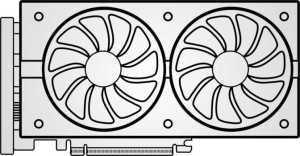
Nvidia GeForce RTX 5070 Ti

Nvidia GeForce RTX 5070 Ti

Performance:
GPU clock speed 2295 MHz 2300 MHz
GPU turbo 2715 MHz 2450 MHz
pixel rate 304.1 GPixel/s 235.2 GPixel/s
floating-point performance 58.38 TFLOPS 43.94 TFLOPS
texture rate 912.2 GTexels/s 686.6 GTexels/s
GPU memory speed 1875 MHz 1750 MHz
shading units 10752 8960
texture mapping units (TMUs) 336 280
render output units (ROPs) 112 96
Has Double Precision Floating Point (DPFP)

At base clock, both GPUs start from virtually the same point — 2295 MHz vs 2300 MHz — making their architectural headroom the real differentiator. Under sustained load, the Inno3D GeForce RTX 5080 iChill Frostbite pulls decisively ahead with a turbo clock of 2715 MHz, compared to 2450 MHz on the RTX 5070 Ti. That 265 MHz gap is not a minor footnote — it directly amplifies every downstream compute metric, especially since the 5080 iChill already starts with more raw silicon: 10,752 shading units versus 8,960, and 336 TMUs versus 280.

The compounding effect of more cores running at a higher boost frequency produces a substantial lead in real-world throughput figures. The iChill Frostbite delivers 58.38 TFLOPS of floating-point performance against the 5070 Ti's 43.94 TFLOPS — roughly a 33% advantage — which translates directly to faster frame generation, quicker ray-tracing workloads, and more headroom in compute-intensive tasks. The texture rate follows the same story: 912.2 GTexels/s vs 686.6 GTexels/s, meaning the 5080 iChill can process texture data significantly faster, benefiting high-resolution and high-detail rendering scenarios. The pixel rate gap — 304.1 vs 235.2 GPixel/s — further indicates a meaningful rasterization edge at high resolutions like 4K. Memory speed also favors the iChill at 1875 MHz vs 1750 MHz, reducing potential bandwidth bottlenecks when feeding those extra shading units.

Both cards share Double Precision Floating Point support, which matters for professional and scientific workloads. Overall, the Inno3D RTX 5080 iChill Frostbite holds a clear and consistent performance advantage across every metric in this group — not due to any single spec in isolation, but because of a combination of more shading hardware, a significantly higher boost clock, and faster memory working in concert. The RTX 5070 Ti is by no means slow, but users prioritizing peak compute and rendering throughput will find the 5080 iChill meaningfully ahead.

Memory:
effective memory speed 30000 MHz 28000 MHz
maximum memory bandwidth 960 GB/s 896 GB/s
VRAM 16GB 16GB
GDDR version GDDR7 GDDR7
memory bus width 256-bit 256-bit
Supports ECC memory

Both the Inno3D GeForce RTX 5080 iChill Frostbite and the Nvidia GeForce RTX 5070 Ti come with 16GB of VRAM, but they differ in terms of memory speed and bandwidth. The RTX 5080 iChill features an effective memory speed of 30000 MHz, which is higher than the 28000 MHz offered by the RTX 5070 Ti. This results in the RTX 5080 iChill also having a higher maximum memory bandwidth of 960 GB/s, compared to the 5070 Ti's 896 GB/s.

Both products use the same GDDR7 memory type and share a 256-bit memory bus width. Additionally, both cards support ECC memory, with this feature being present in both models as indicated by the “YES” value for this spec in both products.

While the VRAM capacity, GDDR version, and memory bus width are identical for both cards, the RTX 5080 iChill offers a faster memory setup overall with its higher effective memory speed and bandwidth.

Features:
DirectX version DirectX 12 Ultimate DirectX 12 Ultimate
OpenGL version 4.6 4.6
OpenCL version 3 3
Supports multi-display technology
supports ray tracing
Supports 3D
supports DLSS
has XeSS (XMX)
AMD SAM / Intel Resizable BAR Intel Resizable BAR Intel Resizable BAR
has LHR
has RGB lighting
supported displays 4 4

Both the Inno3D GeForce RTX 5080 iChill Frostbite and the Nvidia GeForce RTX 5070 Ti offer similar features in several key areas. Both cards support DirectX 12 Ultimate, OpenGL 4.6, and OpenCL 3. Additionally, both support multi-display technology, ray tracing, 3D, and DLSS. Neither card has XeSS (XMX), and both support Intel Resizable BAR, as indicated by the Intel Resizable BAR specification.

The two products differ when it comes to RGB lighting. The RTX 5080 iChill includes RGB lighting, while the RTX 5070 Ti does not. Both cards also support up to four displays, providing flexibility in multi-monitor setups.

Both models feature the same support for DirectX, OpenGL, OpenCL, multi-display, ray tracing, 3D, DLSS, XeSS, and Intel Resizable BAR, but the key difference lies in the RGB lighting, where the RTX 5080 iChill stands out with this feature.

Ports:
has an HDMI output
HDMI ports 1 1
HDMI version HDMI 2.1b HDMI 2.1b
DisplayPort outputs 3 3
USB-C ports 0 0
DVI outputs 0 0
mini DisplayPort outputs 0 0

Both the Inno3D GeForce RTX 5080 iChill Frostbite and the Nvidia GeForce RTX 5070 Ti offer very similar port configurations. Both cards have one HDMI output with HDMI 2.1b support, as well as three DisplayPort outputs. Neither product includes USB-C ports, DVI outputs, or mini DisplayPort outputs.

The port specifications for both the RTX 5080 iChill and the RTX 5070 Ti are identical, meaning users will get the same display connectivity options with either model. Both cards support HDMI 2.1b and DisplayPort, with no additional ports beyond these standard outputs.

In summary, the ports offered by both the RTX 5080 iChill and the RTX 5070 Ti are the same, providing a straightforward array of HDMI and DisplayPort options without any major differences.

General info:
GPU architecture Blackwell Blackwell
release date January 2025 January 2025
Thermal Design Power (TDP) 360W 300W
PCI Express (PCIe) version 5 5
semiconductor size 5 nm 5 nm
number of transistors 45600 million 45600 million
Has air-water cooling
width 160 mm 304 mm
height 140 mm 137 mm

Both the Inno3D GeForce RTX 5080 iChill Frostbite and the Nvidia GeForce RTX 5070 Ti use the same Blackwell GPU architecture, with a semiconductor size of 5 nm and a transistor count of 45600 million. The primary differences between these two cards in this category come down to power and physical dimensions. The RTX 5080 iChill has a higher Thermal Design Power (TDP) of 360W, compared to the 300W TDP of the RTX 5070 Ti.

In terms of physical size, the RTX 5080 iChill is 160 mm wide and 140 mm high, whereas the RTX 5070 Ti is much wider at 304 mm but shorter in height at 137 mm. Both cards use PCI Express (PCIe) version 5 and neither model features air-water cooling.

Overall, both cards share key architectural features but differ in their power requirements and physical dimensions, with the RTX 5080 iChill having a higher TDP and more compact design compared to the larger RTX 5070 Ti.

Comparison Summary & Verdict

After examining every specification, a clear picture emerges for each card. The Inno3D GeForce RTX 5080 iChill Frostbite holds a consistent lead in pure performance, delivering higher floating-point throughput at 58.38 TFLOPS, a significantly faster turbo clock of 2715 MHz, greater memory bandwidth of 960 GB/s, and more shading units — making it the stronger choice for demanding workloads and enthusiast-level gaming. It also adds RGB lighting for those who value aesthetics. The Nvidia GeForce RTX 5070 Ti, on the other hand, operates at a lower 300W TDP and features a wider 304 mm form factor suited to standard tower builds, while still offering capable TFLOPS performance at 43.94 and solid memory bandwidth. Choose the Inno3D if maximum GPU horsepower is your priority; choose the RTX 5070 Ti if power efficiency and a more accessible performance tier better match your needs.

Inno3D GeForce RTX 5080 iChill Frostbite
Buy Inno3D GeForce RTX 5080 iChill Frostbite if...

Buy the Inno3D GeForce RTX 5080 iChill Frostbite if you want maximum GPU performance, with higher TFLOPS, faster turbo clocks, and greater memory bandwidth, and you do not mind the higher 360W power draw.

Nvidia GeForce RTX 5070 Ti
Buy Nvidia GeForce RTX 5070 Ti if...

Buy the Nvidia GeForce RTX 5070 Ti if you prefer a more power-efficient card at 300W TDP that still delivers strong Blackwell-architecture performance at a lower performance tier.