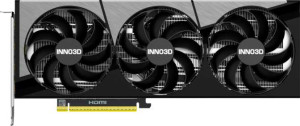
Inno3D GeForce RTX 5080 X3 Gaming OC
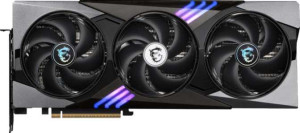
MSI GeForce RTX 5080 Gaming Trio OC

Inno3D GeForce RTX 5080 X3 Gaming OC MSI GeForce RTX 5080 Gaming Trio OC

Overview

Welcome to our detailed specification face-off between the Inno3D GeForce RTX 5080 X3 Gaming OC and the MSI GeForce RTX 5080 Gaming Trio OC. Both cards are built on the cutting-edge Blackwell architecture and target the high-end gaming segment, but they take different approaches when it comes to physical design and dimensions. Read on to explore how these two RTX 5080 contenders stack up across performance, memory, features, and form factor.

Common Features

  • Both cards have a base GPU clock speed of 2295 MHz.
  • Both cards reach a GPU turbo clock of 2700 MHz.
  • Both cards deliver a pixel rate of 302.4 GPixel/s.
  • Both cards achieve a floating-point performance of 58.06 TFLOPS.
  • Both cards offer a texture rate of 907.2 GTexels/s.
  • Both cards have a GPU memory speed of 1875 MHz.
  • Both cards include 10752 shading units.
  • Both cards are equipped with 336 texture mapping units (TMUs).
  • Both cards have an effective memory speed of 30000 MHz.
  • Both cards provide a maximum memory bandwidth of 960 GB/s.
  • Both cards feature 16 GB of VRAM.
  • Both cards use GDDR7 memory.
  • Both cards have a 256-bit memory bus width.
  • ECC memory support is available on both cards.
  • Both cards support DirectX 12 Ultimate.
  • Both cards support OpenGL version 4.6.
  • Both cards support OpenCL version 3.
  • Multi-display technology is supported on both cards.
  • Ray tracing is supported on both cards.
  • DLSS is supported on both cards.
  • 3D support is available on both cards.
  • XeSS (XMX) support is not available on either card.
  • Both cards feature one HDMI 2.1b output.
  • Both cards include three DisplayPort outputs.
  • Neither card has a USB-C port, DVI output, or mini DisplayPort output.
  • Both cards are built on the Blackwell GPU architecture.
  • Both cards have a Thermal Design Power (TDP) of 360W.
  • Both cards use a PCI Express 5 interface.
  • Both cards are manufactured on a 5 nm process node.
  • Both cards contain 45600 million transistors.
  • Neither card features air-water cooling.

Main Differences

  • Width is 300 mm on the Inno3D GeForce RTX 5080 X3 Gaming OC and 338 mm on the MSI GeForce RTX 5080 Gaming Trio OC.
  • Height is 120 mm on the Inno3D GeForce RTX 5080 X3 Gaming OC and 140 mm on the MSI GeForce RTX 5080 Gaming Trio OC.
Specs Comparison
Inno3D GeForce RTX 5080 X3 Gaming OC

Inno3D GeForce RTX 5080 X3 Gaming OC

MSI GeForce RTX 5080 Gaming Trio OC

MSI GeForce RTX 5080 Gaming Trio OC

Performance:
GPU clock speed 2295 MHz 2295 MHz
GPU turbo 2700 MHz 2700 MHz
pixel rate 302.4 GPixel/s 302.4 GPixel/s
floating-point performance 58.06 TFLOPS 58.06 TFLOPS
texture rate 907.2 GTexels/s 907.2 GTexels/s
GPU memory speed 1875 MHz 1875 MHz
shading units 10752 10752
texture mapping units (TMUs) 336 336
render output units (ROPs) 112 112
Has Double Precision Floating Point (DPFP)

In terms of raw performance, the Inno3D GeForce RTX 5080 X3 Gaming OC and the MSI GeForce RTX 5080 Gaming Trio OC are in complete lockstep. Both cards share an identical silicon foundation: the same 2295 MHz base clock, the same 2700 MHz boost clock, and the same underlying compute resources — 10,752 shading units, 336 TMUs, and 112 ROPs. This is not a coincidence; both are built on the same RTX 5080 GPU die, and neither vendor has pushed the factory overclock beyond what the other offers.

The practical consequence of this parity is that all derived throughput metrics are also identical: a pixel fill rate of 302.4 GPixel/s, a texture rate of 907.2 GTexels/s, and 58.06 TFLOPS of single-precision floating-point performance. These figures represent the theoretical ceiling for rendering and compute workloads — meaning in gaming, content creation, or AI-accelerated tasks, neither card holds a measurable advantage over the other out of the box. Both also support Double Precision Floating Point, which is relevant for professional simulation or scientific compute use cases, though it is a shared trait and not a differentiator.

On performance alone, this group is a dead tie. Every metric that determines gaming throughput, rendering bandwidth, and compute capability is numerically identical between the two cards. A buyer choosing between them based solely on performance would have no rational basis to prefer one over the other — the decision should therefore hinge on other factors such as cooling design, build quality, acoustics, or price.
Memory:
effective memory speed 30000 MHz 30000 MHz
maximum memory bandwidth 960 GB/s 960 GB/s
VRAM 16GB 16GB
GDDR version GDDR7 GDDR7
memory bus width 256-bit 256-bit
Supports ECC memory

The Inno3D GeForce RTX 5080 X3 Gaming OC and the MSI GeForce RTX 5080 Gaming Trio OC are identical in terms of memory specifications. Both products feature an effective memory speed of 30000 MHz, a maximum memory bandwidth of 960 GB/s, and 16GB of VRAM. They also use the same GDDR7 memory version, ensuring similar performance in memory handling. The memory bus width is 256-bit on both models, providing a similar data transfer capability.

Additionally, both models support ECC memory, a key feature for error correction, ensuring stable operation under demanding workloads.

In summary, the memory specifications for the Inno3D GeForce RTX 5080 X3 Gaming OC and the MSI GeForce RTX 5080 Gaming Trio OC are fully aligned, with no differences between the two products in terms of memory speed, bandwidth, VRAM, GDDR version, memory bus width, or ECC support.

Features:
DirectX version DirectX 12 Ultimate DirectX 12 Ultimate
OpenGL version 4.6 4.6
OpenCL version 3 3
Supports multi-display technology
supports ray tracing
Supports 3D
supports DLSS
has XeSS (XMX)
AMD SAM / Intel Resizable BAR Intel Resizable BAR Intel Resizable BAR
has LHR
has RGB lighting
supported displays 4 4

The Inno3D GeForce RTX 5080 X3 Gaming OC and the MSI GeForce RTX 5080 Gaming Trio OC share identical feature sets. Both cards support DirectX 12 Ultimate, OpenGL version 4.6, and OpenCL version 3, ensuring compatibility with the latest graphics and compute APIs. They also both support multi-display technology, ray tracing, and 3D rendering, making them well-suited for advanced gaming and professional workloads. Additionally, both models support DLSS, which enhances performance in supported games.

Both cards do not support XeSS (XMX), a feature not included in either model. They also both support Intel Resizable BAR (AMD SAM is not mentioned for either). Neither product features LHR (Low Hash Rate), indicating they are not limited for cryptocurrency mining. Both also come with RGB lighting for customizable aesthetics, and both support up to four displays.

In summary, the Inno3D GeForce RTX 5080 X3 Gaming OC and the MSI GeForce RTX 5080 Gaming Trio OC are fully aligned in terms of features, offering the same support for DirectX, OpenGL, OpenCL, ray tracing, DLSS, multi-display setups, and other key capabilities.

Ports:
has an HDMI output
HDMI ports 1 1
HDMI version HDMI 2.1b HDMI 2.1b
DisplayPort outputs 3 3
USB-C ports 0 0
DVI outputs 0 0
mini DisplayPort outputs 0 0

The Inno3D GeForce RTX 5080 X3 Gaming OC and the MSI GeForce RTX 5080 Gaming Trio OC share identical port configurations. Both models feature one HDMI output, supporting HDMI 2.1b. They each have three DisplayPort outputs, but neither has USB-C ports, DVI outputs, or mini DisplayPort outputs.

In summary, the port setups for both products are exactly the same, offering the same types and quantities of outputs with no differences between the two.

General info:
GPU architecture Blackwell Blackwell
release date April 2025 January 2025
Thermal Design Power (TDP) 360W 360W
PCI Express (PCIe) version 5 5
semiconductor size 5 nm 5 nm
number of transistors 45600 million 45600 million
Has air-water cooling
width 300 mm 338 mm
height 120 mm 140 mm

The Inno3D GeForce RTX 5080 X3 Gaming OC and the MSI GeForce RTX 5080 Gaming Trio OC share identical specifications in terms of GPU architecture, thermal design power (TDP), PCI Express version, semiconductor size, and number of transistors. Both products utilize the Blackwell GPU architecture, have a TDP of 360W, and support PCIe version 5. They are both built using a 5 nm semiconductor process and contain 45600 million transistors.

The only differences between the two models are in their physical dimensions. The Inno3D model has a width of 300 mm and a height of 120 mm, while the MSI model is slightly larger, measuring 338 mm in width and 140 mm in height.

In summary, both graphics cards are identical in terms of core specifications, with the only distinction being the size, with the MSI GeForce RTX 5080 Gaming Trio OC being larger in both width and height compared to the Inno3D GeForce RTX 5080 X3 Gaming OC.

Comparison Summary & Verdict

After a thorough side-by-side analysis, the Inno3D GeForce RTX 5080 X3 Gaming OC and the MSI GeForce RTX 5080 Gaming Trio OC are virtually identical in every technical regard: both deliver the same 58.06 TFLOPS of floating-point performance, the same 16 GB of GDDR7 memory on a 256-bit bus, and the same comprehensive feature set including ray tracing and DLSS. The only measurable distinction lies in their physical footprint. The Inno3D measures a more compact 300 mm x 120 mm, while the MSI is noticeably larger at 338 mm x 140 mm. This makes the Inno3D the better fit for builders working with space-constrained cases, while the MSI suits those with full-size towers who prioritize a potentially more robust cooling solution in a larger chassis.

Inno3D GeForce RTX 5080 X3 Gaming OC
Buy Inno3D GeForce RTX 5080 X3 Gaming OC if...

Buy the Inno3D GeForce RTX 5080 X3 Gaming OC if you have a compact or mid-tower PC case and need a shorter, narrower card that still delivers full RTX 5080 performance.

MSI GeForce RTX 5080 Gaming Trio OC
Buy MSI GeForce RTX 5080 Gaming Trio OC if...

Buy the MSI GeForce RTX 5080 Gaming Trio OC if you have a full-size tower with ample clearance and do not have strict size constraints on card width or height.