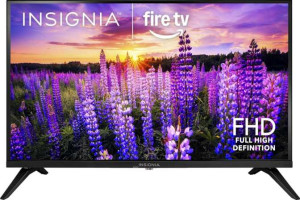
Insignia NS-40F401NA26 40"
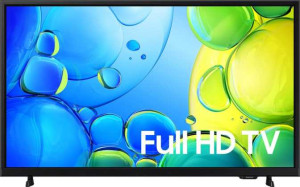
Samsung UN32F6000FFXZA 32"

Insignia NS-40F401NA26 40" Samsung UN32F6000FFXZA 32"

Overview

Choosing between the Insignia NS-40F401NA26 40″ and the Samsung UN32F6000FFXZA 32″ means weighing screen size against picture quality enhancements. Both televisions are built on a shared foundation of 1080p Full HD, 60Hz LED-backlit LCD panels with smart TV platforms that include AirPlay and Alexa support, yet they diverge meaningfully on HDR capabilities, audio connectivity, and physical footprint. Read through every specification below to see which model best fits your living room and viewing needs.

Common Features

  • Both products have a display resolution of 1080p (Full HD).
  • Both products use an LED-backlit LCD display type.
  • Both products share a resolution of 1920 x 1080 px.
  • Both products reproduce 1670 million display colors.
  • Both products have an 8-bit color bit depth.
  • Both products have a 60Hz refresh rate.
  • Neither product supports Dolby Vision.
  • Neither product supports HLG.
  • Both products support Bluetooth.
  • Both products have 2 HDMI ports.
  • Both products support Wi-Fi, including Wi-Fi 4 (802.11n) and Wi-Fi 5 (802.11ac).
  • Both products have 1 USB port.
  • Both products have 1 RJ45 port.
  • Both products support Miracast.
  • Neither product has an external memory slot.
  • Both products support Dolby Digital.
  • Neither product has SRS TheaterSound HD.
  • Both products have stereo speakers.
  • Neither product has Dolby Atmos.
  • Both products have Dolby Audio.
  • Neither product supports Dolby Virtual.
  • Neither product has a subwoofer.
  • Both products support VESA mounting.
  • Both products have AirPlay.
  • Both products have a built-in smart TV platform.
  • Both products work with Alexa.
  • Neither product works with Siri or Apple HomeKit.
  • Both products support remote smartphone control.
  • Neither product has a rechargeable remote control.
  • Both products support USB recording.
  • Both products have a standby power consumption of 0.5W.

Main Differences

  • Screen size is 39.5″ on Insignia NS-40F401NA26 40″ and 32″ on Samsung UN32F6000FFXZA 32″.
  • Pixel density is 56 ppi on Insignia NS-40F401NA26 40″ and 69 ppi on Samsung UN32F6000FFXZA 32″.
  • HDR10 support is present on Samsung UN32F6000FFXZA 32″ but not available on Insignia NS-40F401NA26 40″.
  • HDR10+ support is present on Samsung UN32F6000FFXZA 32″ but not available on Insignia NS-40F401NA26 40″.
  • A 3.5 mm audio jack socket is available on Insignia NS-40F401NA26 40″ but not on Samsung UN32F6000FFXZA 32″.
  • Digital Out support is present on Insignia NS-40F401NA26 40″ but not available on Samsung UN32F6000FFXZA 32″.
  • Dolby Digital Plus support is present on Samsung UN32F6000FFXZA 32″ but not available on Insignia NS-40F401NA26 40″.
  • HDMI ARC is the only ARC standard on Insignia NS-40F401NA26 40″, while Samsung UN32F6000FFXZA 32″ offers both HDMI ARC and HDMI eARC.
  • Width is 894.1 mm on Insignia NS-40F401NA26 40″ and 734.1 mm on Samsung UN32F6000FFXZA 32″.
  • Weight is 4581 g on Insignia NS-40F401NA26 40″ and 3856 g on Samsung UN32F6000FFXZA 32″.
  • Thickness is 71.1 mm on Insignia NS-40F401NA26 40″ and 73.7 mm on Samsung UN32F6000FFXZA 32″.
  • Height is 508 mm on Insignia NS-40F401NA26 40″ and 439.4 mm on Samsung UN32F6000FFXZA 32″.
  • Volume is 32293.82 cm³ on Insignia NS-40F401NA26 40″ and 23772.93 cm³ on Samsung UN32F6000FFXZA 32″.
  • Google Assistant compatibility is present on Samsung UN32F6000FFXZA 32″ but not available on Insignia NS-40F401NA26 40″.
Specs Comparison
Insignia NS-40F401NA26 40"

Insignia NS-40F401NA26 40"

Samsung UN32F6000FFXZA 32"

Samsung UN32F6000FFXZA 32"

Display:
display resolution 1080p (Full HD) 1080p (Full HD)
Display type LED-backlit, LCD LED-backlit, LCD
screen size 39.5" 32"
resolution 1920 x 1080 px 1920 x 1080 px
pixel density 56 ppi 69 ppi
display colors 1670 million 1670 million
bit depth 8-bit 8-bit
refresh rate 60Hz 60Hz
supports HDR10
supports HDR10+
supports Dolby Vision
supports HLG
Adaptive synchronization None None
has anti-reflection coating
has an ambient light sensor
maximum horizontal viewing angle 178º 178º
maximum vertical viewing angle 178º 178º

Both the Insignia NS-40F401NA26 and the Samsung UN32F6000FFXZA share the same foundational display architecture: LED-backlit LCD panels, a 1920 x 1080 resolution, 8-bit color depth rendering 1.67 billion colors, a 60Hz refresh rate, and identical 178º viewing angles in both directions. For everyday HD viewing, both panels offer the same baseline picture quality on paper.

The most meaningful differentiator in this group is HDR support. The Samsung supports both HDR10 and HDR10+, while the Insignia supports neither. In practice, this means the Samsung can display content with a wider contrast range and more nuanced brightness levels when fed an HDR signal from a streaming service or Blu-ray — the Insignia will simply tone-map that same content as if it were standard dynamic range. This is a tangible picture quality advantage for anyone watching modern HDR content. The Insignia′s larger 39.5″ physical screen versus the Samsung′s 32″ does come with a trade-off: its pixel density drops to 56 ppi compared to the Samsung′s 69 ppi, meaning individual pixels are more visible up close on the Insignia.

Overall, the Samsung UN32F6000FFXZA holds a clear edge in display quality due to its HDR10 and HDR10+ support and sharper pixel density. The Insignia′s advantage is purely physical screen real estate, which matters for viewing distance but does not offset the Samsung′s superior contrast rendering capability for HDR content.

Connectivity:
Has Bluetooth
HDMI ports 2 2
supports Wi-Fi
Wi-Fi version Wi-Fi 4 (802.11n), Wi-Fi 5 (802.11ac) Wi-Fi 4 (802.11n), Wi-Fi 5 (802.11ac)
USB ports 1 1
RJ45 ports 1 1
supports Miracast
has a socket for a 3.5 mm audio jack
has an external memory slot
has a VGA connector
has a DVI connector

The connectivity profiles of these two TVs are remarkably similar. Both offer 2 HDMI ports, 1 USB port, a wired RJ45 ethernet port, Bluetooth, identical Wi-Fi 4 and Wi-Fi 5 dual-band wireless support, and Miracast screen mirroring — giving users the same range of options for connecting external devices, streaming sticks, gaming consoles, or home network infrastructure.

The only differentiator in this entire group is the 3.5mm audio jack, which the Insignia NS-40F401NA26 includes and the Samsung UN32F6000FFXZA omits. While this may seem minor, it has a practical impact: the Insignia allows direct connection of wired headphones or a basic stereo system without needing an adapter or relying on Bluetooth audio. For users in shared living spaces or those who prefer wired audio solutions, this is a genuine convenience advantage.

On the whole, the Insignia holds a narrow edge here purely due to the headphone jack. The rest of the connectivity feature set is a complete tie, so the significance of that edge depends entirely on whether analog audio output is part of the user′s setup.

Audio:
supports Dolby Digital
supports Digital Out
supports Dolby Digital Plus
has SRS TheaterSound HD
has stereo speakers
has Dolby Atmos
has Dolby Audio
supports Dolby Virtual
has a subwoofer
HDMI ARC / eARC HDMI ARC HDMI ARC, HDMI eARC

At the shared foundation, both TVs feature stereo speakers, Dolby Digital, Dolby Audio, and HDMI ARC — covering the essentials for passthrough audio to a soundbar or AV receiver. Neither includes a subwoofer or Dolby Atmos, so neither will deliver immersive spatial audio from its built-in hardware alone.

The divergence comes in two areas. First, the Samsung UN32F6000FFXZA supports Dolby Digital Plus, an enhanced audio codec that carries higher bitrate audio streams — relevant for streaming services that encode content in DD+ for richer sound. The Insignia NS-40F401NA26 lacks this, meaning it may fall back to a compressed standard Dolby Digital signal in those scenarios. Second, the Samsung adds HDMI eARC alongside standard ARC, whereas the Insignia offers only ARC. eARC is a meaningful upgrade for external audio setups: it supports uncompressed multi-channel audio and high-bitrate formats over a single HDMI cable, making it far better suited to pairing with a modern soundbar or AV receiver that can take advantage of those formats. The Insignia does counter with Digital Out, providing an optical audio output path the Samsung lacks — useful for older audio equipment that lacks HDMI.

The Samsung holds the clearer advantage here for users invested in a quality external audio setup, thanks to eARC and Dolby Digital Plus support. The Insignia′s Digital Out is a practical perk for legacy audio gear, but it does not offset the Samsung′s superiority in modern audio routing capabilities.

Design:
width 894.1 mm 734.1 mm
weight 4581 g 3856 g
thickness 71.1 mm 73.7 mm
height 508 mm 439.4 mm
volume 32293.81908 cm³ 23772.932898 cm³
Supports VESA mount

The size difference between these two TVs is substantial and largely expected given their screen sizes. The Insignia NS-40F401NA26 is considerably larger at 894.1 mm wide and 4581 g, versus the Samsung UN32F6000FFXZA at 734.1 mm wide and 3856 g. That roughly 725g weight advantage makes the Samsung noticeably easier to handle, reposition, or mount solo — a practical consideration during installation.

Interestingly, despite the Insignia being the larger panel, the two TVs are nearly identical in depth — 71.1 mm vs 73.7 mm — meaning the Samsung is actually fractionally thicker. In practice, both sit at essentially the same profile off a wall or stand, so depth is not a differentiating factor. Both support VESA mounting, giving users the same flexibility to wall-mount either set.

There is no design ″winner″ in any absolute sense here — the differences are a direct consequence of screen size. The Samsung′s lighter weight and smaller footprint make it the easier fit for compact spaces and simpler to install, while the Insignia demands more surface area and a bit more effort to handle. Users should simply match the set to the available space in their room.

Features:
release date May 2025 March 2025
has AirPlay
has built-in smart TV
compatible with Google Assistant
works with Alexa
works with Siri/Apple HomeKit
supports a remote smartphone
has a rechargeable remote control
supports USB recording
standby power consumption 0.5W 0.5W
has a search browser
has a sleep timer
has a child lock
has voice commands

Across the smart feature set, these two TVs are nearly identical. Both are full smart TVs with AirPlay, Alexa, smartphone remote support, USB recording, voice commands, sleep timer, child lock, and a standby draw of just 0.5W — a well-rounded feature package that covers the most common everyday needs for modern TV users.

The single differentiator is Google Assistant compatibility, which the Samsung UN32F6000FFXZA supports and the Insignia NS-40F401NA26 does not. For users embedded in the Google ecosystem — Android phones, Google Home speakers, Nest devices — this is a meaningful convenience advantage, enabling voice control and smart home integration without relying solely on Alexa. The Insignia is limited to Alexa for voice assistant functionality, which is still capable but represents a narrower ecosystem fit.

The Samsung holds a slight edge here due to its dual Alexa and Google Assistant support, giving it broader compatibility with different smart home setups. For users already committed to Amazon′s ecosystem, the difference is negligible — but for anyone with Google-centric devices, the Samsung is the more versatile choice.

Comparison Summary & Verdict

Having examined every specification, both the Insignia NS-40F401NA26 40″ and the Samsung UN32F6000FFXZA 32″ share a solid 1080p Full HD, 60Hz smart TV experience complete with AirPlay, Alexa, Miracast, and USB recording. The Insignia is the stronger pick for anyone who wants a larger 39.5″ panel, a 3.5 mm headphone jack, and a Digital Out port for connecting legacy audio equipment. The Samsung, on the other hand, is purpose-built for viewers who prioritize HDR10 and HDR10+ support for a more vibrant picture, benefit from HDMI eARC and Dolby Digital Plus for a premium home-theater audio chain, and appreciate Google Assistant integration alongside a more compact, lighter form factor. Neither model is a universal winner; your ideal choice hinges squarely on whether screen size or HDR-driven picture quality matters most to you.

Insignia NS-40F401NA26 40
Buy Insignia NS-40F401NA26 40" if...

Buy the Insignia NS-40F401NA26 40″ if you want a larger 39.5″ screen and need a 3.5 mm headphone jack or a Digital Out connection for your audio setup.

Samsung UN32F6000FFXZA 32
Buy Samsung UN32F6000FFXZA 32" if...

Choose the Samsung UN32F6000FFXZA 32″ if HDR10 and HDR10+ picture support, HDMI eARC, Dolby Digital Plus, and Google Assistant are priorities for your home theater.