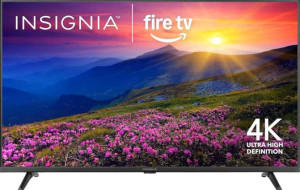
Insignia NS-85F501NA26 85"
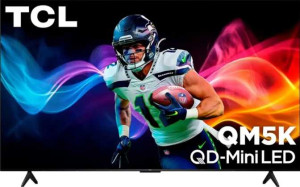
TCL 75QM5K 75"

Insignia NS-85F501NA26 85" TCL 75QM5K 75"

Overview

Welcome to our in-depth spec comparison between the Insignia NS-85F501NA26 85″ and the TCL 75QM5K 75″. These two large-screen 4K TVs share a surprising amount of common ground, yet diverge sharply when it comes to display technology, refresh rate, and gaming capabilities. Whether screen size, picture quality, or smart features matter most to you, read on to see how these two sets stack up across every major specification.

Common Features

  • Both TVs offer 4K UHD resolution at 3840 x 2160 px.
  • Both TVs have a 10-bit panel capable of displaying 1070 million colors.
  • HDR10 support is available on both products.
  • Dolby Vision support is available on both products.
  • HLG support is available on both products.
  • An anti-reflection coating is present on both products.
  • Bluetooth connectivity is available on both products.
  • Both TVs include 3 HDMI ports and 1 USB port.
  • Both TVs include 1 RJ45 Ethernet port.
  • Wi-Fi is supported on both products, covering Wi-Fi 4 (802.11n) and Wi-Fi 5 (802.11ac).
  • Miracast support is available on both products.
  • Neither product includes an external memory slot.
  • Dolby Digital and Dolby Digital Plus support is available on both products.
  • Dolby Atmos and Dolby Audio support is available on both products.
  • Dolby Virtual support is not available on either product.
  • SRS TheaterSound HD is not available on either product.
  • Both TVs feature stereo speakers with Digital Out support.
  • Both TVs support VESA mounting.
  • AirPlay support is available on both products.
  • A built-in smart TV platform is present on both products.
  • Both TVs work with Alexa.
  • Neither product works with Siri or Apple HomeKit.
  • Smartphone remote control support is available on both products.
  • Neither product includes a rechargeable remote control.
  • USB recording is supported on both products.
  • Both TVs have a standby power consumption of 0.5W.

Main Differences

  • The display technology is LED-backlit LCD on Insignia NS-85F501NA26 85″ and QLED Mini-LED LED-backlit LCD on TCL 75QM5K 75″.
  • The screen size is 84.56″ on Insignia NS-85F501NA26 85″ and 74.5″ on TCL 75QM5K 75″.
  • The pixel density is 52 ppi on Insignia NS-85F501NA26 85″ and 59 ppi on TCL 75QM5K 75″.
  • The refresh rate is 60Hz on Insignia NS-85F501NA26 85″ and 144Hz on TCL 75QM5K 75″.
  • HDR10+ support is present on TCL 75QM5K 75″ but not available on Insignia NS-85F501NA26 85″.
  • Adaptive synchronization is absent on Insignia NS-85F501NA26 85″, while TCL 75QM5K 75″ supports AMD FreeSync.
  • A 3.5 mm audio jack is present on Insignia NS-85F501NA26 85″ but not available on TCL 75QM5K 75″.
  • A built-in subwoofer is present on TCL 75QM5K 75″ but not available on Insignia NS-85F501NA26 85″.
  • The width is 1890 mm on Insignia NS-85F501NA26 85″ and 1671.3 mm on TCL 75QM5K 75″.
  • The height is 1082.3 mm on Insignia NS-85F501NA26 85″ and 960.1 mm on TCL 75QM5K 75″.
  • The thickness is 93.2 mm on Insignia NS-85F501NA26 85″ and 55.9 mm on TCL 75QM5K 75″.
  • The weight is 29901 g on Insignia NS-85F501NA26 85″ and 23496 g on TCL 75QM5K 75″.
  • The total volume is 190644.9804 cm³ on Insignia NS-85F501NA26 85″ and 89697.985767 cm³ on TCL 75QM5K 75″.
  • Google Assistant compatibility is present on TCL 75QM5K 75″ but not available on Insignia NS-85F501NA26 85″.
Specs Comparison
Insignia NS-85F501NA26 85"

Insignia NS-85F501NA26 85"

TCL 75QM5K 75"

TCL 75QM5K 75"

Display:
display resolution 4K (UHD) 4K (UHD)
Display type LED-backlit, LCD QLED, LED-backlit, LCD, Mini-LED
screen size 84.56" 74.5"
resolution 3840 x 2160 px 3840 x 2160 px
pixel density 52 ppi 59 ppi
display colors 1070 million 1070 million
bit depth 10-bit 10-bit
refresh rate 60Hz 144Hz
supports HDR10
supports HDR10+
supports Dolby Vision
supports HLG
Adaptive synchronization None AMD FreeSync
has anti-reflection coating
has an ambient light sensor
maximum horizontal viewing angle 178º 178º
maximum vertical viewing angle 178º 178º

Both TVs share the same 4K (3840 x 2160) resolution, 10-bit color depth, and a wide 178° horizontal and vertical viewing angle, making them comparable on the basics. They also both support Dolby Vision, HDR10, and HLG, ensuring broad HDR format compatibility for streaming and broadcast content. The obvious size difference — 84.56″ for the Insignia NS-85F501NA26 versus 74.5″ for the TCL 75QM5K — means the Insignia delivers a larger canvas, but that extra screen real estate comes at a pixel density cost: 52 ppi versus 59 ppi on the TCL, meaning the TCL actually renders a sharper, more detailed image despite its smaller panel.

The most significant divergence lies in panel technology and motion handling. The TCL uses a QLED Mini-LED backlit panel, which enables more precise local dimming zones, higher peak brightness, and richer color volume compared to the Insignia's conventional LED-backlit LCD. Compounding that advantage, the TCL's 144Hz refresh rate versus the Insignia's 60Hz is a substantial real-world difference — smoother motion in fast-action sports and films, and a dramatically better experience for gaming. The TCL also adds AMD FreeSync adaptive sync support, which eliminates screen tearing when connected to a compatible PC or console, and extends HDR coverage with HDR10+ — a format the Insignia does not support.

The TCL 75QM5K holds a clear display advantage in nearly every qualitative dimension: superior panel technology, higher pixel density, a far more capable refresh rate, and broader HDR format support. The Insignia NS-85F501NA26's primary edge is its larger physical screen size, which may matter for viewers prioritizing sheer viewing presence in a large room. But for image quality, motion clarity, and gaming use, the TCL is the stronger performer based strictly on these specs.
Connectivity:
Has Bluetooth
HDMI ports 3 3
supports Wi-Fi
Wi-Fi version Wi-Fi 4 (802.11n), Wi-Fi 5 (802.11ac) Wi-Fi 4 (802.11n), Wi-Fi 5 (802.11ac)
USB ports 1 1
RJ45 ports 1 1
supports Miracast
has a socket for a 3.5 mm audio jack
has an external memory slot
has a VGA connector
has a DVI connector

Connectivity between these two TVs is nearly identical across the board — both offer 3 HDMI ports, 1 USB port, a dedicated RJ45 ethernet port, Bluetooth, Wi-Fi (up to Wi-Fi 5 / 802.11ac), and Miracast wireless display mirroring. For most living room setups, this shared spec sheet means neither TV will leave you short on ways to connect a soundbar, streaming stick, gaming console, or network cable.

The only functional difference in this group is the 3.5mm audio jack present on the Insignia NS-85F501NA26 but absent on the TCL 75QM5K. In practice, this matters primarily to users who want to connect wired headphones directly to the TV for private listening — a convenience feature that the Insignia supports and the TCL does not.

Connectivity is essentially a near-tie, with the Insignia holding a narrow edge thanks solely to its headphone jack. Users who rely on wired audio output will find the Insignia more accommodating, but for the vast majority of connection scenarios — external displays, streaming devices, home networks — both TVs are on equal footing.

Audio:
supports Dolby Digital
supports Digital Out
supports Dolby Digital Plus
has SRS TheaterSound HD
has stereo speakers
has Dolby Atmos
has Dolby Audio
supports Dolby Virtual
has a subwoofer
has DTS:X
HDMI ARC / eARC HDMI ARC, HDMI eARC HDMI ARC, HDMI eARC

On paper, these two TVs share a remarkably similar audio feature set: both support Dolby Atmos, DTS:X, Dolby Digital Plus, and offer both HDMI ARC and eARC for connecting external audio equipment. The presence of eARC on both is worth highlighting — it supports lossless, high-bandwidth audio formats over a single HDMI cable, making either TV a capable partner for a modern soundbar or AV receiver.

The one concrete differentiator is that the TCL 75QM5K includes a built-in subwoofer, while the Insignia NS-85F501NA26 does not. A dedicated subwoofer handles low-frequency reproduction — bass in music, rumble in action sequences, depth in dialogue-heavy scenes — that stereo speakers alone typically struggle to deliver. This means the TCL is more likely to produce a fuller, more impactful sound straight out of the box, without requiring an external speaker system.

For users planning to pair either TV with a soundbar or surround system, the subwoofer difference becomes largely irrelevant — both TVs are equally well-equipped for that use case via eARC. But for those relying solely on the TV's built-in speakers, the TCL holds a clear audio edge thanks to that integrated low-end driver.

Design:
width 1890 mm 1671.3 mm
weight 29901 g 23496 g
thickness 93.2 mm 55.9 mm
height 1082.3 mm 960.1 mm
volume 190644.9804 cm³ 89697.985767 cm³
Supports VESA mount

The size gap between these two TVs extends well beyond screen diagonal. The Insignia NS-85F501NA26 is substantially larger in every physical dimension — 1890mm wide versus 1671.3mm for the TCL 75QM5K, and 1082.3mm tall versus 960.1mm. That translates to a real footprint difference that matters when measuring wall space, furniture clearance, or room sightlines. Both support VESA mounting, so wall installation is an option either way, but the Insignia will demand noticeably more wall real estate.

The most striking contrast is in thickness and weight. The TCL is just 55.9mm thick compared to the Insignia's 93.2mm — nearly 40% slimmer — which gives it a considerably more modern, low-profile appearance whether wall-mounted or stand-placed. Weight compounds this: the Insignia weighs in at 29,901g (roughly 66 lbs) versus the TCL's 23,496g (approximately 52 lbs). That ~14 lb difference is meaningful during installation, particularly for wall mounting where a lighter panel is easier to handle and places less stress on mounting hardware.

From a design and installation standpoint, the TCL 75QM5K has a clear practical advantage — it is slimmer, lighter, and more compact despite being only modestly smaller in screen size. The Insignia's bulk is a direct consequence of its larger panel, which some buyers will consider a worthwhile trade-off, but anyone working with space constraints or planning a solo wall-mount installation will find the TCL significantly easier to accommodate.

Features:
release date March 2025 June 2025
has AirPlay
has built-in smart TV
compatible with Google Assistant
works with Alexa
works with Siri/Apple HomeKit
supports a remote smartphone
has a rechargeable remote control
supports USB recording
standby power consumption 0.5W 0.5W
has a search browser
has a sleep timer
has a child lock
warranty period 1 years 1 years
has voice commands

Feature parity between these two TVs is high across the smart platform essentials — both offer a built-in smart TV interface, AirPlay, Alexa voice assistant support, smartphone remote control, USB recording, and standard convenience features like a sleep timer and child lock. For most users, day-to-day smart TV operation will feel essentially equivalent on either set.

The single differentiator in this group is that the TCL 75QM5K adds Google Assistant compatibility, which the Insignia NS-85F501NA26 lacks. In practical terms, this means TCL owners embedded in the Google ecosystem — using Google Home, Chromecast devices, or Android smartphones — can control the TV and query information through a familiar, deeply integrated voice assistant. The Insignia, limited to Alexa, is well-suited for Amazon ecosystem households but offers no equivalent Google Assistant pathway.

This group is largely a tie for most users, but the TCL earns a narrow edge for its broader voice assistant coverage. The choice between them here really comes down to ecosystem preference: Alexa-first households will find both TVs equally capable, while Google-centric users will find the TCL the more naturally integrated option.

Comparison Summary & Verdict

After examining every specification, the two TVs serve distinct audiences. The Insignia NS-85F501NA26 85″ delivers a massive 84.56-inch screen at a more accessible entry point, making it a strong choice for living rooms where sheer screen size is the top priority. The TCL 75QM5K 75″, on the other hand, raises the bar with its QLED Mini-LED panel, a smoother 144Hz refresh rate, AMD FreeSync adaptive sync, HDR10+ support, and a built-in subwoofer, making it the clear pick for viewers who demand superior picture quality and gamers who need fluid, tear-free motion. Both share solid smart TV platforms, Dolby Atmos audio, and AirPlay support, so the choice ultimately comes down to size versus performance.

Insignia NS-85F501NA26 85
Buy Insignia NS-85F501NA26 85" if...

Buy the Insignia NS-85F501NA26 85″ if you want the largest possible screen size and prefer a TV with a 3.5 mm audio jack for easy headphone connectivity.

TCL 75QM5K 75
Buy TCL 75QM5K 75" if...

Buy the TCL 75QM5K 75″ if you prioritize a superior QLED Mini-LED picture, a 144Hz refresh rate with AMD FreeSync for gaming, HDR10+ support, and a built-in subwoofer for richer audio.