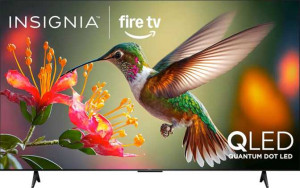
Insignia NS75-UQFL26 75"
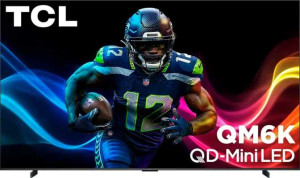
TCL 65QM6K 65"

Insignia NS75-UQFL26 75" TCL 65QM6K 65"

Overview

Welcome to our detailed spec comparison between the Insignia NS75-UQFL26 75″ and the TCL 65QM6K 65″. These two QLED 4K televisions share a strong common foundation, yet diverge in meaningful ways across display technology, refresh rate, audio capabilities, and smart platform compatibility. Whether screen size or advanced gaming features matter most to you, this side-by-side breakdown will help you decide which TV best fits your needs.

Common Features

  • Both TVs have a 4K UHD display resolution of 3840 x 2160 px.
  • Both TVs support 1070 million display colors with a 10-bit bit depth.
  • HDR10 support is available on both products.
  • Dolby Vision support is available on both products.
  • HLG support is available on both products.
  • An anti-reflection coating is present on both products.
  • Both TVs use a QLED, LED-backlit, LCD display type as a base.
  • Both TVs have 4 HDMI ports and 1 RJ45 port.
  • Bluetooth is available on both products.
  • Wi-Fi support is available on both products, with both supporting Wi-Fi 5 (802.11ac) and Wi-Fi 4 (802.11n).
  • Miracast support is available on both products.
  • Neither product has an external memory slot, a VGA connector, or a DVI connector.
  • Dolby Digital support is available on both products.
  • DTS Surround is available on both products.
  • Digital Out support is available on both products.
  • Dolby Digital Plus support is available on both products.
  • Dolby Atmos and Dolby Audio are available on both products.
  • Stereo speakers are present on both products.
  • Both TVs support VESA mounting.
  • AirPlay is available on both products, and both support remote smartphone control and USB recording.
  • Standby power consumption is 0.5W on both products.
  • A search browser is available on both products.
  • Neither product works with Siri/Apple HomeKit, and neither has a rechargeable remote control.

Main Differences

  • The Insignia NS75-UQFL26 75″ uses a standard QLED LED-backlit LCD panel, while the TCL 65QM6K 65″ adds Mini-LED backlighting technology.
  • Screen size is 74.5″ on the Insignia NS75-UQFL26 75″ and 64.5″ on the TCL 65QM6K 65″.
  • Pixel density is 59 ppi on the Insignia NS75-UQFL26 75″ and 68 ppi on the TCL 65QM6K 65″.
  • Refresh rate is 60Hz on the Insignia NS75-UQFL26 75″ and 144Hz on the TCL 65QM6K 65″.
  • HDR10+ support is present on the TCL 65QM6K 65″ but not available on the Insignia NS75-UQFL26 75″.
  • Adaptive synchronization (AMD FreeSync, FreeSync Premium, and FreeSync Premium Pro) is available on the TCL 65QM6K 65″ but not present on the Insignia NS75-UQFL26 75″.
  • Bluetooth version is 5 on the Insignia NS75-UQFL26 75″ and 5.4 on the TCL 65QM6K 65″.
  • USB ports count is 1 on the Insignia NS75-UQFL26 75″ and 2 on the TCL 65QM6K 65″.
  • A 3.5 mm audio jack is present on the Insignia NS75-UQFL26 75″ but not available on the TCL 65QM6K 65″.
  • A built-in subwoofer is present on the TCL 65QM6K 65″ but not available on the Insignia NS75-UQFL26 75″.
  • Width is 1666.2 mm on the Insignia NS75-UQFL26 75″ and 1445.3 mm on the TCL 65QM6K 65″.
  • Height is 960.1 mm on the Insignia NS75-UQFL26 75″ and 830.6 mm on the TCL 65QM6K 65″.
  • Thickness is 73.7 mm on the Insignia NS75-UQFL26 75″ and 55.9 mm on the TCL 65QM6K 65″.
  • Weight is 18189 g on the Insignia NS75-UQFL26 75″ and 17146 g on the TCL 65QM6K 65″.
  • Volume is 117899.262294 cm³ on the Insignia NS75-UQFL26 75″ and 67106.059462 cm³ on the TCL 65QM6K 65″.
  • Google Assistant compatibility is present on the TCL 65QM6K 65″ but not available on the Insignia NS75-UQFL26 75″.
  • Alexa compatibility is present on the Insignia NS75-UQFL26 75″ but not available on the TCL 65QM6K 65″.
Specs Comparison
Insignia NS75-UQFL26 75"

Insignia NS75-UQFL26 75"

TCL 65QM6K 65"

TCL 65QM6K 65"

Display:
display resolution 4K (UHD) 4K (UHD)
Display type QLED, LED-backlit, LCD QLED, LED-backlit, LCD, Mini-LED
screen size 74.5" 64.5"
resolution 3840 x 2160 px 3840 x 2160 px
pixel density 59 ppi 68 ppi
display colors 1070 million 1070 million
bit depth 10-bit 10-bit
refresh rate 60Hz 144Hz
supports HDR10
supports HDR10+
supports Dolby Vision
supports HLG
Adaptive synchronization None AMD FreeSync, AMD FreeSync Premium, AMD FreeSync Premium Pro
has anti-reflection coating
has an ambient light sensor
maximum horizontal viewing angle 178º 178º
maximum vertical viewing angle 178º 178º

Both the Insignia NS75-UQFL26 and the TCL 65QM6K share a strong display foundation: 4K (3840 x 2160) QLED LED-backlit LCD panels with 10-bit color depth, 1.07 billion colors, and support for HDR10, Dolby Vision, and HLG. They also match on viewing angles (178º both axes) and both include anti-reflection coating and an ambient light sensor. At this level, picture quality basics are comparable.

The most meaningful differentiator is the refresh rate: the Insignia tops out at 60Hz, while the TCL reaches 144Hz — a substantial gap that results in noticeably smoother motion in fast-paced content, sports, and gaming. The TCL also incorporates Mini-LED backlighting, which enables finer local dimming zones for improved contrast and brightness control. It further adds HDR10+ support (dynamic metadata HDR, similar to Dolby Vision) and full AMD FreeSync Premium Pro adaptive sync, making it a far more capable gaming display with reduced screen tearing and lower input-lag variability. The Insignia offers no adaptive sync at all.

The Insignia's only counter-advantage here is its larger 74.5″ screen versus the TCL's 64.5″, though the TCL's higher pixel density (68 ppi vs. 59 ppi) means its smaller panel is actually sharper per inch. Overall, the TCL 65QM6K holds a clear display edge for anyone prioritizing motion clarity, gaming performance, or advanced HDR — the Insignia's size advantage is real but narrow in impact compared to those feature gaps.

Connectivity:
Has Bluetooth
HDMI ports 4 4
supports Wi-Fi
Wi-Fi version Wi-Fi 5 (802.11ac), Wi-Fi 4 (802.11n) Wi-Fi 4 (802.11n), Wi-Fi 5 (802.11ac)
Bluetooth version 5 5.4
USB ports 1 2
RJ45 ports 1 1
supports Miracast
has a socket for a 3.5 mm audio jack
has an external memory slot
has a VGA connector
has a DVI connector

The wired connectivity foundation is nearly identical between these two TVs: both offer 4 HDMI ports, a single RJ45 ethernet port, Wi-Fi 5, and Bluetooth. For most living room setups — soundbars, streaming sticks, game consoles, cable boxes — neither will leave you short on ports at the HDMI level.

The differences, while not dramatic, do favor the TCL 65QM6K in a couple of meaningful ways. Its Bluetooth 5.4 is a newer revision than the Insignia's Bluetooth 5.0, offering improved connection stability and slightly better energy efficiency for wireless peripherals and headphones. More practically, the TCL also doubles the USB count with 2 USB ports versus the Insignia's single port — useful for simultaneously connecting a media drive and a keyboard, or charging a device while using the other port. On the flip side, the Insignia includes a 3.5mm headphone jack, which the TCL omits entirely; for users who rely on a wired headphone connection directly to the TV, this is a genuine limitation on the TCL.

On balance, the TCL has a slight connectivity edge thanks to the extra USB port and newer Bluetooth version, but the Insignia's headphone jack preserves an option the TCL drops. Neither TV stands out as a clear overall winner in this category — the right choice depends on whether wired headphone output or an additional USB port matters more for your specific setup.

Audio:
supports Dolby Digital
has DTS Surround
supports Digital Out
supports Dolby Digital Plus
has SRS TheaterSound HD
has stereo speakers
has Dolby Atmos
has Dolby Audio
supports Dolby Virtual
has a subwoofer
HDMI ARC / eARC HDMI ARC, HDMI eARC HDMI ARC, HDMI eARC

Audio format support is a complete tie between these two TVs. Both decode Dolby Atmos, Dolby Digital Plus, DTS Surround, and share identical HDMI ARC and eARC ports — meaning either can pass high-quality audio to an external soundbar or AV receiver without compromise. For anyone planning to route sound through a separate audio system, this parity makes the internal speaker specs largely academic.

For those who rely on built-in sound, however, there is one meaningful hardware distinction: the TCL 65QM6K includes a built-in subwoofer, while the Insignia NS75-UQFL26 does not. A dedicated subwoofer handles low-frequency reproduction independently, which typically results in more perceptible bass depth and body — particularly noticeable during action sequences, music, or cinematic content. The Insignia, without one, is more likely to sound thin at the low end when used without an external audio setup.

The TCL holds a narrow but real advantage in this category strictly because of that built-in subwoofer. It is the only differentiator in an otherwise identical audio spec sheet, but for viewers watching TV without a soundbar, it translates to a more complete out-of-the-box listening experience.

Design:
width 1666.2 mm 1445.3 mm
weight 18189 g 17146 g
thickness 73.7 mm 55.9 mm
height 960.1 mm 830.6 mm
volume 117899.262294 cm³ 67106.059462 cm³
Supports VESA mount

Screen size accounts for much of the dimensional gap here, so direct size comparisons need that context. The Insignia NS75-UQFL26 is a 75″ TV measuring 1666 mm wide and weighing 18.2 kg, while the TCL 65QM6K is a 65″ set at 1445 mm wide and 17.1 kg. The weight difference is modest given the 10-inch screen size gap — in fact, the Insignia is only about 1 kg heavier despite being significantly larger, which speaks to comparable build efficiency. Both support VESA mounting, so wall installation is an option for either.

Where the difference becomes more practically relevant is thickness: the Insignia measures 73.7 mm deep compared to the TCL's 55.9 mm — a roughly 32% reduction. A slimmer profile matters most for wall-mounted setups where protrusion from the wall is a concern, and the TCL will sit noticeably flatter. This also contributes to the TCL's dramatically smaller overall volume (67,106 cm³ vs. 117,899 cm³), making it easier to maneuver during installation even if the weight gap alone doesn't tell that story.

Design-wise, neither TV has a structural disadvantage for standard use — both wall-mount cleanly and are sized proportionally to their screens. But if a slim, unobtrusive footprint is a priority, the TCL 65QM6K has a clear edge in form factor, particularly its significantly reduced depth. The Insignia's larger size is an intentional trade-off for screen real estate, not a design shortcoming.

Features:
release date February 2025 March 2025
has AirPlay
has built-in smart TV
compatible with Google Assistant
works with Alexa
works with Siri/Apple HomeKit
supports a remote smartphone
has a rechargeable remote control
supports USB recording
standby power consumption 0.5W 0.5W
has a search browser
has a sleep timer
has a child lock
warranty period 1 years 1 years
has voice commands

Functionally, these two TVs are nearly identical in their feature sets — both offer a built-in smart TV platform, AirPlay, voice commands, smartphone remote support, USB recording, sleep timer, child lock, and identical 0.5W standby power consumption. For the vast majority of users, day-to-day operation will feel very similar on either set.

The one area where they meaningfully diverge is voice assistant ecosystem compatibility. The Insignia NS75-UQFL26 works with Alexa but not Google Assistant, while the TCL 65QM6K supports Google Assistant but not Alexa. Both include AirPlay, but neither supports Apple HomeKit or Siri natively. This distinction is less about one TV being more capable than the other and more about which smart home ecosystem a buyer is already invested in — an Alexa-heavy household will find the Insignia a more natural fit, while a Google Home or Android-centric setup will integrate more fluidly with the TCL.

Given the near-total feature parity, this category is effectively a tie for most users. The voice assistant split is the sole differentiator, and it is entirely ecosystem-dependent rather than a reflection of one TV offering objectively more functionality than the other.

Comparison Summary & Verdict

Both TVs deliver a solid 4K QLED experience with Dolby Vision, HDR10, HLG, Dolby Atmos, and four HDMI ports, making either a capable choice for home entertainment. However, the differences are significant. The Insignia NS75-UQFL26 75″ stands out with its larger 74.5-inch screen, a 3.5 mm audio jack, and Alexa integration, making it ideal for living room viewers who prioritize sheer screen size. The TCL 65QM6K 65″, on the other hand, pulls ahead with Mini-LED backlighting, a blazing 144Hz refresh rate, AMD FreeSync Premium Pro, HDR10+ support, a built-in subwoofer, and Google Assistant — making it the clear choice for gamers and picture-quality enthusiasts who value cutting-edge display tech in a slimmer, lighter form factor.

Insignia NS75-UQFL26 75
Buy Insignia NS75-UQFL26 75" if...

Buy the Insignia NS75-UQFL26 75″ if you want the largest possible screen size and prefer Alexa voice control with a 3.5 mm audio jack for easy headphone connectivity.

TCL 65QM6K 65
Buy TCL 65QM6K 65" if...

Buy the TCL 65QM6K 65″ if you want superior picture quality with Mini-LED backlighting and HDR10+, a 144Hz refresh rate with AMD FreeSync Premium Pro for gaming, and a built-in subwoofer for richer sound.