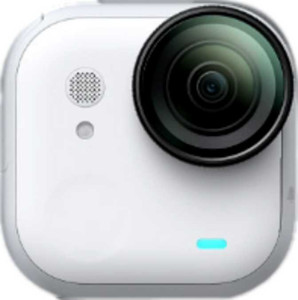
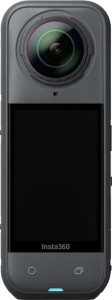
Insta360 Go Ultra
Insta360 X5

Insta360 Go Ultra Insta360 X5

Common Features

  • Both products have an external memory slot.
  • Both products have a display.
  • Both products can operate in temperatures as low as -20 °C.
  • Both products have a gyroscope.
  • Both products are compatible with Android.
  • Both products are compatible with iOS.
  • Both products have first-party support for live streaming.
  • Both products have USB Type-C connectivity.
  • Both products support a remote smartphone.
  • Both products have voice commands.
  • Both products have a rechargeable battery.
  • Both products have a battery level indicator.
  • Both products have an adjustable field of view.
  • Both products have a CMOS sensor.
  • Both products have a built-in HDR mode.
  • Both products have manual ISO controls.
  • Both products have a timelapse function.
  • Both products support slow-motion video recording.
  • Both products have continuous autofocus when recording movies.
  • Both products support horizon leveling.

Main Differences

  • Ingress Protection (IP) rating is IPX8 on Insta360 Go Ultra and IP68 on Insta360 X5.
  • Insta360 Go Ultra does not have a touch screen, while Insta360 X5 has a touch screen.
  • Water resistance is described as water resistant on Insta360 Go Ultra and waterproof on Insta360 X5.
  • Waterproof depth rating is 10 m on Insta360 Go Ultra and 15 m on Insta360 X5.
  • Volume is 38.47026 cm³ on Insta360 Go Ultra and 218.7714 cm³ on Insta360 X5.
  • Weight is 52.9 g on Insta360 Go Ultra and 200 g on Insta360 X5.
  • Thickness is 18.3 mm on Insta360 Go Ultra and 38.2 mm on Insta360 X5.
  • Height is 45.7 mm on Insta360 Go Ultra and 124.5 mm on Insta360 X5.
  • Bluetooth version is 5.4 on Insta360 Go Ultra and 5.2 on Insta360 X5.
  • Battery life is 1.15 hours on Insta360 Go Ultra and 3.08 hours on Insta360 X5.
  • Battery power is 500 mAh on Insta360 Go Ultra and 2400 mAh on Insta360 X5.
  • Megapixels of the main camera is 50 MP on Insta360 Go Ultra and 72 MP on Insta360 X5.
  • Wide aperture of the main camera is 2.85f on Insta360 Go Ultra and 2f on Insta360 X5.
  • Insta360 Go Ultra has a single-lens main camera, while Insta360 X5 has a dual-lens (or multi-lens) main camera.
  • Video recording resolution is 2160 x 60 fps on Insta360 Go Ultra and 3840 x 30 fps on Insta360 X5.
  • Insta360 Go Ultra does not shoot raw, while Insta360 X5 shoots raw.
Specs Comparison
Insta360 Go Ultra

Insta360 Go Ultra

Insta360 X5

Insta360 X5

Design:
Ingress Protection (IP) rating IPX8 IP68
has a touch screen
has an external memory slot
Has a display
water resistance Water resistant Waterproof
lowest potential operating temperature -20 °C -20 °C
Has a secondary screen
waterproof depth rating 10 m 15 m
has a gyroscope
volume 38.47026 cm³ 218.7714 cm³
weight 52.9 g 200 g
thickness 18.3 mm 38.2 mm
width 46 mm 46 mm
height 45.7 mm 124.5 mm

The design features of the Insta360 Go Ultra and Insta360 X5 show several distinctions in size, weight, and waterproof capabilities. The Go Ultra is more compact, with a volume of 38.47 cm³ and a weight of just 52.9 g, while the X5 is significantly larger, with a volume of 218.77 cm³ and a weight of 200 g. In terms of dimensions, the Go Ultra is smaller in all aspects, measuring 46 mm in width, 45.7 mm in height, and 18.3 mm in thickness, compared to the X5, which is 46 mm wide, 124.5 mm tall, and 38.2 mm thick.

Both cameras have waterproof capabilities, though the X5 has a higher waterproof depth rating of 15 meters, compared to the Go Ultra’s 10 meters. The Go Ultra has an IPX8 rating for water resistance, while the X5 is rated IP68, indicating a more robust level of protection for the X5 against dust and water.

Both cameras feature a display and a gyroscope, but only the X5 includes a touch screen. The Go Ultra does not have a touch screen but does have an external memory slot. Both models support operating in temperatures as low as -20 °C and do not have a secondary screen. The Go Ultra’s design is more minimalistic, while the X5 offers a larger form factor with additional features like the touch screen.

Connectivity & Features:
release date August 2025 April 2025
Is compatible with Android
Is compatible with iOS
Bluetooth version 5.4 5.2
has first-party support for live streaming
Has USB Type-C
has GPS
supports a remote smartphone
has voice commands

Both the Insta360 Go Ultra and Insta360 X5 offer a range of connectivity and feature support, with a few key differences. Both products are compatible with Android and iOS devices, allowing for versatile connectivity. Additionally, both support first-party live streaming, USB Type-C for charging and data transfer, remote smartphone control, and voice commands, providing a seamless user experience across both cameras.

However, there is a difference in Bluetooth versions. The Go Ultra is equipped with Bluetooth 5.4, while the X5 uses Bluetooth 5.2. While both versions allow for solid wireless connectivity, the Go Ultra benefits from the slightly more advanced Bluetooth 5.4.

Neither camera has GPS functionality, and both support remote smartphone control, meaning you can easily operate the cameras remotely. Overall, both products share many common connectivity features, with the Go Ultra offering a slightly more advanced Bluetooth version.

Battery:
Battery life 1.15 hours 3.08 hours
battery power 500 mAh 2400 mAh
has a rechargeable battery
has a battery level indicator

The Insta360 Go Ultra and Insta360 X5 differ significantly in their battery specifications. The Go Ultra features a smaller 500 mAh battery, providing a battery life of 1.15 hours. In contrast, the X5 has a much larger 2400 mAh battery, offering a significantly longer battery life of 3.08 hours.

Both cameras have rechargeable batteries and include a battery level indicator, allowing users to monitor remaining power. While both products share these essential battery features, the X5’s larger battery capacity results in considerably longer usage time compared to the Go Ultra.

Overall, the X5 stands out with its extended battery life, making it more suitable for longer shooting sessions, while the Go Ultra offers a more compact battery option with shorter run time.

Audio:
has a microphone input
has a socket for a 3.5 mm audio jack

Both the Insta360 Go Ultra and Insta360 X5 have identical audio-related specifications. Neither camera includes a microphone input or a socket for a 3.5 mm audio jack.

With both products lacking these features, neither camera supports external microphones or wired audio devices for enhanced sound capture. Users will need to rely on the built-in microphones for audio recording.

Overall, both cameras are limited to their internal audio systems, with no options for expanding or enhancing the audio input through external devices.

Optics:
megapixels (main camera) 50 MP 72 MP
has an adjustable field of view
wide aperture (main camera) 2.85f 2f
Has a dual-lens (or multi-lens) main camera
has a CMOS sensor
has a built-in HDR mode
has a flash
has manual ISO

The Insta360 Go Ultra and Insta360 X5 both offer impressive optics, though there are some notable differences. The Go Ultra has a 50 MP main camera, while the X5 boasts a higher 72 MP main camera, providing a higher resolution for capturing more detailed images.

Both cameras feature an adjustable field of view and a CMOS sensor, ensuring high-quality imaging. However, the Go Ultra has a wide aperture of 2.85f, which is slightly larger than the X5’s 2f, which may allow for more light to enter the lens in certain conditions. Additionally, the Go Ultra has a single-lens main camera, while the X5 features a dual-lens setup, potentially offering more advanced imaging capabilities in specific scenarios.

Both cameras come with a built-in HDR mode, manual ISO control, and no flash, but the differences in megapixels, lens configuration, and aperture size may result in slightly different imaging experiences between the two products.

Videography:
video recording (main camera) 2160 x 60 fps 3840 x 30 fps
Has timelapse function
supports slow-motion video recording
has continuous autofocus when recording movies
supports horizon leveling
has a 24p cinema mode
movie bitrate 180 Mbps 180 Mbps
shoots raw
has AF tracking
has a video light

The videography capabilities of the Insta360 Go Ultra and Insta360 X5 differ in several key aspects. The Go Ultra records video at a resolution of 2160 x 60 fps, while the X5 supports video recording at a higher resolution of 3840 x 30 fps. Both cameras support features like timelapse, slow-motion video, continuous autofocus, and horizon leveling, ensuring smooth and versatile video capture.

Both models also include a 24p cinema mode, providing cinematic-style video options. However, the Go Ultra does not shoot raw video, while the X5 offers raw video capture, giving users more flexibility in post-production. Both cameras have a movie bitrate of 180 Mbps and include AF tracking for precise focus during video recording.

Neither camera includes a video light, so additional lighting equipment may be necessary in low-light conditions. Overall, both cameras offer robust videography features, with the main differences lying in video resolution and the ability to shoot raw footage on the X5.

Comparison Summary

This is a specification comparison between the Insta360 Go Ultra and Insta360 X5. Both products have an external memory slot, display, and can operate in temperatures as low as -20 °C. They also have a gyroscope and are compatible with both Android and iOS. The Insta360 Go Ultra is lighter, weighing 52.9 g, and has a smaller size compared to the 200 g and larger dimensions of the Insta360 X5. Additionally, the Insta360 Go Ultra has a shorter battery life of 1.15 hours, with a 500 mAh battery, while the Insta360 X5 lasts 3.08 hours with a 2400 mAh battery. The Go Ultra has a 50 MP main camera, while the X5 features a 72 MP camera with dual lenses. The Go Ultra supports video recording at 2160 x 60 fps, whereas the X5 records at 3840 x 30 fps and can shoot raw images.