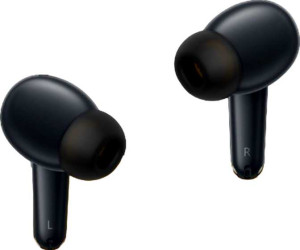
iQOO TWS 5
Vivo TWS 5

iQOO TWS 5 Vivo TWS 5

Overview

Welcome to our in-depth spec comparison between the iQOO TWS 5 and the Vivo TWS 5, two true wireless earbuds that share a remarkably close foundation yet differ in some meaningful ways. Both arrive with active noise cancellation, Bluetooth 5.4, and LDAC support, but the real questions lie in their audio frequency range and codec capabilities. If you are trying to decide which of these earbuds best fits your listening habits and workflow, read on as we break down every specification side by side.

Common Features

  • Both products have an in-ear fit.
  • Both products have an IP54 ingress protection rating.
  • Both products are sweat resistant.
  • Each earbud weighs 9.6 g on both products.
  • Both products are fully wireless with no wires or cables.
  • Neither product is a neckband earbud style.
  • Neither product includes wingtips.
  • Neither product has RGB lighting.
  • Active noise cancellation is available on both products.
  • Passive noise reduction is available on both products.
  • Both products use an 11 mm driver unit.
  • Spatial audio support is available on both products.
  • Dolby Atmos support is not available on either product.
  • Dirac Virtuo support is not available on either product.
  • Neither product uses a neodymium magnet.
  • Both products offer 12 hours of battery life.
  • Both products offer 36 hours of battery life from the charging case.
  • Both products offer 6 hours of battery life with ANC enabled.
  • Both products have a charge time of 2 hours.
  • Wireless charging is not available on either product.
  • Solar power battery is not available on either product.
  • Both products have a battery level indicator.
  • Both products have a rechargeable battery.
  • Fast pairing is not available on either product.
  • Both products have a USB Type-C connector.
  • Both products use Bluetooth version 5.4.
  • LDAC support is available on both products.
  • Bluetooth LE Audio support is not available on either product.
  • aptX Adaptive support is not available on either product.
  • aptX Low Latency support is not available on either product.
  • aptX HD support is not available on either product.
  • Ambient sound mode is available on both products.
  • In/on-ear detection is not available on either product.
  • A find device feature is not available on either product.
  • Fast charging is supported on both products.
  • Notification reading is not available on either product.
  • A built-in translator is not available on either product.
  • A mute function is available on both products.
  • Both products can be used as a headset.
  • Both products have a noise-canceling microphone.

Main Differences

  • Lowest frequency is 16 Hz on iQOO TWS 5 and 20 Hz on Vivo TWS 5.
  • Highest frequency is 48000 Hz on iQOO TWS 5 and 20000 Hz on Vivo TWS 5.
  • Battery power is 56 mAh on iQOO TWS 5 and 54 mAh on Vivo TWS 5.
  • LDHC support is present on Vivo TWS 5 but not available on iQOO TWS 5.
Specs Comparison
iQOO TWS 5

iQOO TWS 5

Vivo TWS 5

Vivo TWS 5

Design:
Fit In-ear In-ear
Ingress Protection (IP) rating IP54 IP54
water resistance Sweat resistant Sweat resistant
weight 9.6 g 9.6 g
has no wires or cables
are neckband earbuds
wingtips included
has RGB lighting
has stereo speakers
has UV light
Has a display

In terms of design, the iQOO TWS 5 and Vivo TWS 5 are effectively identical across every measured specification. Both are in-ear, fully wireless earbuds weighing exactly 9.6 g, rated IP54 for sweat resistance, and share the same feature set — stereo drivers, no neckband, no wingtips, no RGB lighting, and no display.

The IP54 rating is worth noting in context: it provides solid protection against sweat and light splashing, making both suitable for workouts and commutes, but neither is rated for submersion or heavy rain exposure. At 9.6 g, both sit in a comfortable midrange weight class — light enough for extended wear without fatigue, though not among the lightest options on the market.

This group is a complete tie. There is no design-based differentiator between the two products — buyers should look to other specification groups such as audio performance, battery life, or connectivity to make their decision.

Sound quality:
has active noise cancellation (ANC)
has passive noise reduction
driver unit size 11 mm 11 mm
lowest frequency 16 Hz 20 Hz
highest frequency 48000 Hz 20000 Hz
supports spatial audio
has Dolby Atmos
has Dirac Virtuo
has a neodymium magnet

Both earbuds share the same 11 mm driver, ANC, passive noise reduction, and spatial audio support — a strong shared foundation. The meaningful divergence lies in their frequency ranges: the iQOO TWS 5 reaches from 16 Hz to 48,000 Hz, while the Vivo TWS 5 covers the standard 20 Hz to 20,000 Hz range.

In practice, the extra low-end extension down to 16 Hz on the iQOO pushes into sub-bass territory that most listeners feel more than hear — relevant for bass-heavy music genres. More notably, the high-frequency ceiling of 48,000 Hz on the iQOO indicates Hi-Res Audio compatibility, meaning it can technically reproduce content encoded beyond standard CD quality. The Vivo's 20,000 Hz ceiling, by contrast, covers exactly the range of typical human hearing — functional and sufficient for everyday listening, but without that headroom.

The iQOO TWS 5 holds a clear edge here. Its extended frequency range is not merely a numbers game — it signals hardware and tuning designed for higher-fidelity audio sources, which will matter to audiophile-leaning users. For casual listeners, the difference may be subtle, but the iQOO is the stronger choice on paper for sound quality.

Power:
Battery life 12 hours 12 hours
Battery life of charging case 36 hours 36 hours
Battery life (ANC) 6 hours 6 hours
charge time 2 hours 2 hours
battery power 56 mAh 54 mAh
has wireless charging
Has a solar power battery
has a battery level indicator
has a rechargeable battery

On paper, the power specs of these two earbuds are nearly a carbon copy of each other: both deliver 12 hours of playback, 36 hours total with the case, drop to 6 hours with ANC active, and fully recharge in 2 hours. For most users, this translates to a full workday of listening without touching the case — a competitive endurance figure in this category.

The only measurable difference is the earbud battery capacity: 56 mAh on the iQOO TWS 5 versus 54 mAh on the Vivo TWS 5. A 2 mAh gap is negligible in real-world terms and almost certainly has no perceptible impact on runtime, given that both products quote identical playback hours. Neither model offers wireless charging, which is a notable omission at this tier for users who value cable-free convenience.

This category is effectively a tie. The marginal battery capacity difference does not translate into any stated advantage in runtime, and every other power metric is identical. Buyers prioritizing longevity will find both products equally capable — the decision should rest on other factors.

Connectivity:
has fast pairing
Has USB Type-C
Bluetooth version 5.4 5.4
has LDAC
has LDHC
has Bluetooth LE Audio
has aptX Adaptive
has aptX Low Latency
has aptX HD
has aptX
has aptX Lossless
has aptX Voice
has Auracast
maximum Bluetooth range 10 m 10 m
supports Bluetooth pairing using NFC
Can be used wirelessly
has AAC

Across most connectivity metrics, these two earbuds are identical: Bluetooth 5.4, a 10 m wireless range, USB-C charging, and shared support for both LDAC and AAC codecs. LDAC is Sony's high-resolution wireless codec capable of transmitting up to 990 kbps — a meaningful advantage for Android users streaming lossless audio, and a codec that many competing earbuds at this price point omit entirely.

The single differentiator in this group is the Vivo TWS 5's additional support for LDHC — a high-definition codec developed by Huawei capable of transmitting audio at up to 900 kbps with lower latency characteristics. In practice, LDHC offers a tangible benefit only when paired with a compatible source device; on non-compatible hardware, the connection falls back to a lower-quality codec. The iQOO TWS 5 lacks LDHC entirely.

The Vivo TWS 5 takes a narrow but real edge here. For users with LDHC-compatible devices, it opens an additional high-fidelity transmission path that the iQOO cannot match. For everyone else, the two products are functionally equivalent in connectivity — the shared LDAC support already sets a high bar for wireless audio quality on both.

Features:
release date October 2025 October 2025
has ambient sound mode
has in/on-ear detection
has find device feature
Supports fast charging
can read notifications
Has a built-in translator
has a mute function
can be used as a headset
control panel placed on a device
Has voice prompts
travel bag is included
Has an in-line control panel
Has a temperature sensor
Has a built-in camera remote control function

Feature-for-feature, the iQOO TWS 5 and Vivo TWS 5 are indistinguishable in this category. Both offer ambient sound mode, fast charging, on-device controls, voice prompts, a mute function, headset capability, and even a travel bag included in the box — a practical bonus that many competitors skip at this price point.

Worth flagging are the shared omissions: neither earbud includes in/on-ear detection or a find device feature. The absence of ear detection means audio will not automatically pause when an earbud is removed — a convenience that has become fairly standard in premium TWS products. The lack of a find device feature is a minor but real drawback for users prone to misplacing small accessories.

With no differentiating specs on either side, this group is a complete tie. Both products deliver a solid and practical feature set, with the same strengths and the same gaps. Buyers should weigh the missing ear detection and device-finding capability against their personal use habits, but neither earbud holds an advantage over the other here.

Microphone:
has a noise-canceling microphone

The microphone data for this comparison is limited to a single spec, but it is a meaningful one: both the iQOO TWS 5 and Vivo TWS 5 include a noise-canceling microphone. For call quality, this matters more than most users realize — microphone noise cancellation filters out ambient noise from the caller's environment, making voices clearer on the receiving end during commutes, busy offices, or outdoor use.

This is a tie. With only one data point available and both products matching on it, there is no basis to distinguish between them in this category. Deeper microphone characteristics — such as the number of microphone array elements or beamforming technology — are not provided, so no further differentiation can be drawn from the available data.

Comparison Summary & Verdict

After examining every specification, it is clear that the iQOO TWS 5 and Vivo TWS 5 are remarkably similar earbuds, sharing the same IP54 rating, 11 mm drivers, ANC, spatial audio, 12-hour battery life, and fast charging. The distinctions come down to a handful of targeted areas. The iQOO TWS 5 stands out with a wider audio frequency range of 16 Hz to 48000 Hz, making it the stronger pick for audiophiles who want high-resolution sound reproduction at both extremes of the spectrum. The Vivo TWS 5, on the other hand, adds LDHC codec support alongside LDAC, offering greater flexibility for users whose devices are compatible with that codec. Both earbuds are well-rounded choices, but your decision should hinge on whether extended audio range or broader codec support matters more to your daily listening setup.

iQOO TWS 5
Buy iQOO TWS 5 if...

Buy the iQOO TWS 5 if you prioritize the widest possible audio frequency range, with reproduction extending from 16 Hz all the way up to 48000 Hz for high-resolution listening.

Vivo TWS 5
Buy Vivo TWS 5 if...

Buy the Vivo TWS 5 if LDHC codec support is important to you alongside LDAC, giving you more wireless audio transmission options depending on your source device.