iQOO TWS Air 3 Pro
Moondrop Space Travel 2 Ultra

iQOO TWS Air 3 Pro Moondrop Space Travel 2 Ultra

Overview

Welcome to our in-depth spec comparison between the iQOO TWS Air 3 Pro and the Moondrop Space Travel 2 Ultra. Both earbuds arrive with active noise cancellation, Bluetooth 6, and fast charging, but they take noticeably different paths when it comes to fit style, battery endurance, and audio codec support. Whether you are chasing all-day listening sessions or the richest possible wireless audio fidelity, this side-by-side breakdown will help you find the right pair for your needs.

Common Features

  • Both products are wireless and have no cables or wires.
  • Neither product is a neckband earbud style.
  • Neither product includes wingtips.
  • Neither product features RGB lighting.
  • Both products have stereo speakers.
  • Neither product has a UV light.
  • Neither product has a display.
  • Both products support active noise cancellation (ANC).
  • The lowest frequency on both products is 20 Hz.
  • The highest frequency on both products is 20000 Hz.
  • Neither product supports spatial audio.
  • Neither product has Dolby Atmos.
  • Neither product has Dirac Virtuo.
  • Neither product uses a neodymium magnet.
  • Neither product supports wireless charging.
  • Neither product has a solar power battery.
  • Both products have a battery level indicator.
  • Both products have a rechargeable battery.
  • Neither product supports fast pairing.
  • Both products have a USB Type-C port.
  • Both products use Bluetooth version 6.
  • Neither product supports LDHC.
  • Neither product supports Bluetooth LE Audio.
  • Neither product supports aptX Adaptive.
  • Neither product supports aptX Low Latency.
  • Neither product supports aptX HD.
  • Both products have an ambient sound mode.
  • Neither product has in/on-ear detection.
  • Neither product has a find device feature.
  • Both products support fast charging.
  • Neither product can read notifications.
  • Neither product has a built-in translator.
  • Both products have a mute function.
  • Both products can be used as a headset.
  • Both products have a noise-canceling microphone.

Main Differences

  • The fit style is earbud on iQOO TWS Air 3 Pro and in-ear on Moondrop Space Travel 2 Ultra.
  • Passive noise reduction is present on Moondrop Space Travel 2 Ultra but not available on iQOO TWS Air 3 Pro.
  • The driver unit size is 12 mm on iQOO TWS Air 3 Pro and 13 mm on Moondrop Space Travel 2 Ultra.
  • Battery life is 9.5 hours on iQOO TWS Air 3 Pro and 7 hours on Moondrop Space Travel 2 Ultra.
  • Battery life of the charging case is 45.5 hours on iQOO TWS Air 3 Pro and 24 hours on Moondrop Space Travel 2 Ultra.
  • Charge time is 2 hours on iQOO TWS Air 3 Pro and 1.5 hours on Moondrop Space Travel 2 Ultra.
  • LDAC support is present on Moondrop Space Travel 2 Ultra but not available on iQOO TWS Air 3 Pro.
  • The number of microphones is 6 on iQOO TWS Air 3 Pro and 2 on Moondrop Space Travel 2 Ultra.
Specs Comparison
iQOO TWS Air 3 Pro

iQOO TWS Air 3 Pro

Moondrop Space Travel 2 Ultra

Moondrop Space Travel 2 Ultra

Design:
Fit Earbud In-ear
has no wires or cables
are neckband earbuds
wingtips included
has RGB lighting
has stereo speakers
has UV light
Has a display

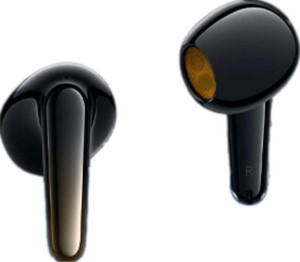
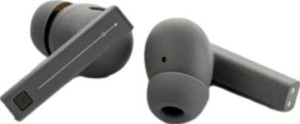
The most meaningful design difference between these two earphones comes down to fit style: the iQOO TWS Air 3 Pro uses an earbud design, while the Moondrop Space Travel 2 Ultra opts for an in-ear form factor. This distinction has real-world consequences for comfort, passive isolation, and long-term wearability. Earbud designs rest in the outer ear without sealing the ear canal, making them more comfortable for extended sessions for users who dislike the plugged feeling, but they sacrifice passive noise isolation. In-ear monitors create a seal inside the canal, which typically delivers better sound isolation and improved bass response at the cost of a more intrusive fit that some users find fatiguing over time.

Beyond fit, both products share identical design characteristics across every other measured attribute: both are fully wireless with no cables or neckband, neither includes wingtips, and both feature stereo speakers while omitting RGB lighting, UV light, and a display. This means neither product carries any added visual flair or gimmick features, suggesting both are positioned as straightforward, utility-focused audio products.

On design, the Moondrop Space Travel 2 Ultra holds a functional edge for users who prioritize passive noise isolation and a more secure fit during active use, as the in-ear seal provides real acoustic advantages. The iQOO TWS Air 3 Pro counters with the comfort advantage inherent to earbud designs, making it the better pick for users sensitive to in-ear pressure. The right choice here is entirely user-preference-driven, but the fit difference is the only distinguishing design factor between these otherwise identical-on-paper earphones.
Sound quality:
has active noise cancellation (ANC)
has passive noise reduction
driver unit size 12 mm 13 mm
lowest frequency 20 Hz 20 Hz
highest frequency 20000 Hz 20000 Hz
supports spatial audio
has Dolby Atmos
has Dirac Virtuo
has a neodymium magnet

Both earphones share a 20 Hz–20,000 Hz frequency range, covering the full extent of human hearing, and both feature active noise cancellation (ANC). Neither supports spatial audio, Dolby Atmos, or Dirac Virtuo, so neither has an edge in advanced audio processing. Where the two diverge is in passive noise reduction and driver size — and those differences carry meaningful real-world weight.

The Moondrop Space Travel 2 Ultra adds passive noise reduction on top of ANC, a combination that compounds isolation performance. ANC works electronically to cancel low-frequency rumble, while passive isolation physically blocks mid-to-high frequency noise through the ear seal. Having both layers means the Moondrop is better equipped for genuinely loud environments, such as planes or busy commutes, where ANC alone often struggles. The iQOO TWS Air 3 Pro relies on ANC exclusively, which, given its earbud fit from the Design group, means its real-world noise isolation is likely more limited in practice.

The Moondrop also carries a marginally larger 13 mm driver versus the iQOO's 12 mm unit. Driver size alone does not guarantee superior sound — tuning matters far more — but a larger driver can move more air, which tends to support fuller low-end reproduction. Taken together, the dual-layer noise isolation and the slightly larger driver give the Moondrop Space Travel 2 Ultra a clear edge in this category for users who prioritize immersive, isolated listening.

Power:
Battery life 9.5 hours 7 hours
Battery life of charging case 45.5 hours 24 hours
charge time 2 hours 1.5 hours
has wireless charging
Has a solar power battery
has a battery level indicator
has a rechargeable battery

Battery endurance is where the iQOO TWS Air 3 Pro pulls ahead decisively. It delivers 9.5 hours of playback per charge compared to the Moondrop's 7 hours — a 35% advantage that translates directly into fewer interruptions during long travel days, extended work sessions, or all-day listening. When the case is factored in, the gap widens further: the iQOO's case extends total playback to 45.5 hours, versus the Moondrop's 24 hours. That is nearly double the total battery capacity, meaning the iQOO can go significantly longer between any need to find a wall outlet.

The Moondrop does narrow the gap slightly on charge time, refilling in 1.5 hours against the iQOO's 2 hours. For users who do forget to charge and need a quick top-up, that 30-minute difference is a minor but real convenience. Neither earphone supports wireless charging, so both require a cable regardless.

Across every other power attribute — battery level indicator, rechargeable battery, solar charging — the two products are identical. The iQOO TWS Air 3 Pro holds a commanding advantage in this category, and for any user who prioritizes going long between charges, it is the clear winner here.

Connectivity:
has fast pairing
Has USB Type-C
Bluetooth version 6 6
has LDAC
has LDHC
has Bluetooth LE Audio
has aptX Adaptive
has aptX Low Latency
has aptX HD
has aptX
has aptX Lossless
has aptX Voice
has Auracast
maximum Bluetooth range 10 m 10 m
supports Bluetooth pairing using NFC
Can be used wirelessly
has AAC

On paper, these two earphones are nearly identical in connectivity: both run on Bluetooth 6, share a 10 m wireless range, support AAC, and charge via USB-C. Neither offers fast pairing, NFC, LE Audio, Auracast, or any variant of aptX. The one spec that breaks the tie is codec support — and it is a meaningful one.

The Moondrop Space Travel 2 Ultra supports LDAC, Sony's high-resolution wireless codec capable of transmitting audio at up to three times the bitrate of standard Bluetooth codecs. For users streaming from LDAC-compatible sources — many Android phones and Sony devices — this opens the door to audibly richer wireless audio with greater detail and dynamic range compared to AAC alone. The iQOO TWS Air 3 Pro tops out at AAC, which is perfectly competent for everyday listening but cannot match LDAC's throughput ceiling when source and conditions are favorable.

It is worth noting that LDAC's real-world benefit depends heavily on source device compatibility and signal environment — in congested wireless conditions, LDAC can dynamically drop to lower bitrates. That said, having the option is strictly additive. The Moondrop Space Travel 2 Ultra takes a clear edge in connectivity for audio enthusiasts who want the highest possible wireless fidelity, while the iQOO offers no compensating connectivity advantage to offset the gap.

Features:
release date August 2025 September 2025
has ambient sound mode
has in/on-ear detection
has find device feature
Supports fast charging
can read notifications
Has a built-in translator
has a mute function
can be used as a headset
control panel placed on a device
Has voice prompts
travel bag is included
Has an in-line control panel
Has a temperature sensor
Has a built-in camera remote control function

Across every single feature in this category, the iQOO TWS Air 3 Pro and the Moondrop Space Travel 2 Ultra are a perfect match. Both support ambient sound mode, fast charging, a mute function, on-device controls, voice prompts, and include a travel bag. Both can function as a headset for calls. There is not a single feature point where one product pulls ahead of the other.

The shared feature set is well-rounded for the price tier these products likely occupy. Ambient sound mode is a genuinely useful daily tool, letting users stay aware of their surroundings without removing the earphones. Fast charging is a practical convenience that pairs well with the battery figures analyzed earlier. The absence of features like in-ear detection, a find device function, or notification readout reflects a focus on core audio utility over smart assistive features — a trade-off that keeps the experience straightforward but means neither earphone competes with more feature-rich alternatives in those areas.

This group is a complete tie. No differentiation exists between these two products on features, and neither holds any advantage over the other here. Buyers prioritizing feature breadth should weigh this category against the other spec groups — specifically Design, Sound, and Connectivity — where the products do diverge.

Microphone:
number of microphones 6 2
has a noise-canceling microphone

Microphone hardware is where the iQOO TWS Air 3 Pro establishes a notable structural advantage. It deploys 6 microphones across the two earbuds, compared to just 2 microphones on the Moondrop Space Travel 2 Ultra. Both implement noise-canceling microphone technology, so the qualitative intent is the same — but the iQOO has three times the microphone count to work with.

More microphones enable more sophisticated beamforming and wind noise rejection algorithms. With 6 mics, the system can sample sound from multiple angles simultaneously, making it easier to isolate the speaker's voice and suppress background noise during calls. This is particularly relevant in challenging environments — busy streets, cafes, or moving vehicles — where a sparser mic array can struggle to cleanly separate the voice signal from ambient noise. The Moondrop's 2-mic setup is a common baseline configuration, functional for standard call quality but working with less raw data to achieve the same goal.

The iQOO TWS Air 3 Pro holds a clear edge in this category. For users who frequently take calls or use voice assistants in noisy environments, the higher microphone count represents a meaningful practical advantage. The Moondrop offers no compensating microphone feature to close that gap.

Comparison Summary & Verdict

After examining every data point, these two earbuds emerge as strong but distinctly different picks. The iQOO TWS Air 3 Pro stands out for its remarkable battery stamina — 9.5 hours on a single charge and a combined 45.5-hour case life — along with a six-microphone array that makes it a compelling choice for calls and voice clarity. The Moondrop Space Travel 2 Ultra counters with LDAC support for higher-quality wireless audio, a slightly larger 13 mm driver, passive noise reduction, and a faster 1.5-hour charge time, appealing to listeners who prioritize sound quality over raw endurance. Both share ANC, ambient sound mode, fast charging, and Bluetooth 6, so the core feature set is well-matched. Your decision ultimately comes down to battery life versus audio codec fidelity.

iQOO TWS Air 3 Pro
Buy iQOO TWS Air 3 Pro if...

Buy the iQOO TWS Air 3 Pro if you need maximum battery life and superior call quality, thanks to its 9.5-hour playback, 45.5-hour charging case, and six-microphone setup.

Moondrop Space Travel 2 Ultra
Buy Moondrop Space Travel 2 Ultra if...

Buy the Moondrop Space Travel 2 Ultra if you prioritize high-fidelity wireless audio and faster charging, with LDAC support, passive noise reduction, and a 1.5-hour charge time.