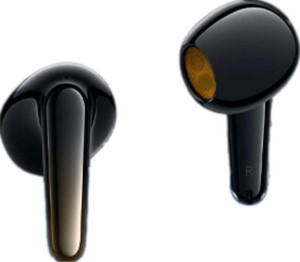
iQOO TWS Air 3 Pro
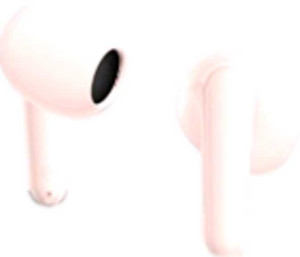
Vivo TWS Air 3

iQOO TWS Air 3 Pro Vivo TWS Air 3

Overview

Picking between two earbuds from the same product family is rarely simple. In this detailed head-to-head between the iQOO TWS Air 3 Pro and the Vivo TWS Air 3, we examine the areas where these otherwise closely matched earbuds diverge most sharply: active noise cancellation, spatial audio support, total battery endurance, and codec compatibility — giving you the clarity you need to make the right choice for your ears.

Common Features

  • Both products use an earbud fit design.
  • Both products carry an IP54 ingress protection rating.
  • Both products are fully wireless with no cables.
  • Neither product is a neckband earbud style.
  • Neither product includes wingtips.
  • Neither product features RGB lighting.
  • Both products have stereo speakers.
  • Neither product includes a UV light.
  • Neither product offers passive noise reduction.
  • Both products use a 12 mm driver unit size.
  • Both products share a frequency range of 20 Hz to 20000 Hz.
  • Neither product supports Dolby Atmos.
  • Neither product supports Dirac Virtuo.
  • Neither product uses a neodymium magnet.
  • Both products require 2 hours to fully charge.
  • Neither product supports wireless charging.
  • Neither product has a solar power battery.
  • Both products include a battery level indicator.
  • Both products have a rechargeable battery.
  • Neither product supports fast pairing.
  • Both products feature a USB Type-C connection.
  • Both products use Bluetooth version 6.
  • Neither product supports LDAC.
  • Neither product supports LDHC.
  • Neither product supports Bluetooth LE Audio.
  • Neither product supports aptX Adaptive.
  • Neither product supports aptX Low Latency.
  • Both products support fast charging.
  • Neither product can read notifications.
  • Neither product has a built-in translator.
  • Both products include a mute function.
  • Both products can be used as a headset.
  • Both products have a control panel placed on the device.
  • Both products feature voice prompts.
  • Both products include a travel bag.
  • Both products have a noise-canceling microphone.

Main Differences

  • Weight is 7.6 g on the iQOO TWS Air 3 Pro and 7.2 g on the Vivo TWS Air 3.
  • Active noise cancellation (ANC) is available on the iQOO TWS Air 3 Pro but not on the Vivo TWS Air 3.
  • Spatial audio support is present on the Vivo TWS Air 3 but not available on the iQOO TWS Air 3 Pro.
  • Battery life per charge is 9.5 hours on the iQOO TWS Air 3 Pro and 10 hours on the Vivo TWS Air 3.
  • Battery life of the charging case is 45.5 hours on the iQOO TWS Air 3 Pro and 35 hours on the Vivo TWS Air 3.
  • AAC codec support is available on the iQOO TWS Air 3 Pro but not on the Vivo TWS Air 3.
  • Ambient sound mode is present on the iQOO TWS Air 3 Pro but not available on the Vivo TWS Air 3.
Specs Comparison
iQOO TWS Air 3 Pro

iQOO TWS Air 3 Pro

Vivo TWS Air 3

Vivo TWS Air 3

Design:
Fit Earbud Earbud
Ingress Protection (IP) rating IP54 IP54
weight 7.6 g 7.2 g
has no wires or cables
are neckband earbuds
wingtips included
has RGB lighting
has stereo speakers
has UV light
Has a display

In terms of physical design, the iQOO TWS Air 3 Pro and Vivo TWS Air 3 are nearly identical twins. Both are true wireless earbuds with an IP54 rating, meaning they offer the same level of protection against dust ingress and water splashes — suitable for workouts and light rain, but not submersion. Neither includes wingtips, RGB lighting, a display, or UV sterilization, so there are no feature gaps to speak of on those fronts.

The one measurable difference in this category is weight: the Vivo TWS Air 3 comes in at 7.2 g per earbud versus 7.6 g for the iQOO TWS Air 3 Pro. While a 0.4 g gap is marginal in absolute terms, lighter earbuds can reduce ear fatigue during extended listening sessions, making the difference relevant for users who wear them for hours at a stretch.

Overall, the two products are virtually tied on design. The Vivo TWS Air 3 holds a very slight weight advantage, but the gap is small enough that most users are unlikely to notice it in daily use. Neither product distinguishes itself significantly in this category.

Sound quality:
has active noise cancellation (ANC)
has passive noise reduction
driver unit size 12 mm 12 mm
lowest frequency 20 Hz 20 Hz
highest frequency 20000 Hz 20000 Hz
supports spatial audio
has Dolby Atmos
has Dirac Virtuo
has a neodymium magnet

Both earbuds share the same 12 mm driver size and an identical frequency range of 20 Hz to 20,000 Hz, covering the full spectrum of human hearing. On paper, this suggests comparable raw audio reproduction capabilities, and neither unit uses a neodymium magnet or proprietary audio processing like Dolby Atmos or Dirac Virtuo, so the hardware baseline is effectively the same.

Where the two diverge meaningfully is in their noise management and spatial audio approaches. The iQOO TWS Air 3 Pro includes Active Noise Cancellation (ANC), which uses microphones to actively counter ambient sound — a genuine advantage in noisy environments like commutes or open offices. The Vivo TWS Air 3, by contrast, skips ANC entirely but offers spatial audio support, which creates a wider, more immersive soundstage — a feature better suited to media consumption like movies or music where perceived depth matters more than isolation.

The ″winner″ here depends entirely on use case. For listeners who prioritize blocking out the world, the iQOO TWS Air 3 Pro has a clear edge with ANC. For those focused on an immersive listening experience in quieter settings, the Vivo TWS Air 3′s spatial audio support gives it the advantage. Neither product is objectively superior — they simply make different trade-offs.

Power:
Battery life 9.5 hours 10 hours
Battery life of charging case 45.5 hours 35 hours
charge time 2 hours 2 hours
has wireless charging
Has a solar power battery
has a battery level indicator
has a rechargeable battery

Charging infrastructure is identical across both products — a 2-hour charge time, no wireless charging, and a battery level indicator on each. The real story lies in how the two products distribute their total battery capacity between the earbuds and the case.

The Vivo TWS Air 3 edges ahead on single-session endurance with 10 hours of earbud battery life versus 9.5 hours for the iQOO TWS Air 3 Pro — a modest but real advantage for users who listen through long flights or full workdays without reaching for the case. However, the iQOO TWS Air 3 Pro makes a compelling counter-argument with its case: it delivers 45.5 hours of total combined playback, compared to only 35 hours for the Vivo. That is a substantial 10.5-hour gap, meaning the iQOO case can squeeze out roughly one to two full extra top-ups over multiple days away from a charger.

The choice ultimately comes down to usage patterns. Frequent travelers or users who go days without access to a power outlet will find the iQOO TWS Air 3 Pro′s superior total system endurance more practical. For those who charge nightly and simply want maximum uninterrupted listening in a single stretch, the Vivo TWS Air 3′s slightly longer per-session battery gives it a narrow edge. On balance, the iQOO TWS Air 3 Pro holds the broader power advantage due to its significantly larger case capacity.

Connectivity:
has fast pairing
Has USB Type-C
Bluetooth version 6 6
has LDAC
has LDHC
has Bluetooth LE Audio
has aptX Adaptive
has aptX Low Latency
has aptX HD
has aptX
has aptX Lossless
has aptX Voice
has Auracast
maximum Bluetooth range 10 m 10 m
supports Bluetooth pairing using NFC
Can be used wirelessly
has AAC

Connectivity fundamentals are essentially a wash between these two earbuds. Both run on Bluetooth 6 — the latest standard, offering improved connection stability and efficiency over previous versions — with a maximum range of 10 m and USB-C charging. Neither supports advanced high-resolution codecs like LDAC or aptX, and features like NFC pairing or fast pairing are absent on both.

The sole differentiator in this category is codec support: the iQOO TWS Air 3 Pro supports AAC, while the Vivo TWS Air 3 does not. AAC is the default high-quality audio codec used by Apple devices and many streaming platforms, and its presence means the iQOO can deliver noticeably better audio quality over Bluetooth when paired with an AAC-compatible source — particularly iPhones or iPads — compared to falling back on the baseline SBC codec.

For Android-centric users who stream via platforms that don't leverage AAC, this distinction may be minor in practice. But for anyone in the Apple ecosystem or using AAC-native apps, the iQOO TWS Air 3 Pro holds a clear connectivity edge. Overall, the iQOO takes this category by a narrow but meaningful margin on the strength of its AAC codec support.

Features:
release date August 2025 May 2025
has ambient sound mode
Supports fast charging
can read notifications
Has a built-in translator
has a mute function
can be used as a headset
control panel placed on a device
Has voice prompts
travel bag is included
Has an in-line control panel
Has a temperature sensor
Has a built-in camera remote control function

Across most practical features, these two earbuds are well matched. Fast charging, mute function, on-device controls, voice prompts, headset capability, and an included travel bag are all present on both — a solid, well-rounded feature set for everyday use at this tier.

The single differentiator in this group is ambient sound mode, which is exclusive to the iQOO TWS Air 3 Pro. This feature uses the earbuds′ microphones to pipe in environmental audio, allowing the wearer to stay aware of their surroundings — hear a colleague speak, catch a boarding announcement, or monitor traffic — without removing the earbuds. It is a genuinely practical feature for commuters and office users, and its absence on the Vivo TWS Air 3 is a tangible gap rather than a niche omission.

The iQOO TWS Air 3 Pro takes this category clearly. When combined with its ANC support noted in the sound quality group, it offers a full listening environment toolkit — the ability to both block the world out and selectively let it back in — that the Vivo TWS Air 3 simply cannot match.

Microphone:
has a noise-canceling microphone

Microphone performance data is limited to a single spec here, but it is a meaningful one: both the iQOO TWS Air 3 Pro and the Vivo TWS Air 3 include a noise-canceling microphone. This means call quality on both units benefits from active filtering of background noise — wind, street sounds, or office chatter — before your voice reaches the other end of the line, which is a practical necessity for earbuds used regularly for calls or voice assistants.

With only one data point available and both products sharing it equally, there is no differentiator to analyze in this category. The two earbuds are fully tied on microphone specifications as provided.

Comparison Summary & Verdict

Having examined every shared trait and key difference, the iQOO TWS Air 3 Pro and the Vivo TWS Air 3 emerge as two earbuds built on a near-identical foundation but tuned for distinct audiences. The iQOO TWS Air 3 Pro justifies its positioning with active noise cancellation, an ambient sound mode, and AAC codec support — a compelling trio for commuters, remote workers, and anyone who needs precise control over their listening environment. Its charging case battery life of 45.5 hours also offers a meaningful advantage for heavy travelers. The Vivo TWS Air 3, meanwhile, counters with spatial audio support, a slightly longer per-charge earbud runtime of 10 hours, and a fractionally lighter build of 7.2 g, making it the more appealing option for casual listeners who prioritize an immersive, open soundstage over noise isolation features.

iQOO TWS Air 3 Pro
Buy iQOO TWS Air 3 Pro if...

Buy the iQOO TWS Air 3 Pro if active noise cancellation, ambient sound mode, and AAC codec support are priorities for you, especially if a significantly longer charging case battery life matters on the go.

Vivo TWS Air 3
Buy Vivo TWS Air 3 if...

Choose the Vivo TWS Air 3 if you value spatial audio and a slightly longer per-charge earbud battery life in a marginally lighter design, and have no need for active noise cancellation.