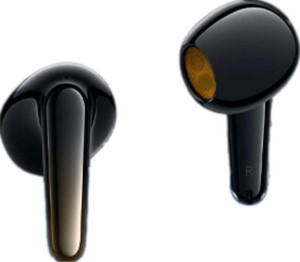
iQOO TWS Air 3 Pro
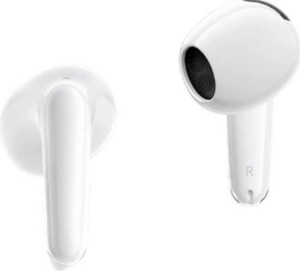
Vivo TWS Air 3 Pro

iQOO TWS Air 3 Pro Vivo TWS Air 3 Pro

Overview

Welcome to our in-depth specification comparison of the iQOO TWS Air 3 Pro and the Vivo TWS Air 3 Pro. These two wireless earbuds share a remarkable amount of DNA — from their IP54-rated builds and 12 mm drivers to their ANC capabilities and Bluetooth 6 connectivity. Yet when it comes to charging case endurance and charge time, the two take meaningfully different paths. Read on to see exactly how they stack up across every specification.

Common Features

  • Both products use an earbud fit design.
  • Both products carry an IP54 ingress protection rating.
  • Both products weigh 7.6 g.
  • Neither product has any wires or cables.
  • Neither product is a neckband earbud.
  • Neither product includes wingtips.
  • Neither product features RGB lighting.
  • Both products have stereo speakers.
  • Both products support active noise cancellation (ANC).
  • Neither product offers passive noise reduction.
  • Both products use a 12 mm driver unit.
  • Both products share a frequency range of 20 Hz to 20000 Hz.
  • Neither product supports spatial audio.
  • Neither product supports Dolby Atmos.
  • Neither product supports Dirac Virtuo.
  • Both products offer 9.5 hours of battery life.
  • Neither product supports wireless charging.
  • Neither product has a solar power battery.
  • Both products include a battery level indicator.
  • Both products have a rechargeable battery.
  • Neither product supports fast pairing.
  • Both products feature a USB Type-C connection.
  • Both products use Bluetooth version 6.
  • Neither product supports LDAC.
  • Neither product supports LDHC.
  • Neither product supports Bluetooth LE Audio.
  • Neither product supports aptX Adaptive.
  • Neither product supports aptX Low Latency.
  • Both products include an ambient sound mode.
  • Both products support fast charging.
  • Neither product can read notifications.
  • Both products include a mute function.
  • Both products can be used as a headset.
  • Both products have a control panel placed on the device.
  • Both products feature voice prompts.
  • Both products include a travel bag.
  • Both products are equipped with 6 microphones.
  • Both products have a noise-canceling microphone.

Main Differences

  • The charging case battery life is 45.5 hours on the iQOO TWS Air 3 Pro and 37.5 hours on the Vivo TWS Air 3 Pro.
  • The charge time is 2 hours on the iQOO TWS Air 3 Pro and 1.5 hours on the Vivo TWS Air 3 Pro.
Specs Comparison
iQOO TWS Air 3 Pro

iQOO TWS Air 3 Pro

Vivo TWS Air 3 Pro

Vivo TWS Air 3 Pro

Design:
Fit Earbud Earbud
Ingress Protection (IP) rating IP54 IP54
weight 7.6 g 7.6 g
has no wires or cables
are neckband earbuds
wingtips included
has RGB lighting
has stereo speakers
has UV light
Has a display

In terms of design, the iQOO TWS Air 3 Pro and the Vivo TWS Air 3 Pro are identical across every measured spec in this group. Both use a standard earbud fit, are fully wireless, weigh exactly 7.6 g per earbud, and carry an IP54 rating for dust and water resistance — meaning they can handle splashes and light sweat but are not submersible.

The shared IP54 rating makes both suitable for workouts and commuting in light rain, though users seeking full waterproofing (IP67 or above) will need to look elsewhere. The 7.6 g weight is competitive for the segment, light enough for extended wear without significant ear fatigue. Neither model includes wingtips, RGB lighting, a display, or UV sterilization — keeping the design focused and functional rather than feature-laden.

Given that every design specification is a perfect match, this category is a complete tie. There is no design-based reason to choose one over the other; buyers should focus their decision on other spec groups such as audio performance, connectivity, or battery life.

Sound quality:
has active noise cancellation (ANC)
has passive noise reduction
driver unit size 12 mm 12 mm
lowest frequency 20 Hz 20 Hz
highest frequency 20000 Hz 20000 Hz
supports spatial audio
has Dolby Atmos
has Dirac Virtuo
has a neodymium magnet

Both the iQOO TWS Air 3 Pro and the Vivo TWS Air 3 Pro share an identical sound quality profile. Each earbud is equipped with a 12 mm dynamic driver and covers the standard human hearing range of 20 Hz to 20,000 Hz — a frequency response that, on paper, ensures no audible content is left out, from deep bass to the upper limits of treble.

The inclusion of Active Noise Cancellation (ANC) on both models is the standout feature of this group. ANC is particularly valuable in noisy environments like commutes or open offices, actively countering ambient sound rather than relying solely on physical seal — and notably, neither model lists passive noise reduction as a separate feature, suggesting the earbud fit alone is not highlighted as a secondary noise-blocking layer. The absence of spatial audio, Dolby Atmos, or Dirac Virtuo on both units means the listening experience is tuned for conventional stereo output without any virtualized surround processing.

As with the Design group, this category ends in a complete tie. Every sound quality specification is mirrored exactly between the two products, so audio performance alone provides no basis for preferring one over the other.

Power:
Battery life 9.5 hours 9.5 hours
Battery life of charging case 45.5 hours 37.5 hours
charge time 2 hours 1.5 hours
has wireless charging
Has a solar power battery
has a battery level indicator
has a rechargeable battery

Power is where this comparison finally reveals a meaningful split. Both earbuds deliver identical 9.5 hours of playback per charge, which is a solid figure for ANC-equipped earbuds and comfortably covers a full workday of listening. However, the two models diverge when the case enters the picture: the iQOO TWS Air 3 Pro case extends total battery life to 45.5 hours, while the Vivo TWS Air 3 Pro case caps out at 37.5 hours — an 8-hour gap that translates to roughly one additional full earbud charge cycle before the case itself needs refilling.

The trade-off comes in charging speed. The Vivo model recharges in just 1.5 hours versus 2 hours for the iQOO — a 30-minute advantage that matters if you frequently top up on a tight schedule. Neither model supports wireless charging, so both require a cable regardless. The presence of a battery level indicator on both is a practical convenience, removing any guesswork about remaining charge.

On balance, the iQOO TWS Air 3 Pro holds a clear edge for users who prioritize longevity between case charges — ideal for travel or extended periods away from a power outlet. The Vivo TWS Air 3 Pro counters with faster recharging, making it the better fit for users who charge frequently and value minimizing downtime. Which advantage matters more depends entirely on usage pattern.

Connectivity:
has fast pairing
Has USB Type-C
Bluetooth version 6 6
has LDAC
has LDHC
has Bluetooth LE Audio
has aptX Adaptive
has aptX Low Latency
has aptX HD
has aptX
has aptX Lossless
has aptX Voice
has Auracast
maximum Bluetooth range 10 m 10 m
supports Bluetooth pairing using NFC
Can be used wirelessly
has AAC

Connectivity is a straightforward story here: the iQOO TWS Air 3 Pro and the Vivo TWS Air 3 Pro are spec-for-spec identical. Both run on Bluetooth 6, the latest generation of the standard, which brings improvements in connection stability and coexistence with other wireless devices — a meaningful real-world benefit in crowded RF environments like offices or public transit. Both are capped at a 10 m wireless range, which is typical for earbuds and sufficient for most everyday use cases.

On the codec front, both models support AAC but omit higher-fidelity options like LDAC, aptX, or LHDC. AAC is well-suited for Apple device users and delivers reasonable audio quality, but listeners on Android who prioritize lossless or high-resolution wireless audio will find the codec selection limiting on either model. The absence of Bluetooth LE Audio and Auracast also means neither earbud supports next-generation multi-stream or broadcast audio features that are beginning to appear in more premium offerings.

With no differences anywhere in this spec group, connectivity is a complete tie. The shared Bluetooth 6 foundation is a genuine strength both products share equally, but the codec ceiling is the same constraint for both — so this group offers no grounds to favor one model over the other.

Features:
release date August 2025 July 2025
has ambient sound mode
Supports fast charging
can read notifications
has a mute function
can be used as a headset
control panel placed on a device
Has voice prompts
travel bag is included
Has an in-line control panel
Has a temperature sensor
Has a built-in camera remote control function

Feature-for-feature, the iQOO TWS Air 3 Pro and the Vivo TWS Air 3 Pro are once again perfectly matched. The most practically valuable shared capabilities are ambient sound mode and fast charging — the former allowing users to stay aware of their surroundings without removing the earbuds, and the latter ensuring that short charging windows can still yield meaningful playback time.

Both models function as a headset with on-device controls, a mute function, and voice prompts, making them viable for calls and voice assistant use without reaching for a phone. The inclusion of a travel bag on both is a minor but welcome practical addition. Notably, neither model can read notifications aloud or act as a camera remote — features that remain absent across the board and may matter to users seeking deeper smartphone integration.

With every specification mirrored exactly, this group is a complete tie. The feature set is well-rounded for the segment, but since neither product offers anything the other does not, features provide no differentiating factor in this comparison.

Microphone:
number of microphones 6 6
has a noise-canceling microphone

Microphone hardware is another area where the two models are indistinguishable. Both the iQOO TWS Air 3 Pro and the Vivo TWS Air 3 Pro deploy 6 microphones across the pair — a count that sits at the higher end for consumer earbuds and enables more sophisticated beamforming and wind noise rejection algorithms compared to simpler 2- or 4-mic setups.

Paired with noise-canceling microphone processing on both models, the multi-mic array is geared toward clean call quality in challenging environments. More microphones allow the device to better isolate the speaker's voice from background noise, which is particularly relevant for users who take frequent calls in busy or outdoor settings. This is a meaningful capability, not a paper spec.

Since every microphone specification is identical, this group is a complete tie. Both products bring the same call-quality hardware to the table, and neither holds any advantage in this category.

Comparison Summary & Verdict

After a thorough side-by-side review, it is clear that the iQOO TWS Air 3 Pro and the Vivo TWS Air 3 Pro are nearly identical in almost every measurable way — sharing the same earbud design, IP54 protection, 9.5-hour battery life, 12 mm drivers, active noise cancellation, and a full six-microphone array. The only tangible fork in the road comes down to two practical metrics: the iQOO TWS Air 3 Pro delivers a larger 45.5-hour charging case, making it the stronger companion for extended travel or heavy daily use without access to a power source. The Vivo TWS Air 3 Pro, on the other hand, replenishes its case in just 1.5 hours — 30 minutes faster — which suits users who charge frequently and value a quicker turnaround. Your choice ultimately hinges on whether you prioritize longer total backup power or faster top-up convenience.

iQOO TWS Air 3 Pro
Buy iQOO TWS Air 3 Pro if...

Buy the iQOO TWS Air 3 Pro if you need maximum total battery backup — its charging case extends playback to an impressive 45.5 hours, making it ideal for frequent travelers or heavy daily listeners.

Vivo TWS Air 3 Pro
Buy Vivo TWS Air 3 Pro if...

Buy the Vivo TWS Air 3 Pro if a faster charging turnaround matters most to you — its case fully charges in just 1.5 hours, getting you back to listening 30 minutes sooner than the iQOO alternative.