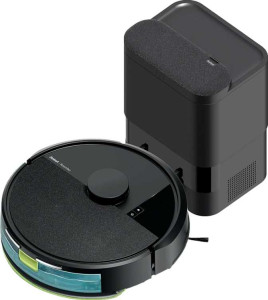
iRobot Roomba 104
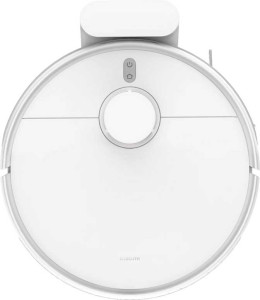
Xiaomi Robot Vacuum S40C

iRobot Roomba 104 Xiaomi Robot Vacuum S40C

Common Features

  • Both products have a HEPA filter.
  • Both products have an allergy filter.
  • Both products are compatible with Google Assistant.
  • Both products work with Alexa.
  • Both products support no-go zones.
  • Both products support a remote smartphone.
  • Both products have an obstacle sensor.
  • Both products do not have self-emptying features.
  • Both products do not get stuck.
  • Both products support virtual barriers.
  • Both products have route mapping.
  • Both products feature auto docking.
  • Both products can clean all floor types.
  • Both products have four cleaning modes.
  • Both products have mopping functionality.
  • Both products have a dirt sensor.
  • Both products have a charge time of 4 hours.

Main Differences

  • Audible noise is 60 dB on iRobot Roomba 104 and 62 dB on Xiaomi Robot Vacuum S40C.
  • Weight is 2926 g on iRobot Roomba 104 and 3440 g on Xiaomi Robot Vacuum S40C.
  • Width is 335 mm on iRobot Roomba 104 and 340 mm on Xiaomi Robot Vacuum S40C.
  • Height is 104 mm on iRobot Roomba 104 and 97 mm on Xiaomi Robot Vacuum S40C.
  • Thickness is 335 mm on iRobot Roomba 104 and 340 mm on Xiaomi Robot Vacuum S40C.
  • Volume is 11671.4 cm³ on iRobot Roomba 104 and 11213.2 cm³ on Xiaomi Robot Vacuum S40C.
  • Warranty period is 1 year on iRobot Roomba 104 and 2 years on Xiaomi Robot Vacuum S40C.
  • Voice prompts are available on iRobot Roomba 104 but not on Xiaomi Robot Vacuum S40C.
  • A remote control is not included with iRobot Roomba 104 but is included with Xiaomi Robot Vacuum S40C.
  • Wi-Fi version is Wi-Fi 4 (802.11n) on iRobot Roomba 104 and Wi-Fi 5 (802.11ac) on Xiaomi Robot Vacuum S40C.
  • Dustbin capacity is 0.4 l on iRobot Roomba 104 and 0.52 l on Xiaomi Robot Vacuum S40C.
  • iRobot Roomba 104 does not automatically adjust its height, whereas Xiaomi Robot Vacuum S40C does.
Specs Comparison
iRobot Roomba 104

iRobot Roomba 104

Xiaomi Robot Vacuum S40C

Xiaomi Robot Vacuum S40C

General info:
has HEPA filter
audible noise 60 dB 62 dB
has an allergy filter
compatible with Google Assistant
works with Alexa
release date April 2025 June 2025
weight 2926 g 3440 g
width 335 mm 340 mm
height 104 mm 97 mm
thickness 335 mm 340 mm
volume 11671.4 cm³ 11213.2 cm³
warranty period 1 years 2 years

The iRobot Roomba 104 and Xiaomi Robot Vacuum S40C both feature a HEPA filter and an allergy filter, making them suitable for homes with allergy concerns. The Roomba 104 operates at a noise level of 60 dB, while the Xiaomi S40C is slightly louder at 62 dB.

In terms of compatibility, both models work with Google Assistant and Alexa, allowing for voice control integration. The Roomba 104 weighs 2926 g, while the Xiaomi S40C is a bit heavier at 3440 g. The dimensions also differ slightly: the Roomba 104 is 335 mm wide, 104 mm high, and 335 mm thick, while the Xiaomi S40C is 340 mm wide, 97 mm high, and 340 mm thick.

Regarding warranty, the Roomba 104 comes with a 1-year warranty, while the Xiaomi S40C offers a longer 2-year warranty. The total volume of the Roomba 104 is 11671.4 cm³, while the Xiaomi S40C’s volume is 11213.2 cm³, making the Roomba 104 slightly larger overall.

Features:
supports no-go zones
supports a remote smartphone
has an obstacle sensor
is self-emptying
doesn't get stuck
supports virtual barriers
has route mapping
Has voice prompts
auto docking
has anti-fall sensor
can be scheduled
has a remote control
supports Wi-Fi
Wi-Fi version Wi-Fi 4 (802.11n) Wi-Fi 5 (802.11ac)
has mop cleaning
has mop raising
has mop drying

The iRobot Roomba 104 and Xiaomi Robot Vacuum S40C share many key features, including support for no-go zones, obstacle sensors, virtual barriers, route mapping, anti-fall sensors, scheduling, and Wi-Fi connectivity. Both models also feature auto docking and support for remote smartphone control. However, the Xiaomi S40C includes a remote control, whereas the Roomba 104 does not.

One difference between the two is that the Roomba 104 has voice prompts, while the Xiaomi S40C lacks this feature. Both vacuums are not self-emptying, but both are designed not to get stuck. Additionally, neither model has mop cleaning, mop raising, or mop drying capabilities.

In terms of Wi-Fi connectivity, the Roomba 104 supports Wi-Fi 4 (802.11n), while the Xiaomi S40C supports the faster Wi-Fi 5 (802.11ac). Both models can be scheduled to clean automatically, making them convenient for regular use.

Design:
dustbin capacity 0.4 l 0.52 l
has twin side brushes
has included washable filters
automatically adjusts its height

The iRobot Roomba 104 and Xiaomi Robot Vacuum S40C differ in a few design features. The Roomba 104 has a dustbin capacity of 0.4 l, while the Xiaomi S40C offers a slightly larger dustbin at 0.52 l. Neither model includes twin side brushes or washable filters.

One notable design difference is that the Xiaomi S40C automatically adjusts its height, whereas the Roomba 104 does not have this feature. Both vacuums do not have included washable filters and lack twin side brushes, making them similar in terms of certain cleaning mechanisms.

Cleaning power:
cleans all floor types
cleaning modes 4 4
mops
has a dirt sensor

Both the iRobot Roomba 104 and Xiaomi Robot Vacuum S40C are capable of cleaning all floor types, offering versatile performance across different surfaces. Both models feature 4 cleaning modes, providing flexibility for different cleaning needs.

Both vacuums are also equipped with mopping functions, though no additional details on mop performance are provided. Additionally, both models include a dirt sensor, helping to identify areas that need more intensive cleaning.

Power:
battery power 3000 mAh 2400 mAh
runtime 120 min 110 min
charge time 4 hours 4 hours
operating power consumption 33W 55W

The iRobot Roomba 104 and Xiaomi Robot Vacuum S40C differ in their power specifications. The Roomba 104 is equipped with a 3000 mAh battery, offering a runtime of 120 minutes, while the Xiaomi S40C has a smaller 2400 mAh battery, providing 110 minutes of runtime.

Both models have the same charge time of 4 hours. However, the Xiaomi S40C consumes more power during operation, with an operating power consumption of 55W, compared to the Roomba 104’s 33W.

Comparison Summary

This is a specification comparison between iRobot Roomba 104 and Xiaomi Robot Vacuum S40C. Both models feature HEPA and allergy filters, are compatible with Google Assistant and Alexa, and support no-go zones and virtual barriers. The iRobot Roomba 104 has a lower audible noise at 60 dB, while the Xiaomi Robot Vacuum S40C has a remote control and supports Wi-Fi 5. Additionally, the iRobot Roomba 104 has a smaller weight and a shorter warranty period than the Xiaomi model, which features a larger dustbin capacity and height adjustment functionality.