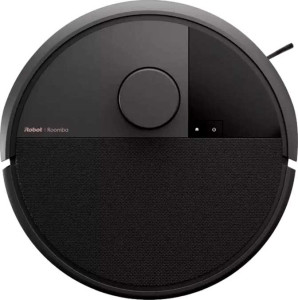
iRobot Roomba Max 705 Vac
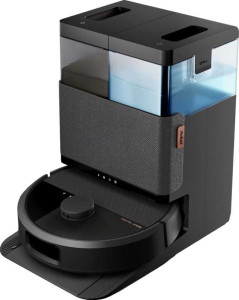
iRobot Roomba Plus 505 Combo

iRobot Roomba Max 705 Vac iRobot Roomba Plus 505 Combo

Overview

Welcome to our in-depth comparison of the iRobot Roomba Max 705 Vac and the iRobot Roomba Plus 505 Combo. Both robots share a strong foundation — HEPA filtration, smart home compatibility, route mapping, and mopping capabilities — yet they diverge in meaningful ways when it comes to suction power, autonomy features, and overall runtime. Read on to discover which model best fits your home and lifestyle.

Common Features

  • Both products include a HEPA filter.
  • Both products include an allergy filter.
  • Both products are compatible with Google Assistant.
  • Both products work with Alexa.
  • Both products come with a 1-year warranty.
  • Both products support no-go zones.
  • Both products support remote smartphone control.
  • Both products have an obstacle sensor.
  • Neither product gets stuck during cleaning.
  • Both products support virtual barriers.
  • Both products have route mapping.
  • Both products have voice prompts.
  • Both products feature auto docking.
  • Neither product has a display.
  • Neither product has twin side brushes.
  • Neither product includes washable filters.
  • Neither product automatically adjusts its height.
  • Both products clean all floor types.
  • Both products offer 4 cleaning modes.
  • Both products are capable of mopping.
  • Both products have a dirt sensor.
  • Neither product has UV light.
  • Both products have a 5000 mAh battery.
  • Both products have an auto-off feature.

Main Differences

  • Audible noise is 60 dB on iRobot Roomba Max 705 Vac and 65.7 dB on iRobot Roomba Plus 505 Combo.
  • Weight is 3400 g on iRobot Roomba Max 705 Vac and 4300 g on iRobot Roomba Plus 505 Combo.
  • Width is 345 mm on iRobot Roomba Max 705 Vac and 351 mm on iRobot Roomba Plus 505 Combo.
  • Height is 104 mm on iRobot Roomba Max 705 Vac and 106 mm on iRobot Roomba Plus 505 Combo.
  • Thickness is 350 mm on iRobot Roomba Max 705 Vac and 357 mm on iRobot Roomba Plus 505 Combo.
  • Volume is 12558 cm³ on iRobot Roomba Max 705 Vac and 13282.542 cm³ on iRobot Roomba Plus 505 Combo.
  • Estimated empty time is 75 days on iRobot Roomba Max 705 Vac and 150 days on iRobot Roomba Plus 505 Combo.
  • Docking station size is 10624.44 cm³ on iRobot Roomba Max 705 Vac and 72756 cm³ on iRobot Roomba Plus 505 Combo.
  • Self-emptying capability is present on iRobot Roomba Max 705 Vac but not available on iRobot Roomba Plus 505 Combo.
  • Dustbin capacity is 0.38 l on iRobot Roomba Max 705 Vac and 0.3 l on iRobot Roomba Plus 505 Combo.
  • Full indication is present on iRobot Roomba Max 705 Vac but not available on iRobot Roomba Plus 505 Combo.
  • Suction power is 13000 Pa on iRobot Roomba Max 705 Vac and 7000 Pa on iRobot Roomba Plus 505 Combo.
  • Runtime is 210 min on iRobot Roomba Max 705 Vac and 120 min on iRobot Roomba Plus 505 Combo.
  • Charge time is 4 hours on iRobot Roomba Max 705 Vac and 3 hours on iRobot Roomba Plus 505 Combo.
  • Operating power consumption is 33W on iRobot Roomba Max 705 Vac and 110W on iRobot Roomba Plus 505 Combo.
Specs Comparison
iRobot Roomba Max 705 Vac

iRobot Roomba Max 705 Vac

iRobot Roomba Plus 505 Combo

iRobot Roomba Plus 505 Combo

General info:
has HEPA filter
audible noise 60 dB 65.7 dB
has an allergy filter
compatible with Google Assistant
works with Alexa
release date May 2025 March 2025
weight 3400 g 4300 g
width 345 mm 351 mm
height 104 mm 106 mm
thickness 350 mm 357 mm
volume 12558 cm³ 13282.542 cm³
warranty period 1 years 1 years
estimated empty time 75 days 150 days
docking station size 10624.44 cm³ 72756 cm³

Both the iRobot Roomba Max 705 Vac and the iRobot Roomba Plus 505 Combo share a strong common foundation: HEPA and allergy filtration, full smart-home integration with both Google Assistant and Alexa, and an identical 1-year warranty. For allergy-sensitive households, neither has an edge on filtration capability based on the provided data.

Where these two diverge meaningfully is in footprint, weight, and — most critically — dust management autonomy. The Max 705 is noticeably lighter at 3,400 g versus 4,300 g for the Plus 505, and it operates more quietly at 60 dB compared to 65.7 dB — a roughly 5.7 dB difference that, in acoustic terms, is perceptible in a quiet room. However, the Plus 505 counters with a dramatically larger docking station at 72,756 cm³ versus just 10,624 cm³, which directly explains its 150-day estimated empty time — double the Max 705's 75 days. In practical terms, the Plus 505 can go roughly five months between manual bin empties, versus about two and a half months for the Max 705.

The overall edge depends on priorities: if low noise and a compact dock footprint matter most, the Roomba Max 705 Vac has the advantage. But if minimizing hands-on maintenance is the goal, the Roomba Plus 505 Combo wins decisively with its far superior dust-bin autonomy — the larger, bulkier dock is simply the trade-off for that convenience.

Features:
supports no-go zones
supports a remote smartphone
has an obstacle sensor
is self-emptying
doesn't get stuck
supports virtual barriers
has route mapping
Has voice prompts
auto docking
has anti-fall sensor
can be scheduled
has a remote control
supports Wi-Fi
Wi-Fi version Wi-Fi 4 (802.11n) Wi-Fi 4 (802.11n)
has mop cleaning
has mop raising
has mop drying

Across the features landscape, these two robots are remarkably close — both support no-go zones, virtual barriers, route mapping, obstacle and anti-fall sensors, scheduled cleaning, smartphone control, voice prompts, and auto docking. Notably, neither offers a physical remote control, and both run on Wi-Fi 4 (802.11n). On the mopping side, both share an identical and fairly advanced trio: mop cleaning, mop raising, and mop drying — meaning neither cuts corners on wet-floor capability.

The single but significant differentiator is self-emptying: the Max 705 Vac has it; the Plus 505 Combo does not. This one feature has outsized real-world impact — without self-emptying, the Plus 505 requires the user to manually empty the dustbin after every cleaning session or risk reduced suction as the bin fills. This also directly explained the large gap in estimated empty time seen in the General Info group; the Max 705's dock handles debris accumulation autonomously, while the Plus 505 relies entirely on the user.

The verdict for this group is clear: the Roomba Max 705 Vac holds a decisive advantage. Two otherwise nearly identical feature sets are separated by one capability — but self-emptying is arguably the most impactful convenience feature in modern robot vacuums, making the Max 705 the stronger choice for users who prioritize a truly hands-off cleaning experience.

Design:
dustbin capacity 0.38 l 0.3 l
Has a display
has twin side brushes
has included washable filters
automatically adjusts its height
Indicates when full

From a design standpoint, these two robots share the same limitations: no display, no twin side brushes, no washable filters included, and no automatic height adjustment. For users who prioritize any of those features, neither model delivers — making this a tie on the shared specs.

The two meaningful differentiators here are dustbin capacity and full-bin awareness. The Max 705 Vac edges ahead with a 0.38 l dustbin versus the Plus 505 Combo's 0.3 l — a roughly 27% larger reservoir. While neither bin is large in absolute terms, that difference matters most for the Plus 505, which lacks self-emptying: a smaller bin that also does not indicate when full means the user has less capacity and no alert system to prompt timely emptying. The Max 705, by contrast, signals when its bin is full — a practical safeguard that helps maintain cleaning performance and prevents the robot from pushing debris rather than collecting it.

The Roomba Max 705 Vac takes the edge in this group. Its combination of a larger dustbin and a full-bin indicator gives it a meaningful real-world advantage over the Plus 505, particularly given that the Plus 505 already requires manual emptying without any automated prompting.

Cleaning power:
suction power 13000 Pa 7000 Pa
cleans all floor types
cleaning modes 4 4
mops
has a dirt sensor
has UV light

On the cleaning power front, the two robots are evenly matched in several respects: both clean all floor types, offer 4 cleaning modes, include mopping, feature a dirt sensor, and skip UV light. The dirt sensor is worth noting — it allows both robots to detect heavily soiled areas and apply extra attention automatically, rather than treating every surface with uniform effort.

The decisive variable here is suction. The Max 705 Vac delivers 13,000 Pa of suction versus the Plus 505 Combo's 7,000 Pa — nearly double the pulling force. In practical terms, higher Pascal ratings translate to more effective pickup of fine dust, pet hair embedded in carpet, and debris lodged in floor crevices. The gap is substantial enough that on medium-pile carpets or in homes with heavy pet shedding, the difference in cleaning thoroughness would be noticeable in day-to-day use.

The Roomba Max 705 Vac wins this group decisively. With almost twice the suction power and an otherwise identical cleaning feature set, it is the stronger performer for anyone dealing with demanding floor conditions — while the Plus 505 remains competent for lighter, routine cleaning tasks.

Power:
battery power 5000 mAh 5000 mAh
runtime 210 min 120 min
charge time 4 hours 3 hours
operating power consumption 33W 110W
has auto-off

Both robots draw from an identical 5,000 mAh battery and both feature auto-off — yet their power profiles diverge sharply from there. The Max 705 Vac runs for 210 minutes per charge while the Plus 505 Combo manages only 120 minutes, a 75% longer runtime from the same battery capacity. The explanation lies in operating power consumption: the Max 705 draws just 33W versus the Plus 505's 110W — more than three times as much. The Plus 505 burns through its battery far faster because it is working at significantly higher wattage during operation.

The charge time difference adds another layer: the Max 705 takes 4 hours to recharge versus 3 hours for the Plus 505. The Plus 505 recharges faster, which partially offsets its shorter runtime, but in large homes where a single uninterrupted cleaning pass is preferable, the Max 705's 210-minute runtime is a tangible advantage — it can cover substantially more floor area before needing to dock.

The Roomba Max 705 Vac holds the clear edge in this group. Its dramatically lower power draw translates directly into nearly double the runtime per charge, making it far better suited for larger spaces or longer cleaning sessions. The Plus 505's quicker recharge is a minor consolation that does not close the gap in practical usability.

Comparison Summary & Verdict

After a thorough review of the specifications, both robots prove to be capable smart home cleaners with shared strengths in filtration, mopping, and smart assistant integration. However, their differences are significant enough to guide distinct purchasing decisions. The iRobot Roomba Max 705 Vac stands out with its superior 13000 Pa suction power, much longer 210-minute runtime, self-emptying capability, and considerably lower operating power consumption of just 33W — making it the stronger choice for users who want maximum cleaning performance and true hands-off automation. The iRobot Roomba Plus 505 Combo, on the other hand, offers a faster 3-hour charge time and a longer estimated empty cycle of 150 days, and its compact docking station may suit tighter spaces. Ultimately, power users and allergy-conscious households will gravitate toward the Max 705 Vac, while budget-aware buyers seeking a capable all-rounder may find the Plus 505 Combo a practical alternative.

iRobot Roomba Max 705 Vac
Buy iRobot Roomba Max 705 Vac if...

Buy the iRobot Roomba Max 705 Vac if you want top-tier suction power of 13000 Pa, a significantly longer runtime of 210 minutes, and the convenience of self-emptying with a full-bin indicator — all at a much lower operating power draw.

iRobot Roomba Plus 505 Combo
Buy iRobot Roomba Plus 505 Combo if...

Buy the iRobot Roomba Plus 505 Combo if you prefer a faster 3-hour recharge time and a longer estimated empty interval of 150 days, and are comfortable with a more hands-on emptying routine.