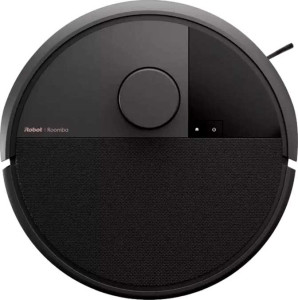
iRobot Roomba Max 705 Vac
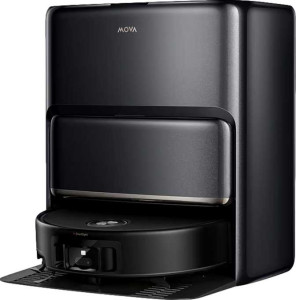
Mova Z60 Ultra Roller Complete

iRobot Roomba Max 705 Vac Mova Z60 Ultra Roller Complete

Overview

When shopping for a high-end robot vacuum, the iRobot Roomba Max 705 Vac and the Mova Z60 Ultra Roller Complete both make a compelling case — sharing a strong foundation of smart mapping, self-emptying capability, and multi-floor cleaning. Yet beneath those similarities lie meaningful distinctions in suction power, noise levels, and docking station design that could make one a far better fit for your home than the other. Read on to see how they stack up across every key specification.

Common Features

  • Both products include a HEPA filter.
  • Both products include an allergy filter.
  • Both products are compatible with Google Assistant.
  • Both products work with Alexa.
  • Both products have a thickness of 350 mm.
  • Both products come with a 1-year warranty.
  • Both products have mapping capability.
  • Both products support no-go zones.
  • Both products support remote smartphone control.
  • Both products have an obstacle sensor.
  • Both products support problem area cleaning.
  • Both products are self-emptying.
  • Both products have carpet detection.
  • Neither product gets stuck during operation.
  • Neither product has a display.
  • Neither product has twin side brushes.
  • Both products clean all floor types.
  • Both products offer 4 cleaning modes.
  • Both products can mop.
  • Both products have a dirt sensor.
  • UV light is not available on either product.
  • Both products have a charge time of 4 hours.
  • Both products feature auto-off functionality.

Main Differences

  • Audible noise is 60 dB on iRobot Roomba Max 705 Vac and 74 dB on Mova Z60 Ultra Roller Complete.
  • Weight is 3400 g on iRobot Roomba Max 705 Vac and 4600 g on Mova Z60 Ultra Roller Complete.
  • Width is 345 mm on iRobot Roomba Max 705 Vac and 350 mm on Mova Z60 Ultra Roller Complete.
  • Height is 104 mm on iRobot Roomba Max 705 Vac and 96 mm on Mova Z60 Ultra Roller Complete.
  • Volume is 12558 cm³ on iRobot Roomba Max 705 Vac and 11760 cm³ on Mova Z60 Ultra Roller Complete.
  • Estimated empty time is 75 days on iRobot Roomba Max 705 Vac and 100 days on Mova Z60 Ultra Roller Complete.
  • Docking station size is 10624.44 cm³ on iRobot Roomba Max 705 Vac and 98410.65 cm³ on Mova Z60 Ultra Roller Complete.
  • Dustbin capacity is 0.38 l on iRobot Roomba Max 705 Vac and 0.32 l on Mova Z60 Ultra Roller Complete.
  • Washable filters are included with Mova Z60 Ultra Roller Complete but not with iRobot Roomba Max 705 Vac.
  • Automatic height adjustment is available on Mova Z60 Ultra Roller Complete but not on iRobot Roomba Max 705 Vac.
  • A full dustbin indicator is present on iRobot Roomba Max 705 Vac but not on Mova Z60 Ultra Roller Complete.
  • Suction power is 13000 Pa on iRobot Roomba Max 705 Vac and 28000 Pa on Mova Z60 Ultra Roller Complete.
  • Battery power is 5000 mAh on iRobot Roomba Max 705 Vac and 6400 mAh on Mova Z60 Ultra Roller Complete.
  • Runtime is 210 min on iRobot Roomba Max 705 Vac and 220 min on Mova Z60 Ultra Roller Complete.
Specs Comparison
iRobot Roomba Max 705 Vac

iRobot Roomba Max 705 Vac

Mova Z60 Ultra Roller Complete

Mova Z60 Ultra Roller Complete

General info:
has HEPA filter
audible noise 60 dB 74 dB
has an allergy filter
compatible with Google Assistant
works with Alexa
release date May 2025 September 2025
weight 3400 g 4600 g
width 345 mm 350 mm
height 104 mm 96 mm
thickness 350 mm 350 mm
volume 12558 cm³ 11760 cm³
warranty period 1 years 1 years
estimated empty time 75 days 100 days
docking station size 10624.44 cm³ 98410.65 cm³

Both the iRobot Roomba Max 705 Vac and the Mova Z60 Ultra Roller Complete share a strong baseline of features: HEPA and allergy filtration, full compatibility with both Google Assistant and Alexa, and a one-year warranty. Their footprints are nearly identical in width and thickness (350 mm), so neither has an advantage in terms of how much floor space the robot itself covers. Where these two products begin to diverge significantly is in their operational characteristics and ecosystem design.

The most striking difference in this group is acoustic output. The Roomba Max 705 Vac operates at 60 dB, while the Z60 Ultra runs at 74 dB — a gap of 14 decibels, which is not subtle. Because the decibel scale is logarithmic, the Z60 Ultra is perceived as roughly 2.5× louder in practice, a meaningful distinction for users who run their robot during calls, while sleeping, or in open-plan living spaces. The Roomba holds a clear acoustic edge here. On the other hand, the Z60 Ultra's docking station is 98,410 cm³ compared to the Roomba's 10,624 cm³ — nearly nine times larger — which corresponds to its significantly longer bin-empty interval of 100 days versus the Roomba's 75 days. The Z60's base is a much more involved home station, meaning less manual intervention over time but a considerably larger physical footprint in your home.

In summary, the Roomba Max 705 Vac has the clear edge in noise level and physical unobtrusiveness of its dock, making it better suited for noise-sensitive environments and smaller living spaces. The Z60 Ultra Roller Complete counters with a longer maintenance cycle and a more capable docking ecosystem, appealing to users who prioritize hands-off operation above all else. Neither product dominates outright — the right choice depends on whether you value quiet operation or extended autonomy more.

Features:
has mapping
supports no-go zones
supports a remote smartphone
has an obstacle sensor
has problem area cleaning
is self-emptying
has carpet detection
doesn't get stuck
supports virtual barriers
has route mapping
Has voice prompts
auto docking
has anti-fall sensor
can be scheduled
has a remote control
has water level adjustment
supports Wi-Fi
has mop cleaning
has mop raising
has mop drying

Across the entire Features specification group, the iRobot Roomba Max 705 Vac and the Mova Z60 Ultra Roller Complete are in complete lockstep — every single capability listed is present on both machines. This is actually a notable finding in itself: both robots deliver a genuinely comprehensive, modern feature set that includes mapping, no-go zones, obstacle sensing, anti-fall protection, auto-docking, and self-emptying, alongside a full wet-cleaning suite with mop cleaning, mop raising, and mop drying.

The wet-floor management stack is worth highlighting specifically. Having all three — mop cleaning, mop raising (lifting the pad over carpets), and mop drying (returning to the base to dry the mop head) — represents a mature mopping implementation that prevents cross-contamination between hard floors and carpets and reduces mildew risk on the mop pad. The fact that both robots include this full trio, along with water level adjustment, means neither compromises on cleaning versatility. Scheduling, Wi-Fi, smartphone control, voice prompts, and virtual barriers round out a feature list that covers essentially everything a modern robot vacuum-mop combo is expected to offer.

The verdict for this group is a definitive tie. There is not a single feature differentiator between these two products as defined by the provided specifications. Users choosing between the Roomba Max 705 Vac and the Z60 Ultra Roller Complete should base their decision entirely on the distinctions surfaced in other spec groups — such as noise level, weight, and docking station size — because on raw feature parity, both robots stand on equal ground.
Design:
dustbin capacity 0.38 l 0.32 l
Has a display
has twin side brushes
has included washable filters
automatically adjusts its height
Indicates when full

Three meaningful design distinctions separate these two robots despite their otherwise similar builds. The Roomba Max 705 Vac carries a slightly larger on-board dustbin at 0.38 L versus the Mova Z60 Ultra's 0.32 L — a modest but real difference that gives the Roomba more capacity between dock returns on longer cleaning runs. Countering that, the Z60 Ultra includes washable filters out of the box, while the Roomba does not. Washable filters translate directly to lower long-term running costs and less dependence on replacement consumables, which adds up meaningfully over the product's lifespan.

The Z60 Ultra also features automatic height adjustment, allowing it to adapt its cleaning head to different surface types — transitioning from hard floors to rugs without manual intervention or getting caught on thicker pile. The Roomba Max 705 Vac lacks this capability. In mixed-flooring homes, automatic height adjustment reduces the likelihood of the robot stalling or underperforming on surface transitions. The Roomba compensates with a full-bin indicator, which the Z60 Ultra does not have — a useful alert for users who want active awareness of the robot's status rather than waiting for performance to degrade.

On balance, the Mova Z60 Ultra Roller Complete holds a slight edge in this group. Washable filters and automatic height adjustment are both features with tangible, recurring real-world value — cost savings and reliable multi-surface performance — that collectively outweigh the Roomba's marginally larger bin and full-bin indicator, particularly given that both robots are self-emptying and the on-board bin size is therefore a secondary concern in daily use.

Cleaning power:
suction power 13000 Pa 28000 Pa
cleans all floor types
cleaning modes 4 4
mops
has a dirt sensor
has UV light

Suction power is where this group's defining gap emerges. The Mova Z60 Ultra Roller Complete delivers 28,000 Pa of suction versus the iRobot Roomba Max 705 Vac's 13,000 Pa — more than double the pulling force. In practical terms, higher Pascal ratings translate to more effective pickup of embedded debris, pet hair lodged in carpet fibers, and fine particulate that lower-powered motors leave behind. For homes with thick rugs, heavy shedding pets, or high-traffic areas, this gap is consequential rather than merely theoretical.

Everything else in this group is evenly matched. Both robots clean all floor types, offer the same 4 cleaning modes, include mopping, feature a dirt sensor for detecting concentrated debris and intensifying cleaning in those areas, and neither carries UV light sanitization. The structural parity across these secondary specs means suction power stands as the sole — but substantial — differentiator.

The Mova Z60 Ultra takes a clear and unambiguous edge in this group. With suction output that exceeds the Roomba's by 15,000 Pa, it is the stronger performer on raw cleaning power by the data provided. Users prioritizing deep-clean capability, particularly on carpeted surfaces or in pet-heavy households, will find the Z60 Ultra's motor specification meaningfully more capable.

Power:
battery power 5000 mAh 6400 mAh
runtime 210 min 220 min
charge time 4 hours 4 hours
has auto-off

Battery capacity tells one story here; runtime tells another. The Mova Z60 Ultra Roller Complete packs a notably larger 6,400 mAh battery compared to the Roomba Max 705 Vac's 5,000 mAh — a 28% increase in stored energy. Yet the real-world runtime difference is surprisingly narrow: 220 minutes for the Z60 Ultra versus 210 minutes for the Roomba. This suggests the Z60 Ultra's larger battery is working harder to sustain its more powerful motor — consistent with its significantly higher suction output noted in the cleaning group — while still eking out a modest lead in endurance.

Where the two products are genuinely identical is in charge time and power management. Both require 4 hours to fully recharge and both feature auto-off, which cuts power automatically when the battery reaches capacity to prevent overcharging and preserve long-term cell health. These shared traits mean neither robot has a logistics advantage in terms of turnaround time between cleaning sessions.

The edge in this group goes narrowly to the Mova Z60 Ultra — it runs 10 minutes longer and carries a larger battery reserve, which provides more headroom for high-suction cleaning modes that draw power faster. However, for most home sizes, 210 minutes of runtime on the Roomba is already more than sufficient to complete a full clean cycle, which makes this a marginal rather than decisive advantage in typical use.

Comparison Summary & Verdict

Both vacuums deliver a well-rounded smart cleaning experience, but they cater to different priorities. The iRobot Roomba Max 705 Vac stands out for its quieter 60 dB operation, lighter 3400 g weight, larger 0.38 l dustbin, and a much more compact docking station — making it ideal for smaller homes or noise-sensitive environments where a discreet, low-profile setup matters. The Mova Z60 Ultra Roller Complete, on the other hand, counters with a commanding 28000 Pa suction power, a larger 6400 mAh battery, included washable filters, and automatic height adjustment — features that suit larger homes with mixed floor types and heavier dirt loads. If raw cleaning performance and longer autonomy top your checklist, the Mova is the stronger pick; if quiet running and a tidier dock setup are your priority, the iRobot earns its place.

iRobot Roomba Max 705 Vac
Buy iRobot Roomba Max 705 Vac if...

Buy the iRobot Roomba Max 705 Vac if you value quieter operation, a lighter build, and a significantly more compact docking station that fits neatly into smaller living spaces.

Mova Z60 Ultra Roller Complete
Buy Mova Z60 Ultra Roller Complete if...

Buy the Mova Z60 Ultra Roller Complete if you need superior suction power, a longer battery life, automatic height adjustment, and the convenience of included washable filters for deeper, more versatile cleaning.