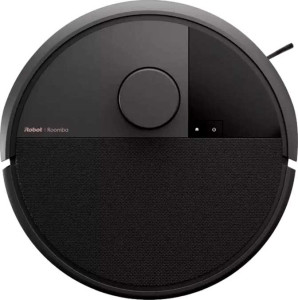
iRobot Roomba Max 705 Vac
Narwal Flow

iRobot Roomba Max 705 Vac Narwal Flow

Common Features

  • Both products have a HEPA filter.
  • Both products have an allergy filter.
  • Both products are compatible with Google Assistant.
  • Both products work with Alexa.
  • Both products come with a 1-year warranty.
  • Both products have mapping capabilities.
  • Both products support no-go zones.
  • Both products support a remote smartphone.
  • Both products have an obstacle sensor.
  • Both products have problem area cleaning.
  • Both products are self-emptying.
  • Both products have carpet detection.
  • Both products do not get stuck.
  • Neither product has a display.
  • Both products indicate when full.
  • Both products clean all floor types.
  • Both products mop.
  • Both products have a dirt sensor.
  • Neither product has UV light.
  • Both products have auto-off.

Main Differences

  • Audible noise is 60 dB on iRobot Roomba Max 705 Vac and 57 dB on Narwal Flow.
  • Weight is 3400 g on iRobot Roomba Max 705 Vac and 4600 g on Narwal Flow.
  • Width is 345 mm on iRobot Roomba Max 705 Vac and 351.2 mm on Narwal Flow.
  • Height is 104 mm on iRobot Roomba Max 705 Vac and 95 mm on Narwal Flow.
  • Thickness is 350 mm on iRobot Roomba Max 705 Vac and 363.5 mm on Narwal Flow.
  • Volume is 12558 cm³ on iRobot Roomba Max 705 Vac and 12127.814 cm³ on Narwal Flow.
  • Estimated empty time is 75 days on iRobot Roomba Max 705 Vac and 120 days on Narwal Flow.
  • Docking station size is 10624.44 cm³ on iRobot Roomba Max 705 Vac and 84893.2942 cm³ on Narwal Flow.
  • Dustbin capacity is 0.38 l on iRobot Roomba Max 705 Vac and 0.8 l on Narwal Flow.
  • Twin side brushes are not included on iRobot Roomba Max 705 Vac but are included on Narwal Flow.
  • Washable filters are not included on iRobot Roomba Max 705 Vac but are included on Narwal Flow.
  • Automatic height adjustment is not available on iRobot Roomba Max 705 Vac but is available on Narwal Flow.
  • Suction power is 13000 Pa on iRobot Roomba Max 705 Vac and 22000 Pa on Narwal Flow.
  • Cleaning modes are 4 on iRobot Roomba Max 705 Vac and 5 on Narwal Flow.
  • Battery power is 5000 mAh on iRobot Roomba Max 705 Vac and 6400 mAh on Narwal Flow.
  • Runtime is 210 min on iRobot Roomba Max 705 Vac and 190 min on Narwal Flow.
  • Charge time is 4 hours on iRobot Roomba Max 705 Vac and 3.5 hours on Narwal Flow.
Specs Comparison
iRobot Roomba Max 705 Vac

iRobot Roomba Max 705 Vac

Narwal Flow

Narwal Flow

General info:
has HEPA filter
audible noise 60 dB 57 dB
has an allergy filter
compatible with Google Assistant
works with Alexa
release date May 2025 August 2025
weight 3400 g 4600 g
width 345 mm 351.2 mm
height 104 mm 95 mm
thickness 350 mm 363.5 mm
volume 12558 cm³ 12127.814 cm³
warranty period 1 years 1 years
estimated empty time 75 days 120 days
docking station size 10624.44 cm³ 84893.2942 cm³

The iRobot Roomba Max 705 Vac and the Narwal Flow both come with a HEPA filter and an allergy filter, ensuring they are suitable for households with allergy concerns. Both are also compatible with Google Assistant and Alexa, offering smart home integration. However, they differ slightly in noise levels, with the Roomba operating at 60 dB, while the Narwal is quieter at 57 dB.

When it comes to size, the Roomba Max 705 Vac is lighter, weighing 3400 g compared to the Narwal Flow's 4600 g. The Roomba is also more compact, measuring 345 mm in width, 104 mm in height, and 350 mm in thickness. The Narwal Flow is slightly wider at 351.2 mm, lower in height at 95 mm, and thicker at 363.5 mm. In terms of volume, the Roomba is also a bit larger at 12558 cm³, compared to the Narwal's 12127.814 cm³.

Both robots come with a 1-year warranty period. The Roomba Max 705 Vac offers an estimated empty time of 75 days, while the Narwal Flow can go for up to 120 days. Lastly, the Roomba’s docking station is smaller at 10624.44 cm³, while the Narwal’s docking station is much larger at 84893.2942 cm³.

Features:
has mapping
supports no-go zones
supports a remote smartphone
has an obstacle sensor
has problem area cleaning
is self-emptying
has carpet detection
doesn't get stuck
supports virtual barriers
has route mapping
Has voice prompts
auto docking
has anti-fall sensor
can be scheduled
has a remote control
has water level adjustment
supports Wi-Fi
Wi-Fi version Wi-Fi 4 (802.11n) Wi-Fi 4 (802.11n)
has mop cleaning
has mop raising
has mop drying

The iRobot Roomba Max 705 Vac and the Narwal Flow share a very similar set of features. Both models include mapping, no-go zone support, obstacle sensors, problem area cleaning, self-emptying, carpet detection, and the ability to avoid getting stuck. They also both support virtual barriers, route mapping, voice prompts, auto docking, anti-fall sensors, scheduling, and water level adjustment. Additionally, neither product includes a remote control, but both support Wi-Fi connectivity and use Wi-Fi 4 (802.11n) for communication.

In terms of mopping features, both the Roomba Max 705 Vac and the Narwal Flow come equipped with mop cleaning, mop raising, and mop drying functionalities. These features are identical across both models, offering a similar level of cleaning performance for wet surfaces.

Overall, the features provided by both products match closely, with no significant differences between them in this category. Both the iRobot Roomba Max 705 Vac and the Narwal Flow offer a comprehensive set of smart and cleaning capabilities, ensuring a similar experience for users.

Design:
dustbin capacity 0.38 l 0.8 l
Has a display
has twin side brushes
has included washable filters
automatically adjusts its height
Indicates when full

The iRobot Roomba Max 705 Vac and the Narwal Flow differ in a few key design features. The Roomba Max 705 Vac has a dustbin capacity of 0.38 l, while the Narwal Flow offers a larger dustbin capacity of 0.8 l, allowing for longer cleaning sessions between emptying. Both models indicate when their dustbins are full, but neither has a display. Additionally, the Roomba does not have twin side brushes, whereas the Narwal Flow does, which could potentially enhance edge cleaning.

Another design distinction is that the Narwal Flow has included washable filters and is capable of automatically adjusting its height, features not available on the Roomba Max 705 Vac. Both products are capable of indicating when full, but the Roomba lacks height adjustment and washable filters, which may influence maintenance and adaptability to different floor types.

Overall, while both robots share some common design traits, such as not having a display and offering dustbin full indicators, the Narwal Flow stands out with its larger dustbin, twin side brushes, washable filters, and automatic height adjustment, making it more versatile in terms of design and functionality.

Cleaning power:
suction power 13000 Pa 22000 Pa
cleans all floor types
cleaning modes 4 5
mops
has a dirt sensor
has UV light

The iRobot Roomba Max 705 Vac and the Narwal Flow both excel at cleaning various floor types, but they differ in a few key areas of cleaning power. The Roomba Max 705 Vac offers a suction power of 13000 Pa, while the Narwal Flow has a higher suction power of 22000 Pa, which may allow the Narwal to pick up more dirt and debris with greater efficiency.

Both robots offer mopping capabilities and include a dirt sensor, which helps detect areas that require more cleaning. However, the Narwal Flow has one additional cleaning mode, with a total of 5 modes compared to the Roomba Max 705 Vac's 4 modes. Neither model features UV light for sanitizing, so both rely on their suction power and mopping features for cleaning.

In summary, while both products are equipped with similar features, the Narwal Flow stands out with its higher suction power and an additional cleaning mode, making it potentially more powerful and versatile in handling various cleaning tasks.

Power:
battery power 5000 mAh 6400 mAh
runtime 210 min 190 min
charge time 4 hours 3.5 hours
has auto-off

The iRobot Roomba Max 705 Vac and the Narwal Flow differ in battery power and runtime. The Roomba Max 705 Vac has a battery power of 5000 mAh and offers a runtime of 210 minutes, while the Narwal Flow features a larger 6400 mAh battery, providing a slightly shorter runtime of 190 minutes. Both models include an auto-off feature, helping to conserve energy when not in use.

In terms of charging, the Roomba Max 705 Vac takes 4 hours to fully charge, while the Narwal Flow charges slightly faster in 3.5 hours. Despite the difference in runtime, the Narwal Flow charges more quickly, potentially allowing for shorter downtimes between cleaning sessions.

To summarize, the Roomba Max 705 Vac has a longer runtime, but the Narwal Flow benefits from a larger battery and a faster charge time. Both models include the auto-off function to improve energy efficiency.

Comparison Summary

This is a specification comparison between iRobot Roomba Max 705 Vac and Narwal Flow. Both models share features such as compatibility with Google Assistant and Alexa, HEPA and allergy filters, and support for no-go zones and mapping. Key differences include the audible noise levels, with 60 dB on the iRobot and 57 dB on the Narwal, the suction power of 13,000 Pa on the iRobot and 22,000 Pa on the Narwal, and the battery power, which is 5000 mAh on the iRobot and 6400 mAh on the Narwal. Additionally, the Narwal has a larger docking station size and includes twin side brushes, while the iRobot does not.