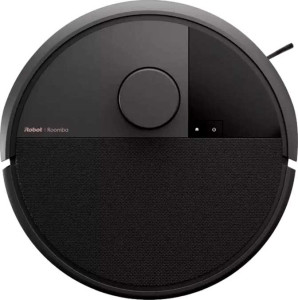
iRobot Roomba Max 705 Vac
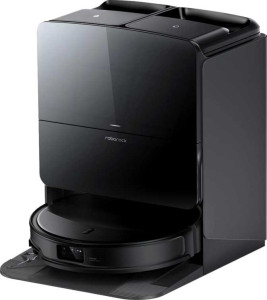
Roborock Saros 10R

iRobot Roomba Max 705 Vac Roborock Saros 10R

Overview

Choosing the right robot vacuum means weighing up a long list of competing priorities, and that challenge is front and centre when comparing these two capable machines. In this detailed look at the iRobot Roomba Max 705 Vac versus the Roborock Saros 10R, we explore the key battlegrounds — including suction power, noise levels, and battery performance — alongside shared strengths and meaningful design differences, to help you determine which robot vacuum is the better match for your home.

Common Features

  • Both products have a HEPA filter.
  • Both products have an allergy filter.
  • Both products are compatible with Google Assistant.
  • Both products work with Alexa.
  • Both products have a thickness of 350 mm.
  • Both products come with a 1-year warranty.
  • Both products have mapping capability.
  • Both products support no-go zones.
  • Both products support remote smartphone control.
  • Both products have an obstacle sensor.
  • Both products support problem area cleaning.
  • Both products are self-emptying.
  • Both products have carpet detection.
  • Neither product gets stuck during cleaning.
  • Twin side brushes are not present on either product.
  • Both products indicate when the dustbin is full.
  • Both products clean all floor types.
  • Both products are capable of mopping.
  • Both products have a dirt sensor.
  • UV light is not available on either product.

Main Differences

  • Audible noise is 60 dB on iRobot Roomba Max 705 Vac and 68 dB on Roborock Saros 10R.
  • Weight is 3400 g on iRobot Roomba Max 705 Vac and 5000 g on Roborock Saros 10R.
  • Width is 345 mm on iRobot Roomba Max 705 Vac and 353 mm on Roborock Saros 10R.
  • Height is 104 mm on iRobot Roomba Max 705 Vac and 79.8 mm on Roborock Saros 10R.
  • Volume is 12558 cm³ on iRobot Roomba Max 705 Vac and 9859.29 cm³ on Roborock Saros 10R.
  • Estimated empty time is 75 days on iRobot Roomba Max 705 Vac and 49 days on Roborock Saros 10R.
  • Docking station size is 10624.44 cm³ on iRobot Roomba Max 705 Vac and 88315.8 cm³ on Roborock Saros 10R.
  • Dustbin capacity is 0.38 l on iRobot Roomba Max 705 Vac and 0.27 l on Roborock Saros 10R.
  • A display is present on Roborock Saros 10R but not available on iRobot Roomba Max 705 Vac.
  • Included washable filters are provided with Roborock Saros 10R but not with iRobot Roomba Max 705 Vac.
  • Automatic height adjustment is available on Roborock Saros 10R but not on iRobot Roomba Max 705 Vac.
  • Suction power is 13000 Pa on iRobot Roomba Max 705 Vac and 19000 Pa on Roborock Saros 10R.
  • Battery power is 5000 mAh on iRobot Roomba Max 705 Vac and 6400 mAh on Roborock Saros 10R.
  • Runtime is 210 min on iRobot Roomba Max 705 Vac and 220 min on Roborock Saros 10R.
  • Charge time is 4 hours on iRobot Roomba Max 705 Vac and 2.5 hours on Roborock Saros 10R.
  • Operating power consumption is 33W on iRobot Roomba Max 705 Vac and 60W on Roborock Saros 10R.
Specs Comparison
iRobot Roomba Max 705 Vac

iRobot Roomba Max 705 Vac

Roborock Saros 10R

Roborock Saros 10R

General info:
has HEPA filter
audible noise 60 dB 68 dB
has an allergy filter
compatible with Google Assistant
works with Alexa
release date May 2025 February 2025
weight 3400 g 5000 g
width 345 mm 353 mm
height 104 mm 79.8 mm
thickness 350 mm 350 mm
volume 12558 cm³ 9859.29 cm³
warranty period 1 years 1 years
estimated empty time 75 days 49 days
docking station size 10624.44 cm³ 88315.8 cm³

Both the iRobot Roomba Max 705 Vac and the Roborock Saros 10R share a strong foundation for allergy-sensitive households: each carries both a HEPA filter and an allergy filter, and both integrate seamlessly with Google Assistant and Alexa. Warranty coverage is identical at 1 year for each. These shared traits mean neither robot holds an edge on smart home compatibility or air filtration quality.

Where the two diverge significantly is in physical design and noise. The Roomba Max 705 Vac is notably lighter at 3,400 g versus the Saros 10R's 5,000 g — a 47% weight difference that matters when manually moving or carrying the robot. The Saros 10R is slimmer at 79.8 mm tall compared to 104 mm, giving it a real-world advantage for navigating under low-clearance furniture like sofas and beds. On noise, the Roomba runs quieter at 60 dB versus the Saros 10R's 68 dB — an 8 dB gap that is perceptually roughly twice as loud, making the Roomba a meaningfully better choice for noise-sensitive environments or use during sleep hours.

On autonomy and docking, the Roomba edges ahead with an estimated bin-empty interval of 75 days versus 49 days for the Saros 10R — a significant difference in how often you need to interact with the system. However, the Saros 10R's docking station is dramatically larger at 88,315 cm³ compared to the Roomba's 10,624 cm³, suggesting the Saros 10R dock likely houses more advanced auto-empty or multi-function hardware, though its shorter empty interval is a trade-off. Overall, the Roomba Max 705 Vac holds a clear general-use edge: it is lighter, quieter, and requires less bin maintenance — while the Saros 10R counters with a lower profile better suited to sliding under furniture.
Features:
has mapping
supports no-go zones
supports a remote smartphone
has an obstacle sensor
has problem area cleaning
is self-emptying
has carpet detection
doesn't get stuck
supports virtual barriers
has route mapping
Has voice prompts
auto docking
has anti-fall sensor
can be scheduled
has a remote control
has water level adjustment
supports Wi-Fi
Wi-Fi version Wi-Fi 4 (802.11n) Wi-Fi 4 (802.11n)
has mop cleaning
has mop raising
has mop drying

Across the full features spectrum, the iRobot Roomba Max 705 Vac and the Roborock Saros 10R are in complete lockstep. Every capability tested — from mapping and no-go zones to self-emptying, carpet detection, and anti-fall sensors — is present on both robots. Even connectivity is identical, with each running on Wi-Fi 4 (802.11n). Neither offers a physical remote control, but both support full smartphone remote operation, which is the modern standard for this class of device.

Notably, both robots cover the full wet-and-dry cleaning trifecta: mop cleaning, mop raising (critical for avoiding wet carpets mid-clean), and mop drying. These three together represent a premium feature set — mop raising in particular prevents the common problem of a robot dragging a wet pad across carpet, and mop drying reduces odor and bacterial buildup between cycles. The fact that both machines include all three reflects their positioning as high-end, hands-off cleaning systems.

On features alone, this is a dead heat. There is not a single differentiating capability between the two products in this group — every feature flag is identical. Buyers making a decision based purely on functionality will find no reason to prefer one over the other here, and should weigh performance, design, and maintenance differences from other specification groups instead.

Design:
dustbin capacity 0.38 l 0.27 l
Has a display
has twin side brushes
has included washable filters
automatically adjusts its height
Indicates when full

The dustbin capacity gap is small but real: the Roomba Max 705 Vac holds 0.38 liters versus the Saros 10R's 0.27 liters — a 41% larger onboard bin. In practice, since both robots are self-emptying, this difference mainly affects how long each can run in an auto-empty-unavailable scenario, or how frequently the bin fills mid-session in heavy-debris environments. For most daily use cases, neither bin size is a bottleneck, but the Roomba's larger capacity offers a modest buffer.

The Saros 10R pulls ahead on several design refinements. It includes washable filters — reducing long-term consumable costs since filters don't need replacing as frequently — and automatically adjusts its height to adapt to different floor surfaces, which can improve suction contact and cleaning consistency without user intervention. It also features an onboard display, providing at-a-glance status information without needing to open an app. The Roomba Max 705 Vac lacks all three of these features, which represent meaningful quality-of-life advantages rather than just spec-sheet checkboxes.

Both robots indicate when the dustbin is full, so neither leaves the user guessing. Overall though, the Roborock Saros 10R holds a clear design edge in this group: its washable filters, automatic height adjustment, and onboard display collectively make it a more self-sufficient and lower-maintenance machine day-to-day, outweighing the Roomba's slightly larger dustbin.

Cleaning power:
suction power 13000 Pa 19000 Pa
cleans all floor types
mops
has a dirt sensor
has UV light

Suction power is where this group's single defining difference lives. The Roborock Saros 10R delivers 19,000 Pa of suction versus 13,000 Pa on the iRobot Roomba Max 705 Vac — a 46% advantage that carries tangible real-world weight. Higher Pascal ratings translate directly to stronger pick-up of embedded debris, fine particles, and pet hair from carpet fibers, as well as better performance on transitions between hard floor and thick rugs where suction resistance increases sharply.

Everything else in this group is matched exactly. Both robots clean all floor types, both mop, and both carry a dirt sensor — which allows the robot to detect heavily soiled areas and intensify cleaning passes automatically, a genuinely useful feature that both machines share equally. Neither includes UV light sanitization, so no edge exists there.

The verdict for cleaning power is clear: the Roborock Saros 10R has a meaningful advantage. A nearly 6,000 Pa gap in suction is not marginal — it positions the Saros 10R as the stronger performer for homes with carpets, pets, or higher debris loads, while the Roomba Max 705 Vac's 13,000 Pa remains competitive for predominantly hard-floor environments with lighter cleaning demands.

Power:
battery power 5000 mAh 6400 mAh
runtime 210 min 220 min
charge time 4 hours 2.5 hours
operating power consumption 33W 60W

Runtime figures tell an initially surprising story. Despite carrying a larger 6,400 mAh battery versus the Roomba Max 705 Vac's 5,000 mAh, the Roborock Saros 10R achieves only marginally more runtime — 220 minutes versus 210 minutes. The reason becomes clear when looking at power consumption: the Saros 10R draws 60W during operation compared to the Roomba's 33W. Its larger battery is essentially compensating for significantly higher energy demands, likely driven by its more powerful suction motor. The practical takeaway is that both robots cover very similar cleaning sessions per charge — roughly 3.5 hours — making runtime a near-tie in real-world use.

Charge time is where a genuine gap emerges. The Saros 10R refills its larger battery in just 2.5 hours, while the Roomba Max 705 Vac requires 4 hours — a 60% longer wait. For users who run back-to-back cleaning cycles, or who clean large homes requiring mid-session docking and resumption, a faster recharge means less total downtime and quicker turnaround between jobs.

Taken together, this group has a nuanced outcome. The iRobot Roomba Max 705 Vac is the more energy-efficient machine by a wide margin, which may appeal to users conscious of electricity consumption over time. But the Roborock Saros 10R holds the practical edge here — its dramatically faster charge time and comparable runtime mean it spends less time tethered to its dock, making it the more responsive option for demanding or frequent cleaning schedules.

Comparison Summary & Verdict

Both the iRobot Roomba Max 705 Vac and the Roborock Saros 10R share a genuinely strong foundation: HEPA filtration, full mapping, self-emptying capability, mopping, obstacle sensing, and compatibility with both Google Assistant and Alexa. Where they diverge is equally telling. The Roomba Max 705 Vac wins on quiet operation at just 60 dB, a lighter 3400 g body, a larger 0.38-litre dustbin, and an impressive 75-day estimated empty time — all backed by a notably smaller docking station footprint, making it the smarter pick for users who want low-maintenance, unobtrusive daily cleaning. The Roborock Saros 10R hits back with substantially stronger suction at 19000 Pa, a faster 2.5-hour charge time, a slimmer 79.8 mm height profile ideal for tight spaces, plus practical extras like a built-in display, included washable filters, and automatic height adjustment — making it the natural choice for those who demand maximum cleaning performance and premium convenience features.

iRobot Roomba Max 705 Vac
Buy iRobot Roomba Max 705 Vac if...

Buy the iRobot Roomba Max 705 Vac if you prioritize quieter operation, a lighter build, and a larger dustbin with a longer 75-day estimated empty interval. It is also the better option if a compact docking station footprint matters in your living space.

Roborock Saros 10R
Buy Roborock Saros 10R if...

Buy the Roborock Saros 10R if you want stronger suction power, faster recharging, and a slimmer profile for navigating under furniture, along with added conveniences like a built-in display, included washable filters, and automatic height adjustment.