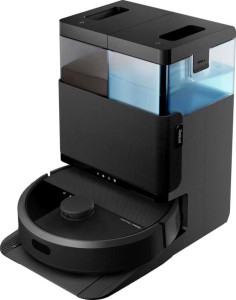
iRobot Roomba Plus 405 (G181)
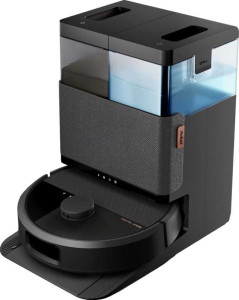
iRobot Roomba Plus 505 Combo

iRobot Roomba Plus 405 (G181) iRobot Roomba Plus 505 Combo

Overview

Welcome to our in-depth specification comparison between the iRobot Roomba Plus 405 (G181) and the iRobot Roomba Plus 505 Combo. Both robots share a strong common foundation — including HEPA filtration, mopping capability, and smart home integration — yet they diverge in meaningful ways across battery runtime, noise levels, and docking station design. Read on to discover which model best fits your home and cleaning routine.

Common Features

  • Both products include a HEPA filter.
  • Both products include an allergy filter.
  • Both products are compatible with Google Assistant.
  • Both products work with Alexa.
  • Both products share the same width of 351 mm.
  • Both products share the same height of 106 mm.
  • Both products share the same thickness of 357 mm.
  • No-go zone support is available on both products.
  • Remote smartphone control is supported on both products.
  • An obstacle sensor is present on both products.
  • Neither product is self-emptying.
  • Neither product gets stuck during operation.
  • Virtual barrier support is available on both products.
  • Route mapping is supported on both products.
  • Voice prompts are available on both products.
  • Neither product has a display.
  • Neither product has twin side brushes.
  • Neither product includes washable filters.
  • Neither product automatically adjusts its height.
  • Neither product indicates when its dustbin is full.
  • Both products clean all floor types.
  • Both products offer 4 cleaning modes.
  • Both products are capable of mopping.
  • Both products include a dirt sensor.
  • Neither product has UV light.
  • Both products have a battery capacity of 5000 mAh.
  • Auto-off functionality is present on both products.

Main Differences

  • Audible noise is 60 dB on the iRobot Roomba Plus 405 (G181) and 65.7 dB on the iRobot Roomba Plus 505 Combo.
  • Weight is 4100 g on the iRobot Roomba Plus 405 (G181) and 4300 g on the iRobot Roomba Plus 505 Combo.
  • Estimated empty time is 75 days on the iRobot Roomba Plus 405 (G181) and 150 days on the iRobot Roomba Plus 505 Combo.
  • Docking station size is 13282.542 cm³ on the iRobot Roomba Plus 405 (G181) and 72756 cm³ on the iRobot Roomba Plus 505 Combo.
  • Dustbin capacity is 0.4 l on the iRobot Roomba Plus 405 (G181) and 0.3 l on the iRobot Roomba Plus 505 Combo.
  • Runtime is 180 minutes on the iRobot Roomba Plus 405 (G181) and 120 minutes on the iRobot Roomba Plus 505 Combo.
  • Charge time is 4 hours on the iRobot Roomba Plus 405 (G181) and 3 hours on the iRobot Roomba Plus 505 Combo.
  • Operating power consumption is 33W on the iRobot Roomba Plus 405 (G181) and 110W on the iRobot Roomba Plus 505 Combo.
Specs Comparison
iRobot Roomba Plus 405 (G181)

iRobot Roomba Plus 405 (G181)

iRobot Roomba Plus 505 Combo

iRobot Roomba Plus 505 Combo

General info:
has HEPA filter
audible noise 60 dB 65.7 dB
has an allergy filter
compatible with Google Assistant
works with Alexa
release date April 2025 March 2025
weight 4100 g 4300 g
width 351 mm 351 mm
height 106 mm 106 mm
thickness 357 mm 357 mm
volume 13282.542 cm³ 13282.542 cm³
warranty period 1 years 1 years
estimated empty time 75 days 150 days
docking station size 13282.542 cm³ 72756 cm³

At first glance, the iRobot Roomba Plus 405 (G181) and the iRobot Roomba Plus 505 Combo share a striking amount of common ground: identical physical dimensions (351 × 357 × 106 mm), the same robot unit volume, matching HEPA and allergy filtration, a one-year warranty, and full compatibility with both Google Assistant and Alexa. For users concerned about air quality or smart-home integration, both products are effectively equivalent.

The real differences emerge in three areas. First, noise: the 405 operates at 60 dB versus the 505 Combo's 65.7 dB — a gap of nearly 6 dB, which is perceptually significant since decibels follow a logarithmic scale. In a quiet home environment this makes the 405 noticeably less intrusive during a cleaning cycle. Second, weight: the 405 is 4100 g compared to the 505 Combo's 4300 g, a modest 200 g difference that matters mainly when manually lifting or relocating the unit. Third — and most impactful — the 505 Combo offers an estimated bin-empty interval of 150 days versus the 405's 75 days, meaning half as many trips to empty the dustbin per year. This correlates directly with the 505 Combo's substantially larger docking station (72756 cm³ versus 13282.542 cm³), which houses a much bigger auto-empty reservoir.

The verdict depends on priorities. If low noise and a compact docking footprint matter most, the 405 has a clear edge. But if minimizing maintenance effort is the priority, the 505 Combo wins decisively: its doubled empty interval and larger dock mean far less hands-on attention over time, at the cost of a bigger footprint and slightly more audible operation.
Features:
supports no-go zones
supports a remote smartphone
has an obstacle sensor
is self-emptying
doesn't get stuck
supports virtual barriers
has route mapping
Has voice prompts
auto docking
has anti-fall sensor
can be scheduled
has a remote control
supports Wi-Fi
Wi-Fi version Wi-Fi 4 (802.11n) Wi-Fi 4 (802.11n)
has mop cleaning
has mop raising
has mop drying

Across the entire Features spec group, the iRobot Roomba Plus 405 (G181) and the iRobot Roomba Plus 505 Combo are a perfect match — every single capability listed is identical for both units. Both support no-go zones, route mapping, and virtual barriers, giving users precise control over where the robot cleans. Both include obstacle and anti-fall sensors, auto docking, scheduling, and smartphone control via Wi-Fi 4 (802.11n). Neither comes with a physical remote control, and neither is self-emptying at the robot level.

Worth highlighting is the shared mop cleaning feature set: both units offer not just mopping, but also mop raising and mop drying — a combination that reflects a more capable wet-cleaning system, as mop raising helps avoid re-wetting hard-to-reach areas and mop drying reduces the risk of mildew on the pad between cycles.

For this spec group, the two products are completely tied. A buyer choosing between them on the basis of features alone will find no differentiator here whatsoever — the decision must rest entirely on the distinctions surfaced in other spec groups, such as noise level, docking station size, or any performance metrics covered elsewhere.

Design:
dustbin capacity 0.4 l 0.3 l
Has a display
has twin side brushes
has included washable filters
automatically adjusts its height
Indicates when full

The Design spec group is largely uniform between the two models — neither features a display, twin side brushes, washable filters, automatic height adjustment, or a full-bin indicator. The one meaningful distinction is dustbin capacity: the iRobot Roomba Plus 405 (G181) holds 0.4 l while the iRobot Roomba Plus 505 Combo holds 0.3 l, a 25% difference in on-board storage.

In practical terms, a larger dustbin means the robot can complete more cleaning area before needing to return to the dock, which matters most in homes with heavy debris, pet hair, or larger floor plans. The 405's extra 100 ml of capacity gives it a modest but real advantage in sustained cleaning runs — particularly relevant since neither unit indicates when the bin is full, meaning overflow is harder to detect and a roomier bin provides a useful buffer.

On design, the 405 holds a slight edge due to its larger dustbin. The gap is not dramatic, but in the absence of a full-bin alert on either model, that additional capacity translates directly into fewer interruptions and a lower risk of the robot pushing debris rather than collecting it during longer sessions.

Cleaning power:
cleans all floor types
cleaning modes 4 4
mops
has a dirt sensor
has UV light

Cleaning power is another area where the iRobot Roomba Plus 405 (G181) and the iRobot Roomba Plus 505 Combo are spec-for-spec identical. Both handle all floor types, offer 4 cleaning modes, include mopping, and feature a dirt sensor — which actively detects concentrated debris and triggers more intensive passes over those areas, a genuinely useful capability for high-traffic zones. Neither unit includes UV light sanitization.

The dirt sensor is worth underscoring: rather than applying uniform effort across an entire floor, it allows the robot to allocate more cleaning attention where it is actually needed. Combined with 4 cleaning modes and full floor-type compatibility, both robots present a well-rounded cleaning profile suited to mixed-surface homes.

There is no differentiator to call out here — the two models are in a complete tie on cleaning power. Buyers prioritizing vacuuming and mopping capability will find no reason to favor one over the other based on this group alone.

Power:
battery power 5000 mAh 5000 mAh
runtime 180 min 120 min
charge time 4 hours 3 hours
operating power consumption 33W 110W
has auto-off

Despite sharing the same 5000 mAh battery, the power profiles of these two robots diverge significantly. The iRobot Roomba Plus 405 (G181) delivers 180 minutes of runtime versus 120 minutes for the iRobot Roomba Plus 505 Combo — a 50% longer single-charge run. The explanation lies in operating power consumption: the 405 draws just 33W while the 505 Combo draws 110W, more than three times as much. The 505 Combo's higher wattage depletes the same battery far faster, which directly accounts for the shorter runtime.

The charge time partially offsets this: the 505 Combo replenishes in 3 hours compared to the 405's 4 hours, meaning it returns to service faster after a cleaning cycle. Still, for larger homes or uninterrupted cleaning sessions, the 405's extra hour of runtime is a tangible advantage — fewer mid-job recharges and less overall downtime. Both units include auto-off, which prevents unnecessary power draw when idle.

On balance, the 405 holds a clear power efficiency edge: it covers more floor time per charge thanks to its much lower operating wattage. The 505 Combo's quicker recharge is a partial consolation but does not fully compensate for a runtime that is a full hour shorter. Users with larger spaces or who prefer fewer charging interruptions will find the 405 better suited to their needs based on these specs.

Comparison Summary & Verdict

After reviewing every specification, both robots prove themselves as capable, feature-rich cleaners with identical floor compatibility, voice control, and four cleaning modes. However, the differences tell an important story. The iRobot Roomba Plus 405 (G181) stands out with a longer 180-minute runtime, quieter 60 dB operation, a larger 0.4 l dustbin, and significantly lower 33W power consumption, making it the more energy-efficient and less disruptive daily companion. The iRobot Roomba Plus 505 Combo, on the other hand, offers a doubled 150-day estimated empty time, a faster 3-hour charge, and a more compact dustbin suited to frequent auto-emptying setups. Choose based on your priorities: endurance and efficiency, or faster turnaround and extended autonomy.

iRobot Roomba Plus 405 (G181)
Buy iRobot Roomba Plus 405 (G181) if...

Buy the iRobot Roomba Plus 405 (G181) if you want a longer runtime, quieter operation, and lower energy consumption without sacrificing cleaning performance.

iRobot Roomba Plus 505 Combo
Buy iRobot Roomba Plus 505 Combo if...

Buy the iRobot Roomba Plus 505 Combo if you prefer a longer estimated empty interval of 150 days and a faster 3-hour recharge time for quicker turnaround between cleaning sessions.